
CHINESE NEW YEAR AT PINGYAO ANCIENT CITY (AND A VISIT TO WANG FAMILY COMPOUND)
-
Hits: 4088
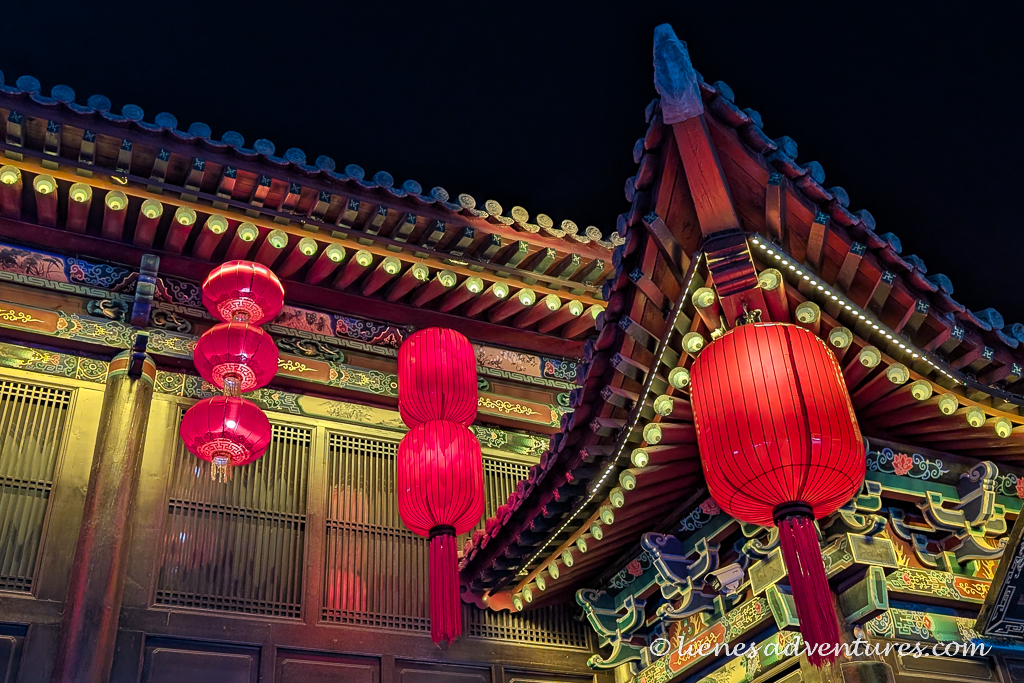
Traditionally, Chinese New Year has been the longest holiday of the year in China. In February 2026, there were 9 consecutive days off work, making it one of the busiest travel rush periods with billions of Chinese traveling to their hometowns to spend time with families. It was also our first Chinese New Year in China, and we were very excited to spend it somewhere special. After considering several options, we settled on Pingyao Ancient City. Due to inflated flights and sold out train tickets, we had to resort to driving. Initially, this was not what we had in mind, but when trying to travel over holidays - we had to adjust and be flexible.
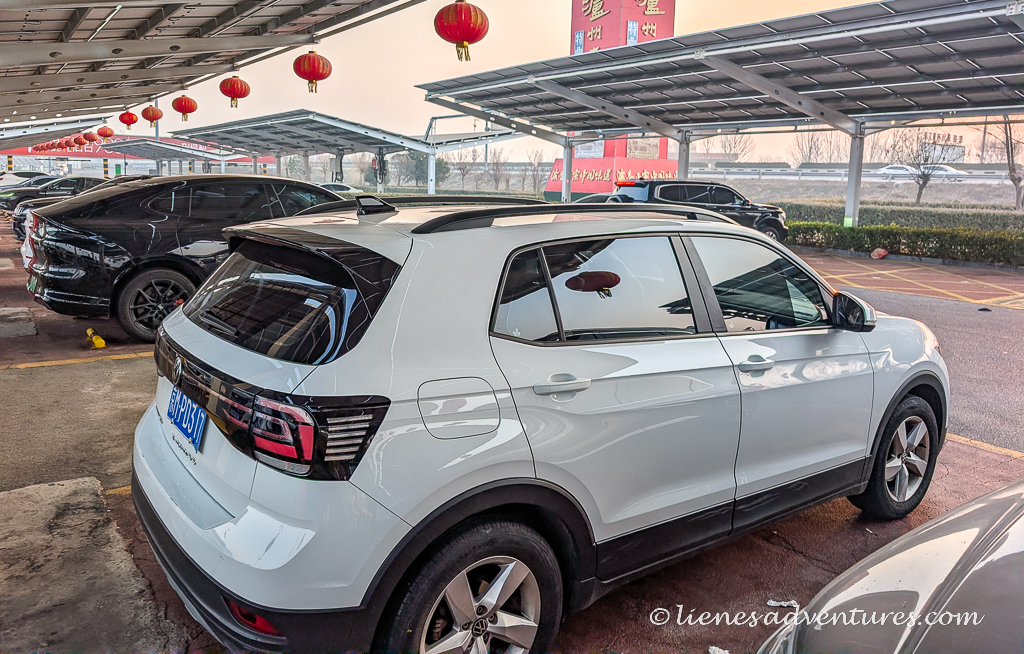
We picked up our rental car the night before our trip. Don’t even get me started on a car rental process in China – it took over 2 hours (as a foreigner) just to get through all the paperwork and system glitches. An extremely long and frustrating process. But with lots of help from the rental workers, all was resolved in the end. We brought our new car back home and packed it up with luggage and snacks ready for an early start the next morning.
DAY 1, February 14
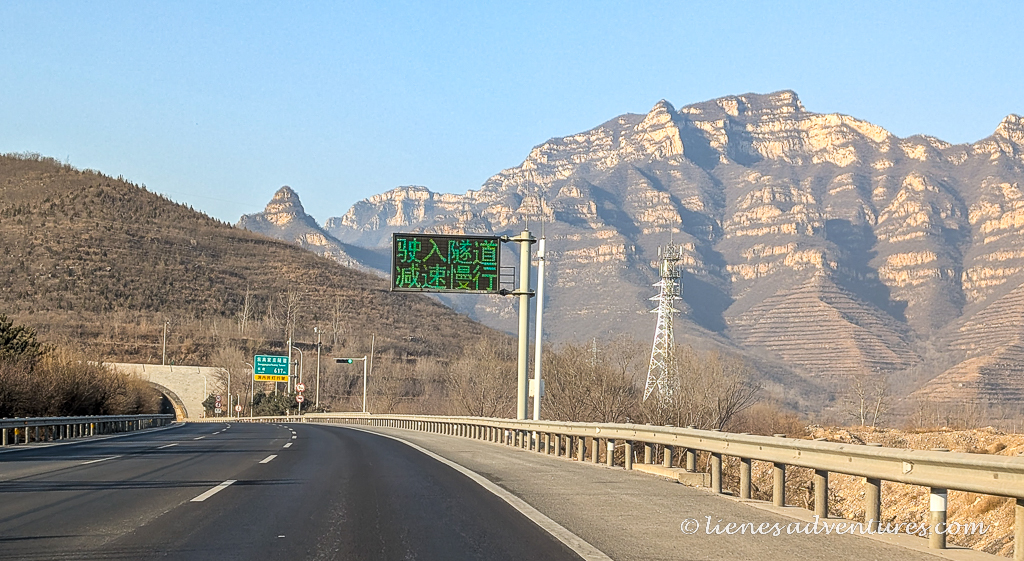
The drive to Pingyao was over 600km (370mi) long with about 7 hours of drive time. To avoid Beijing holiday traffic, we left at 5 in the morning. It was still dark outside, however, the roads were empty. Chinese do not like getting up early, so we used that to our advantage. It took us an hour to get out of Beijing proper, until we hit the main expressway south, leading us all the way to Pingyao. As the sun was coming up, we enjoyed the changing landscape outside the car windows. This was our first long China road trip, so everything was new and exciting. The flat landscape slowly changed into a mountainous one with many tunnels.
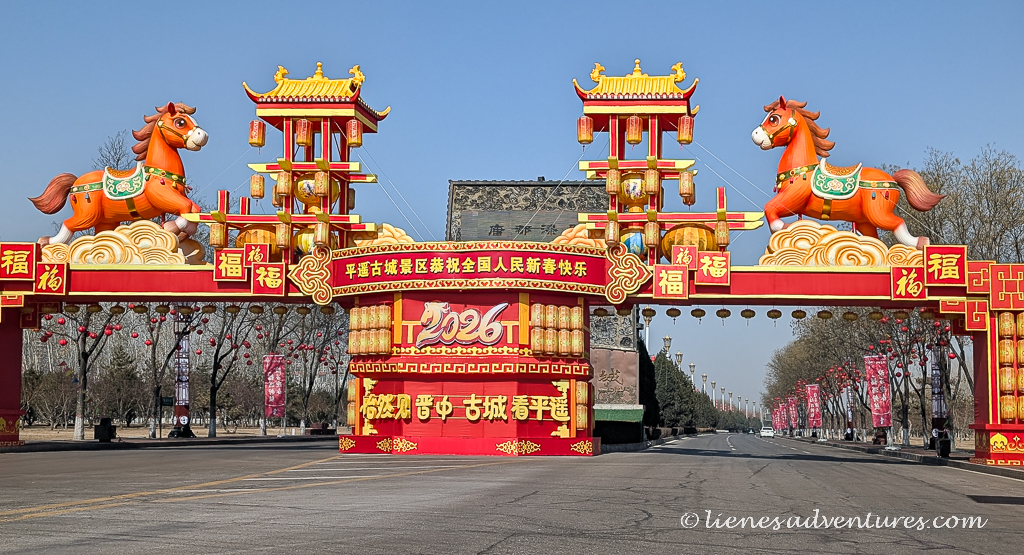
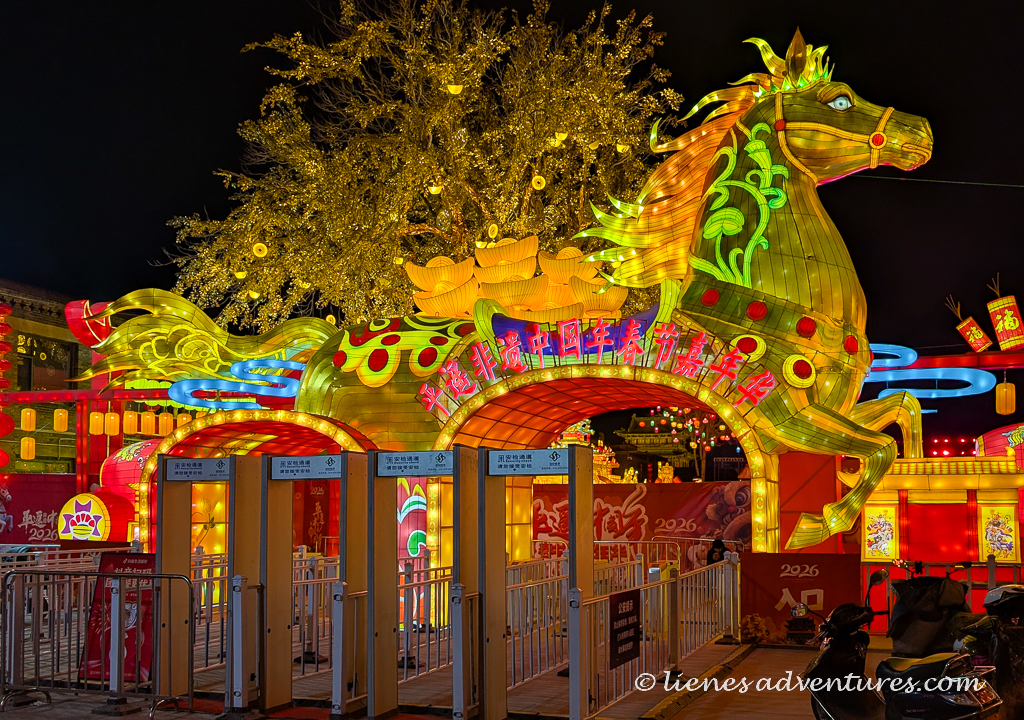
By noon, we had reached Pingyao which greeted all New Year’s visitors with a festive welcome sign! As the upcoming 2026 Chinese Zodiac year animal was going to be a Fire Horse, horses, appropriately, were represented on all the decorations and New Year's greetings.
The part of Pingyao that we were interested in visiting was its fortified, historic section called Pingyao Ancient City. It was a walled section of the city, famed for its Ming and Qing dynasties’ urban planning and architecture. It was considered to be the best persevered Chinese ancient town in existence. The city had over a hundred streets and lanes, lined with close to 4,000 17th–19th century shops and residences. The streets and storefronts retained their historical appearance from hundreds of years ago. In addition, it was still home to 20,000+ people, making Pingyao one of the best examples of an ancient "living city". Pingyao was declared a World Heritage Site by UNESCO in 1997.
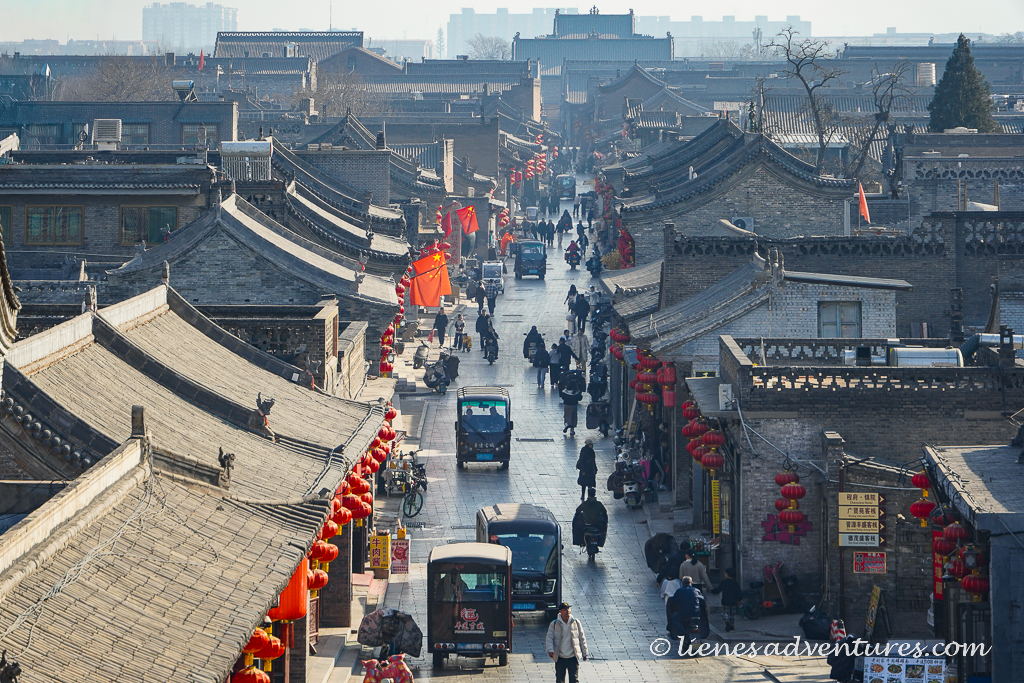
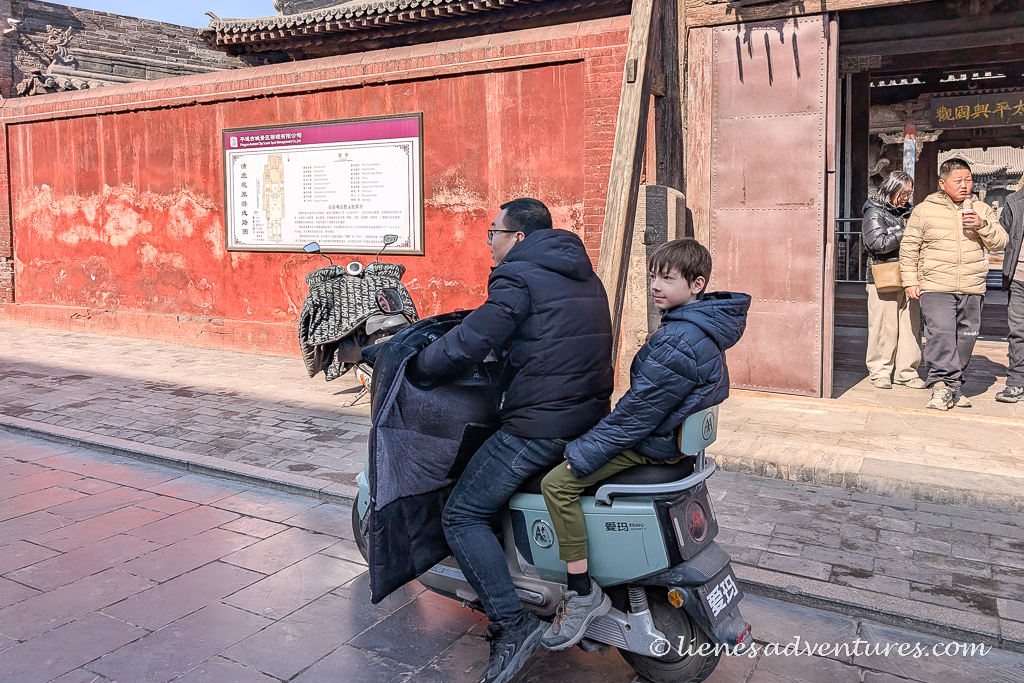
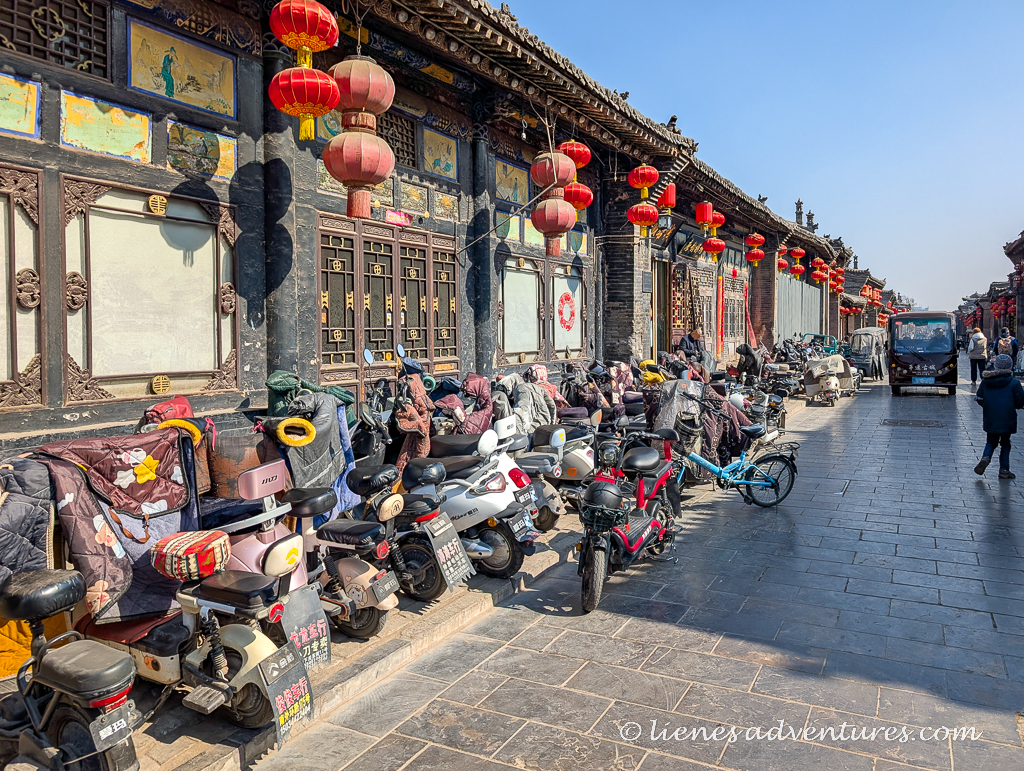
And this was something we wanted to experience for ourselves. Therefore, I had booked a hotel for us right in the center of the Ancient City. No cars were allowed within the city walls. So, we had to park outside, and the hotel owner came to pick us up on his scooter to give us a ride to the hotel.
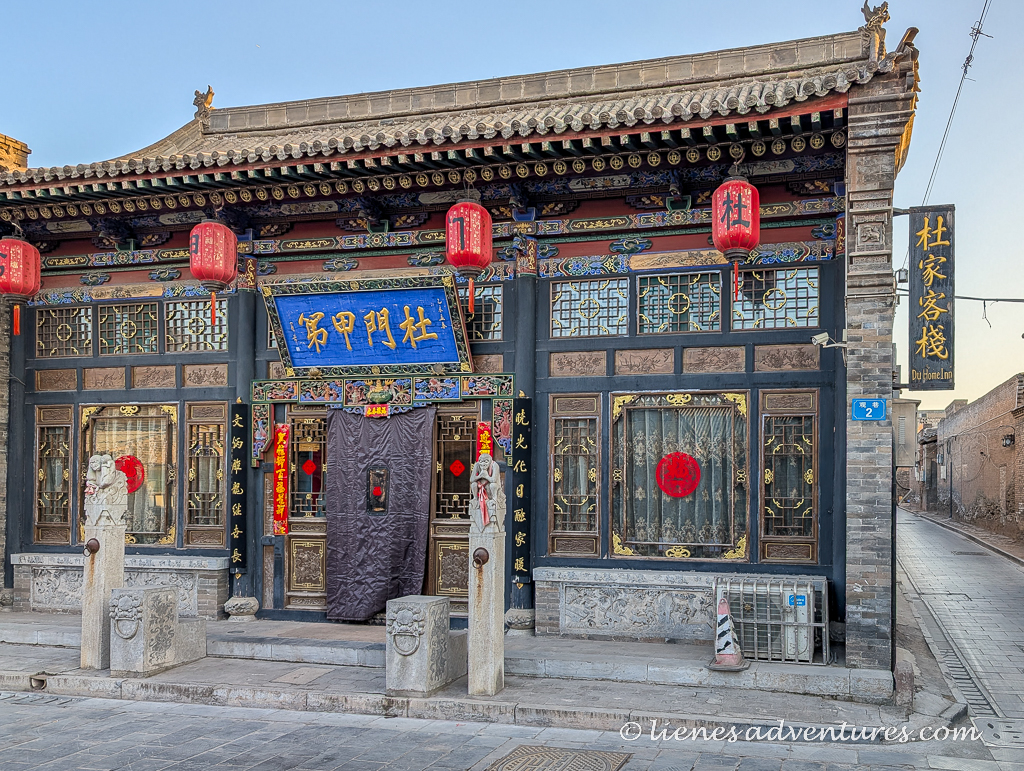
Just like all the other buildings here, our hotel Dumenjiadi Inn was several hundred years old. And it was amazing!
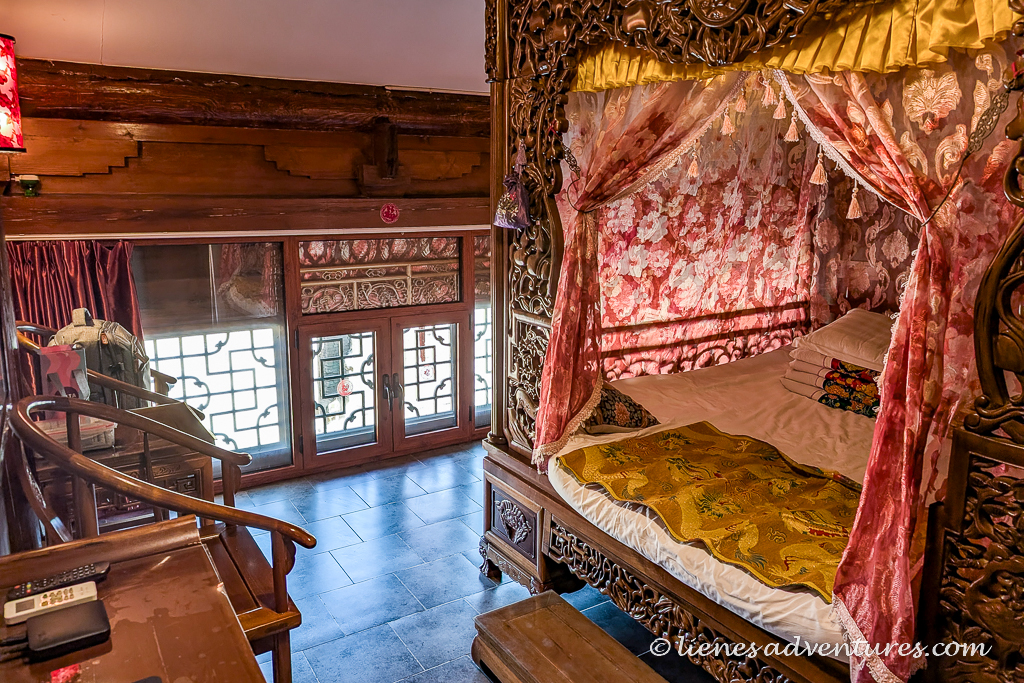
The furniture in our rooms was as historic as the building itself.
And the beautiful view of the hotel’s inner courtyard right outside our door gave us a glimpse into the past… It took us a few moments to walk around and admire all the details. The owner told us that the hotel has been owned by the family since his grandfather - over 150 years ago.
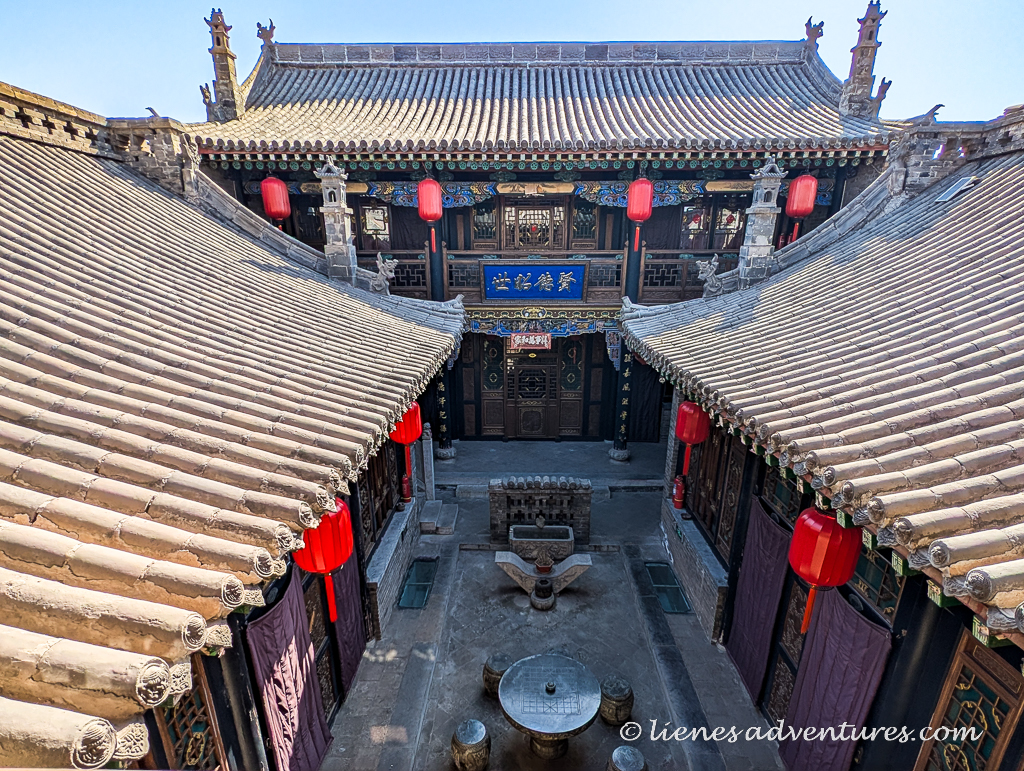
Once we had settled in and taken a little break from the long drive, we were ready to explore. The hotel owner provided us with a map and marked the best attractions, restaurants and sights on it. Pingyao City Pass ticket cost only ¥125 (about $18) and included 22 different attractions that could be explored over the course of 3 days. It worked perfectly for our schedule, as we planned on spending 4 days here in Pingyao.
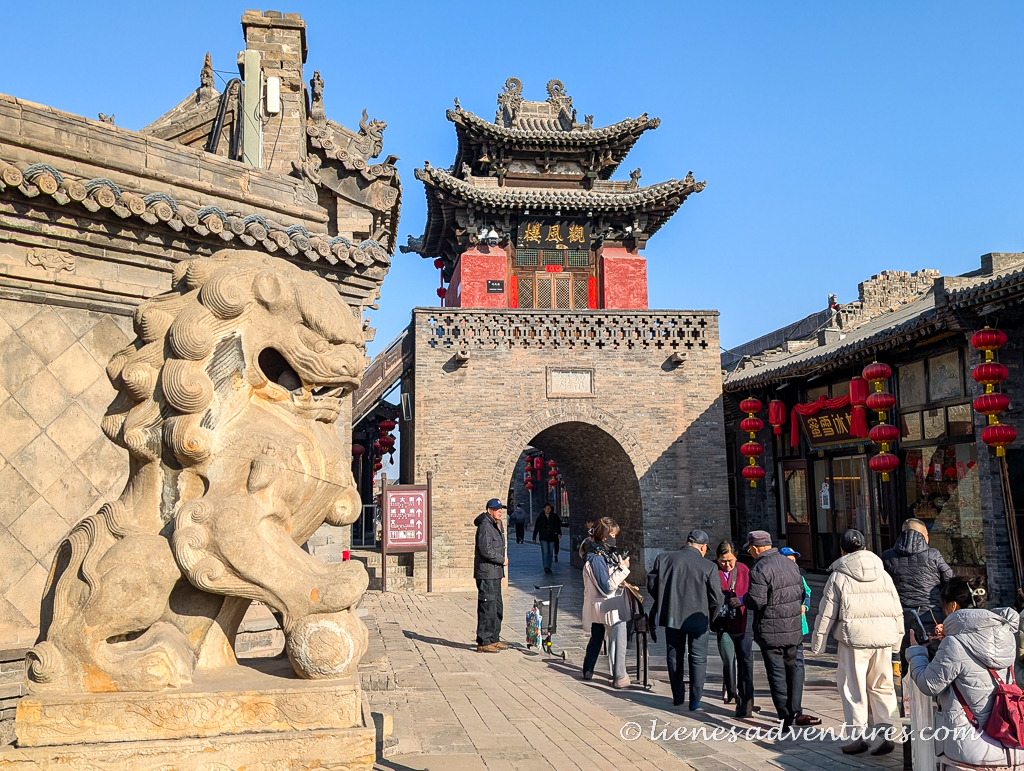
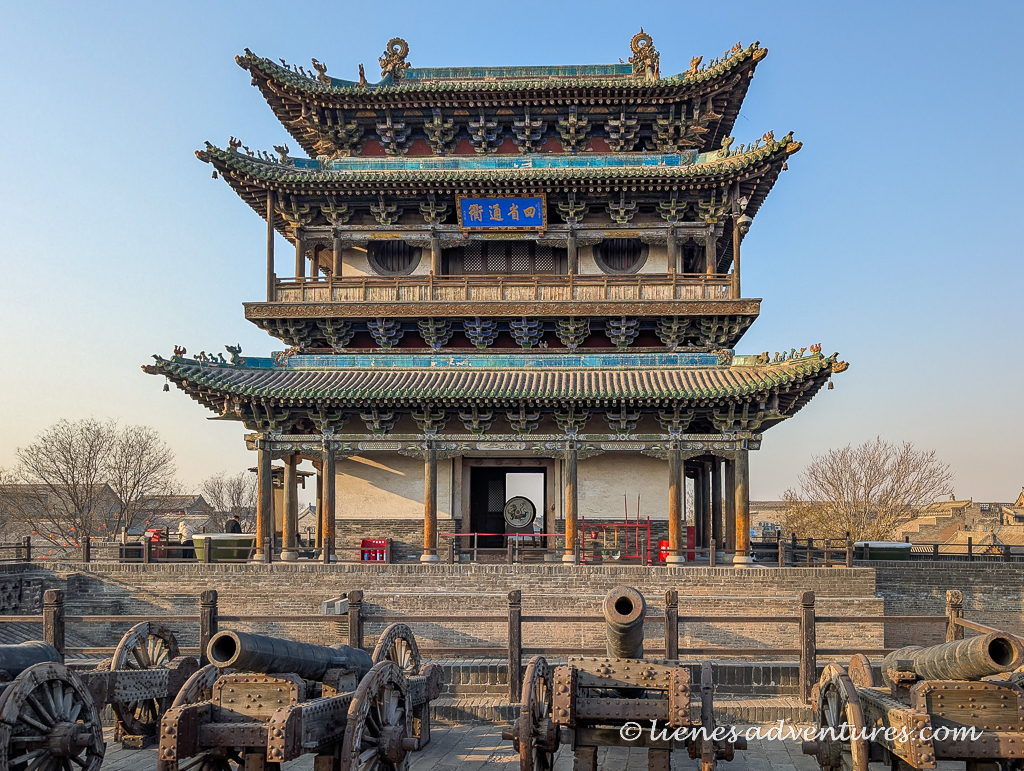
The first attraction we decided to see was the famous city walls of Pingyao. The original wall was built more than 2,700 years ago during the reign of the Western Zhou Dynasty (ab. 827-782 BC). The walls were later rebuilt in 1370 by Emperor Hongwu, and despite many repairs and reconstructions over the last 600 years, they still retained their original style and size.
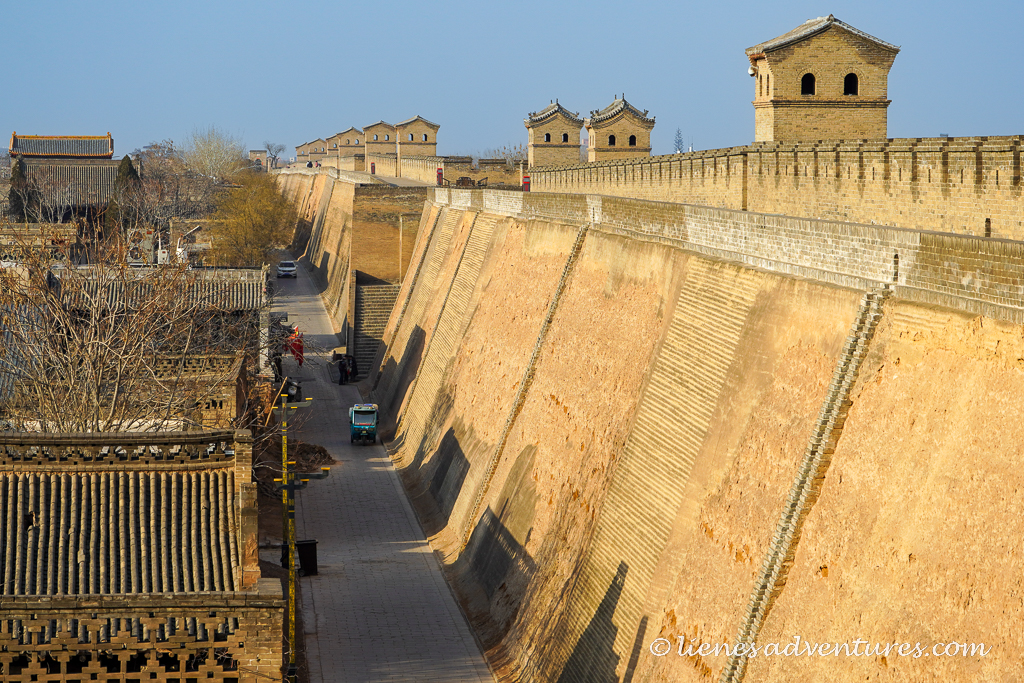
The wall wrapped in full length around the Ancient City, fortifying it from all sides. With a perimeter of roughly 6km (3.7mi) it took visitors on average 2 hours to walk the full circuit of the wall at a leisurely pace.
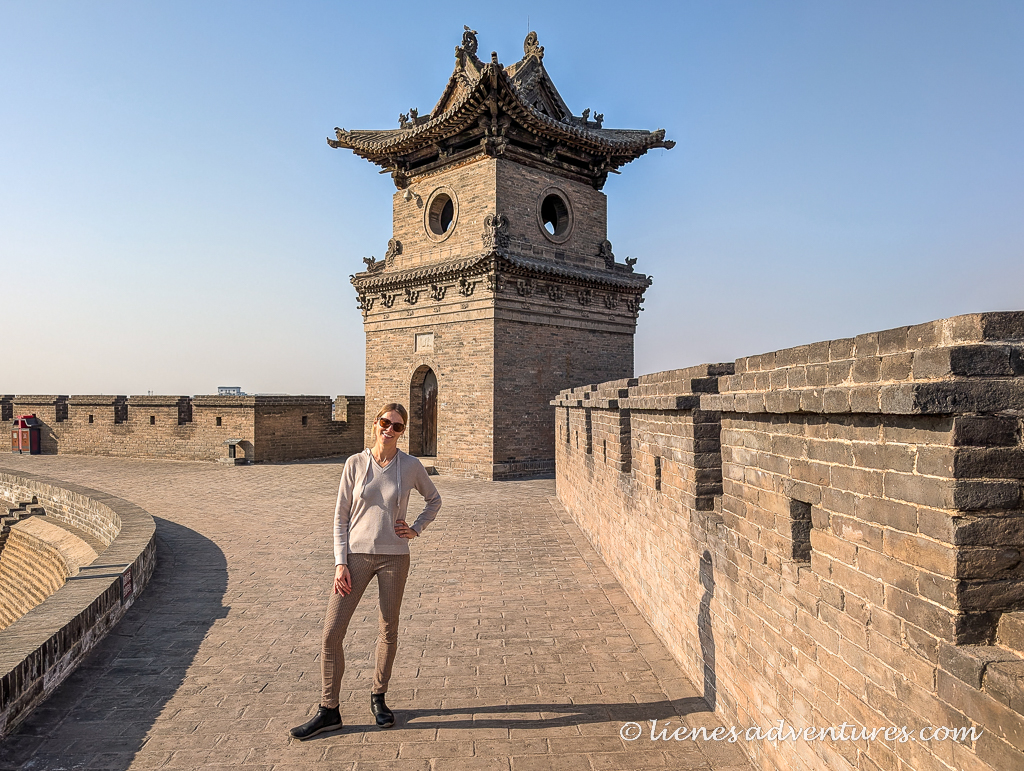
We had plenty of time, so we set off. The walls measured about 12m (39 ft) high, with a 4m (13ft) wide and deep moat found just outside the walls. Aside from the 4 structured towers at the four corners, there were also additional 72 watchtowers all along the sides.
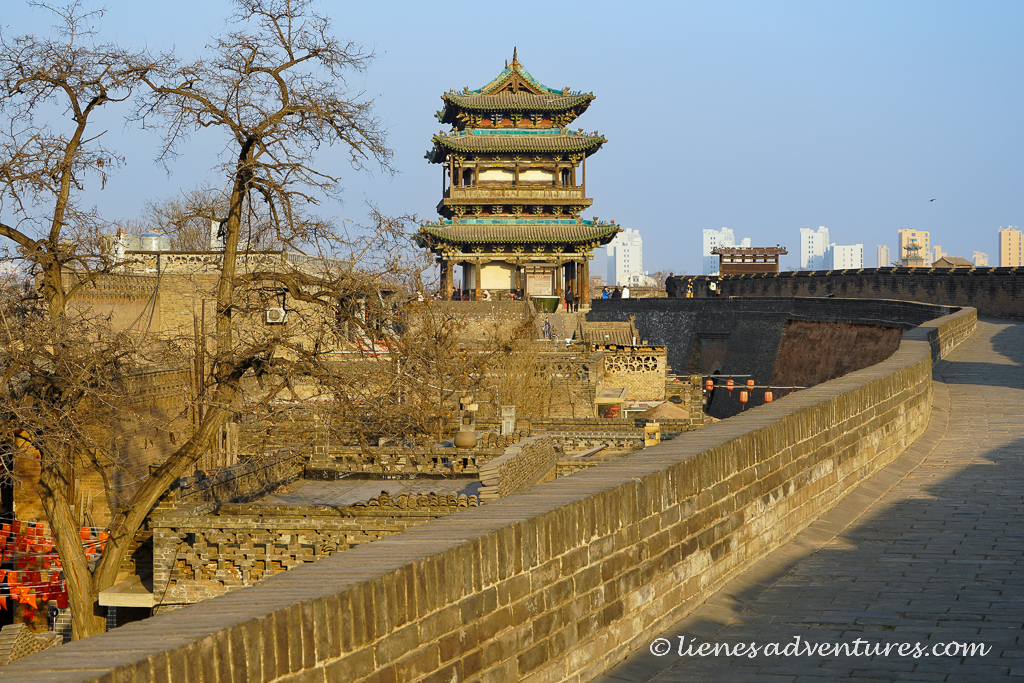
Being so high up, we had a great overview of not only the Ancient City but also the modern Pingyao with skyscrapers, traffic rush and busy market just on the outside of the wall. Those were like two completely different worlds.
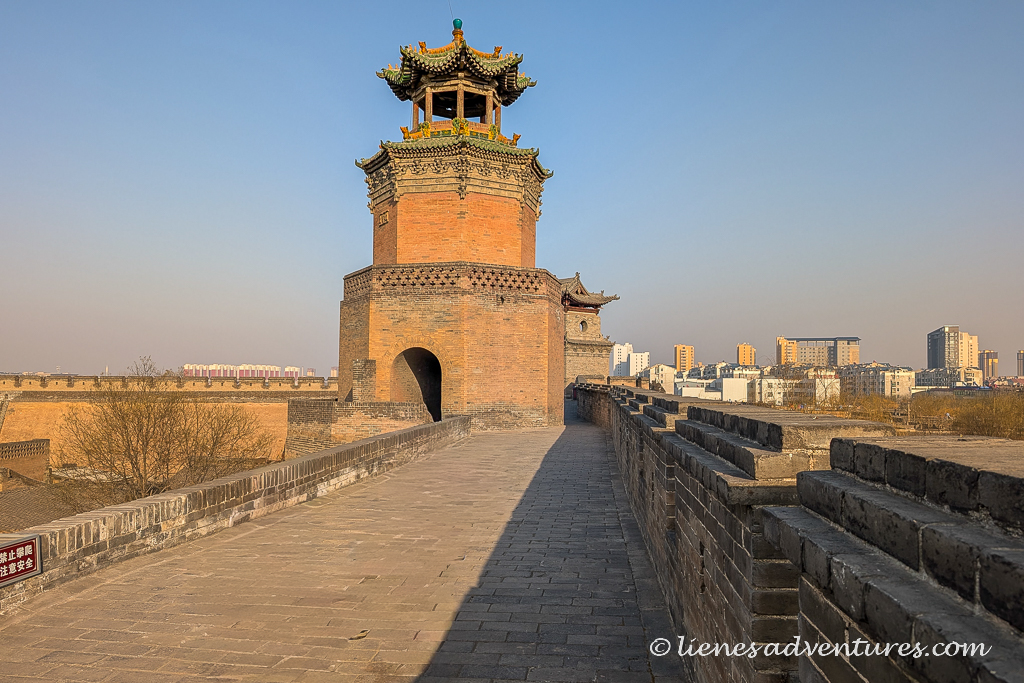
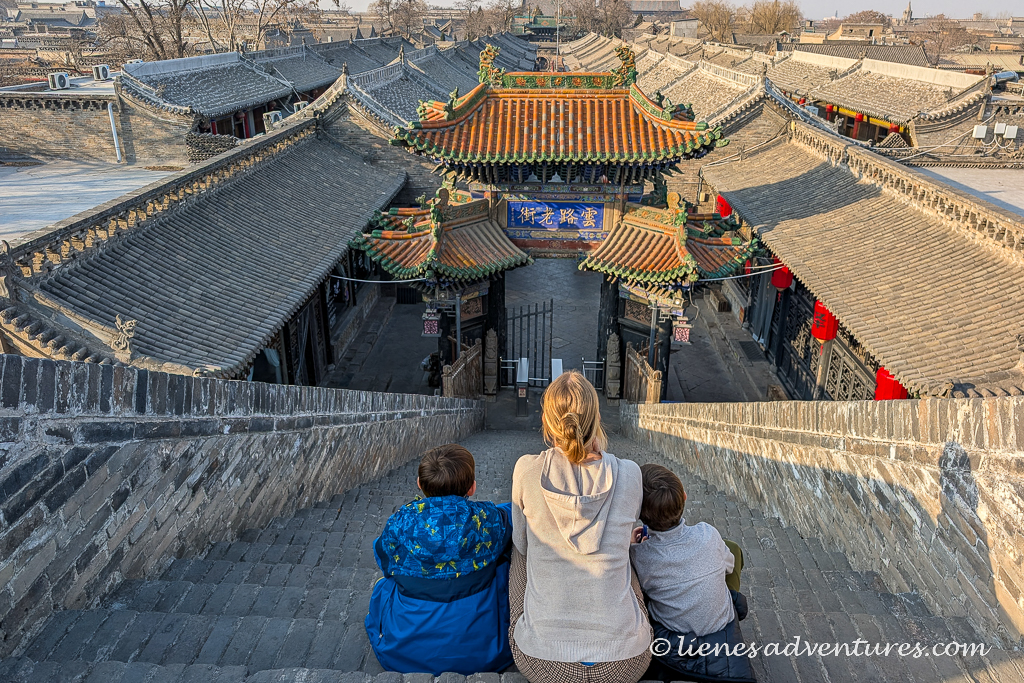
By the time we had completed the full circuit on top of the wall, the sun had already gone down, and it started to get dark. This was the time when the city became especially lively!
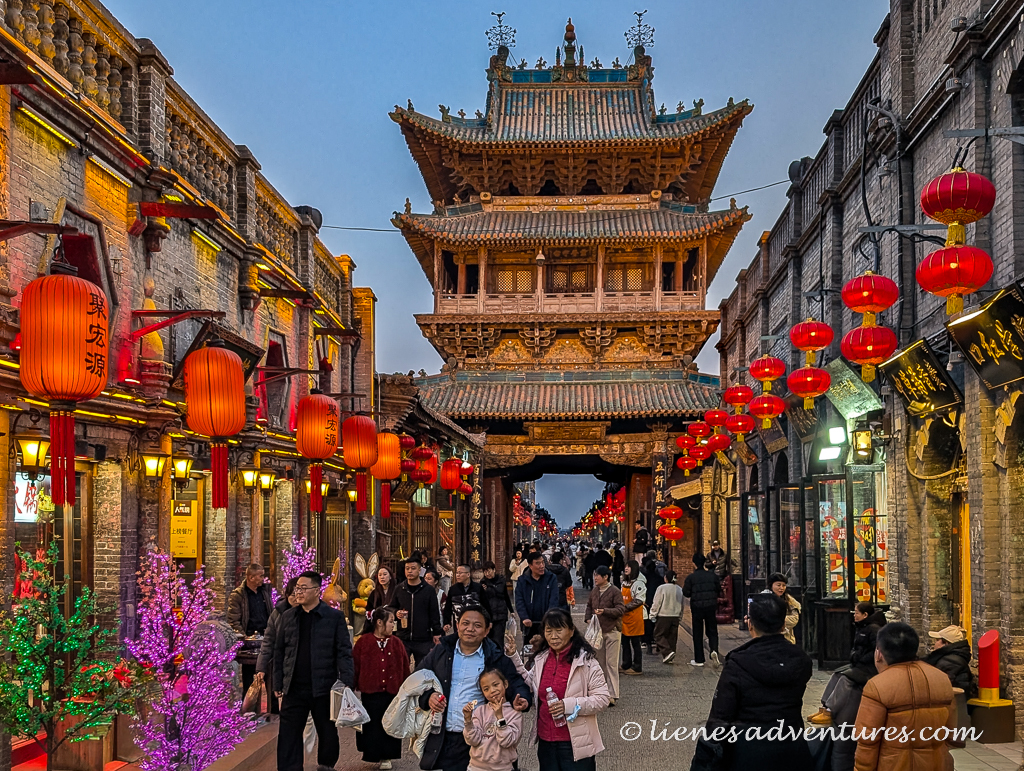
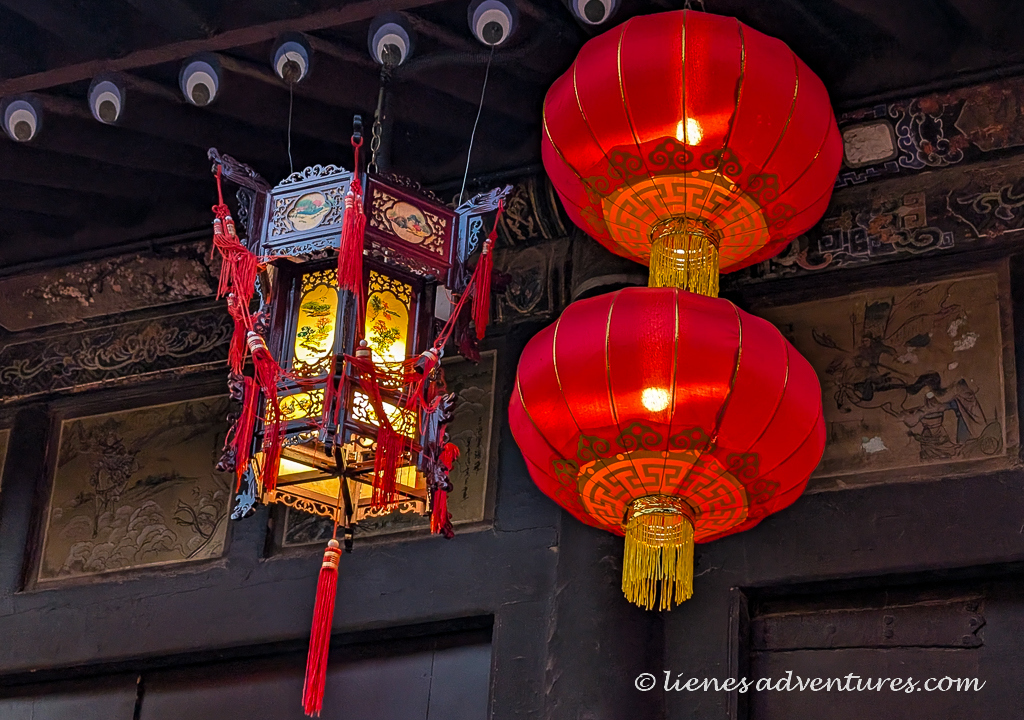
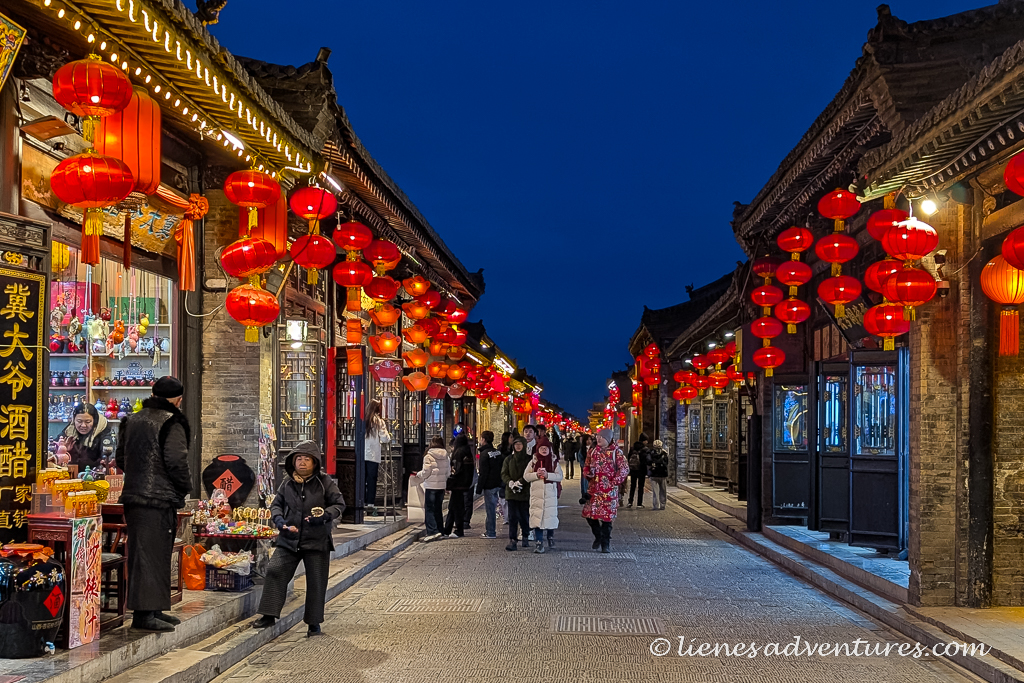
All the red lanterns were lit up along the streets. The storefronts put out their New Year’s decorations and street sellers had set up their stands for the evening rush.
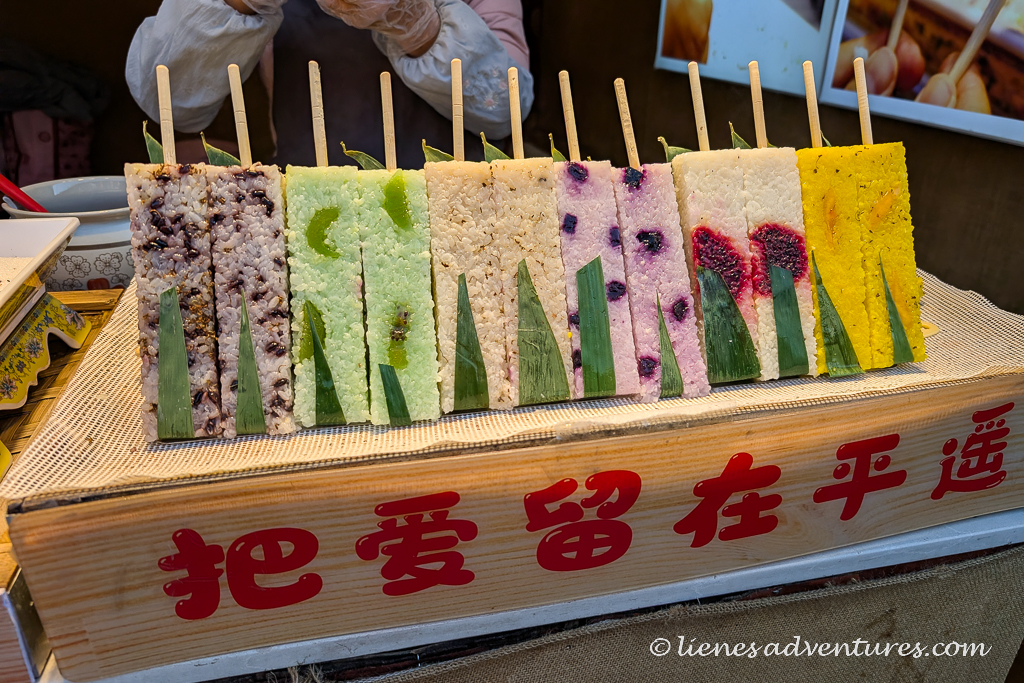
There was so much amazing street food! Of course, most of the time we had no idea what any of it was, yet it all looked delicious and we tried to sample as many of the snacks as our stomachs could hold.
There was also a big festival planned for New Year’s Eve, and most of the decorations were already in place. Although we could not enter the festival grounds, we could still see most of the ornaments, lanterns and all the other festive illuminations. Chinese really go all out on their New Year’s! It was a big event!
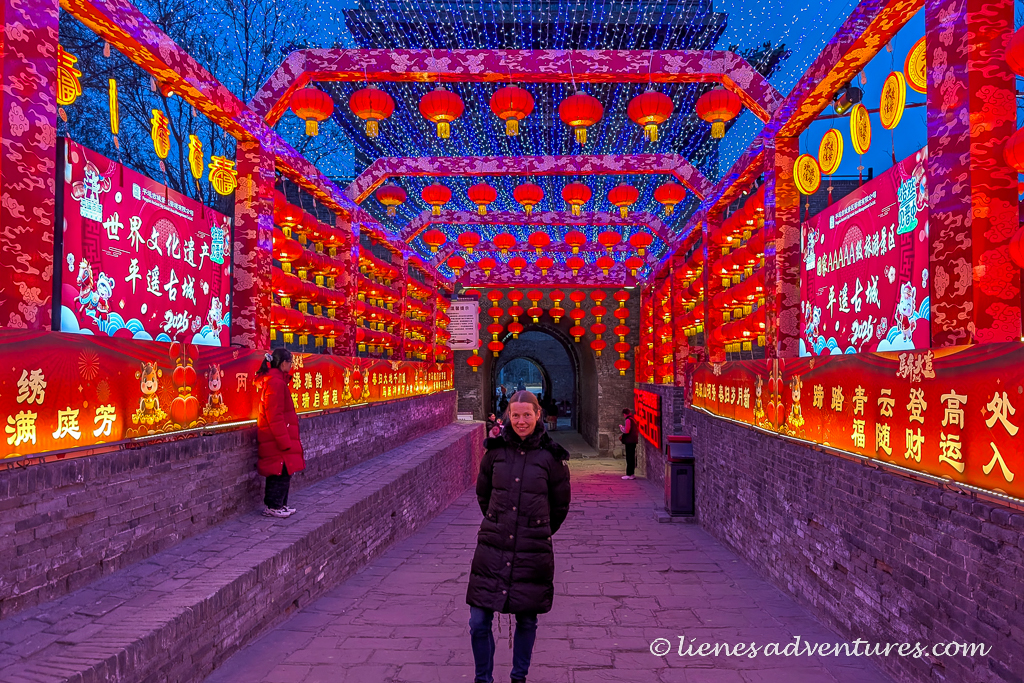
Considering that we had gotten up at 4 in the morning and then completed a 7-hour drive, we were absolutely exhausted by now. It was around 9 in the evening, and we decided to call it quits for the night. We would still have many more days here to explore, so it was time to go back to the hotel and have a good night’s sleep.
DAY 2, February 15
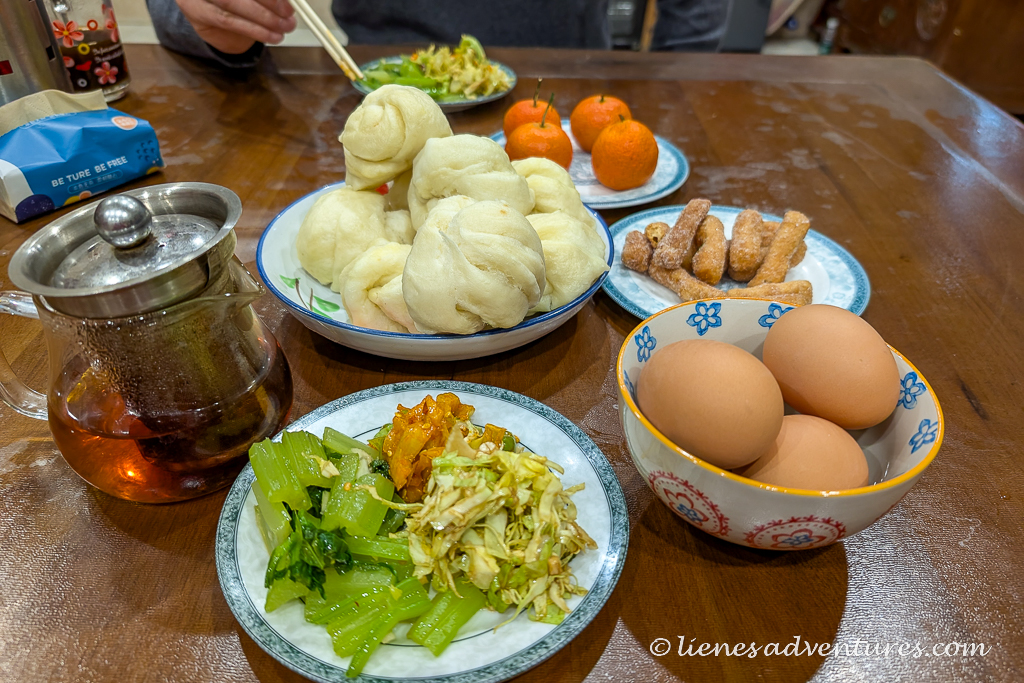
Although we would have loved to sleep in longer, our hotel’s owner had informed us at check-in that breakfast was served between 7:30-8:30. Upon our request, he extended it to 9 just for us, but we could not keep them waiting any longer. And maybe that’s a good thing. Otherwise, we might have slept in until noon and lost half a day… Hotel’s breakfast was a home-cooked meal by the owner’s mother with traditional Chinese meat buns, eggs, tea, coffee, and vinegar salad.
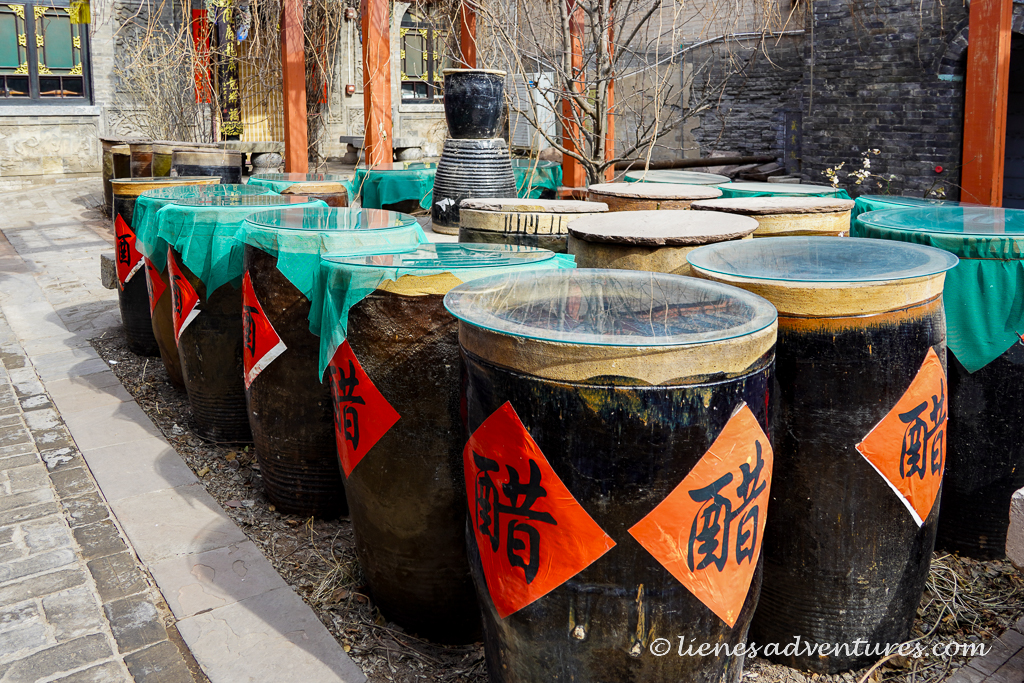
Speaking of vinegar – Pingyao streets were lined with many vinegar shops aged in large barrels. Shanxi Province Vinegar was made from various grains through steaming, fermenting, smoking, pouring and drying. It was one of the “four famous vinegars” of China. The history of it spanned over 3,000 years. The vinegar here was particularly famous for its five characteristics: color, aroma, alcohol, concentration and sourness.
MA'S RESIDENCE
After we finished our breakfast, we were ready to head out and fully explore Pingyao Ancient City. Per our hotel owner’s suggestion, we started out by visiting Ma’s Residence. It was the former residence of Ma Zhongxuan, one of Pingyao’s four most prosperous merchants during the Qing Dynasty in 1644-1911.
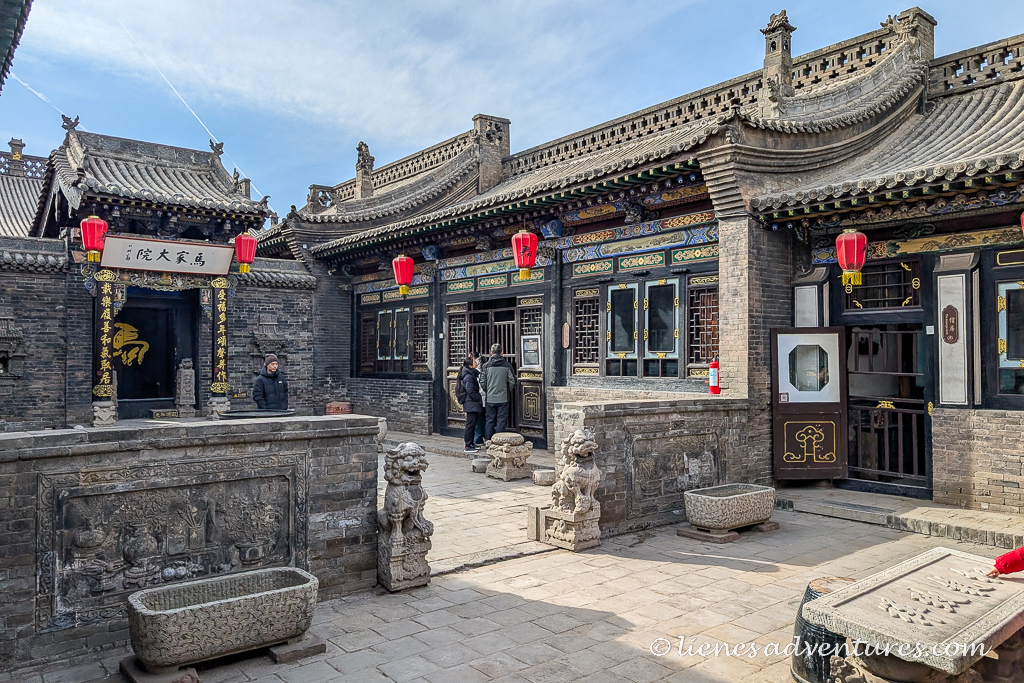
The complex contained three large courtyards, six small courtyards, and 197 rooms in an area of 0.6 hectares. It was a traditional wealthy, large-family Chinese residence with Qing Dynasty décor. It almost reminded me of our hotel room...
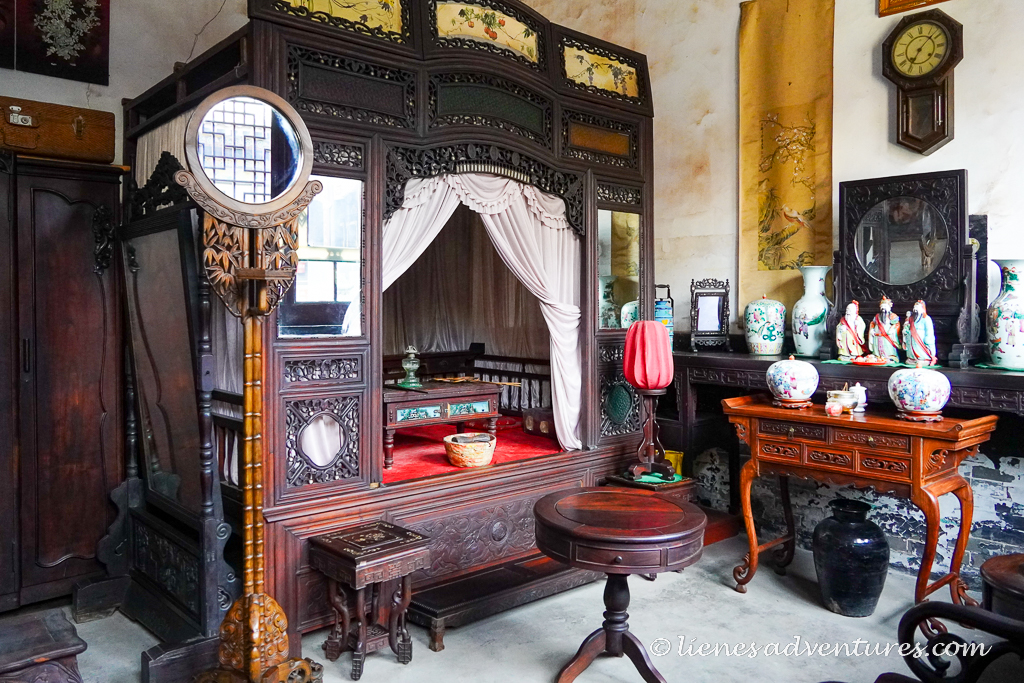
Ma had several wives, each of whom had their own butlers and servants. And each of the wives had their own living quarters complete with children’s rooms, servants’ rooms, gathering rooms and courtyards. It was an astonishing place to walk through! We could only imagine the daily lives people had here hundreds of years ago as they walked through these courtyards, up and down the stone steps and walkways…
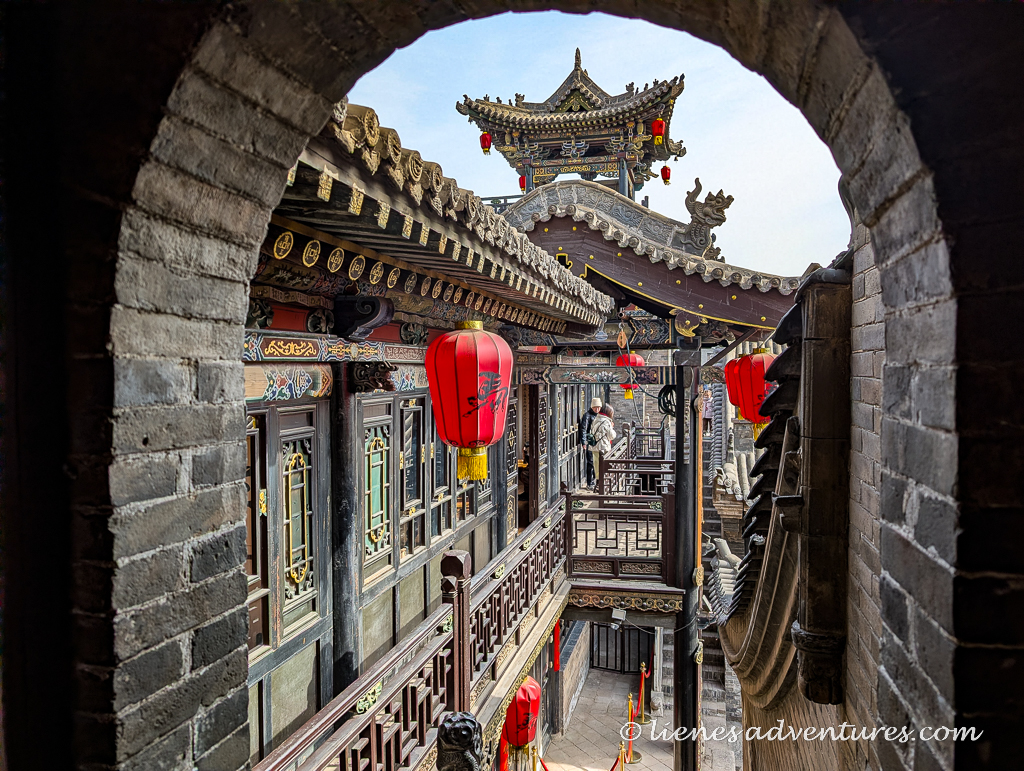
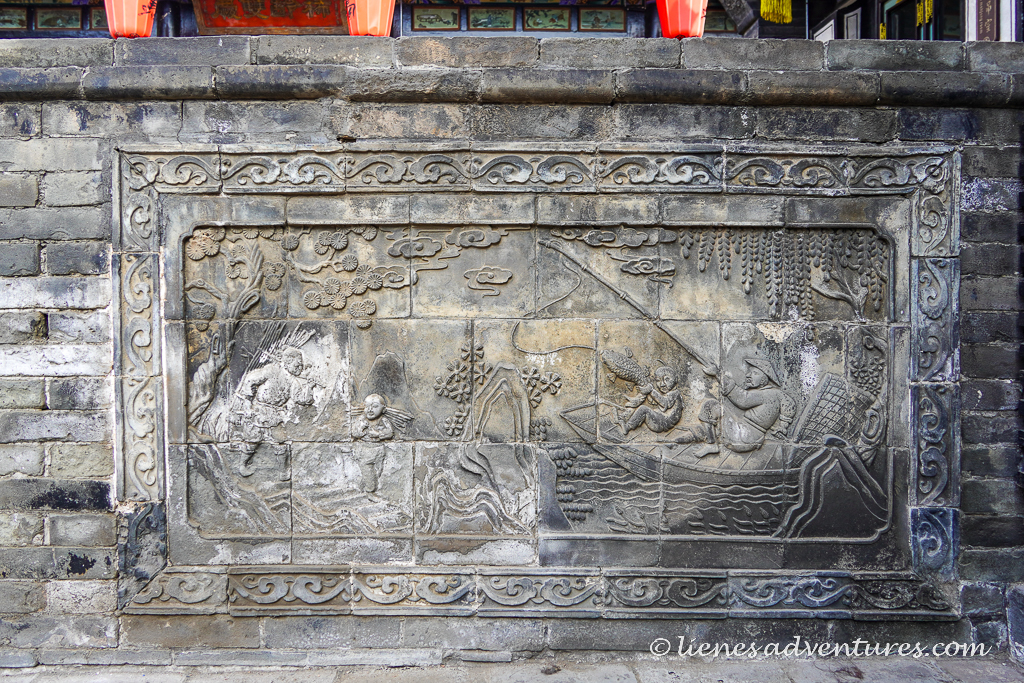
And so many details had been preserved and intact – from colorful wood paintings to stone artwork engraved on house walls.
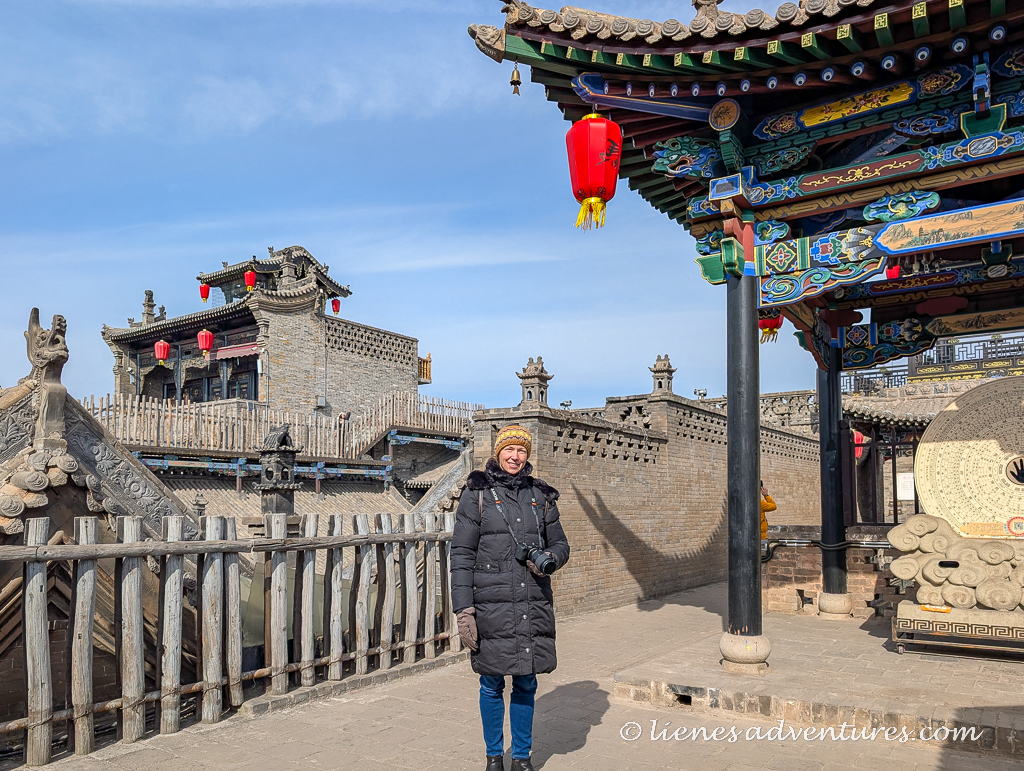
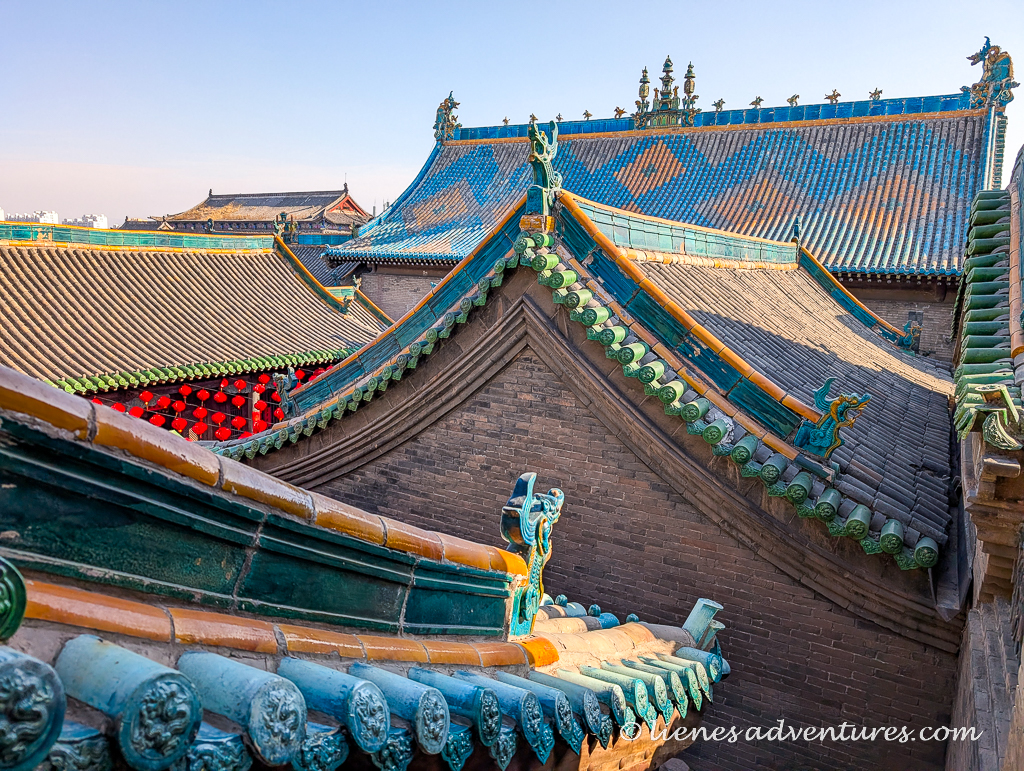
We could explore all the levels of the complex, including taking narrow steps to the rooftop pagoda and admiring the city views from there… And even roofs themselves were something worthy of an admiration!
An interesting fact about Chinese houses:
The number of courtyards symbolized the wealth of a family. Modest houses usually had only one courtyard, while the homes of nobles and wealthy merchants may have had numerous courtyards with gardens and pavilions inside them.
The layout of the rooms and their occupation followed a strictly hierarchical system. The main pavilion, with windows that opened to the south, received better sun exposure, and was therefore reserved for the house owner or parents. The pavilions that opened to the east and west were assigned to the younger children, depending on the importance they had in the family. The unmarried daughters occupied the most hidden rooms in the house, as they were not allowed to reveal themselves to the public. The pavilions with the least sun exposure (for example those with windows that opened to the north) were usually assigned to the servants or used for daily activities such as cooking or study.
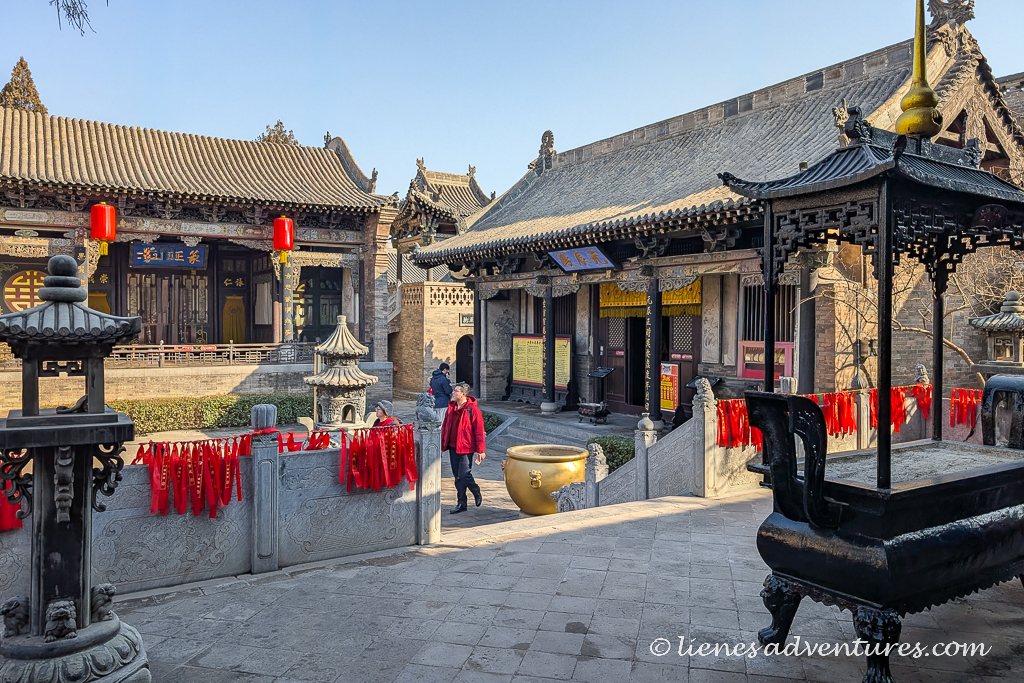
We spent a long time exploring all the rooms and courtyards of this mansion and still did not get to see everything. Knowing that we still had a lot of other sights on our list, we had to move on! However, I could have spent even more time at Ma’s Residence – it was all very intriguing and interesting.
XIE TONG QING DRAFT BANK
Although not originally on our list, we made a quick stop at Qing Draft Bank. Historically, Pingyao was a city of merchants and bankers. As such, it was considered the first banking capital of China. Pingyao’s position along the Silk Road trade route enabled merchants to easily transport tea and silk from southern China to Russia. Massive amounts of money and goods constantly circulated through the city.
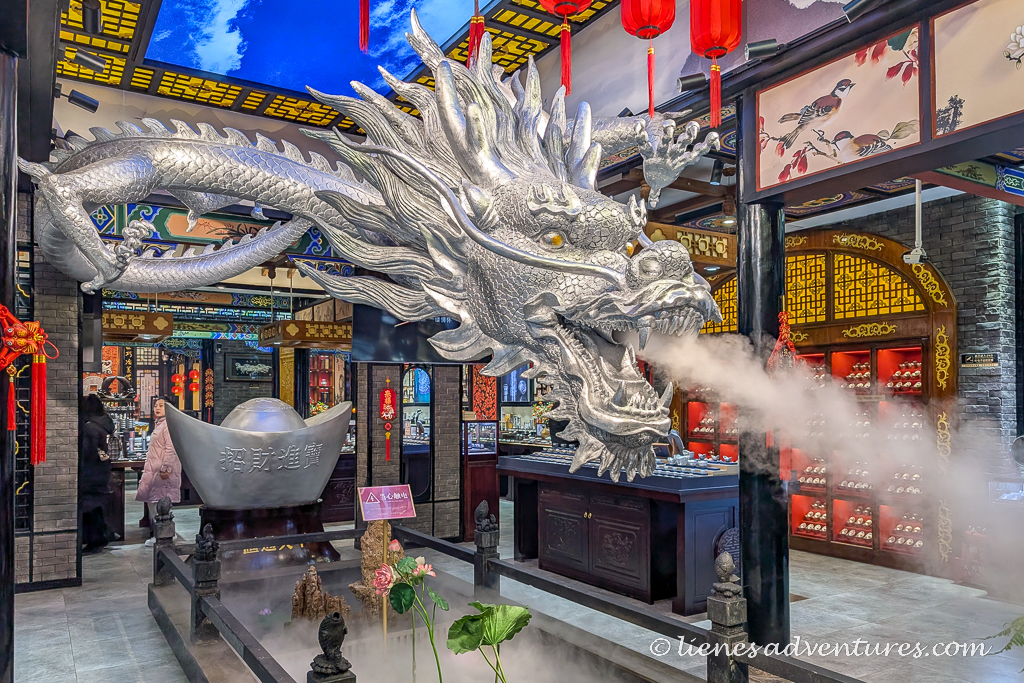
It was here that an innovative merchant introduced the first form of virtual payment. The system used pieces of paper known as “drafts” and was the first model for circulating checks. This inventive breakthrough made trade much easier and safer, allowing banking activity to flourish within Pingyao ensuring its prosperity.
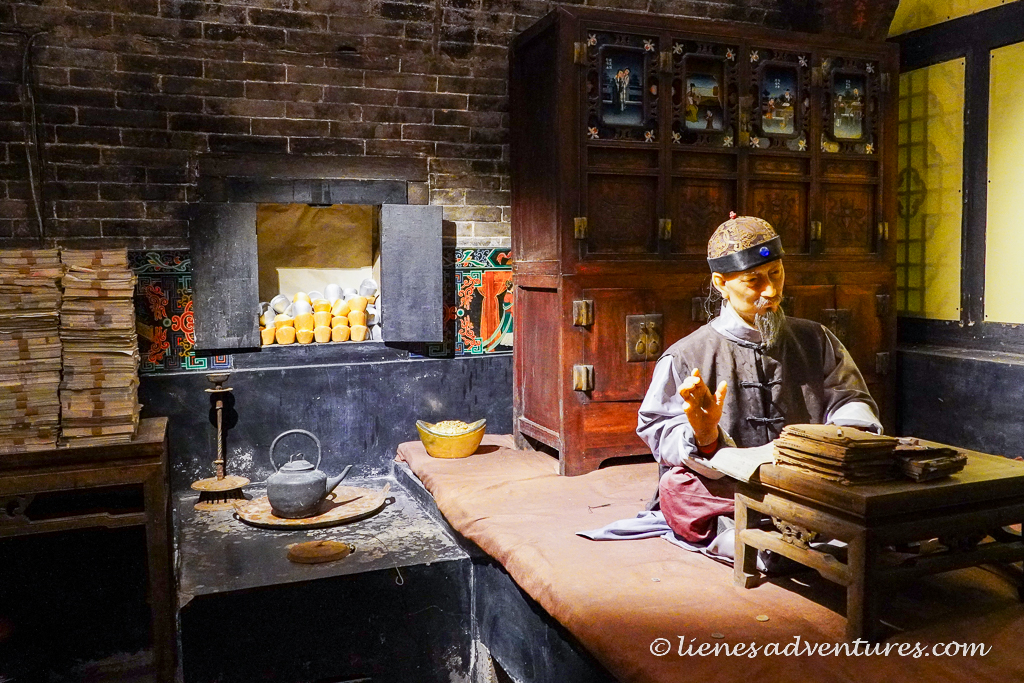
The main attraction was the huge underground vault, said to contain 1,7000,000 liang of silver - roughly equal to CNY 30 billion. The vault was covered with barbed wire and guarded by people. Two rooms were set up here for accountants who had to spend their time underground counting gold and silver.
THE CONFUCIAN TEMPLE
Probably one of our favorite temples in Pingyao was the Confucian Temple. Founded as early as in the Tang Dynasty (618 - 908 AD), it was one of the oldest and currently the best-preserved of its kind in China. It consisted of 5 courtyards from south to the north and two side courtyards to its east and west.
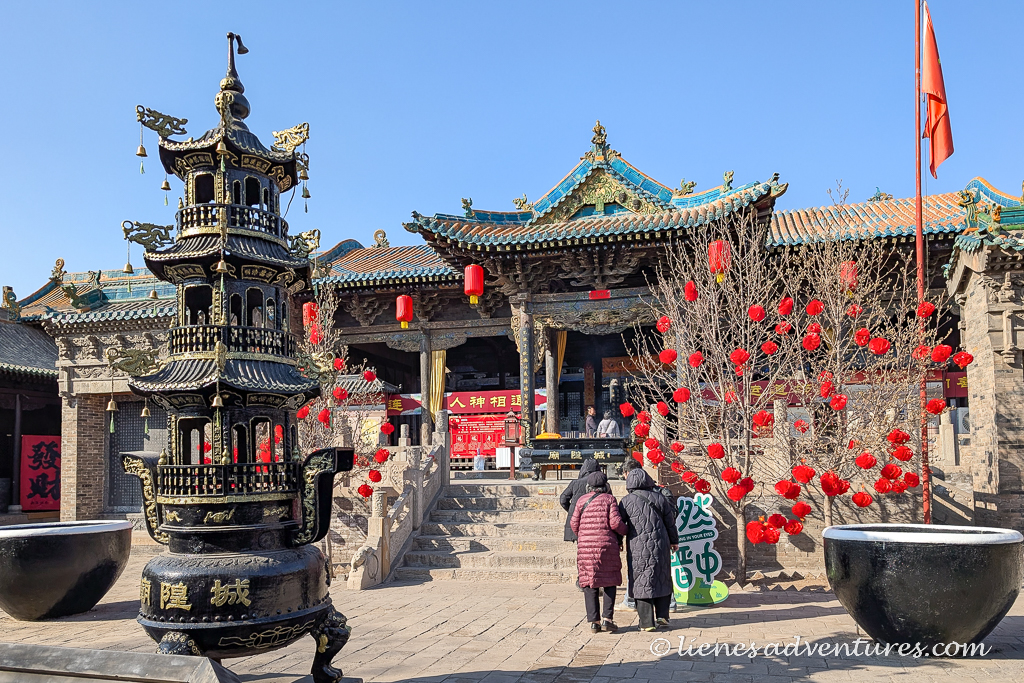
I must admit that neither one of us was well versed in any of the religions or worship practices represented here in Pingyao or China in general. Confucian, Taoist, Buddhist… those were fairly unfamiliar philosophies to us. Yet that did not mean we could not appreciate the beauty and intricate details of their temples and shrines. For us it was the architecture and the historic relevance of each of these places that made them so special. And there was so much history!
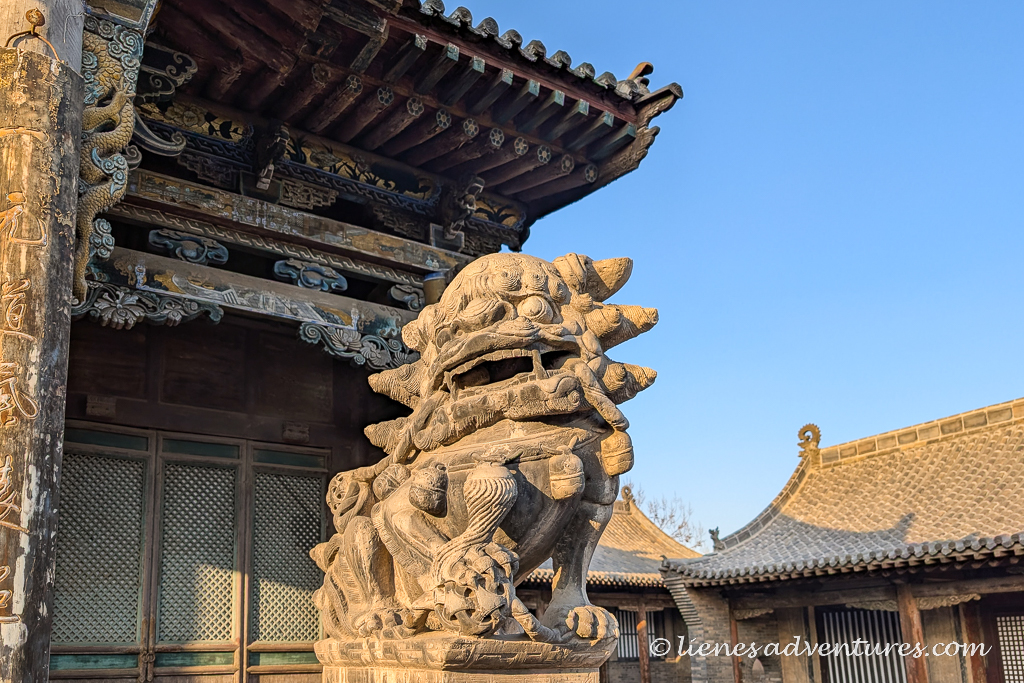
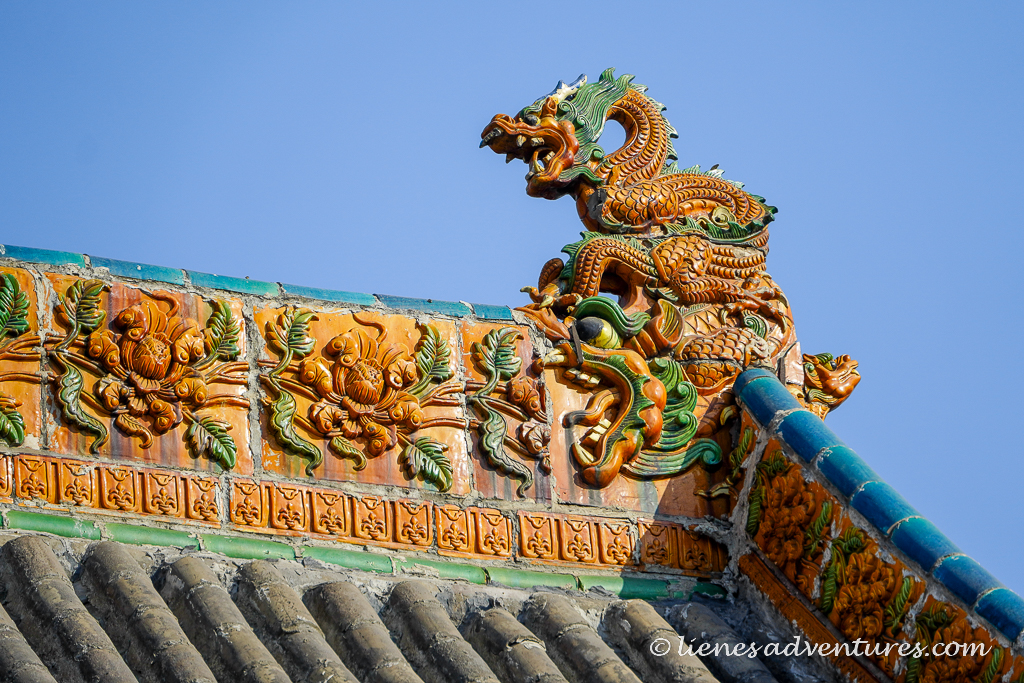
For those truly interested into these old religions and philosophies, each one of the temples could have been worth a full day’s visit! But for us, just even a short glimpse into it was worth a stop.
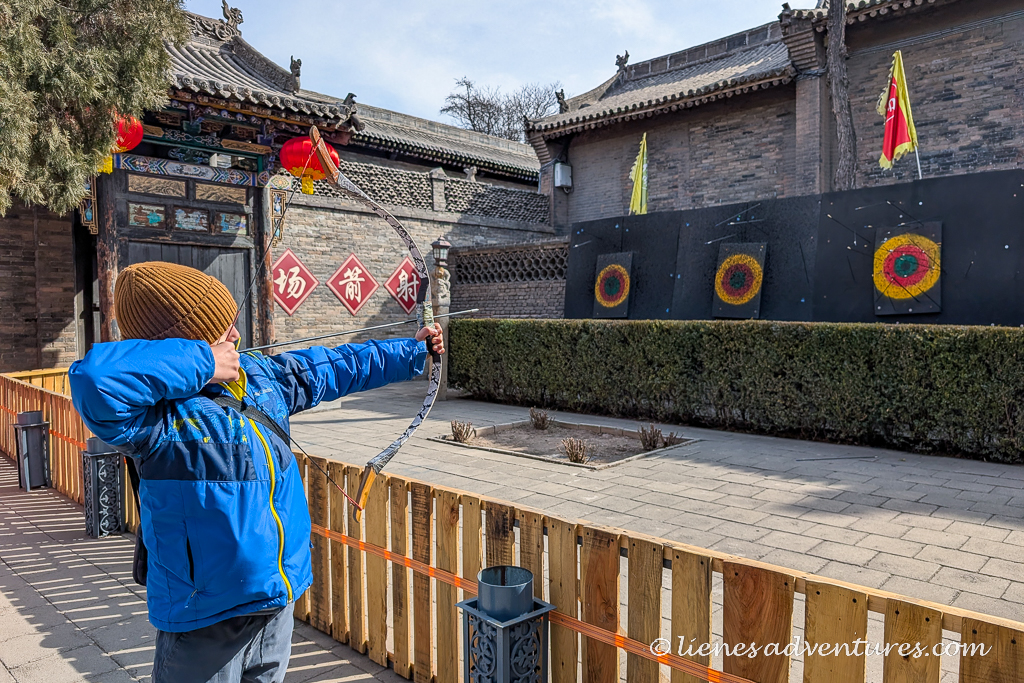
My kids, however, found something appropriate for their own interests. At the corner of one of the courtyards, there was an archery range set up. For just a couple yuan, visitors could try their hand at shooting a bow and arrow. Needless to say, we were not allowed to pass without a stop here...
ANCIENT GOVERNMENT BUILDING
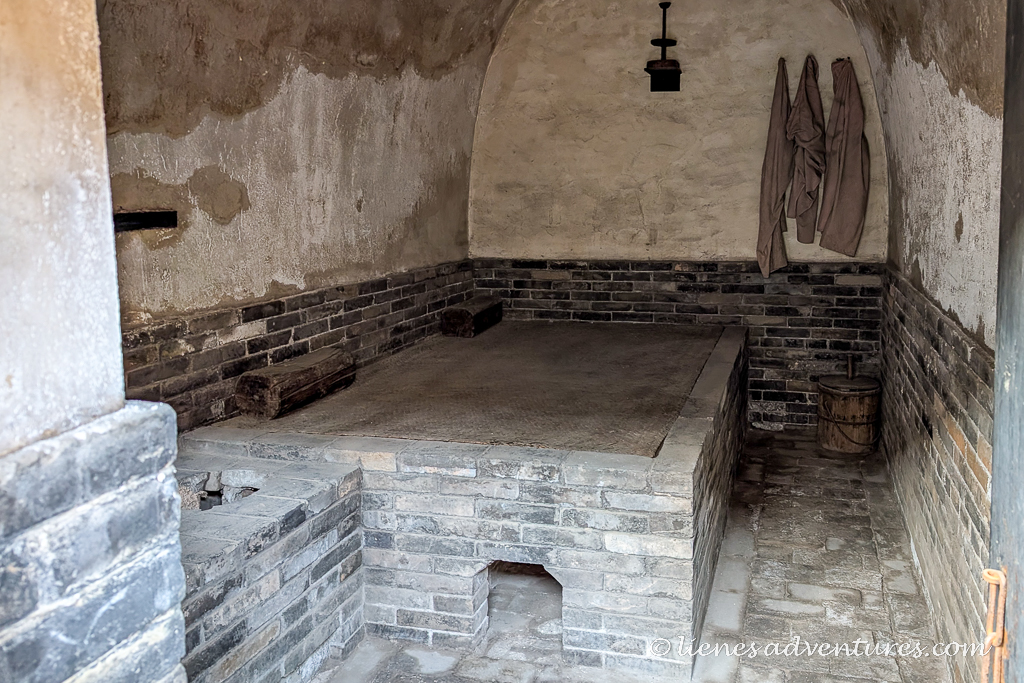
As it was approaching evening, we had time for just one more major stop. We chose something a little different. Pingyao Ancient Government Office dated back to the Northern Wei Dynasty (386-534). The oldest remaining building was constructed in 1346, more than 600 years ago. The complex included various government offices such as taxation and official affairs. The central building was the primary law court which handled criminal cases, and the secondary court which handled criminal cases. There was even a prison here, which, of course, was my kids’ favorite part of the complex! Why would kids care about taxes or laws – that was so boring! But the prison?! Wow, that was exciting! I was just glad that there was still something that held their interest at this point.
Throughout the day, as we walked through Pingyao Ancient City going from one major attraction to another, we made several other shorter stops along the way as well. We also visited places such as Cheng Huang Temple, Temple of the God of Fire, Qing Xu Guan Taoist Temple, First Draft Bank, Armed Escort Agency and a few others. All of these were included in the Pingyao Pass combo ticket we purchased on the first day. Although by evening my kids were completely over and done with the temples and museums, it was still so worth it!
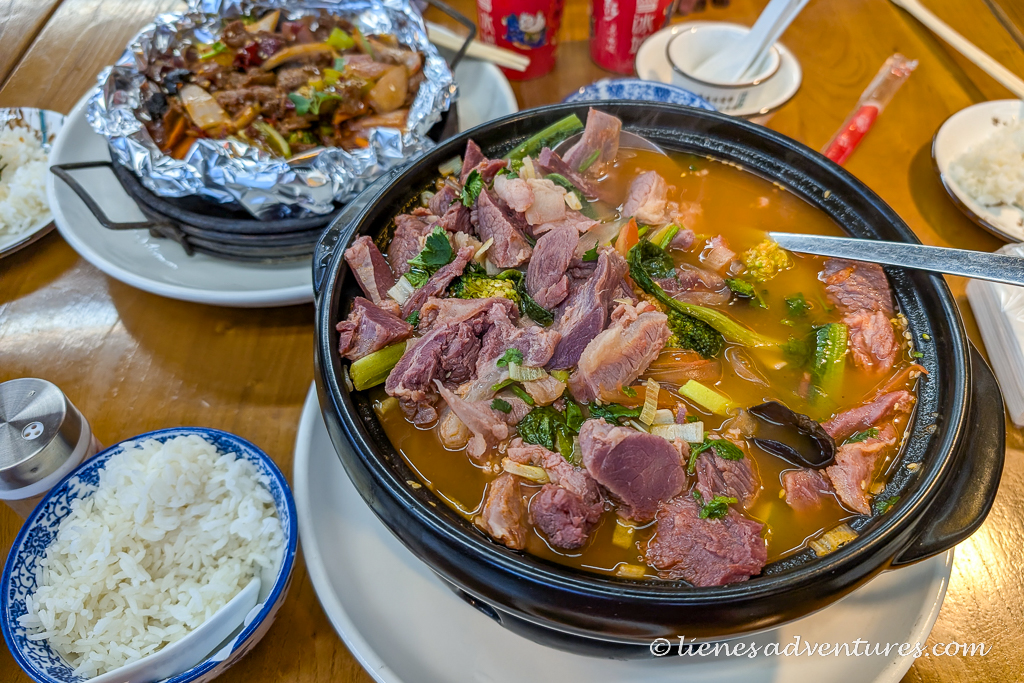
With all ticketed attractions closing at 17:30, we were on our own again. And as we slowly walked the evening lit streets of Pingyao, we realized we had not had any decent sit-down meals since breakfast. There were so many choices, but as most of the offers were quite similar, we just chose one along the way. What I thought would be one serving of beef soup was a whole pot of it meant for sharing! With my kids and husband having ordered their own plates of food, we ended up with a lot more food than we could ever manage to eat! This was our new lesson of the day – some plates in Chinese restaurants are not single servings but an order for the whole table!
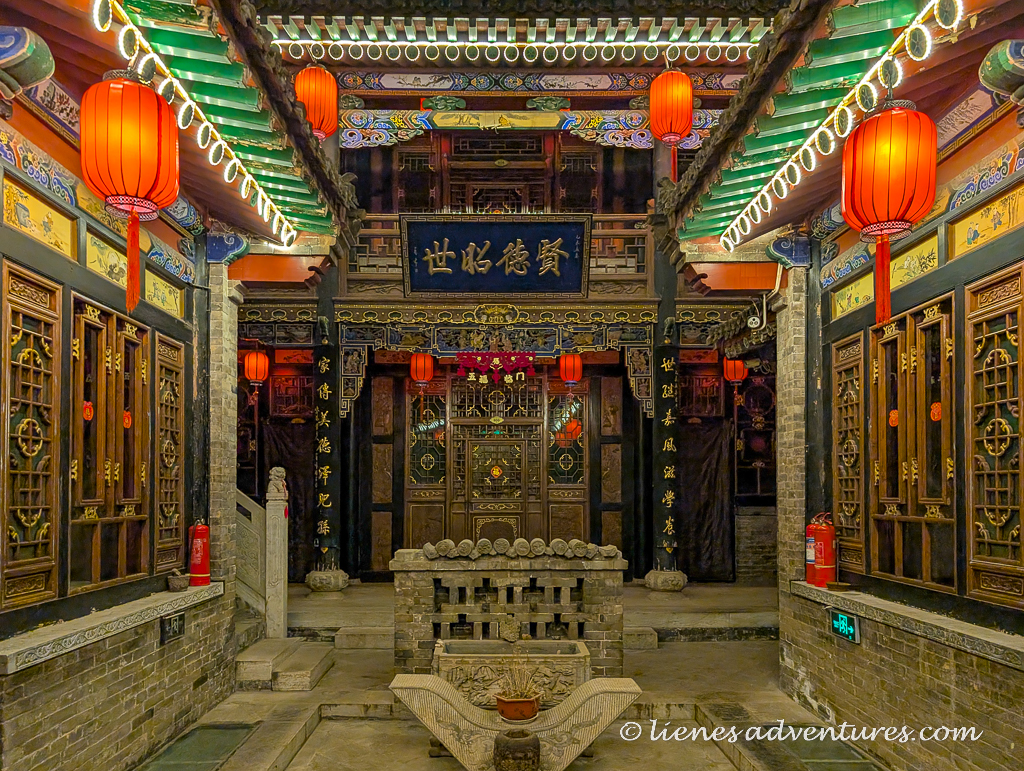
After dinner, my kids had no energy left for any more walks. They just wanted to return to the hotel and watch cartoons. And maybe it wasn’t that bad of an idea after all? As we got back to the hotel, its inner courtyard was beautifully lit. I was so glad I chose our hotel inside the Ancient City. It was like living in a little historical time-capsule.
With their jammies on and cartoons playing, the boys were happy to settle down for the night. My husband and myself, on the other hand, had plans of our own. During the day, we had noticed many massage spas offering manicures, pedicures, cupping, traditional and Chinese massages and the like… A calm, relaxing evening with a traditional Chinese massage was exactly what we were missing. For just ¥199 ($28) each we got 1.5hr long massages with pedicures as an unplanned bonus.
That was a nice end to our second day in Pingyao. And on our walk back, we could enjoy the lit-up streets that slowly started to get emptier and quieter...
DAY 3, February 16
WANG FAMILY COMPOUND
The morning started with hotel’s breakfast again, after which we had finally decided to venture a little bit outside Pingyao Ancient City. Just an hour’s drive away was a very popular historic attraction – Wang Family Compound.
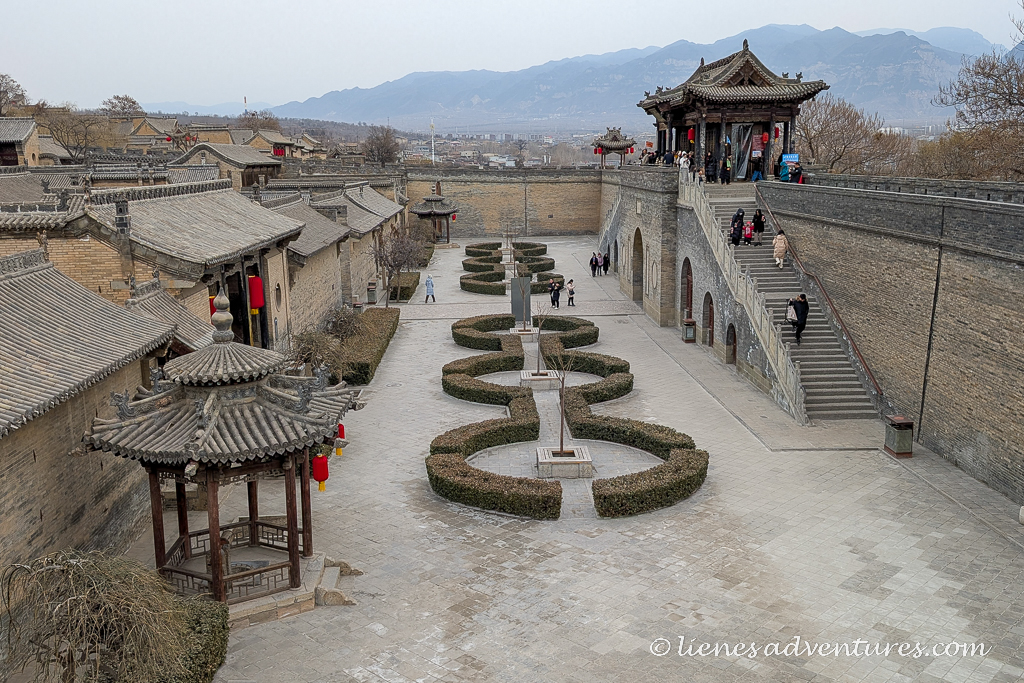
In the reign of Yuan Dynasty (c.1312), Wang's family started farming and selling tofu. From peasants to commerce workers, from businessmen to government officials, Wang's family started to thrive and became rich, and their wealth got turned into a lot of real estate generation after generation. Eventually, they built a huge complex of buildings.
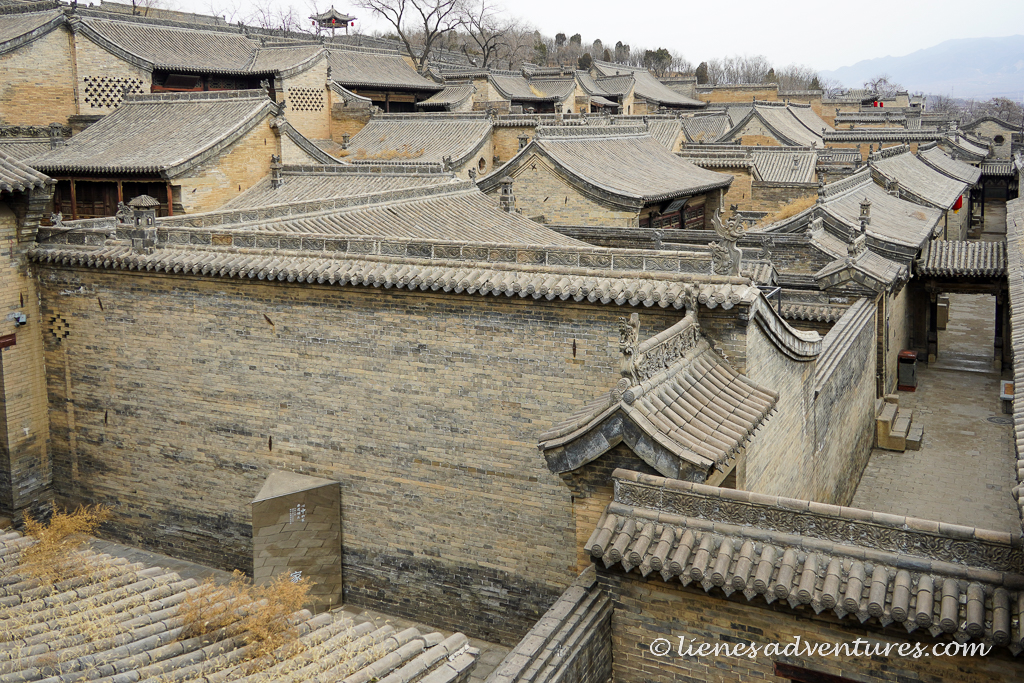
Wang Family Compound was the biggest and most classic residential compound in Shanxi Province, with a total area of 250,000 sq. meters. In all there were 231 courtyards and 2,078 rooms on the site. The four circles of walls were multi-tiered, protecting different layers of dwelling areas from outside threats.
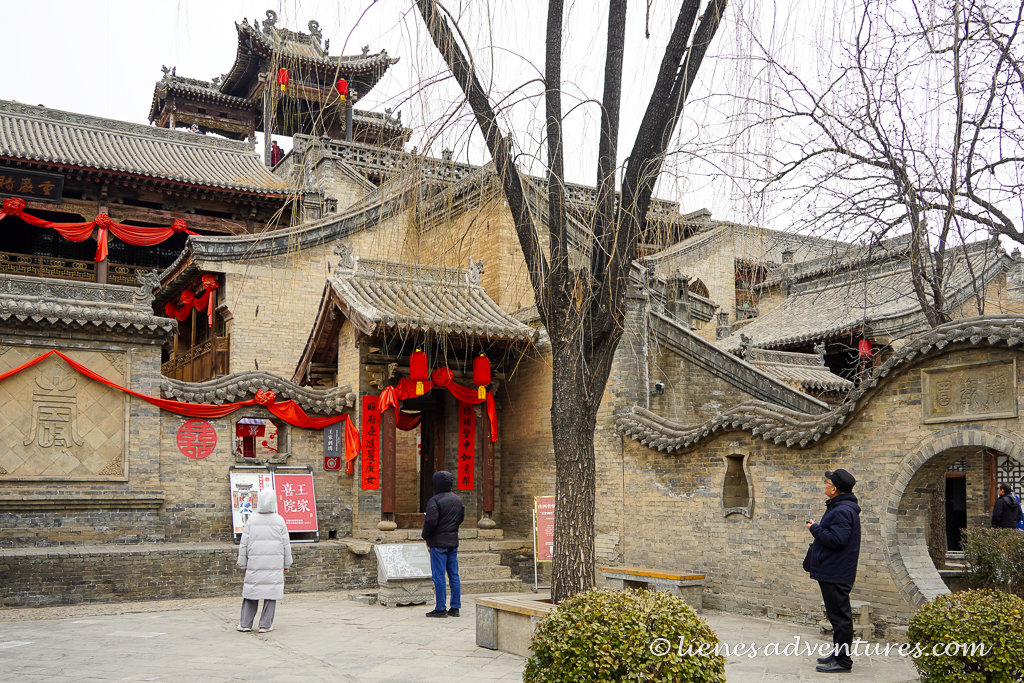
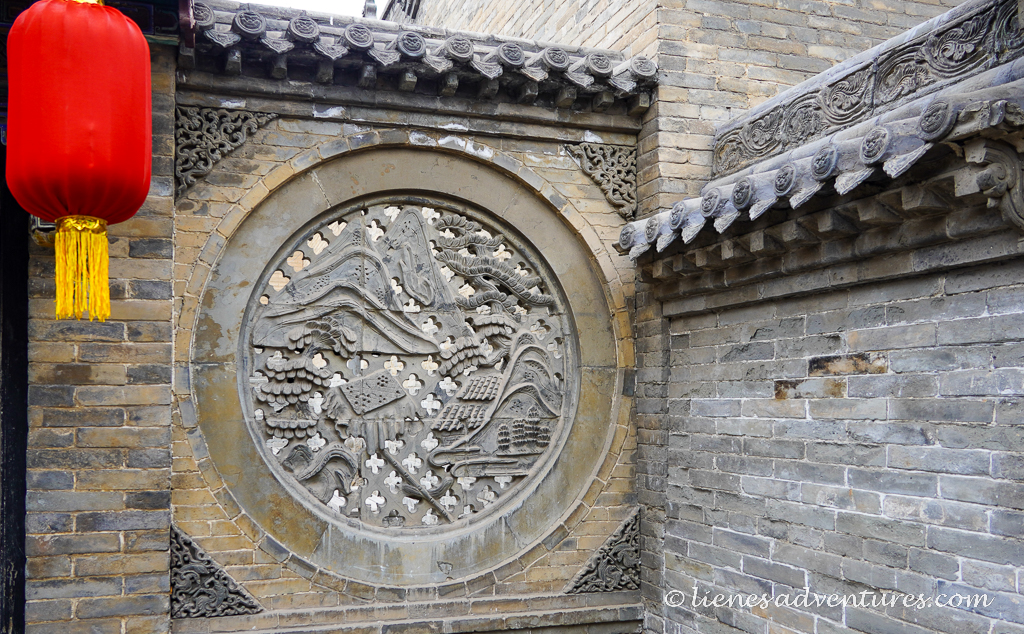
Within the courtyards were rooms, kitchens, schools, gardens and prayer pavilions. The ornate stone, brick and wood carvings had themes based on folk customs and folk arts.
As we were walking the complex and exploring various rooms within it, we got approached by a group of Chinese students. They wanted to know where we were from and if they could take a picture with us. That was something we had already grown accustomed to here in China over the past few months… Seeing that we had agreed to photos with the students, a group of girls dressed in traditional Chinese dresses ran up to us and wanted to take photos as well…
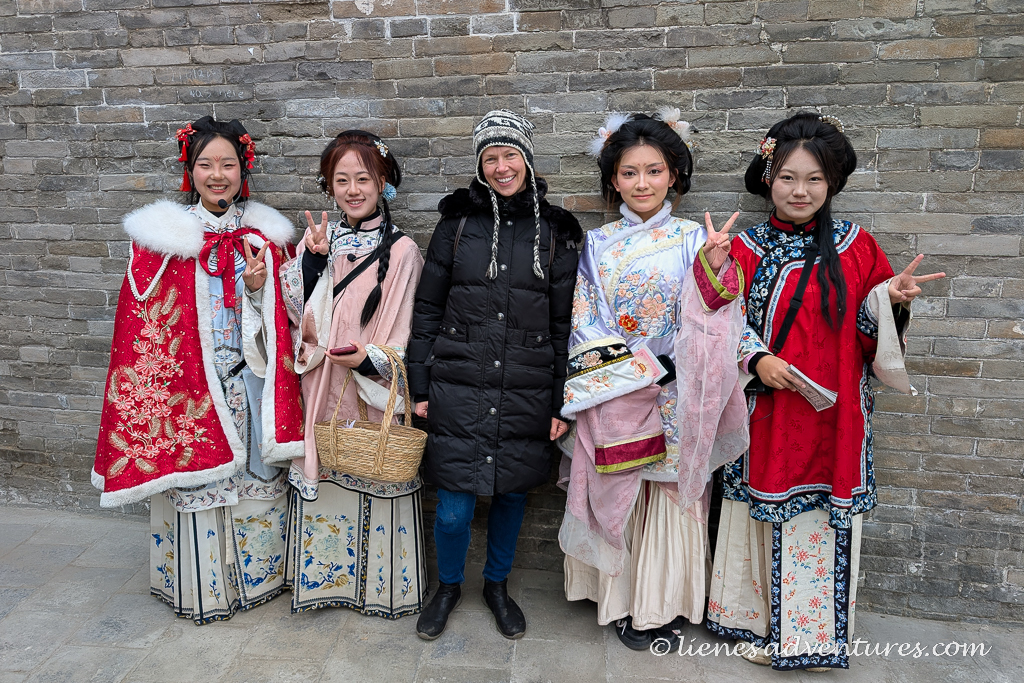
After the photo session was over and we started moving along, the students followed behind… Eventually they asked if it would be OK with us if they tagged along. It was an odd request, but I guess they just wanted to practice their English. Everywhere we walked – they walked. And so it went on for over an hour! Definitely the strangest tourist experience so far, but in the end, it actually worked out quite alright. They were students at a local university and had a lot of knowledge about the Compound, the Chinese art that was displayed here as well as various symbols and their meanings. They were very eager to answer our questions, even if that required the help of a translation app.
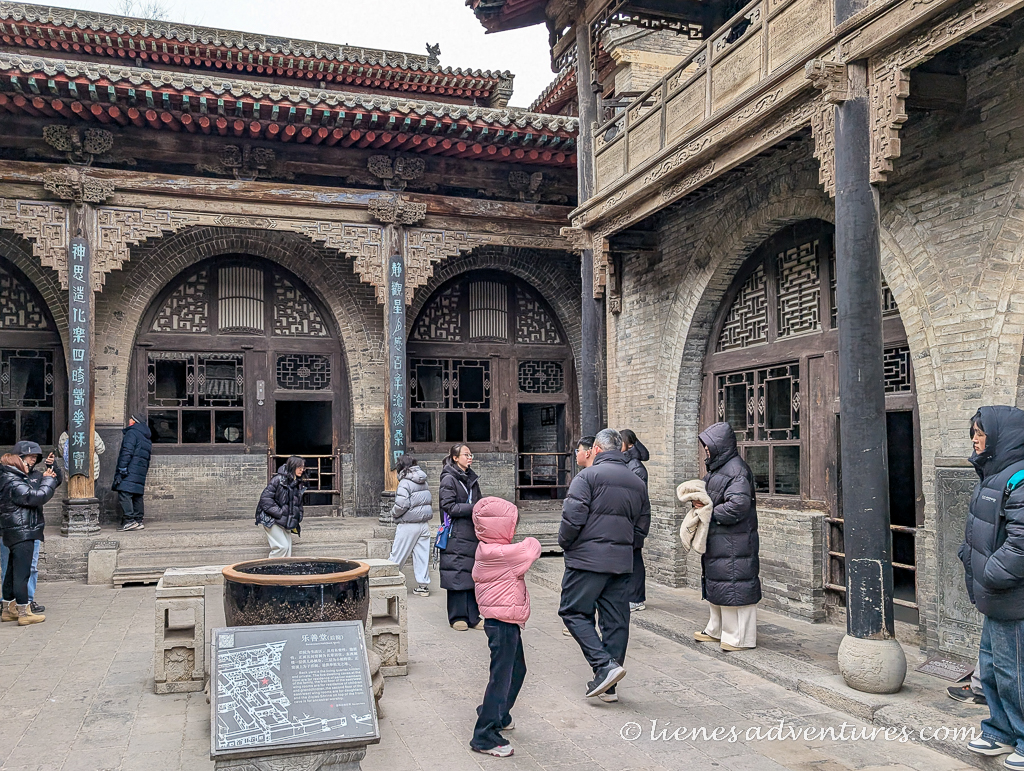
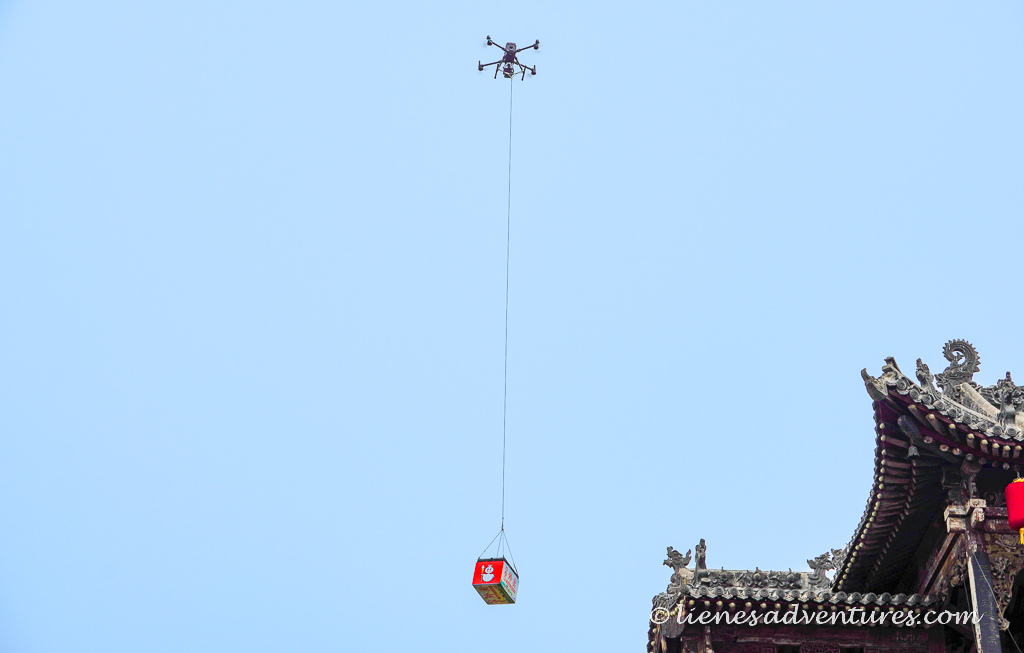
The most exciting part of the day for our boys was the drone delivery service that was available here. At the upper level of the compound was a pagoda with a little helipad and a QR code poster. Scanning the QR code brought up a menu, and the selected food or drink got delivered to the landing pad by a drone just a few minutes later. Those drones definitely kept busy as we saw them zooming back and forth pretty much non-stop.
A few hours at the complex were enough for us. The day was quite gray and chilly, and the kids started to complain about getting cold. And to be honest, I was growing a little tired of the following we had… So, we bid farewell to the students and made our way back to the car.
SHUANGLIN TEMPLE
Just a few kilometers before reaching Pingyao, I had noted down another popular stop. Famous for its more than 2,000 pieces of Song, Yuan, Ming and Qing dynasties colored sculptures, Shuanglin Temple was recognized as part of the UNESCO World Heritage.
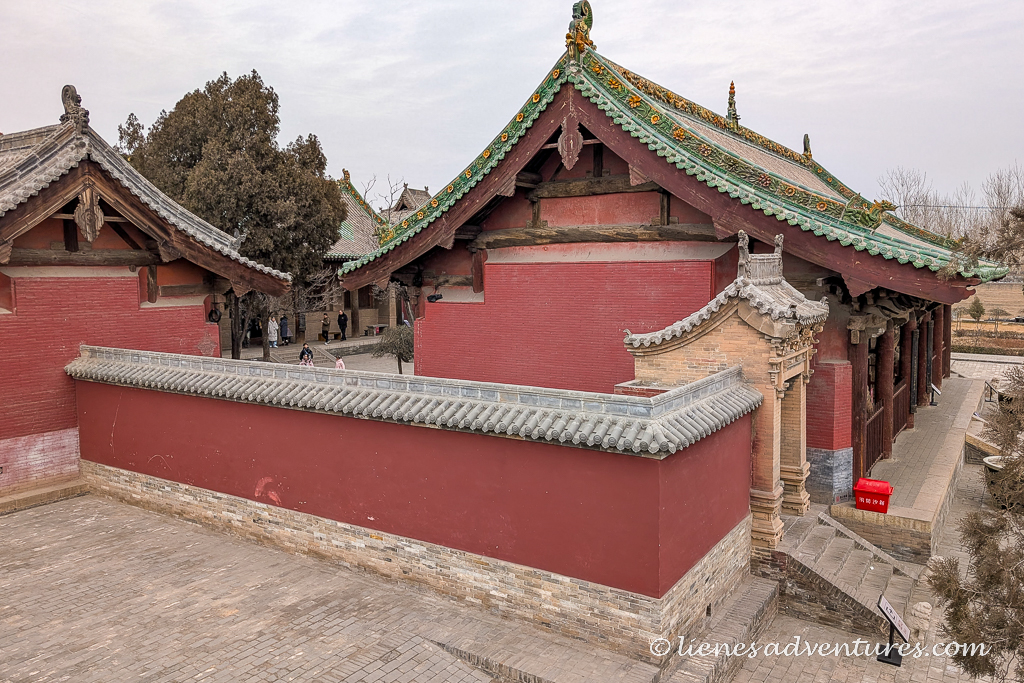
For a small fee, we entered the temple grounds and started wandering around. To be honest, it was quite underwhelming. Or maybe we were just so templed-out by now that choosing to visit yet another temple did not give it a fair fighting chance. I snapped a few pictures, walked a part of the fortified wall, and after some 15-20 minutes we were ready to leave. In our opinion, many of the temples we had seen at Pingyao Ancient City seemed far superior and more magnificent.
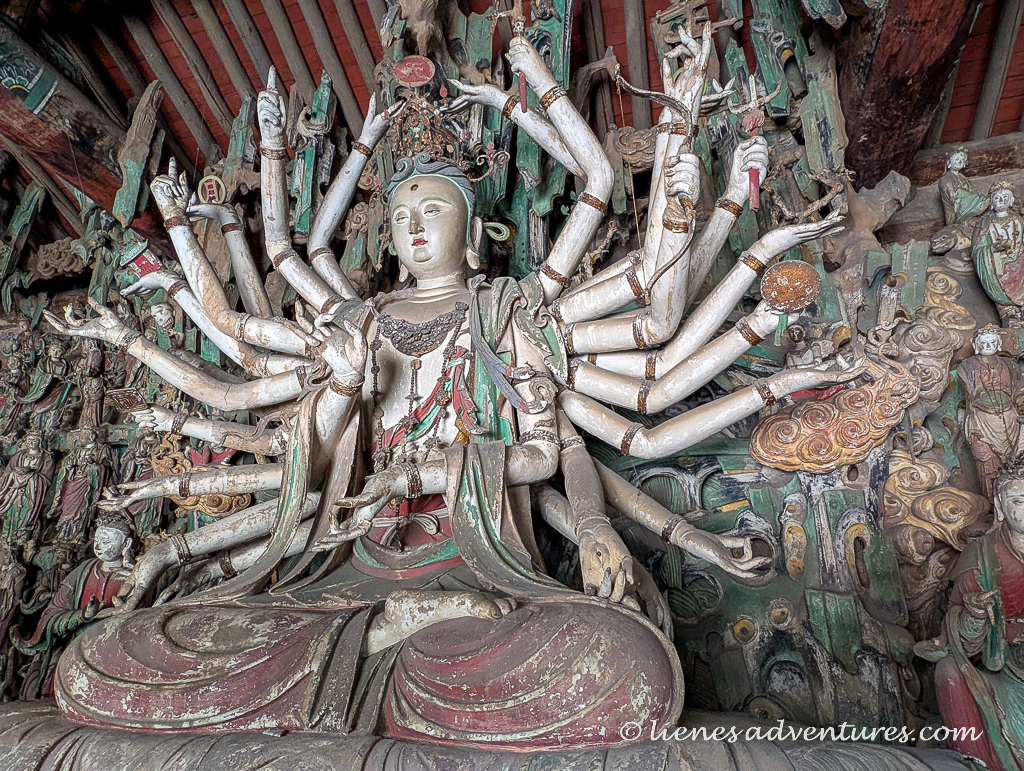
However, we were not art or history experts and had no right to judge a place’s historical value or significance. I am sure there was a reason why this temple was part of the UNESCO Heritage.
A local market near-by was selling themed ice cream, popular in China, where the ice cream is shaped into famous Chinese landmarks. This was the highlight of the stop for my boys!
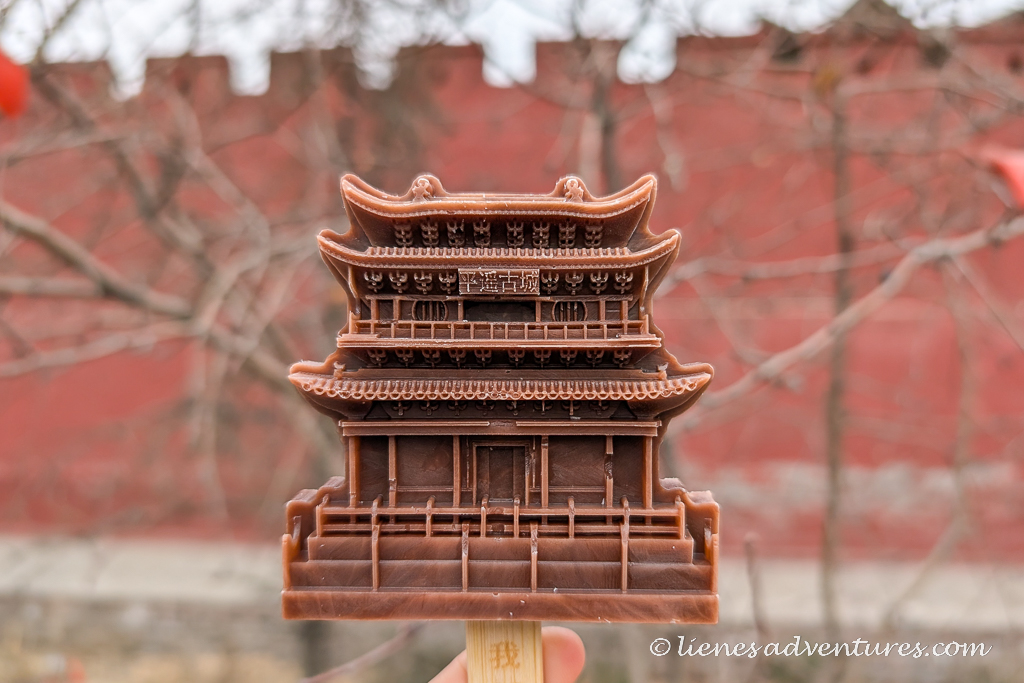
As we made our way back to Pingyao Ancient City, we discovered that all the public parking spots near our entrance were taken. The hotel owner immediately came out to help and directed us to a private dirt parking lot hidden deep into the maze of local streets. It was someone’s car-shop courtyard doubling as a parking lot for extra income of ¥20 ($2.80) per day.
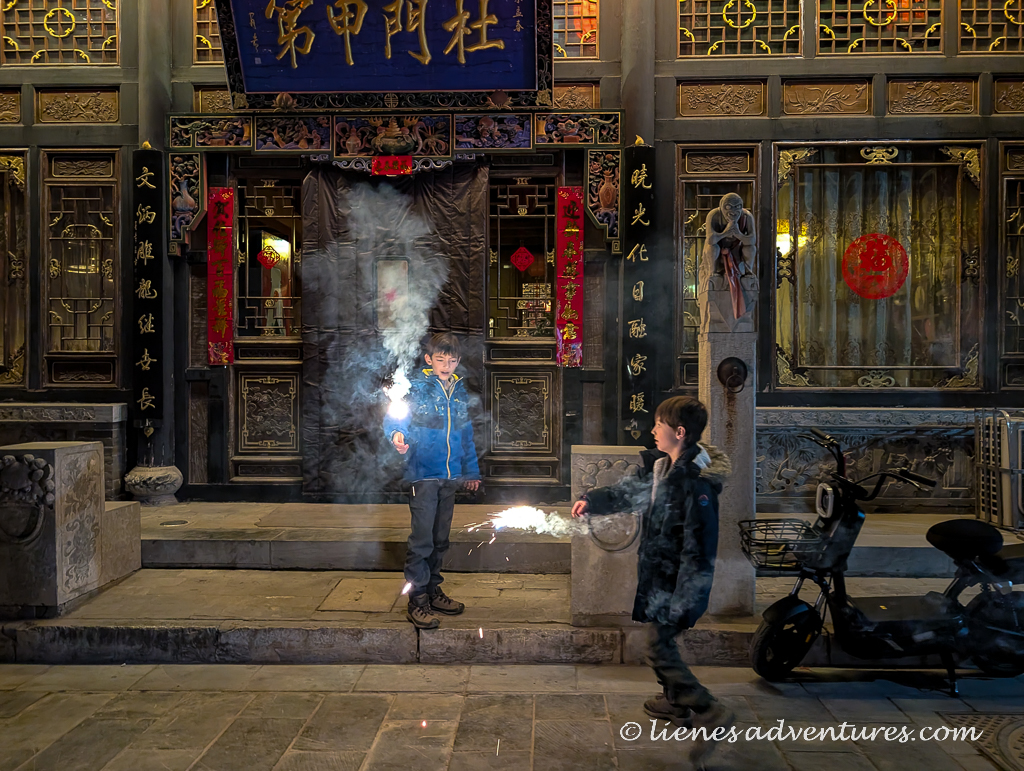
With the car successfully parked, we returned to the hotel. As it was our last night here, and the Eve of Chinese New Year, the hotel’s owner had prepared some sparklers for our boys as a way of little celebration. He also brough us a big plate of various treats – candies, chocolates, nuts, fruit and seeds along with hot tea. I was so happy I had chosen to book this hotel – the owner was an amazing person and a very gracious host, asking nothing in return. It truly made our stay here in Pingyao extra special.
Around 23:00, we were all tucked in our beds ready for a good night’s sleep… Right around 23:45 lots and lots of “boom” and “bang” and “boom” started going off everywhere! Those were fireworks being set off all around the Ancient City. Although fireworks were prohibited inside the Ancient City Walls, outside - fireworks were legal. And locals did not hold back. The colorful explosions took some half an hour to calm down until we could finally go back to sleep. Our first Chinese New Year was in the books!
DAY 4, February 17
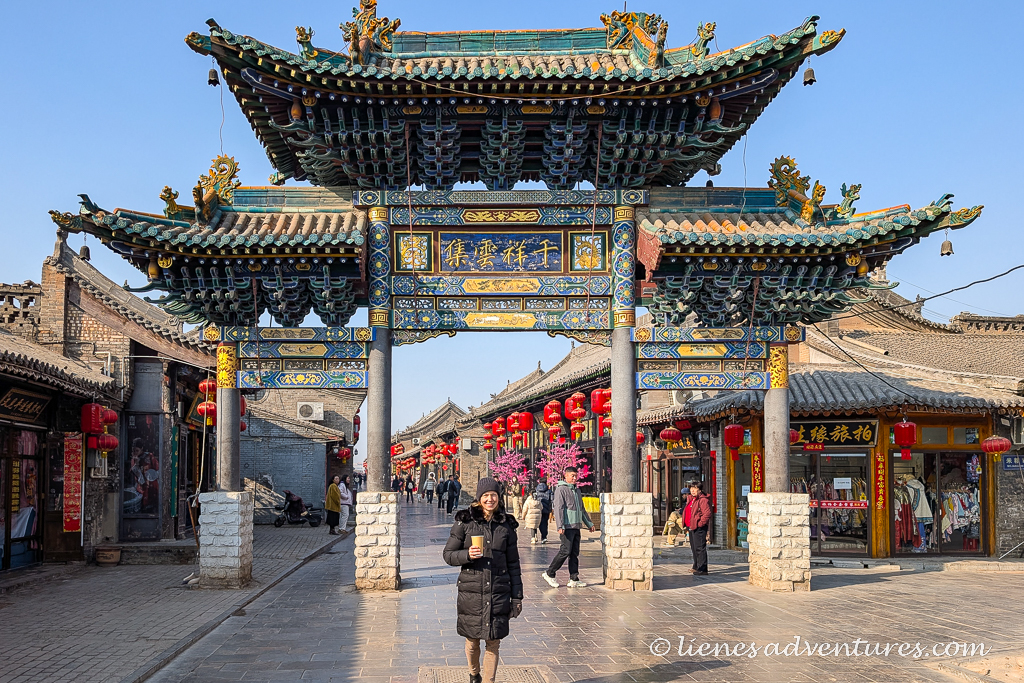
After we woke up in the morning, we decided that we weren’t really in a hurry to leave quite yet. Instead, we walked out into the Ancient City streets just to take a short walk through it one more time. This morning, it was much more crowded than we had used to seeing. It was officially Chinese New Year, and people were out and about – with their kids, their families, their elders. All the little shops that used to open only in the afternoon were already displaying their goods ready for several long and busy shopping days ahead.
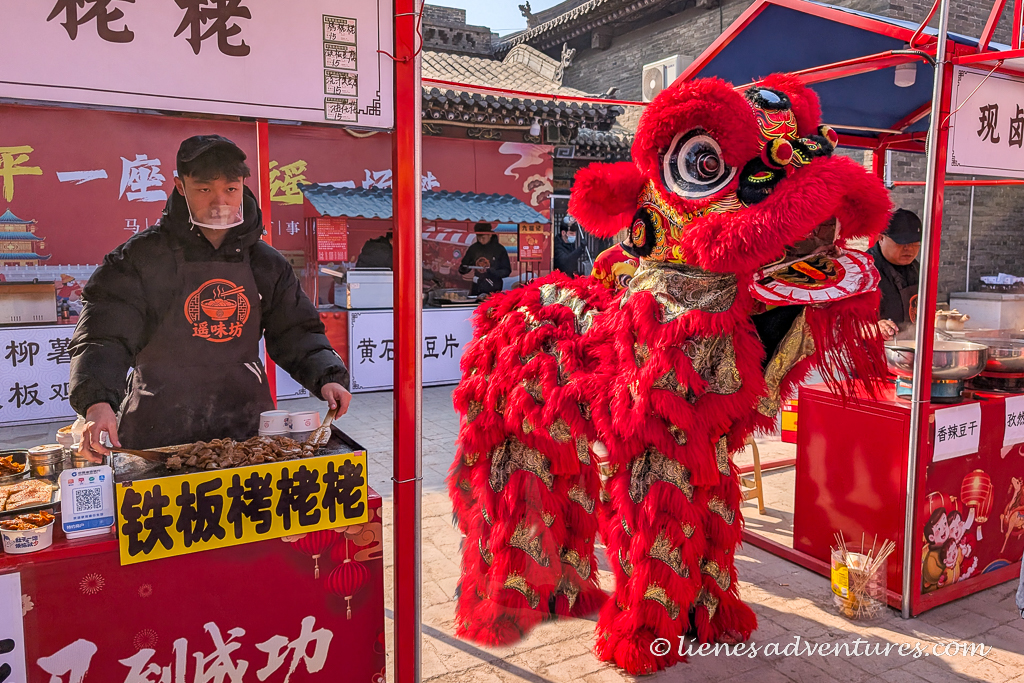
A traditional Chinese Lion was welcoming visitors to the many food stalls. The Lion was an important symbol of Chinese New Year, said to bring good luck and ward off evil spirits for the upcoming year.
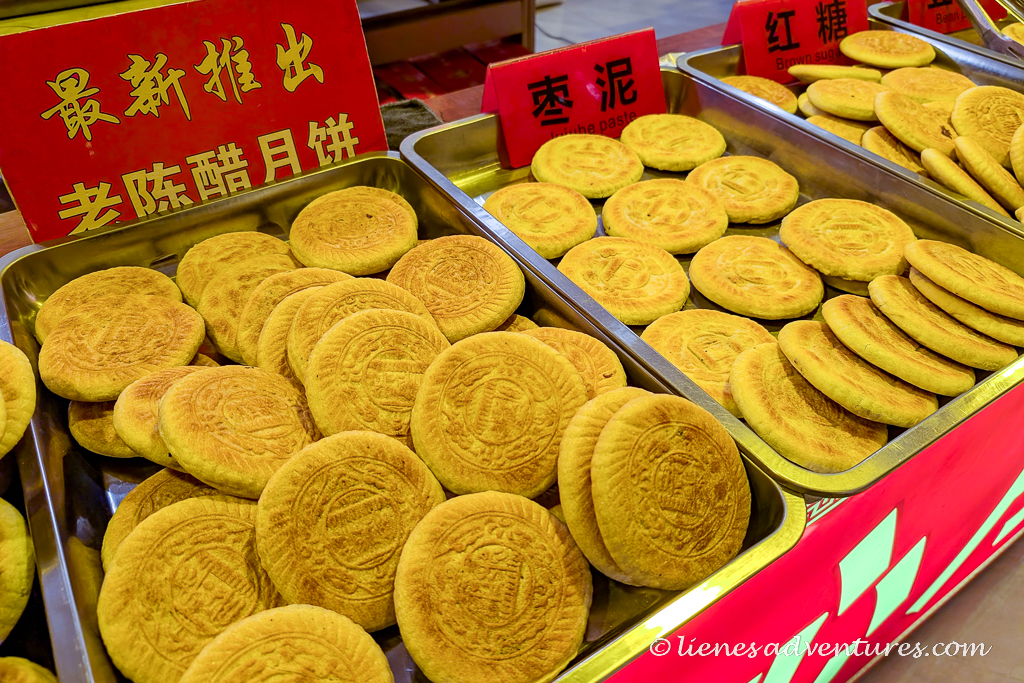
We stopped by several food stands and bought extra treats to bring home as a little souvenir.
As we were making our way back towards the hotel, my husband noticed a hand-drawn portrait shop. He wanted to make a portrait of our boys as a souvenir from the trip. It was a cute idea (although the boys themselves didn’t quite think so), so we sat down. Drawing both their portraits took quite a while and, as usual, a street crowd gathered around to watch them.
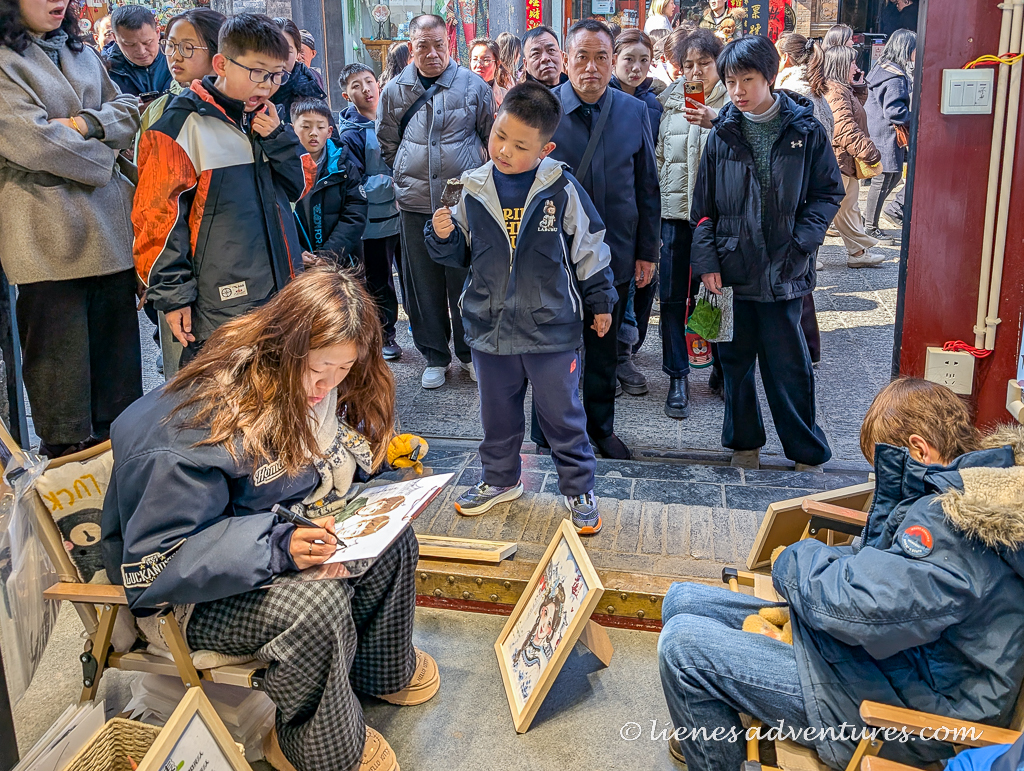
People frequently wanted to stop and talk to us or our kids. And we never rejected polite requests to take photos with us or the boys. I assumed it was Chinese people's curiosity about these odd strangers (us) walking among their midst... The only instances that made me uncomfortable were when locals started pulling out their cellphones filming my kids or video-streaming them over their phones, which started to be the case here...
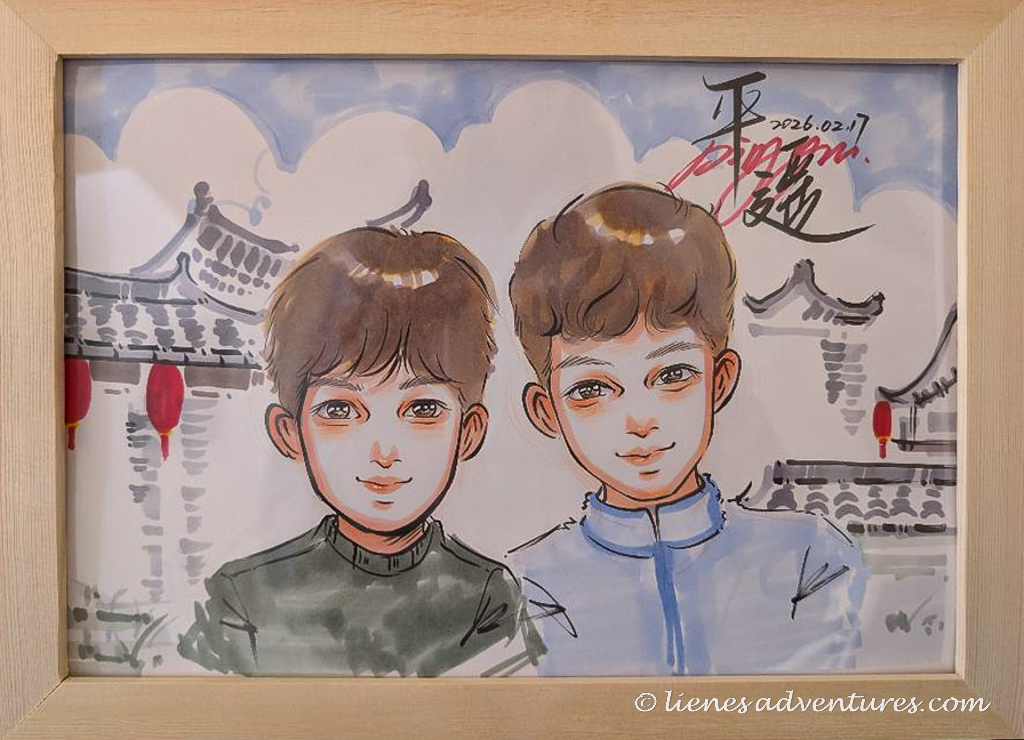
With the portraits complete, we were just a few minutes shy of the hotel’s noon check-out time. So, we rushed back, grabbed our luggage and had the owner scooter us back to the car parking lot. Just as we were saying our goodbyes, I noticed several long scratches on our rental car’s side which weren’t there the night before. Someone had had too much fun on New Year’s at the expense of our car. The hotel owner immediately contacted the parking lot owner who came out with a big bowl of rags and soap. When that did not take care of the problem, they contacted the car-shop owner who came out on his day off to unlock the shop and get a power buffer. With some wax, buffer and elbow grease, the scratches were soon gone. All the while, local kids entertained our boys by offering them kick scooters, toys, and some leftover New Year’s poppers. And the hotel owner came back with 4 bottles of fresh juice for us. I really did not mind the delay one bit. I was just amazed at how helpful and kind the local people were.
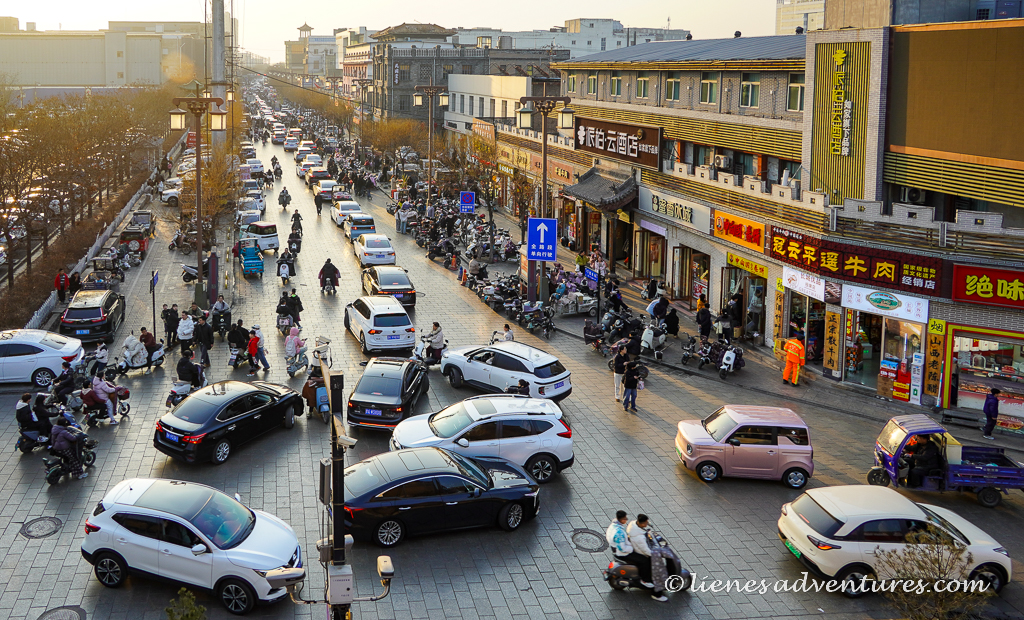
With the rental car back to its original condition, we were ready to hit the 600km (370mi) long road back home to Beijing. Our first Chinese New Year was a success! It was fun, adventurous and full of new experiences. And Pingyao Ancient City was a great choice for our first road trip!
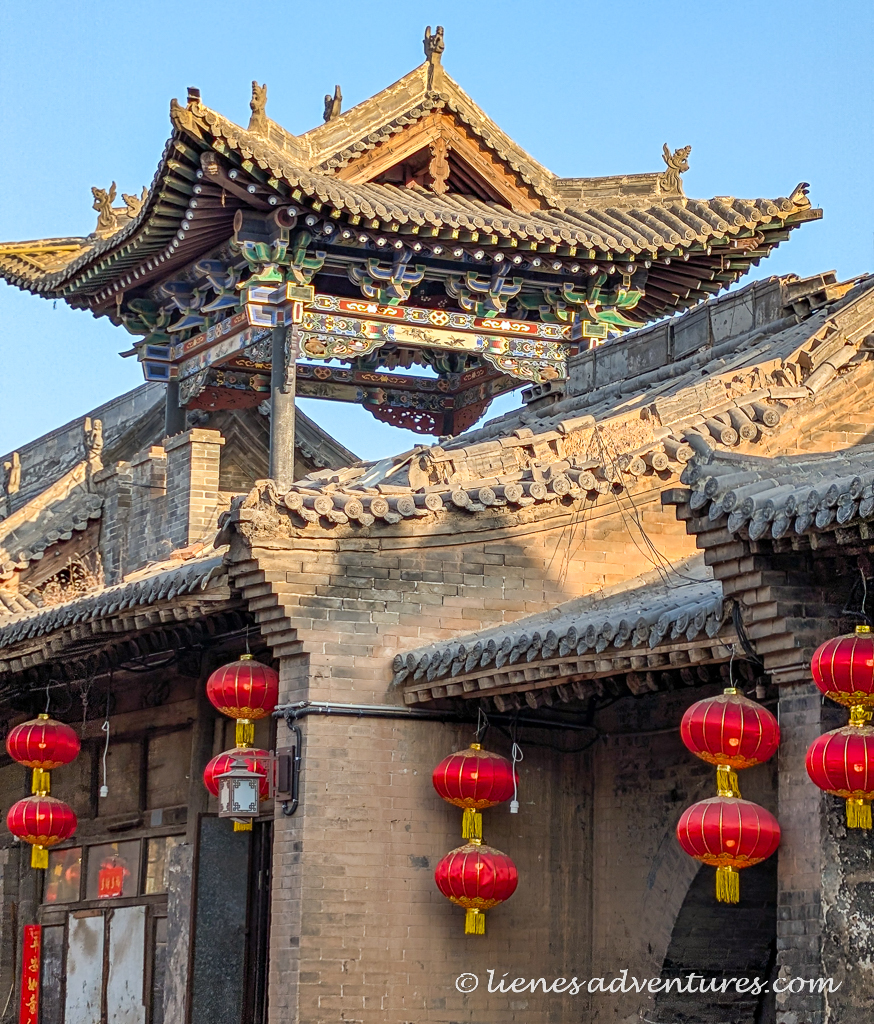
To read about our other travels around China, click here:
HIKING ALL 4 PEAKS OF MOUNT HUASHAN WITH KIDS AND A SPONTANEOUS VISIT TO TERRACOTTA WARRIORS
CHENGDE - IMPERIAL GARDENS AND TIBETAN TEMPLES. A WEEKEND TRIP FROM BEIJING, CHINA
DAY TRIP TO TIANJIN CITY FROM BEIJING, CHINA
3 DAYS AT HARBIN INTERNATIONAL SNOW AND ICE SCULPTURE WINTER FESTIVAL IN CHINA