6-DAY INNER MONGOLIA ROAD TRIP FROM BEIJING - HUITENGXILE GRASSLANDS, VOLCANOES GEOPARK, HOHHOT AND KUBUQI DESERT
-
Hits: 583
Out of all the trips we had taken in China so far, Inner Mongolia was probably the one I was looking forward to the most. With its contrasting landscapes, it promised to be a vastly different experience - from sunrises over lush, green grasslands to sunsets across dry, yellow desert; from horseback rides along a prairie to camel rides on scorching hot sand… And we were open to it all!
While there were quite a few package tour options offered for Inner Mongolia trips from Beijing, none really appealed to us. And the pricing was also inadequately high aka “tourist prices”. At the end of the day, we were not package-tour type travelers anyway, so I decided to plan and book everything myself. It was not the easiest trip to plan due to limited information available in English. The area was not yet a popular tourist destination for foreign travelers. And that was exactly why we wanted to visit it.
Day 1, June 19 – Beijing to HuitengXile Grasslands
Driving distance from Beijing to HuitengXile Grasslands was over 400km and would take us about 5 hours to complete. Therefore, we left the house at 7AM to reach the grasslands by early afternoon.
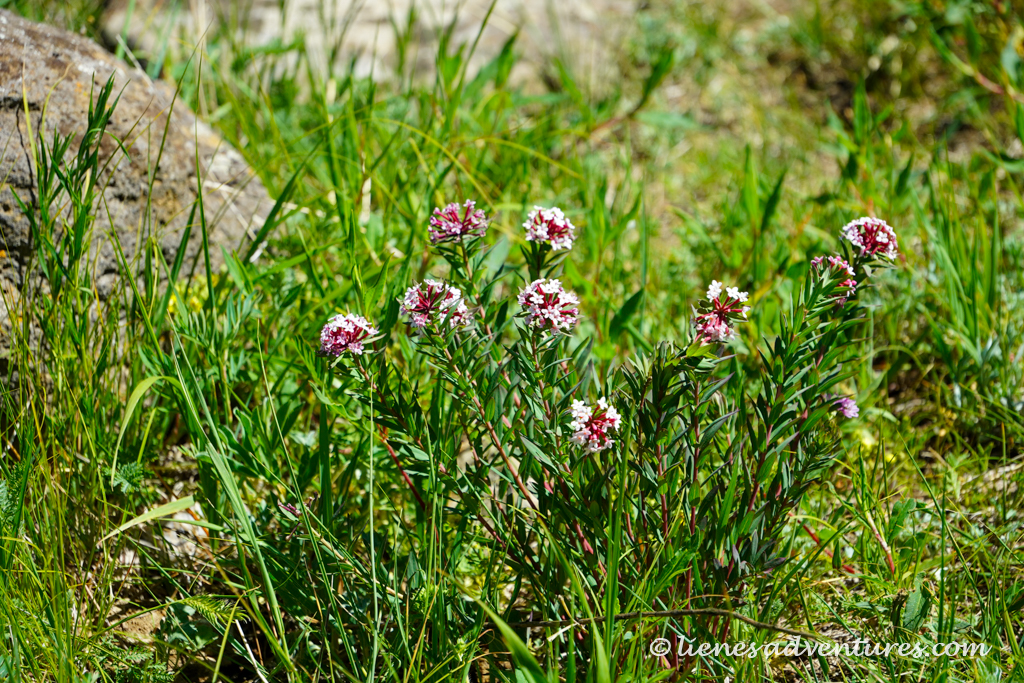
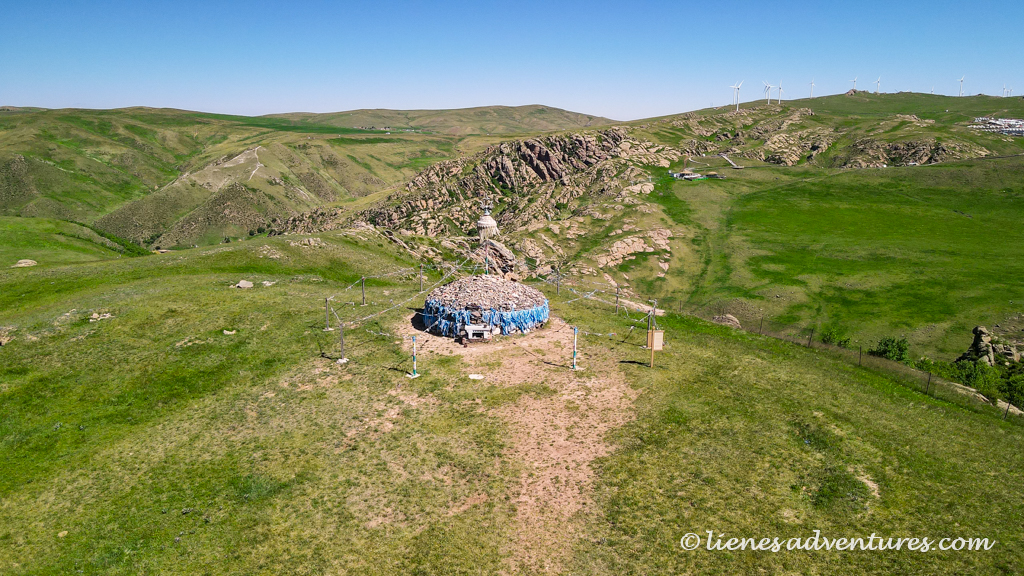
But what was so special about these grasslands? HuitengXile was an alpine meadow plateau — vast, high altitude pastures covered the landscape averaging at 2100 m (6900ft) elevation, filled with wildflowers, volcanic lakes, and endless skies. It was one of the best-preserved alpine meadow grasslands in the world, and definitely worth a visit.
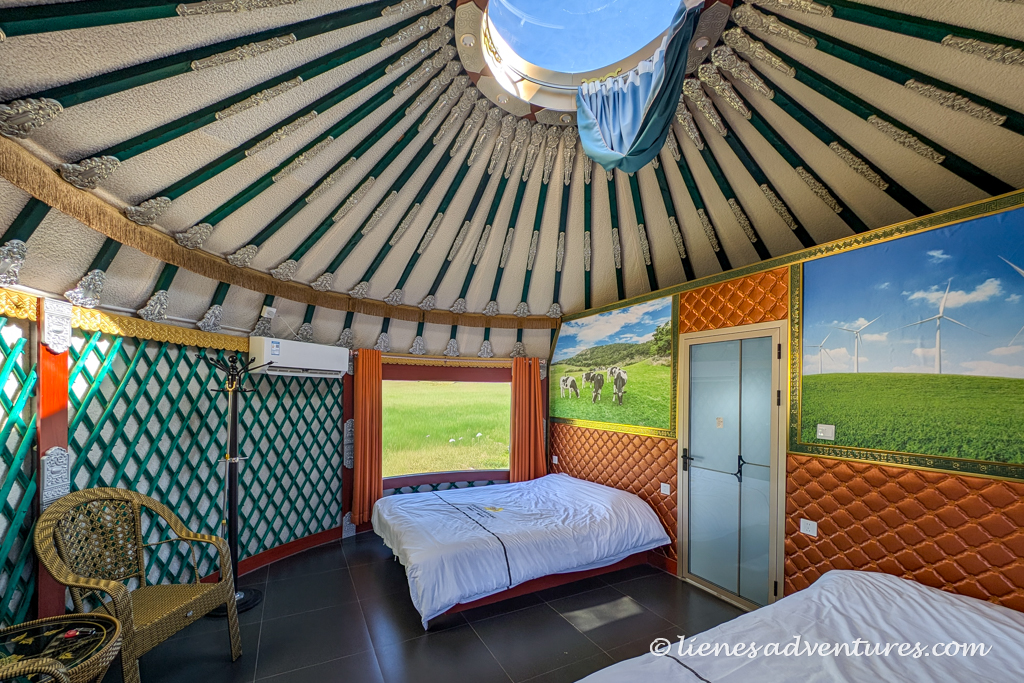
The first order of the day was to check into our accommodation and unpack the car. By far, the most popular way to spend a night at grasslands was by staying in one of the many traditional yurts. Mongols were nomads who constantly migrated across vast plains in search of new food sources. Yurts (called ‘ger’ in Mongolian) were easy to set up and take down and served as the traditional dwelling of nomadic families. Nowadays, tourists had a chance to stay in one of these gers, albeit quite upgraded - with electricity and running water (which, of course, was not the case for Mongol nomads).
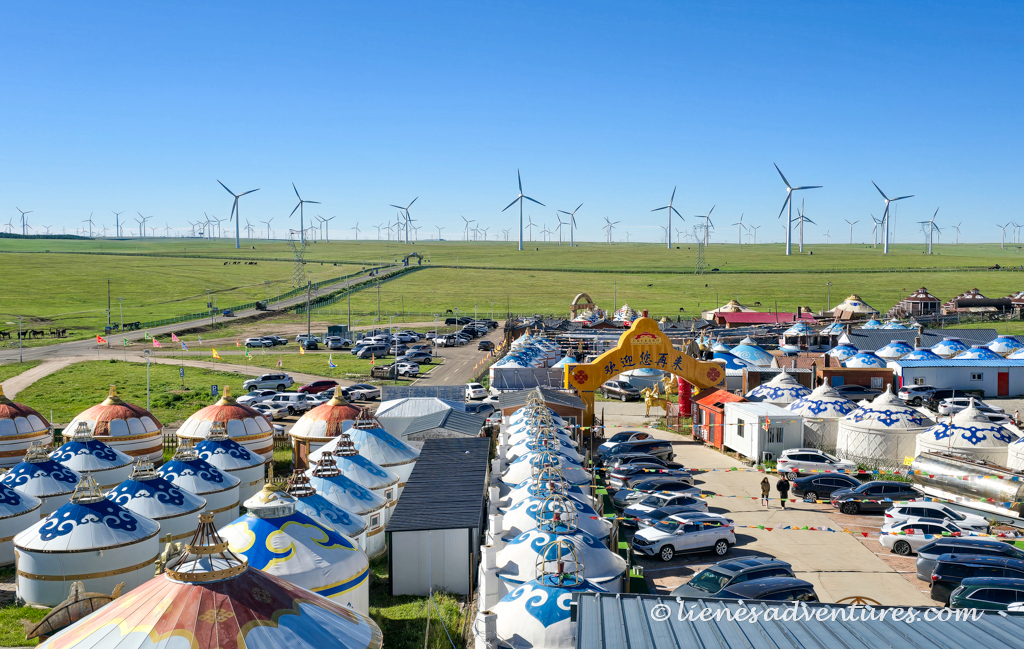
Our yurt was at the back of the encampment which provided unobstructed views of the grasslands outside our window.
After we had settled in, it was time to explore the area. On our first day here, the grasslands welcomed us with dark gray skies, threatening to rain at any minute. So, we decided to play it safe and hopped in the car to just drive around and familiarize ourselves with the area. While the dark skies looked somewhat intimidating, they gave the place a special aura – a wild, savage feel.
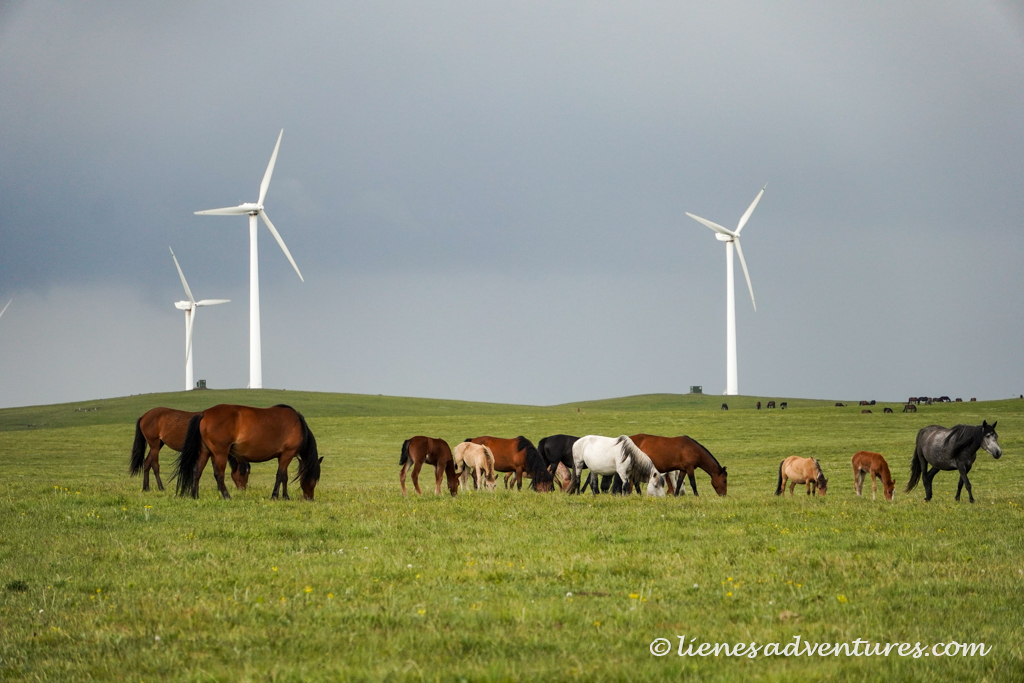
The most prominent feature of HuitengXile Grasslands were thousands of wind generators. HuitengXile was one of the largest wind farm regions in all of Asia. The high-altitude open terrain created strong, consistent winds, making it an ideal place for wind farming.
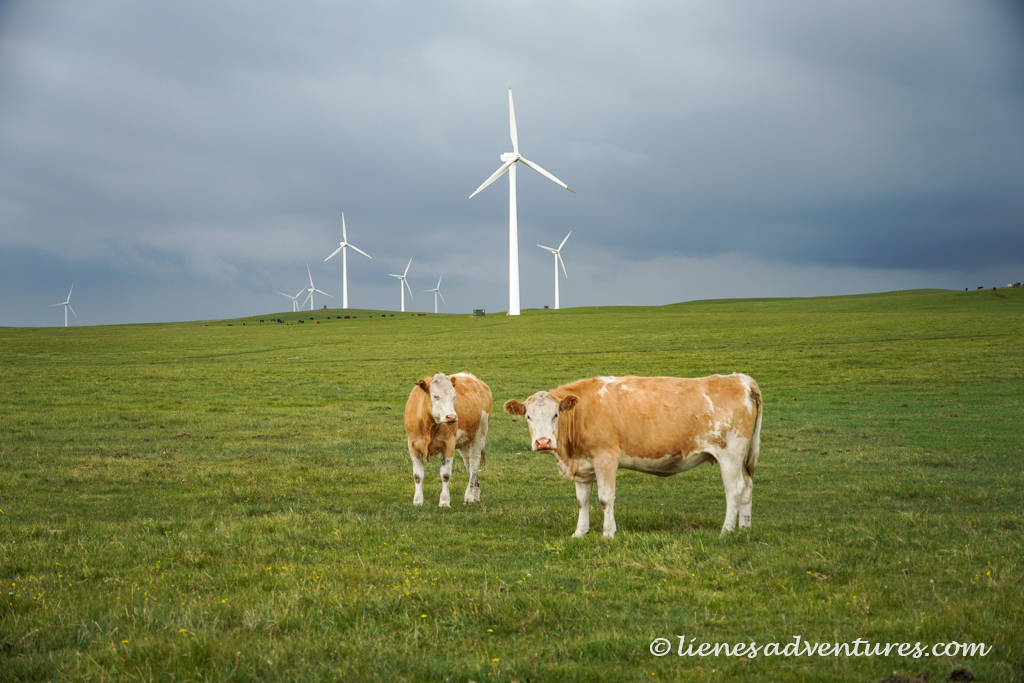
As we drove from place to place, we couldn’t not notice all the horses. Horseback rides were offered everywhere – with mighty steeds already tacked and lined up along fences and trees waiting on their next customers. Our kids reaaaaly wanted to ride a horse, and it was such a traditional thing to do here anyway, so why not. Even my husband agreed to get on a horse in support of the team spirit!
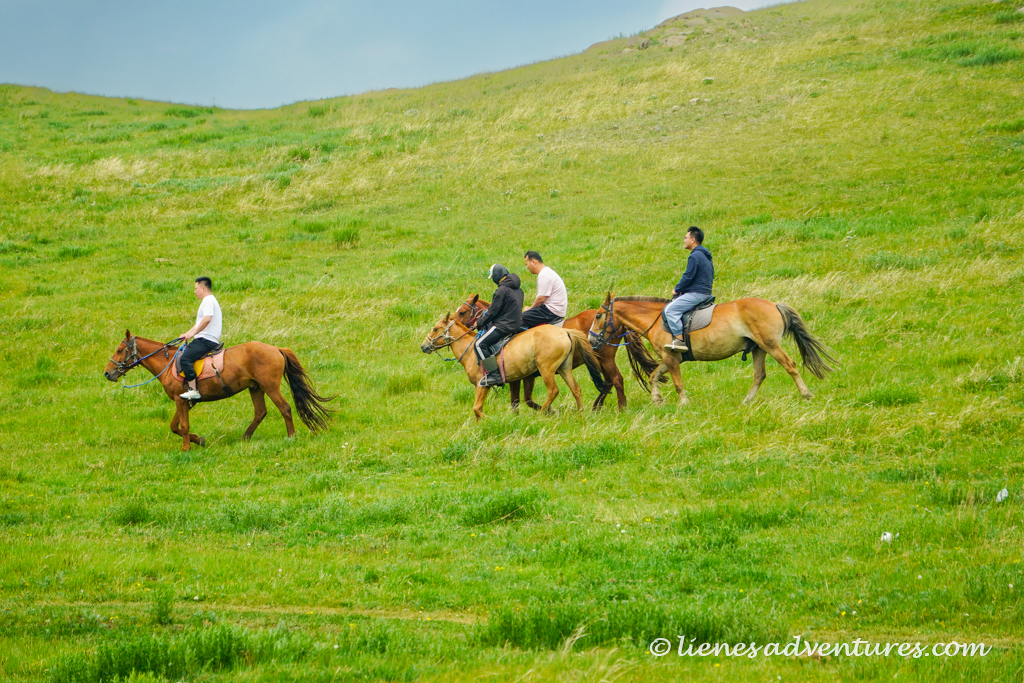
It cost ¥100 ($14US) per horse for a 30-minute ride, and that seemed to be the average going rate here. Each one of us got a horse, and off we went. This was not a wild ride galloping across prairies at lightning speed… This was a ride at walk, with a local person leading each horse. And having ridden horses for nearly 30 years, I was very thankful for that. While I myself could have galloped off into the sunset, the safety of my kids was more important. Over my decades long horseback riding career, I had seen what the dark side of riding accidents looked like. Therefore, I was perfectly content with a nice walk here for my kids. We went by a forest and to the lake, where the handler offered to take some photos for us, after which we started our walk back.
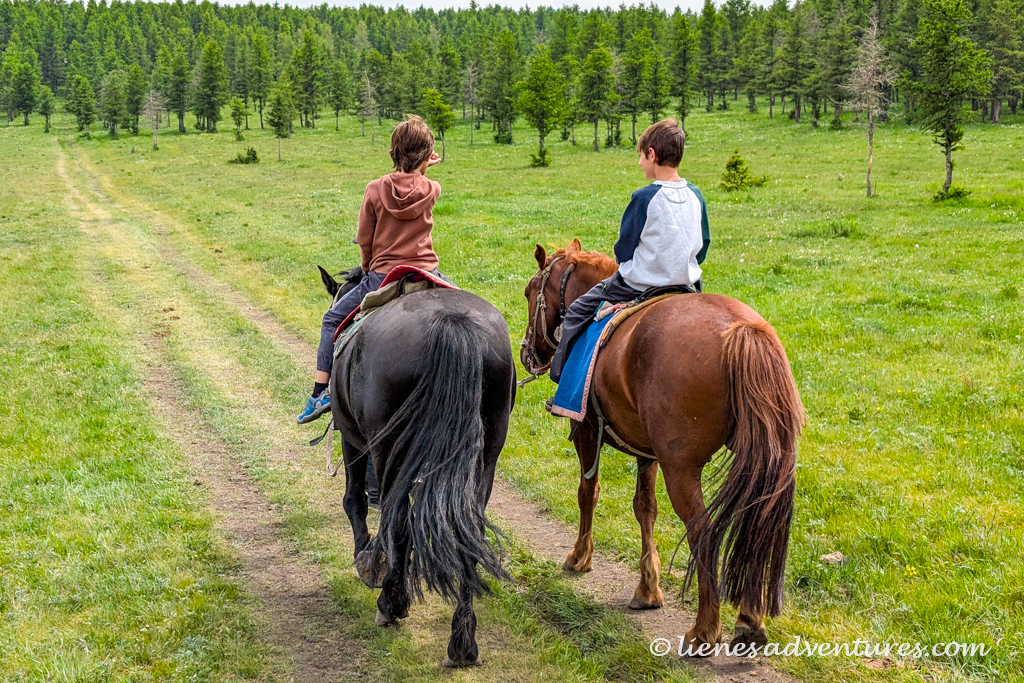
Just as we dismounted and got back into the car, the sky opened up and it started pouring! There was nothing left for us to do outside in this weather, so we drove back to our yurt hotel.
Despite the weather, I did not want to spend the rest of the evening just lounging on a bed. I walked down to the reception area and asked for some help arranging a Zhama Banquet Dinner for us. Making these booking in Chinese was not something I was capable of doing myself. The hotel front desk gladly helped and made reservations for us.
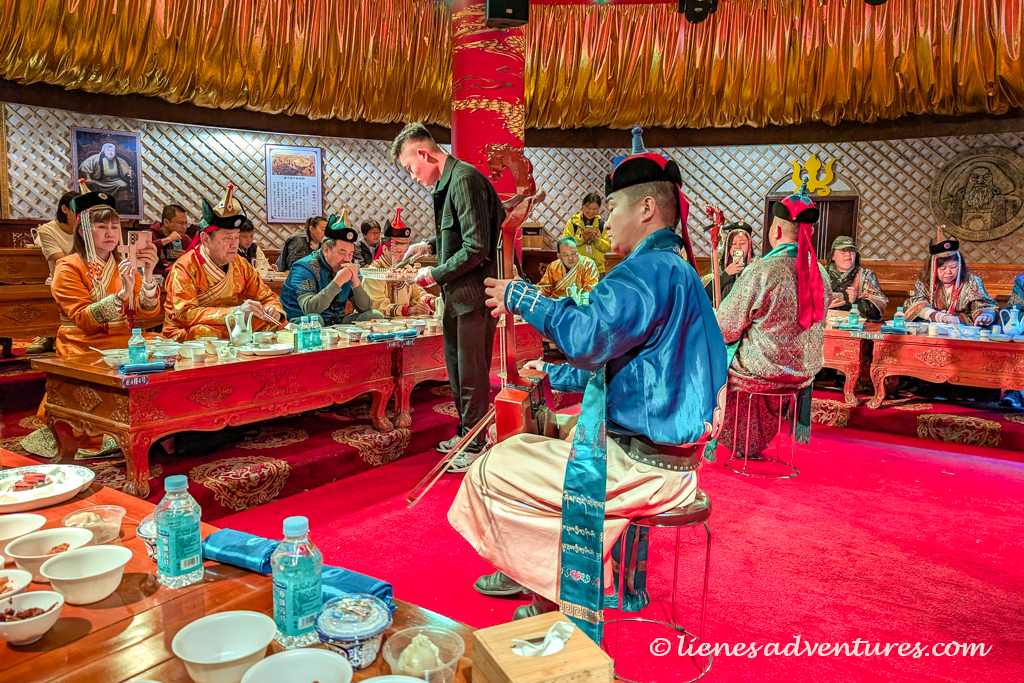
Zhama Dinner was a Royal celebratory Mongolian banquet that integrated dining with entertainment, including morin khuur (horse fiddle), urtiin du (traditional Mongolian long song), Khoomei (Tuvan throat singing), and other Mongol arts and dances. While there were several locations across the grasslands where these dinners were held, our event was taking place at the Huanghuagou Scenic Area South Visitor Center. Upon arrival, all guests, big and small, were dressed in aristocratic Mongolian outfits and then shown their seats at the table. Eating happened at the same time as the performances and servers kept bringing out different types of traditional Mongolian dishes. Some of them we enjoyed, some not so much, but it was a cultural experience worth having. And an amazing way to take part and get acquainted with Mongolian customs!
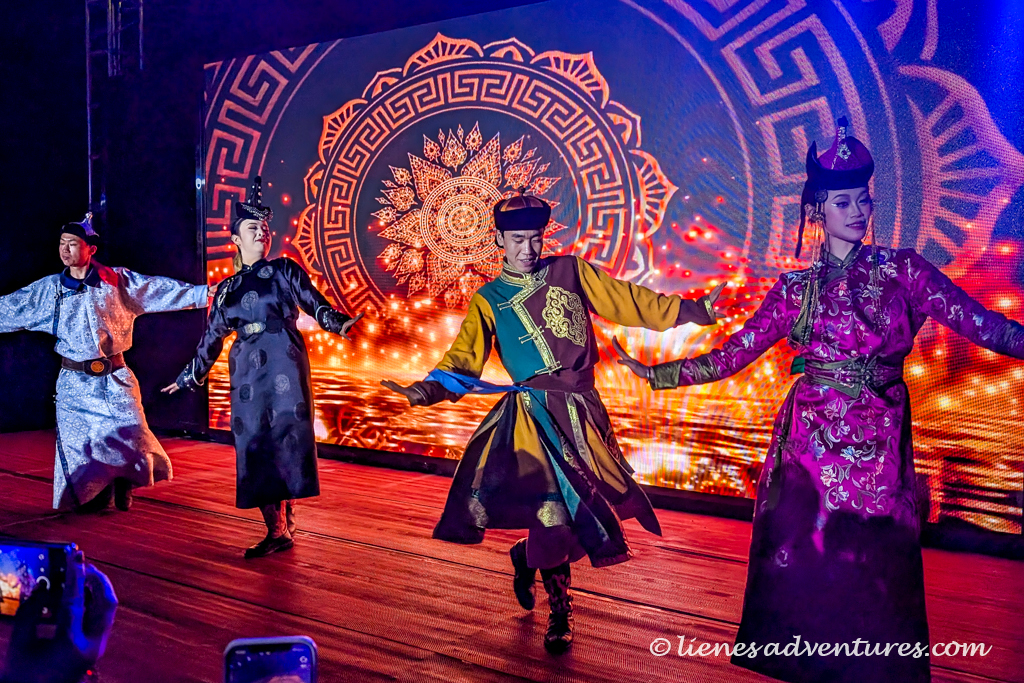
After dinner was finished, we walked outside and saw that the Visitor Center was hosting a bonfire party. It was another traditional event held at many locations across Mongolia, where a bonfire was lit after dark, and singing and dancing took place. The festivities just did not want to end… And there were even fireworks to finish the night! Mongolians really liked to live it up.
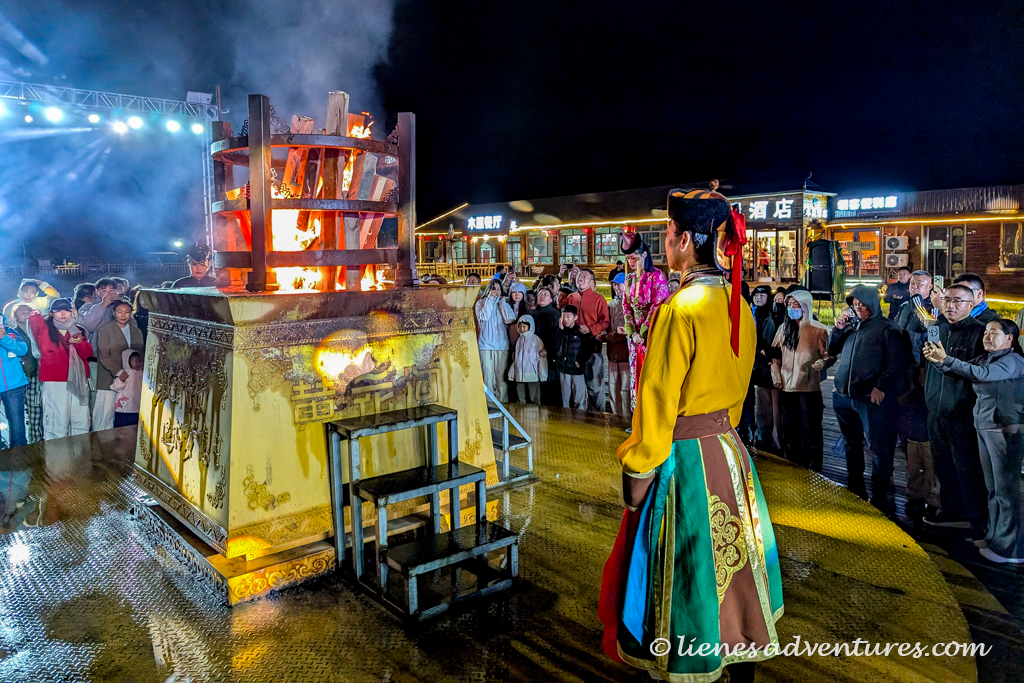
We, however, returned to our yurt for a good night’s rest.
Day 2, June 20 – Huanghuagou Scenic Area and WulanHada Volcanoes Geopark
As we opened our eyes in the morning, a completely different scenery was awaiting us outside. The sky was bright blue, and an endless sea of green grass was shimmering in the sunlight. This was shaping out to be a wonderful day!
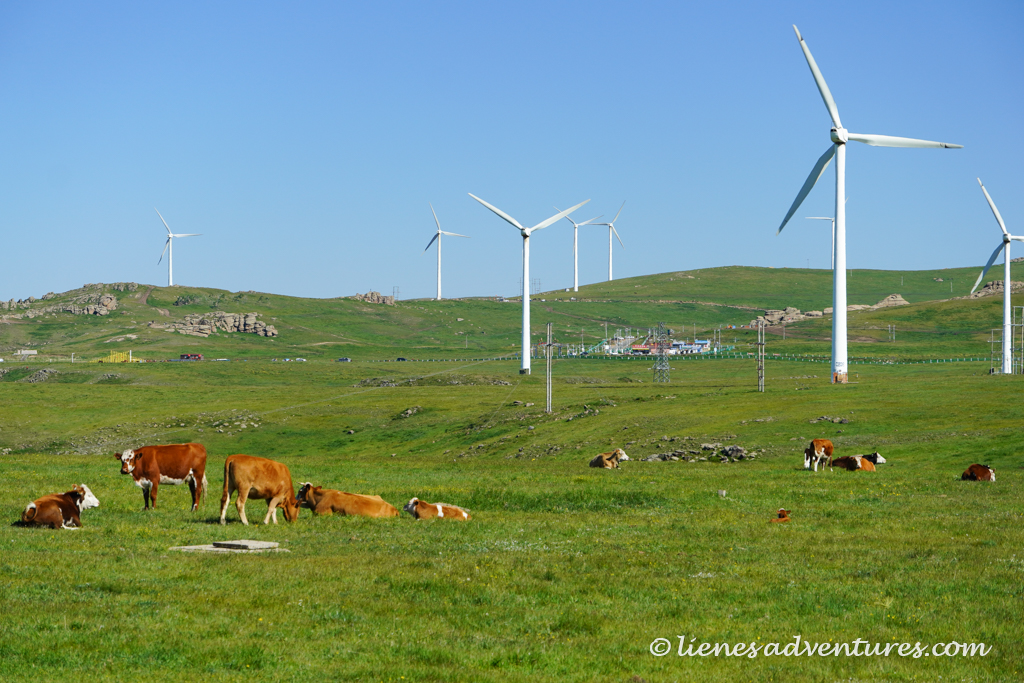
On today’s schedule was a visit to Huanghuagou Scenic Area, also called the Yellow Flower Valley. It was the core scenic area of HuitengXile Grasslands and a famous tourist attraction. It combined a high-altitude meadow with a deep glacial valley and rock canyon. While visiting the broader grasslands was free of charge, this particular attraction had an entrance fee.
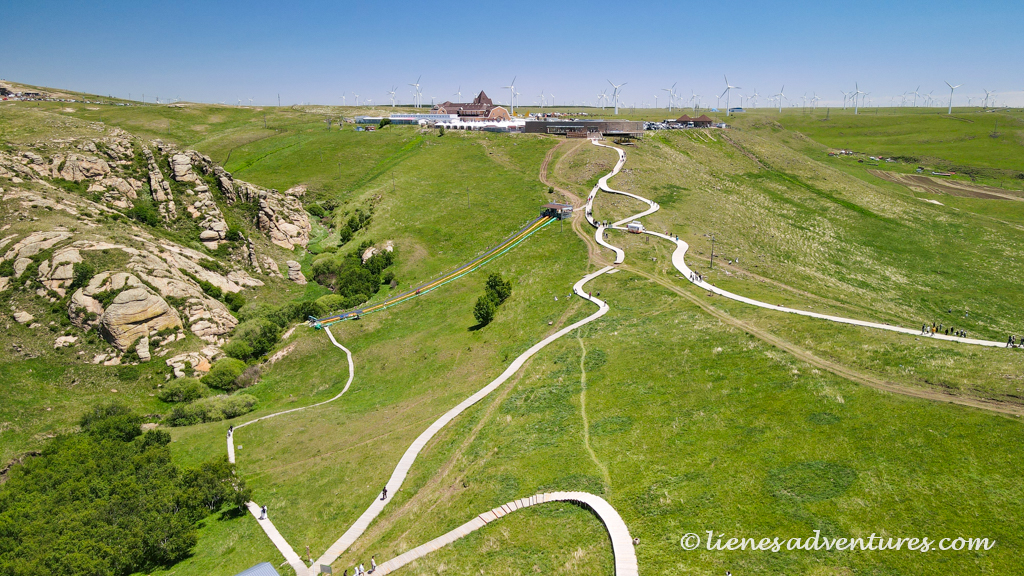
As we had a long day planned, we were one of the first people at the South Visitor Center. We purchased our entry passes and headed out to explore. The main sightseeing route was 16km (10mi) long and utilized a grassland train, cable cars, camel-drawn carts and shuttle buses to get tourists from point to point.
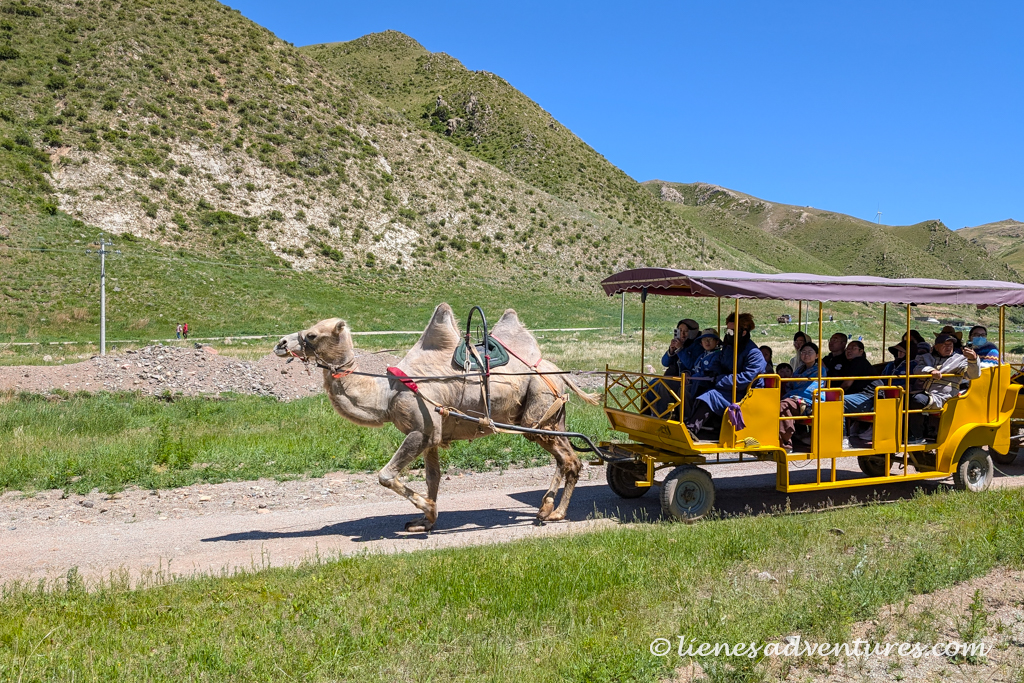
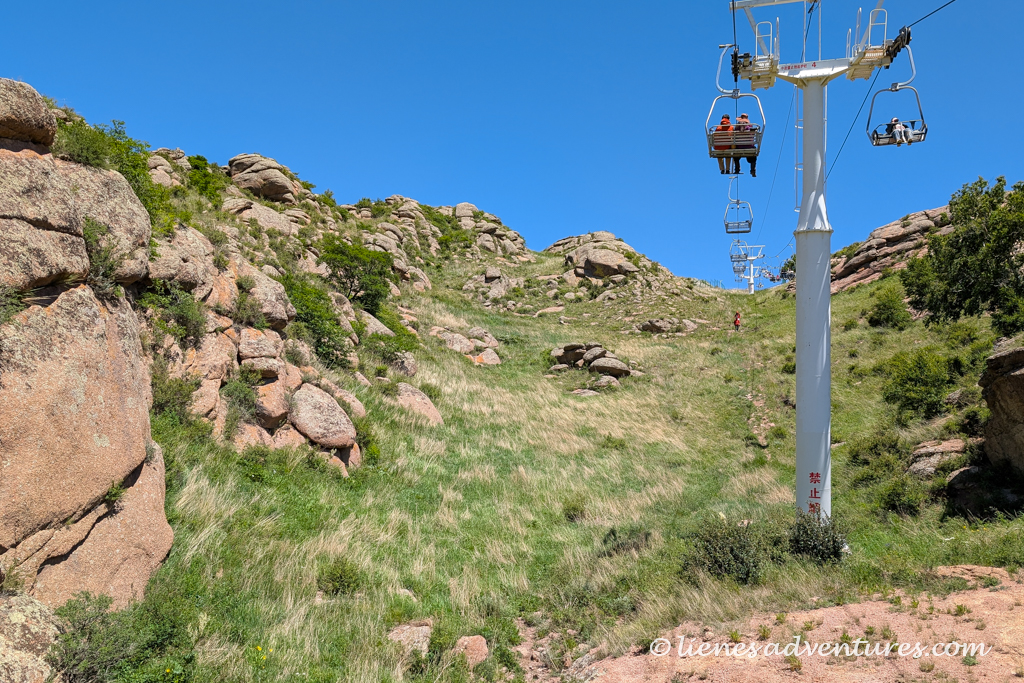
While theoretically the whole route could be hiked, it would require more time than we had available, so we opted to purchase the park transportation ticket. Altogether, it took us around 4 hours to complete the full loop without any rush. We managed to go on some walks on the park’s boardwalks. We stopped for ice cream and drinks. We climbed some rocks and looked at the sights. And we took a lot of photos!
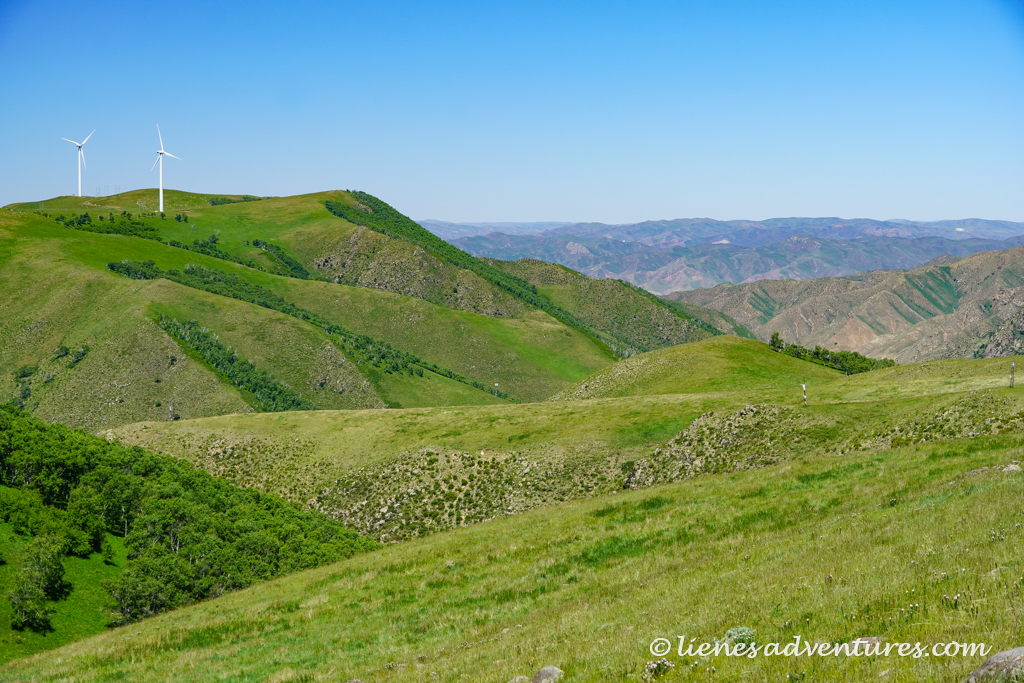
Just like many natural attractions across China, it felt too commercialized for our taste. Too many artificial attractions where nature could have been left alone to just enjoy… We were starting to get the feeling that Chinese people wanted to see nature, but they didn’t want to be inconvenienced by it – too much sun, too much rain, too much walking, too steep, too dusty, too rocky, too hungry… There was always an artificial solution to any of these “problems”. But that’s just a different culture and mindset than the one we were raised by. Neither one was better or worse… just different.
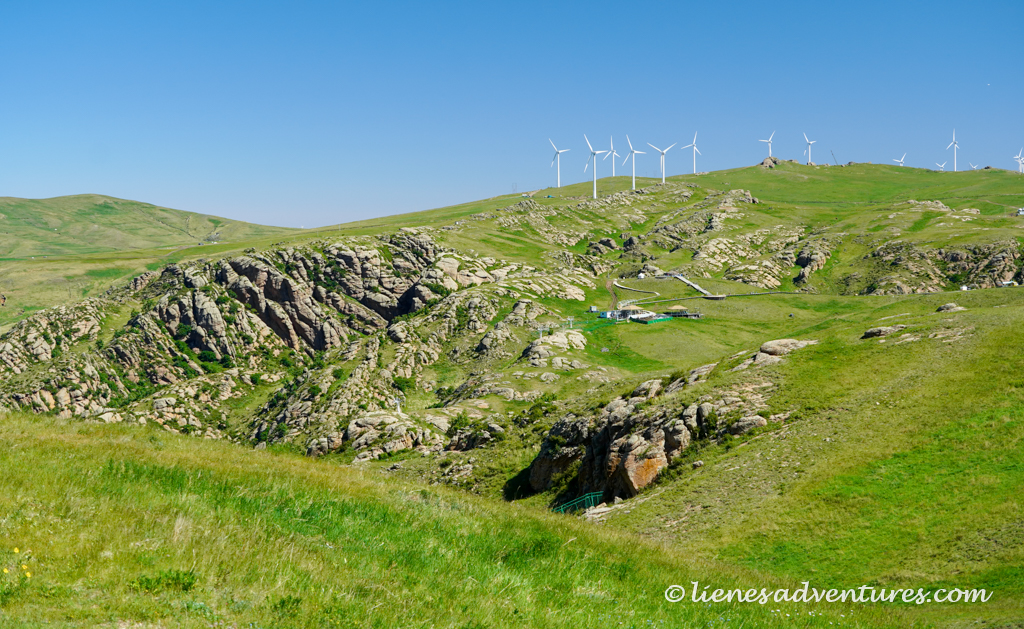
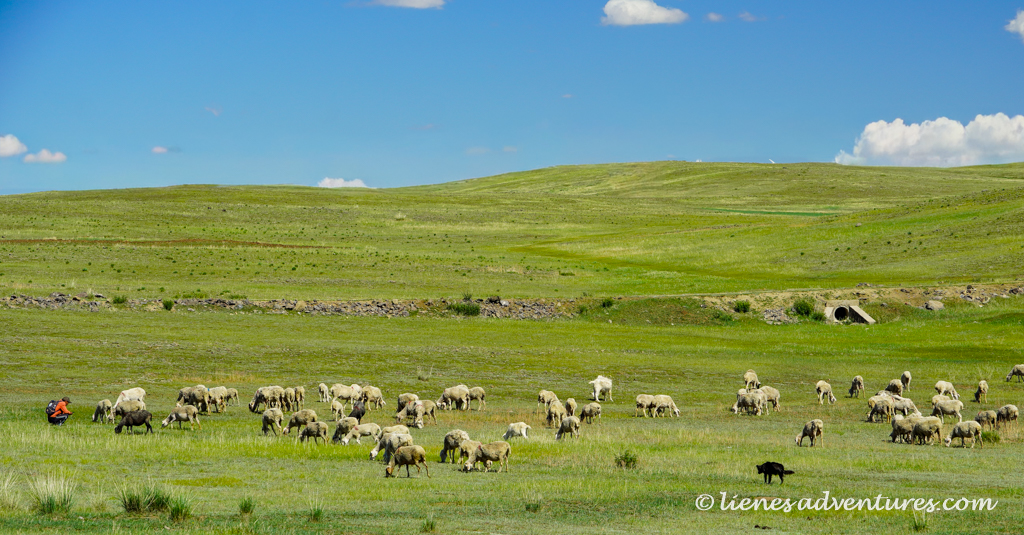
With that, our adventures at HuitengXile Grassland had come to an end. It was time for us to press on as we still had another big attraction to visit this afternoon. About 150km north was WulanHada Volcanoes Geopark. As we headed in that direction, we watched the landscape change from rich grasslands to more shrubbery and dust. I was a little surprised to see large flocks of sheep being herded by actual shepherds and dogs – like from old time fairy tales. There were no fences or enclosures – just the vastness of the prairie and a shepherd with his dog in charge.
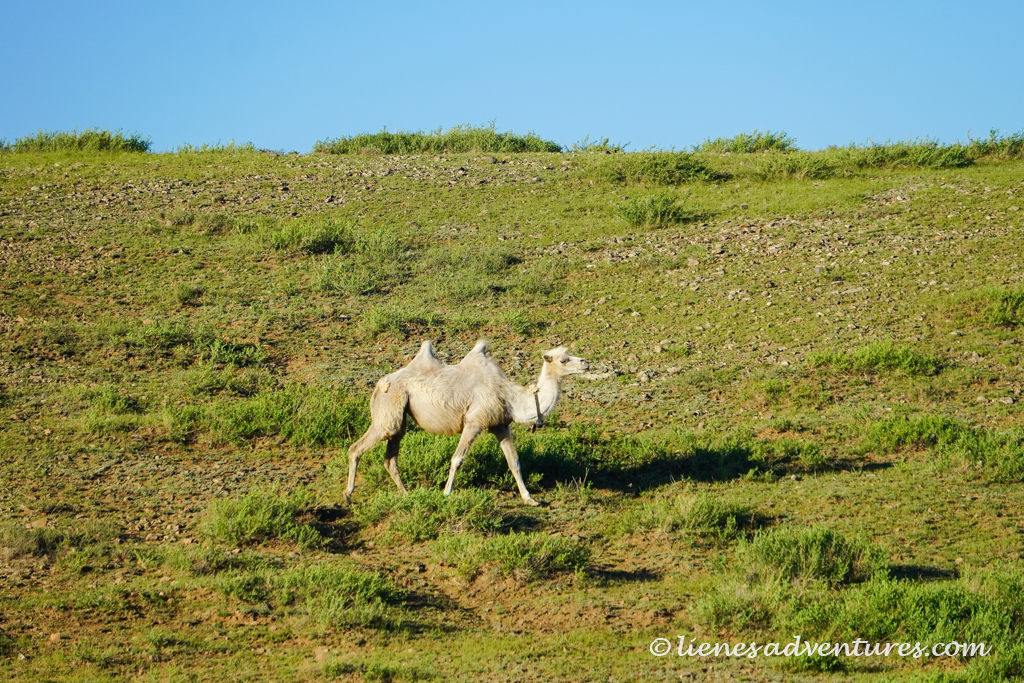
We even happened to spot some camels. These guys were completely on their own and went wherever they wanted.
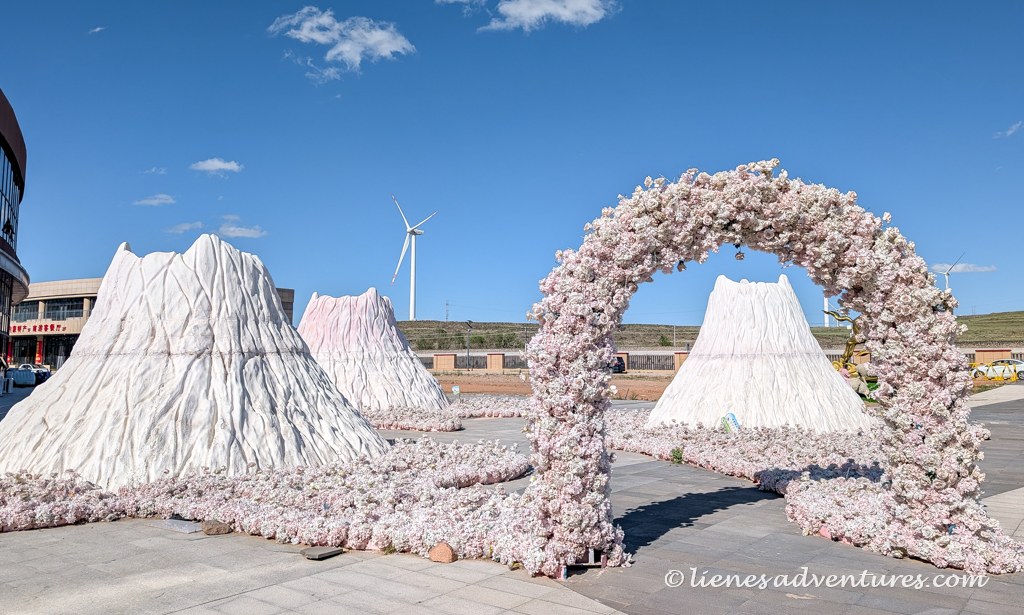
While we reached the WulanHada Volcanoes Visitor Center much later in the afternoon than we had planned, it was still open and full of people. Inside one could find everything from souvenirs to food, drinks, clothing and also park information and tickets… While there were guided bus tours on offer, we opted to purchase a self-drive ticket and explore at our own pace.
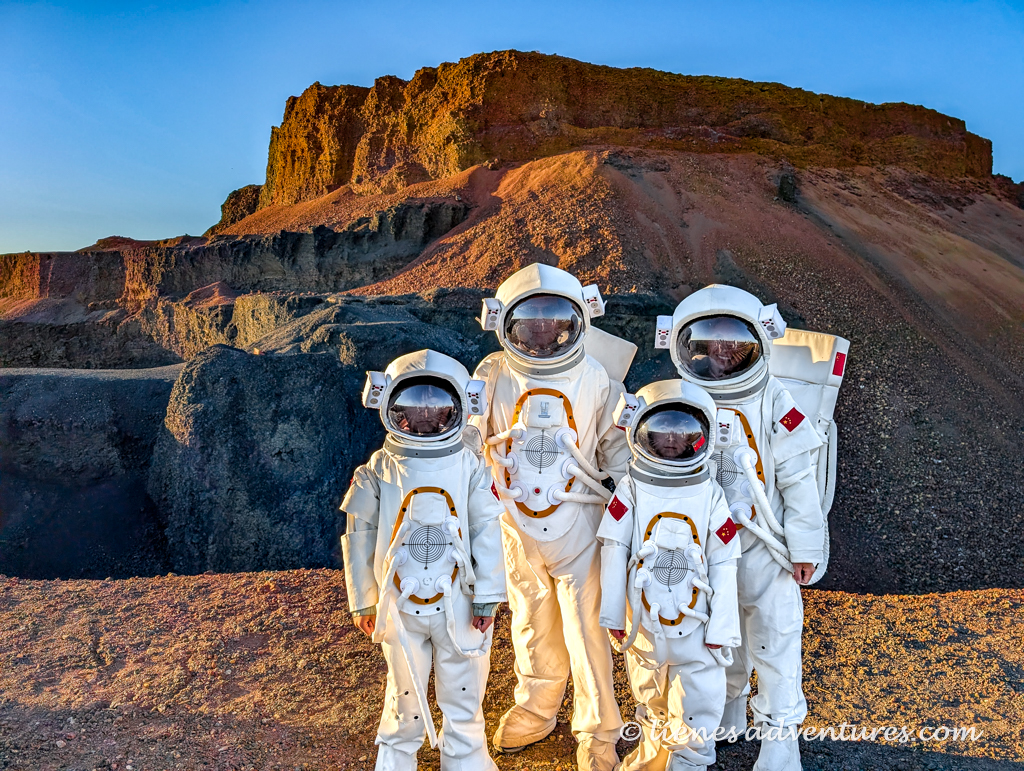
One other thing that was available at the Visitor Center was astronaut outfits! Renting full-on spacesuits (boots, helmet and all) was the thing to do here! At sunset, Volcano #6 illuminated red, creating outer space like scenery which became a popular photo spot. Of course we had to get the suits! They were so huge that, along with our luggage, they could not fit in the trunk of the car. So many of the suit parts got stuffed around the back seat all the way to the roof, completely burying our kids. They didn’t mind and found it entertaining. We were ready!
WulanHada Volcanoes Geopark was the only volcanic group of the Mongolian Plateau confirmed to have erupted about 10,000 years ago. There were around 30 volcanoes scattered around the area, with 8 main peaks forming the scenic area.
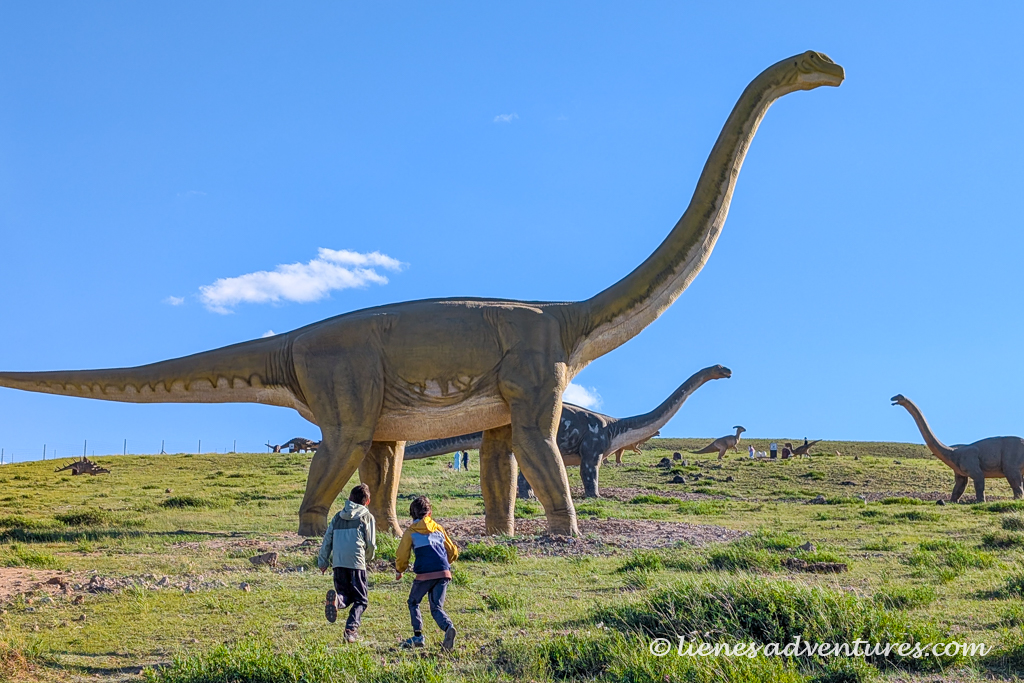
The WulanHada scenic drive from South to North Visitor Center was about 35km (22mi) in length with many stops along the route. While we only planned to stop at the volcanoes, the kids did not want to miss the dinosaur stop. They really enjoyed it as the area featured realistic, giant, life-sized dinosaur models and interactive elements like dinosaur eggs and models that moved…
Once I finally got my boys pulled away from the dinosaurs, we headed over to the famous Volcano #6 (South Alchemy Furnace). With sunset quickly approaching, we did our best to fit into the cumbersome spacesuits, stuff helmets on our heads and make our way up to the volcano’s rim. With not a single live plant in sight, it truly looked like a scene out of space movie. And our photos came out great, I think!
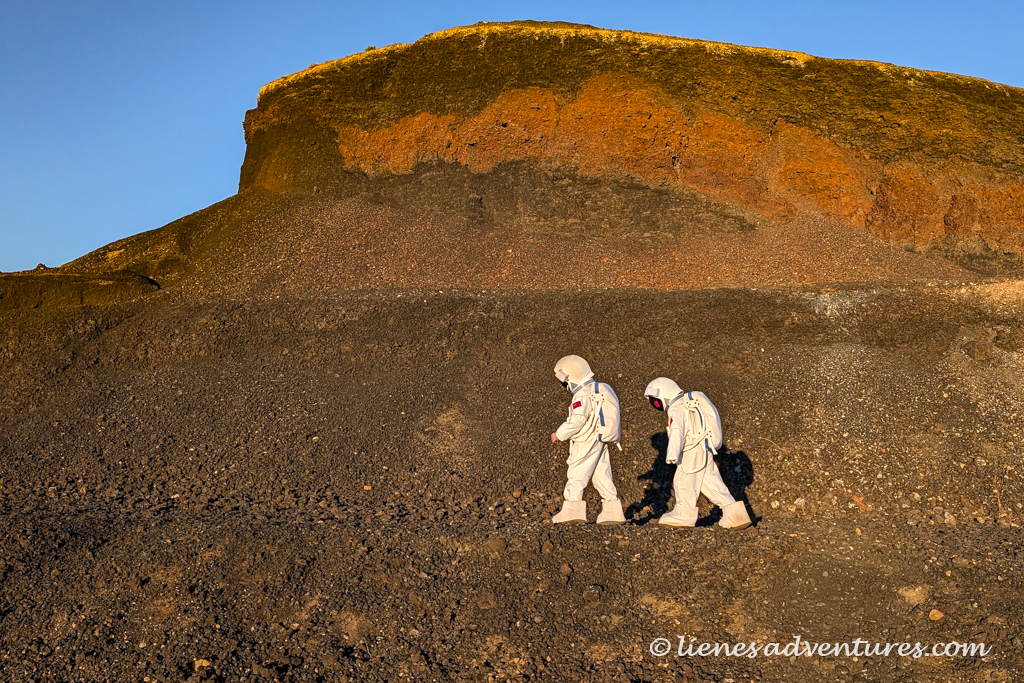
From the top of Volcano #6 there was a great view of Volcano #5 (Central Alchemy Furnace). I really wanted to hike it, so we wrapped up our space photo session and walked back down to the car to make the short drive over to the Volcano #5.
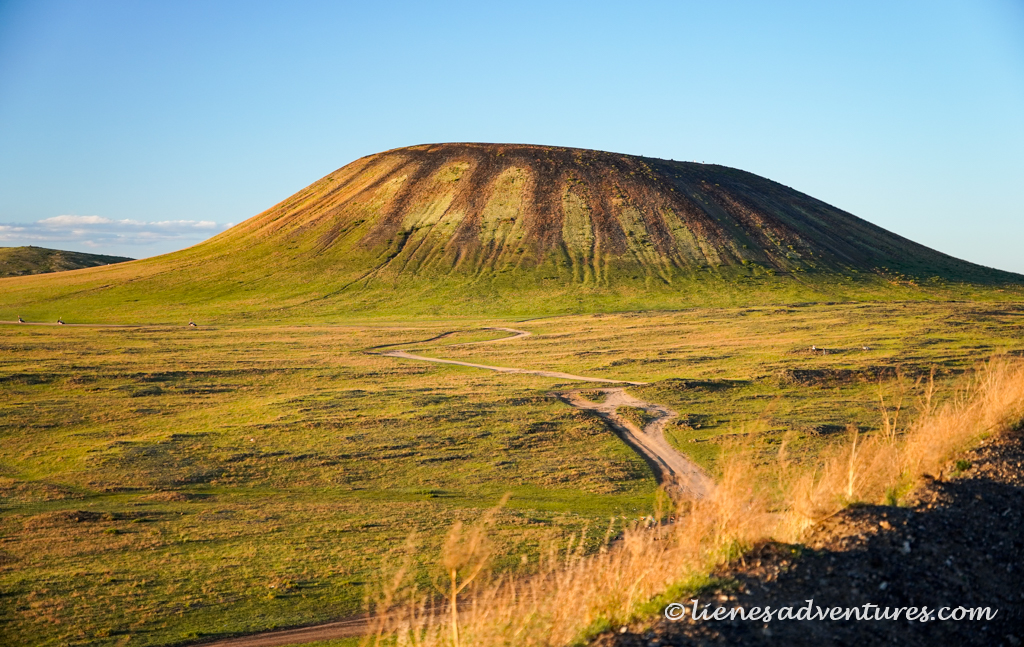
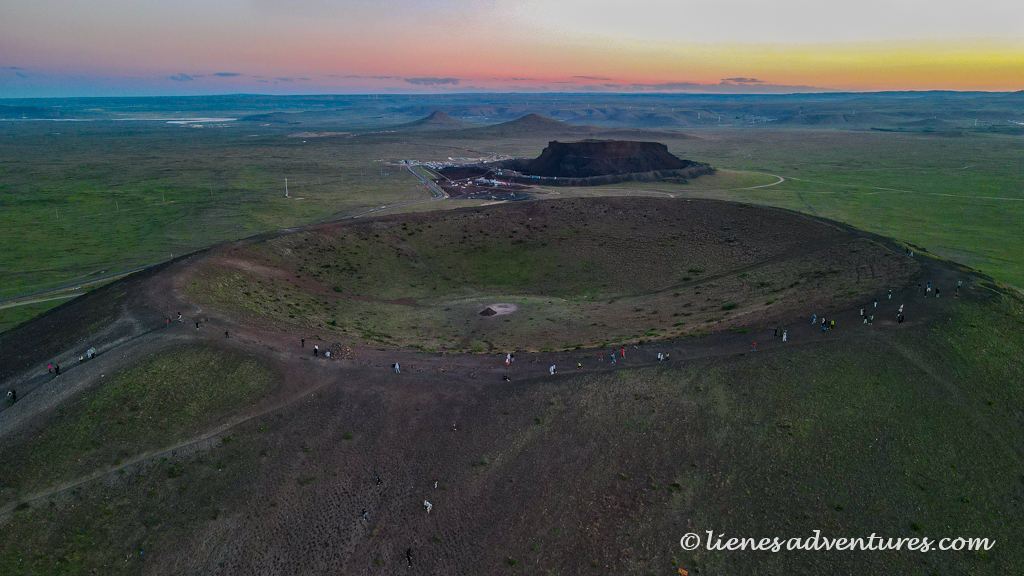
Neither my kids nor my husband were up to the challenge, so I headed out on my own. However, about a quarter way up I had to admit that it was just not going to happen. The darkness was coming on very fast, and in another 10-15 minutes it was about to be pitch black. Disappointed, I had to turn around and go back to the car. Meanwhile, my husband had managed to be productive and had taken some drone shots for me of the volcano’s crater from the top.
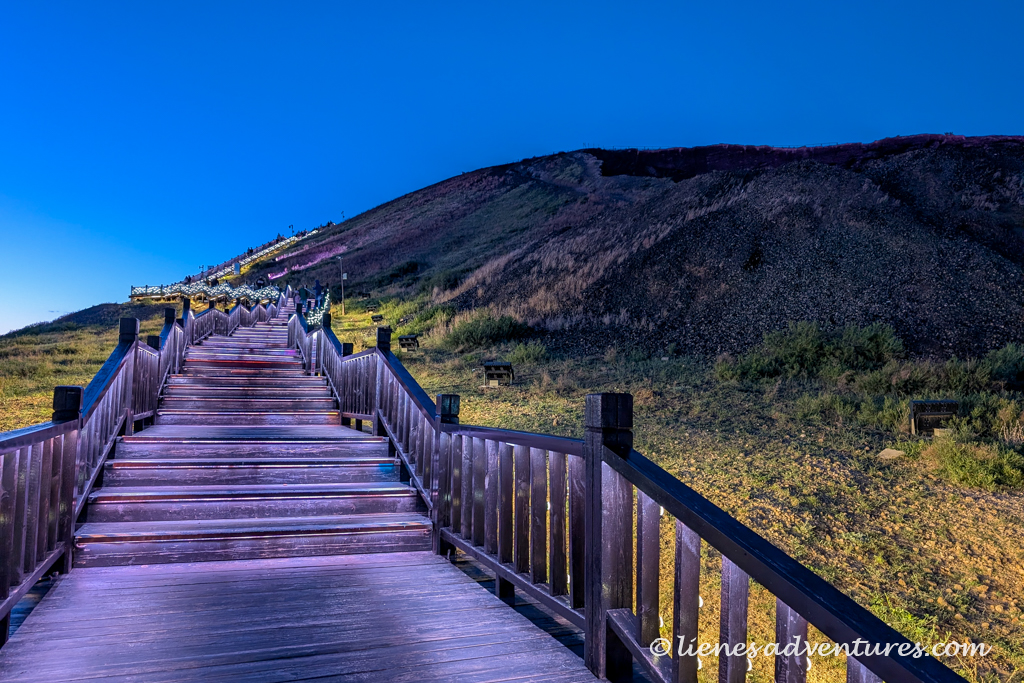
As we were approaching the park’s northern exit, we noticed that Volcano #3 (North Alchemy Furnace) was all lit up and a wooden boardwalk led all the way to the top of the volcano. This was a popular spot for night views. We parked and headed up, slightly easing my disappointment about not being able to do the previous climb. Everything was already dark, so not many views were had from the top.
Upon exiting the park, we returned to astronaut suits at the North rental office and finally headed to our hotel. By the time we got there, it was 10pm and we were exhausted! We wanted nothing other than dinner, shower and sleep, which we successfully accomplished.
Day 3, June 21 – Hohhot
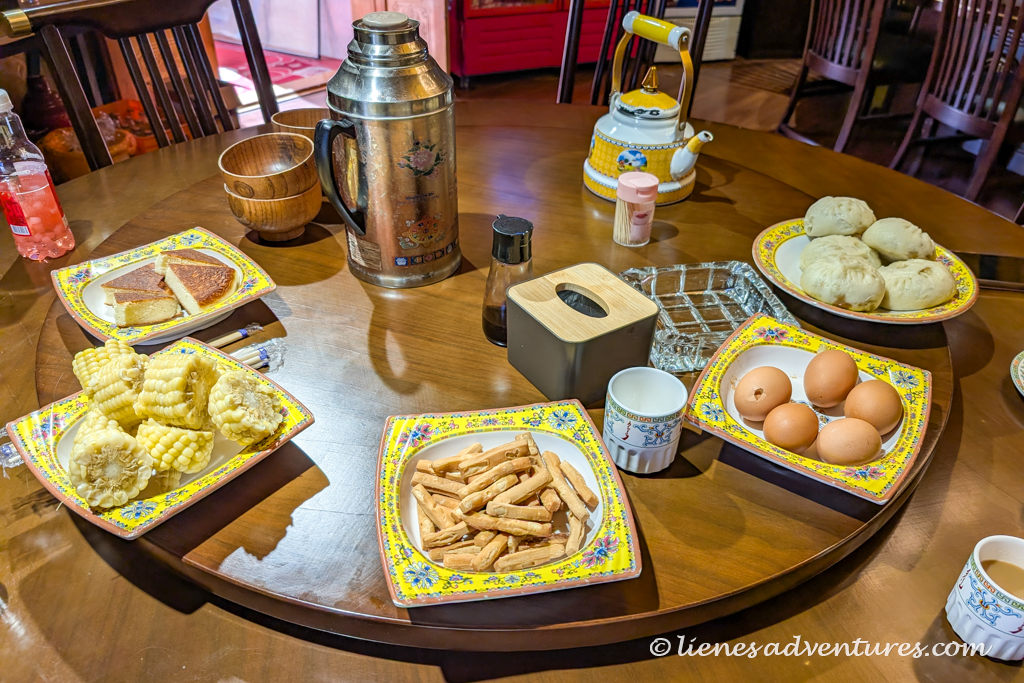
This morning we finally did not have to get up at the crack of dawn, and we could leisurely sleep in until 8:30am, ha ha! The hotel’s owner had prepared breakfast for us, which turned out to be the tastiest breakfast of the whole trip! Their milk tea and freshly baked Mongolian yoghurt pancakes and meat buns were a big hit! There were so many buns that we could not manage to eat them all, so we secretly packed them up for the road…
Ahead of us was a 200km (124mi) drive to Inner Mongolia’s capital Hohhot. Dazhao Tourist Area was a cultural and historical district within Hohhot, surrounded by temples, lively pedestrian streets and markets. That was where I had booked a hotel for us.
Unfortunately, due to language barrier, I was never able to get clear car directions regarding hotel access (with it being in a restricted pedestrian area). The GPS was taking us through a guarded gate, but the guard would yell at us and not let us through. I was trying to show him our hotel’s logo, but he was completely uninterested and wouldn’t even glance at it. We circled the car, and circled again but always ended up at the gate. We were at a loss but calling the hotel was useless because I did not speak Chinese and they did not speak English. Eventually, I got out of the car and completely ignoring security guard’s frantic “come back here!” gestures walked forward through the area in the direction of where the GPS showed the hotel would be. Lo and behold, behind a few houses and through a park, there was our hotel! The hotel front desk had to call the neighborhood security guard and tell him to let us in. All this hour-long debacle could have been avoided had the guard even cared to look at the hotel printout I tried to show him. He was, in all honesty, the most unhelpful, dismissive person we had met in all of China over the past 7 months!
Needless to say, our mood was totally ruined. And it didn’t help that we were dealt a room that stank like a wet mastiff had been living there for a month. Thankfully, the hotel staff promptly changed our room to a better smelling one.
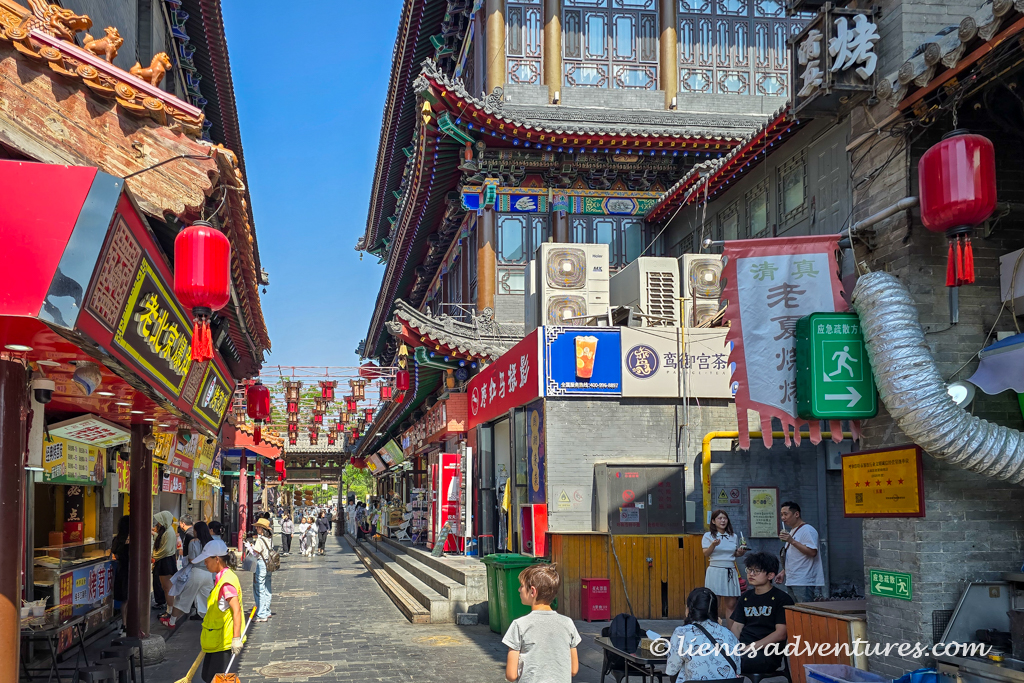
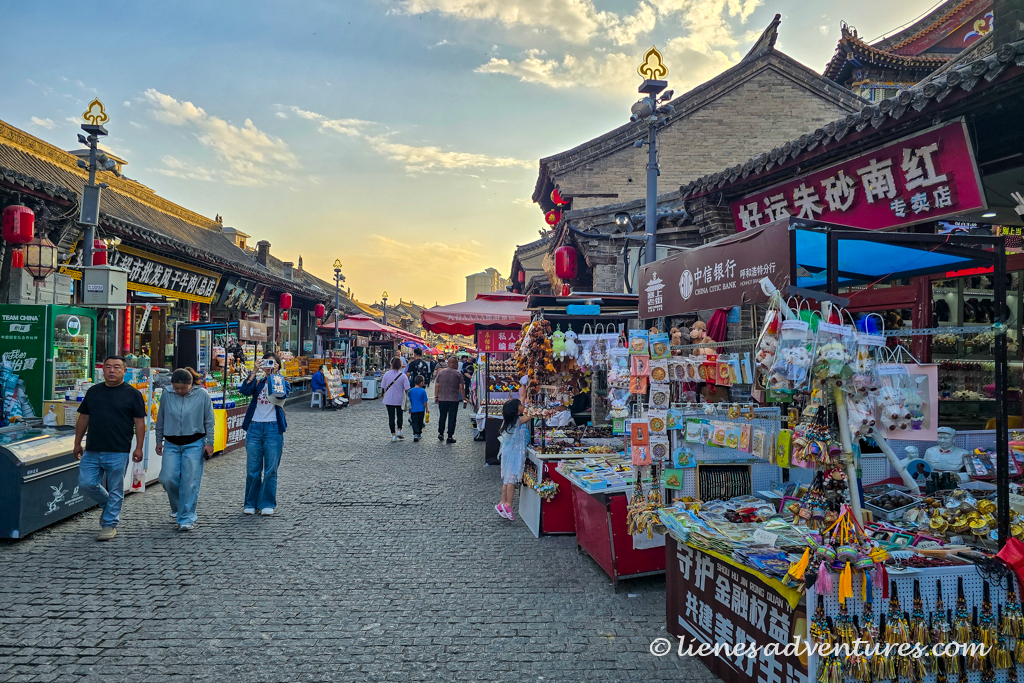
To settle our nerves and get to air out our heads, we brought in the luggage and then walked out into the streets of Hohhot’s historic area. We were immediately surrounded by the hustle and bustle of market stalls, food vendors and trinket sellers. It was loud and crowded.
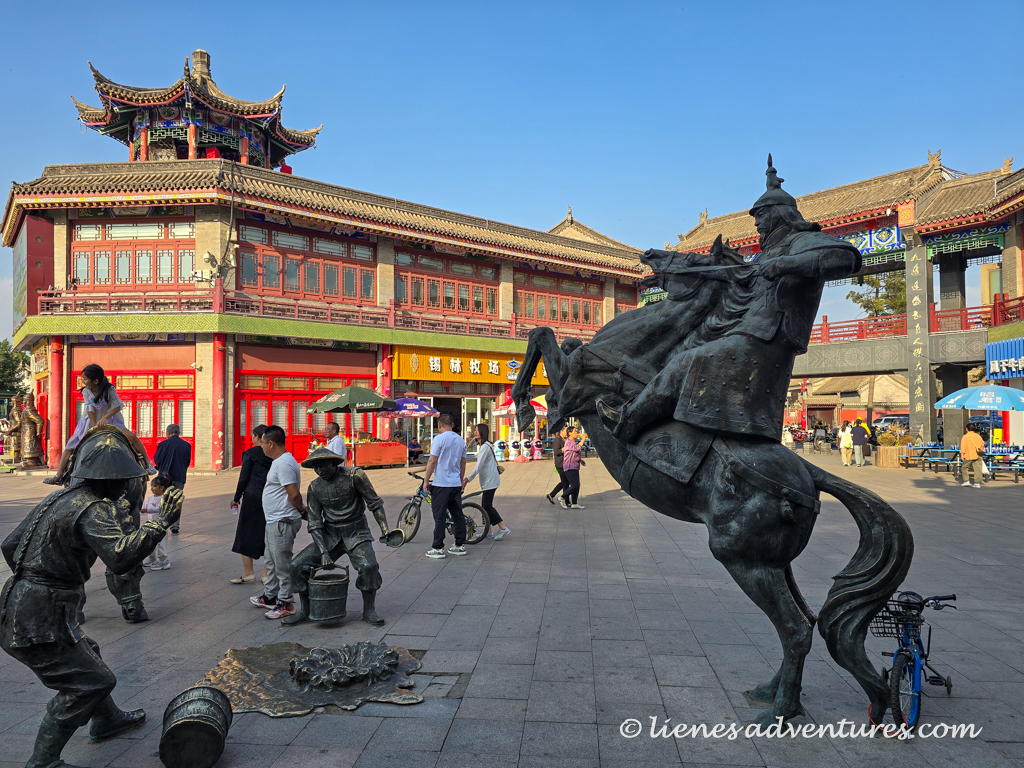
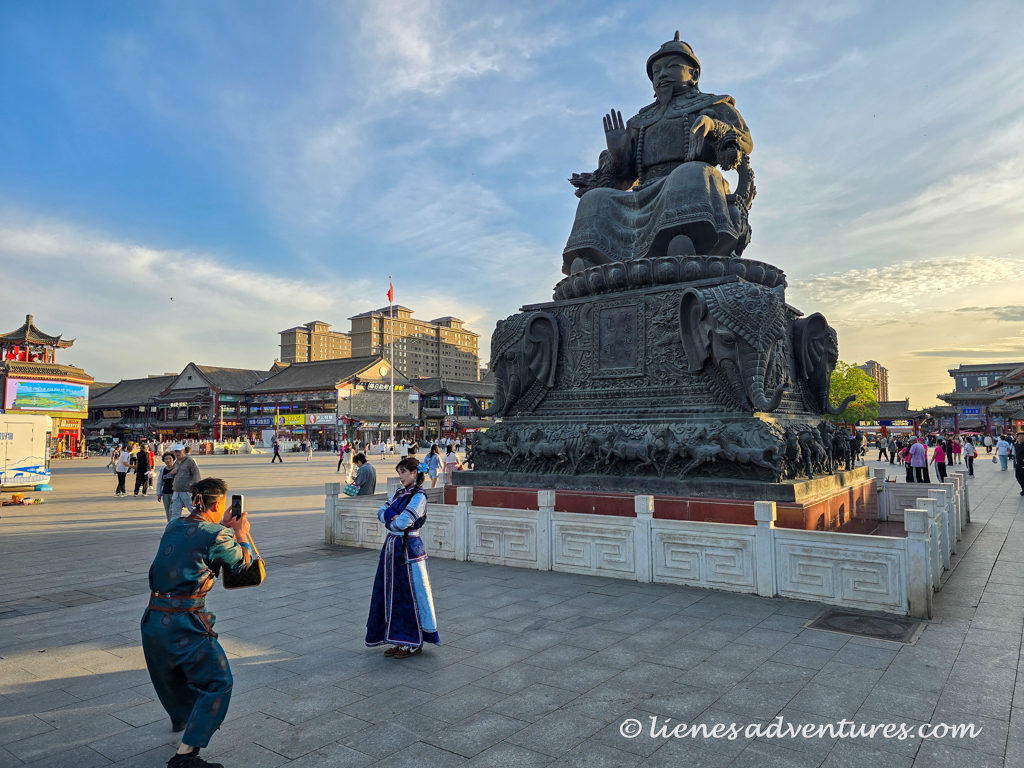
All the buildings were in traditional Chinese style with various Mongolian elements scattered throughout. There were different sculptures from Mongolia’s history and folklore. Girls dressed up in rented traditional Mongolian outfits to take photos alongside popular landmarks.
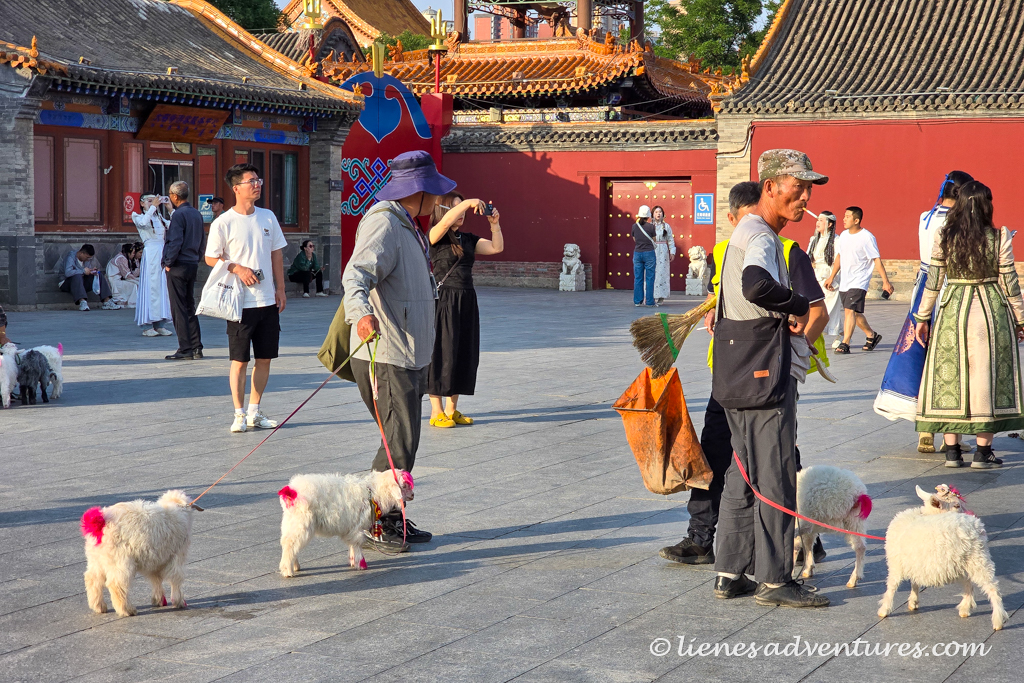
And if a dress-up wasn’t enough, one could even pay a few yuan and take pictures with pink baby goats.
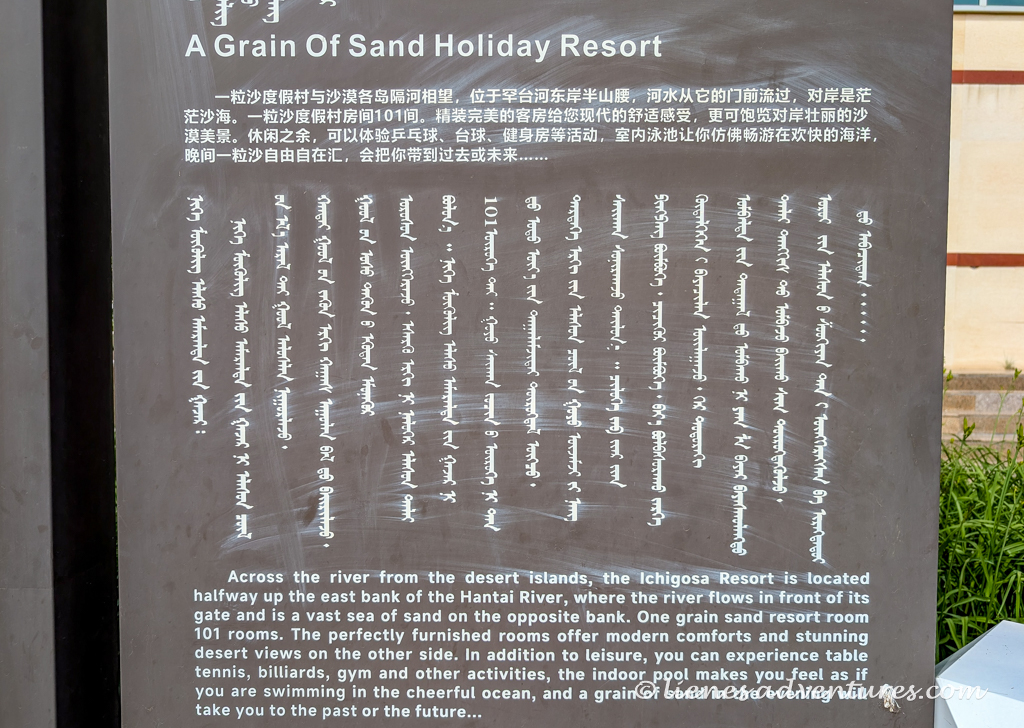
While we had noticed that Mongolian language was being used widely, it was especially evident in Hohhot. All the information signs, store displays, place names and road signs were printed in 2 languages – Mandarin and Mongolian.
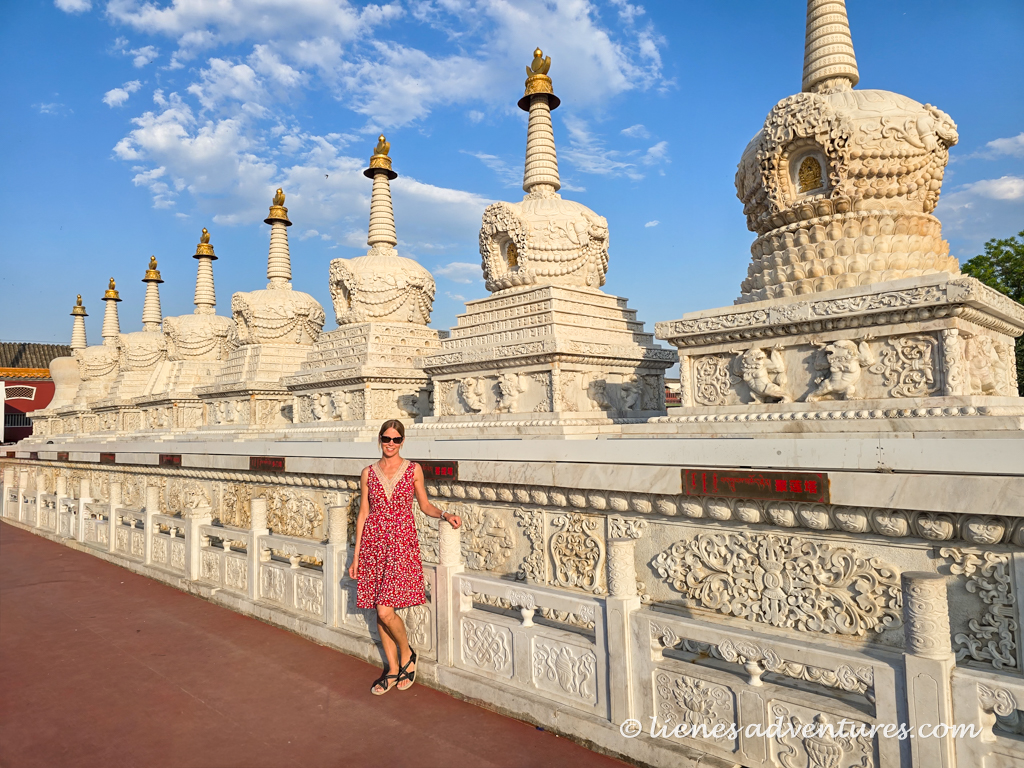
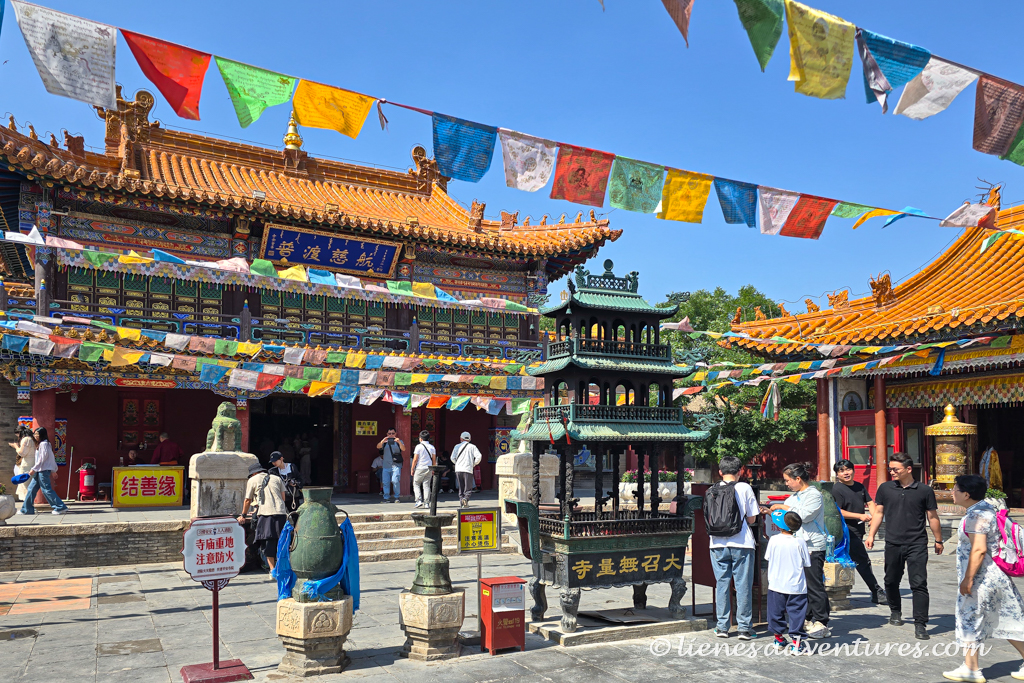
One of the more popular attractions here was the Dazhao Temple. Built in 1580s, it was the oldest and largest Tibetan temple in Hohhot. With nothing much else happening, we walked in to explore it.
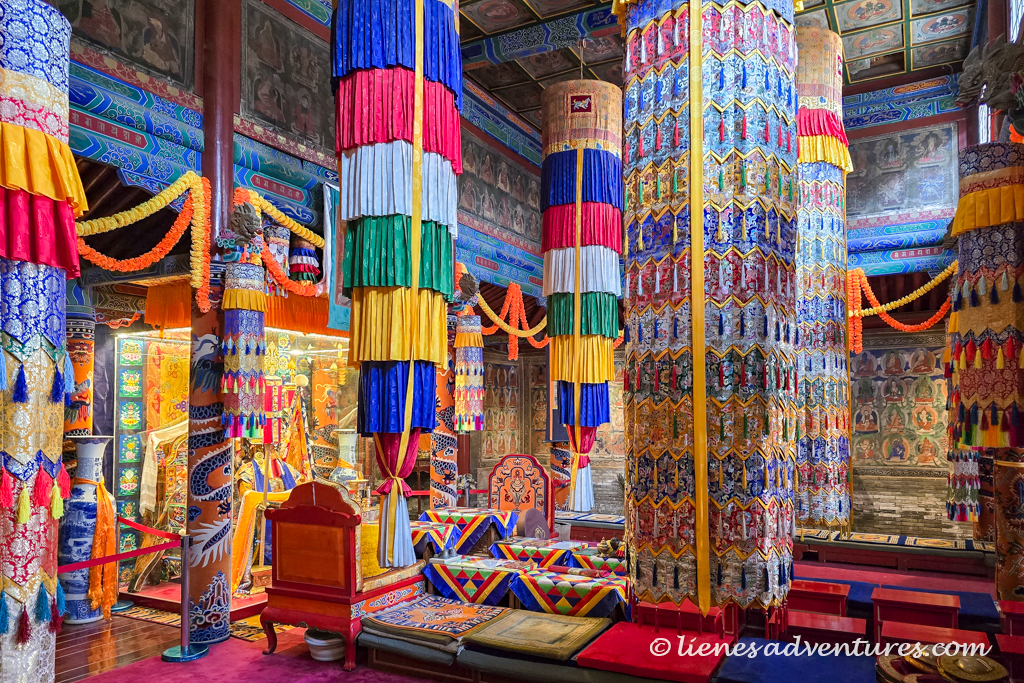
As evening approached, we made another pass along the main market street in hopes of spotting some unique souvenirs, but nothing really stood out.
So, we walked back to the hotel, ordered some room-delivery of spaghetti and lasagna for dinner and then called it a night. Tomorrow will be a new day!
Day 4, June 22 – Kubuqi Desert, Yemingsha Tourist Area
I was very excited for today! It had been quite a while since I last experienced a real desert. And I was even more excited for my kids who were eagerly looking forward to the big sandbox and some camel riding.
While there were several designated tourist zones in Kubuqi desert, I had picked Yemingsha for a reason. With it being a 3-hour drive away from Hohhot, this area was much more remote and less developed than other desert tourist zones closer to the city. I was not interested in another crowded, artificial experience with swimming pools, shuttle busses and water parks… I just wanted simplicity and bare minimum - sand, camels and some starry skies… And Yemingsha offered exactly that.
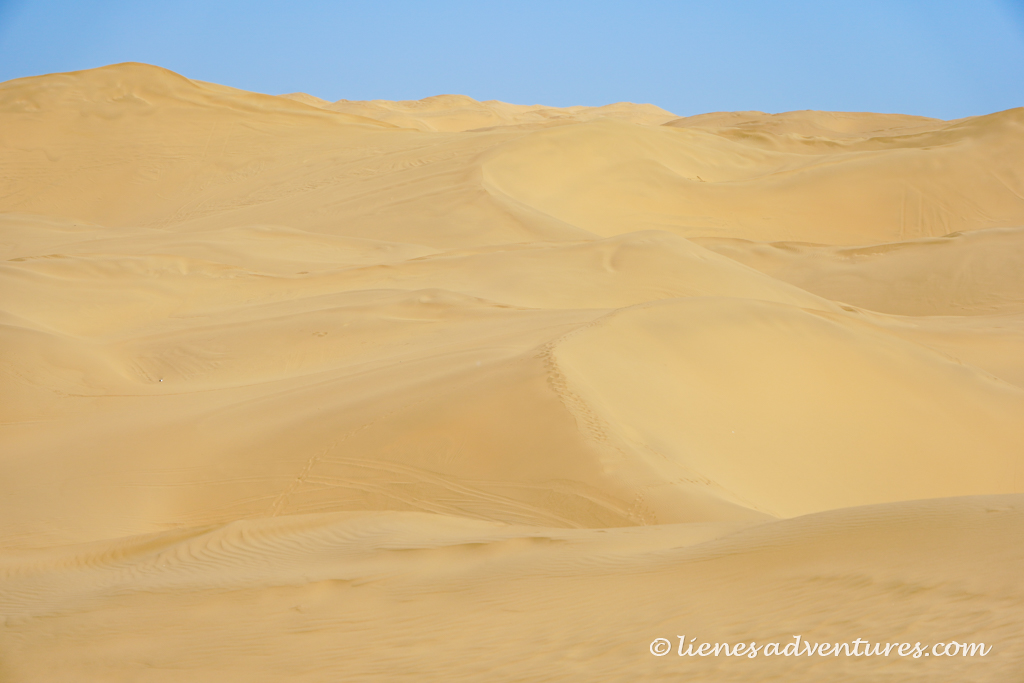
The selection of hotels came down to only 2 choices here, and only one of them could sleep 4 people in a room. Therefore, there was really only 1 choice, and it was a 2* hotel with less than stellar reviews. On top of that, the fine print said that the hotel only accepted Chinese, Taiwanese and Hong Kong residents… We were neither of those. If this didn’t work out, I was just planning on sleeping in the sand together with all the rattlesnakes and scorpions. As a big relief to my husband (who hates rattlesnakes and scorpions), the hotel had no problem at all accepting our foreign passports at the check-in. And even more so – our room was amazing with an absolutely stunning glass wall overlooking nothing but the vastness of desert sands… The best 2* hotel ever!
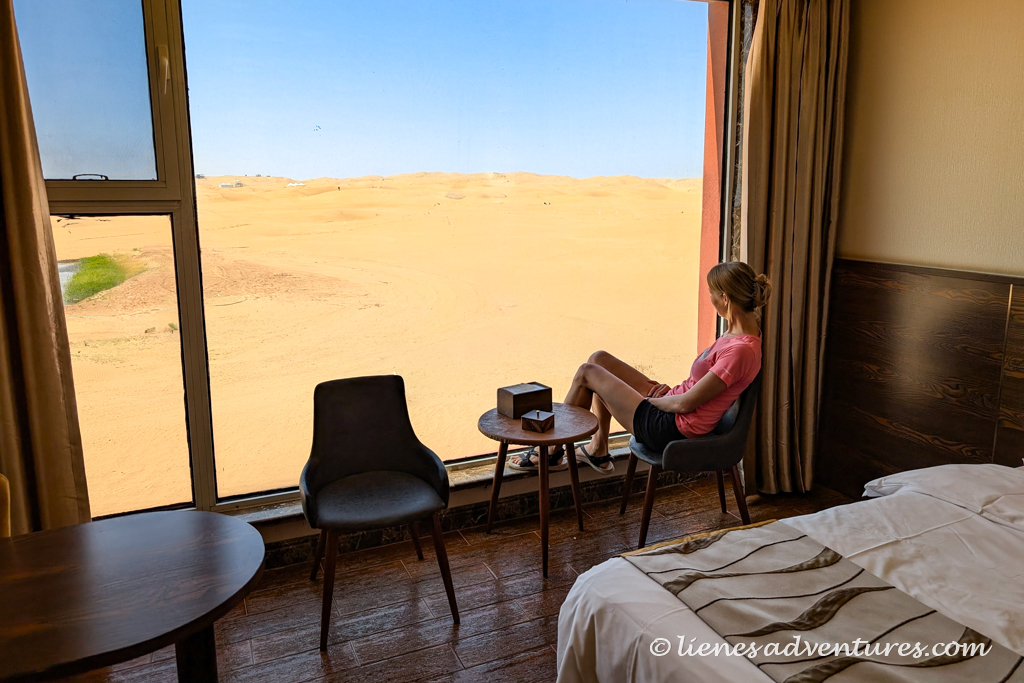
We took a little moment here to rest up after the long drive and enjoy the view. Just like the grasslands, the desert here could be enjoyed and explored free of charge. However, if we wanted to take part in any of the desert activities – those were paid.
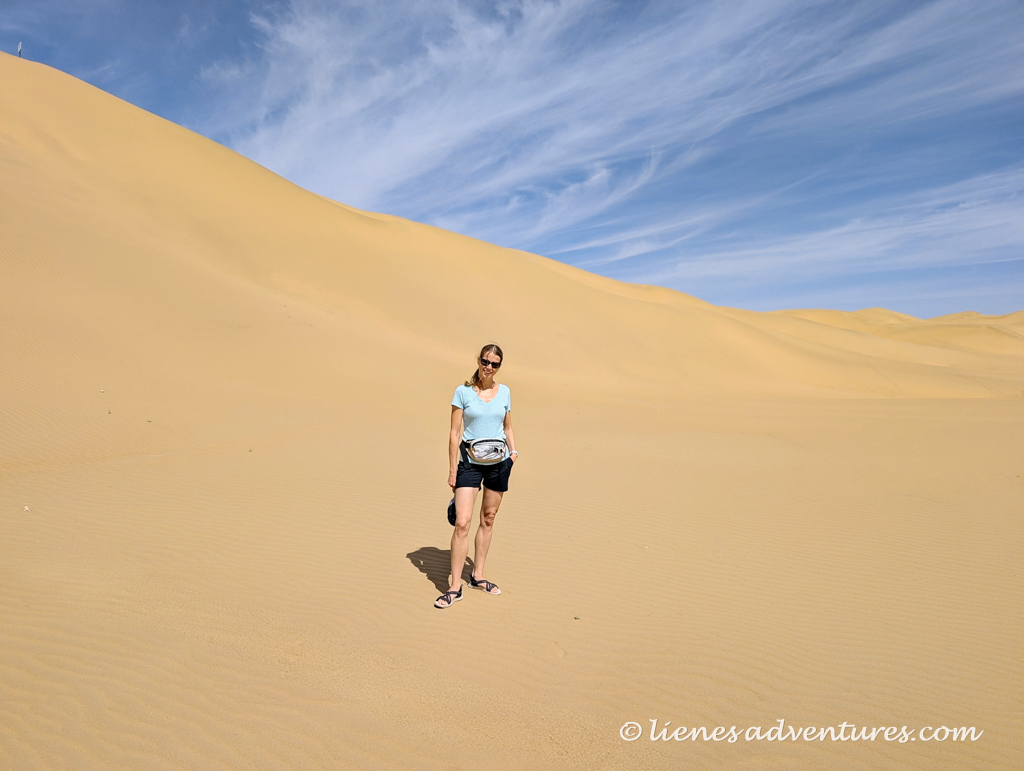
Yemingsha Tourist Area Visitor center was right across the parking lot from the hotel, so we headed there. It was empty. We were the only customers here. Perfect! There were various desert activities that people could enjoy – camel rides, ATV rides, sand sledding, sand karts, archery and many more. A large billboard on the wall displayed activity prices and various package deals. We picked a package that included our choice of 6 different activities.
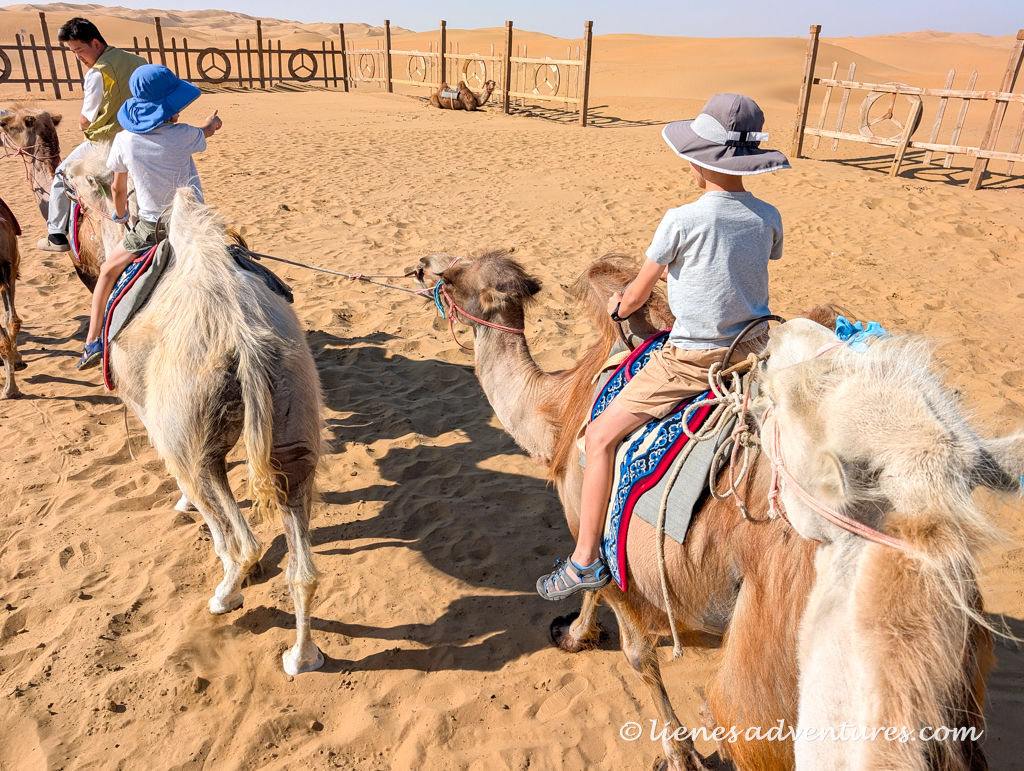
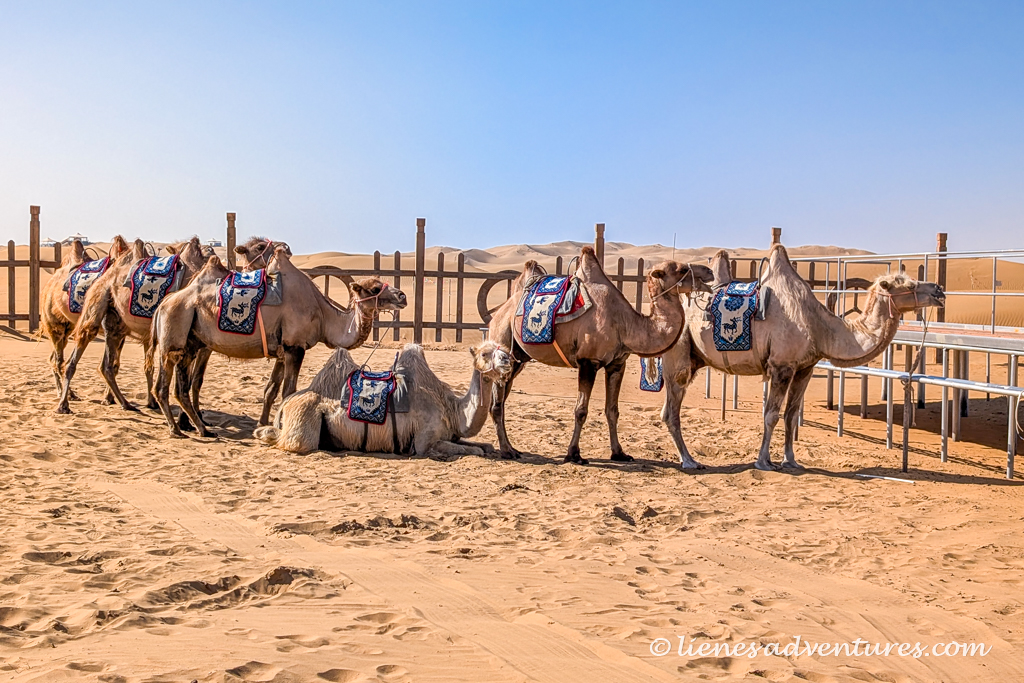
And what other way would there be to start a proper desert adventure if not with a camel ride?! We walked over to the camel enclosure and climbed aboard. I was a little disappointed to find out that the ride was only 10 minutes long and covered a very small loop right by the enclosure.
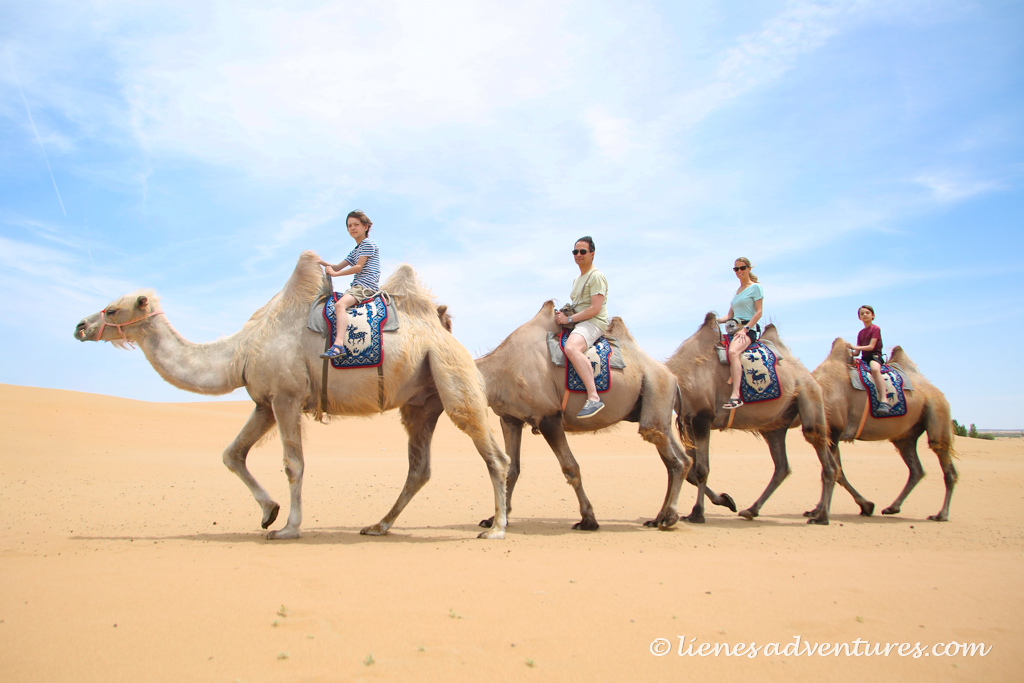
However, what we did learn was that camels in Mongolia (Bactrian 2-hump camels) and camels in Africa (dromedary 1-hump camels) were actually 2 different species and were never related or crossed each other genetically. There are no wild herds of camels in existence in Africa as every dromedary is now a domesticated camel. And African camels are taller and lankier, built for fast speeds across hot sand deserts. On the contrary, wild Bactrian camel herds still exist in Mongolia and Northwestern China. And camels in Mongolia are shorter, bulkier and hairier - adapted to withstand freezing cold, snowy winters. That was an interesting information to learn.
After we were done with the camels, we moved on to other activities, like sand karts and sledding. While originally we purchased these activities with our kids’ entertainment in mind, it turned out to be quite fun for all of us. And the best part of it all – there was barely anyone here. We could count maybe some 10 other tourists in total. No lines, no waits, no crowds… It was so refreshing.
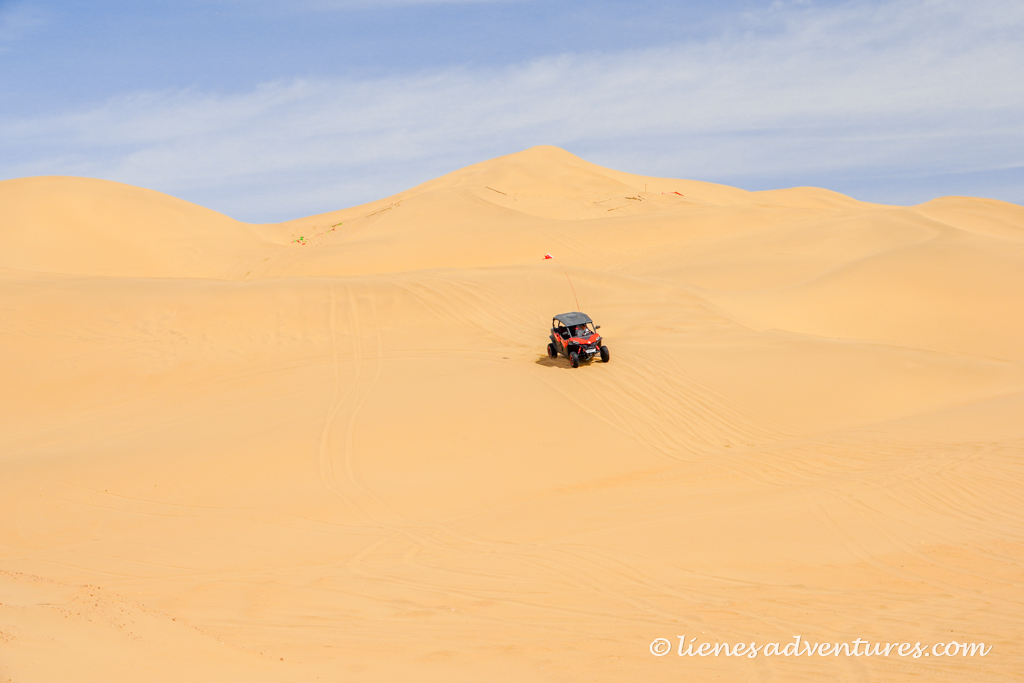
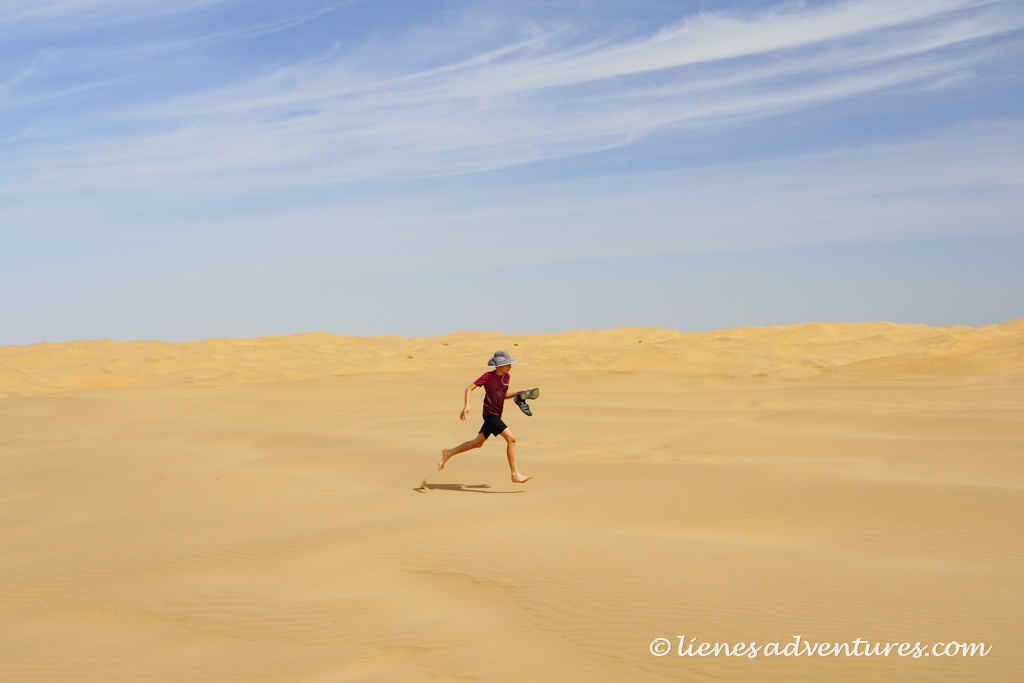
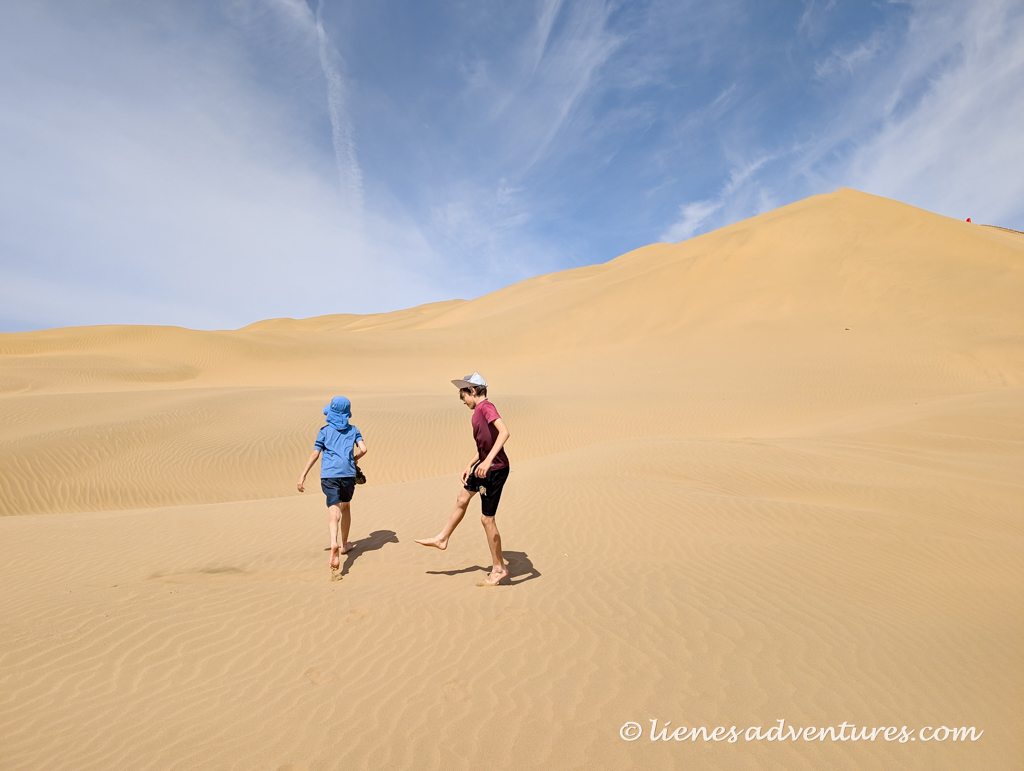
After we had exhausted our activity package, we simply walked the desert dunes and enjoyed the scenery. The sand seemed to change color depending on the sun. It was shifting shades from brown to yellow, to orange to reddish… And the dunes were so high! The kids loved climbing up and rolling down, over and over again.
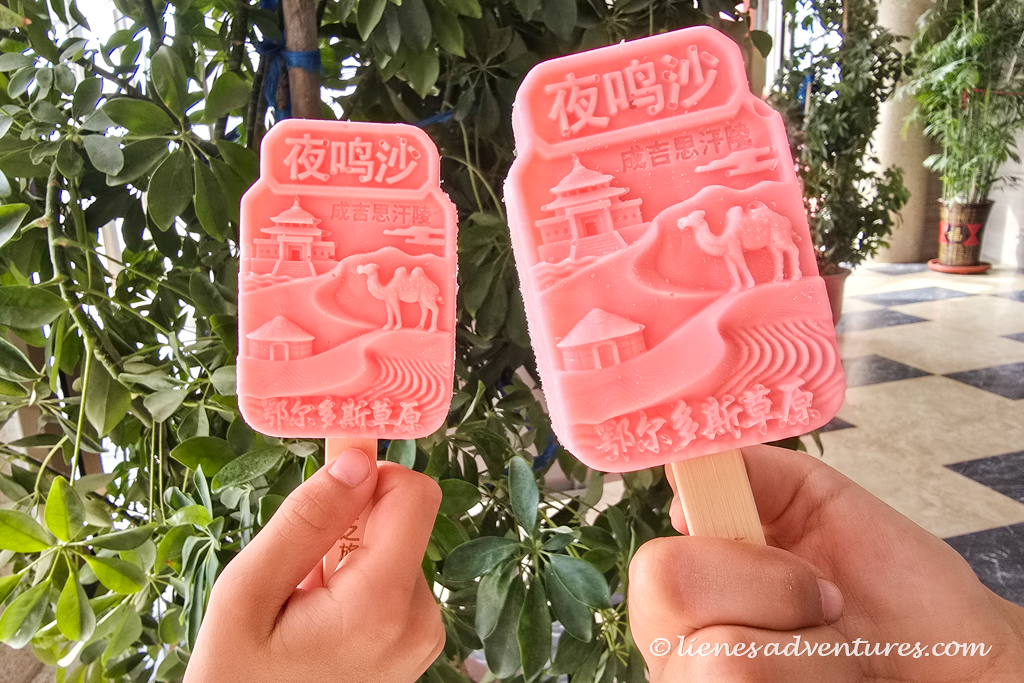
Once the sun set, it was time to get back to the room, clean out all our sandy pockets, shower and have dinner which was conveniently offered right there at the hotel’s restaurant. And of course, no meal would be complete without a souvenir ice cream! And it even had a camel on it!
I had read that due to Yemingsha’s extremely remote location, it was the perfect location for stargazing. And June / July timeframe was famous for its bright Milky Way displays over the desert. Unfortunately, on the night that we spent here, the skies were overcast. And while it did not rain, the visibility was too poor to spot the Milky Way.
Day 5, June 23 – camel model and back to Hohhot
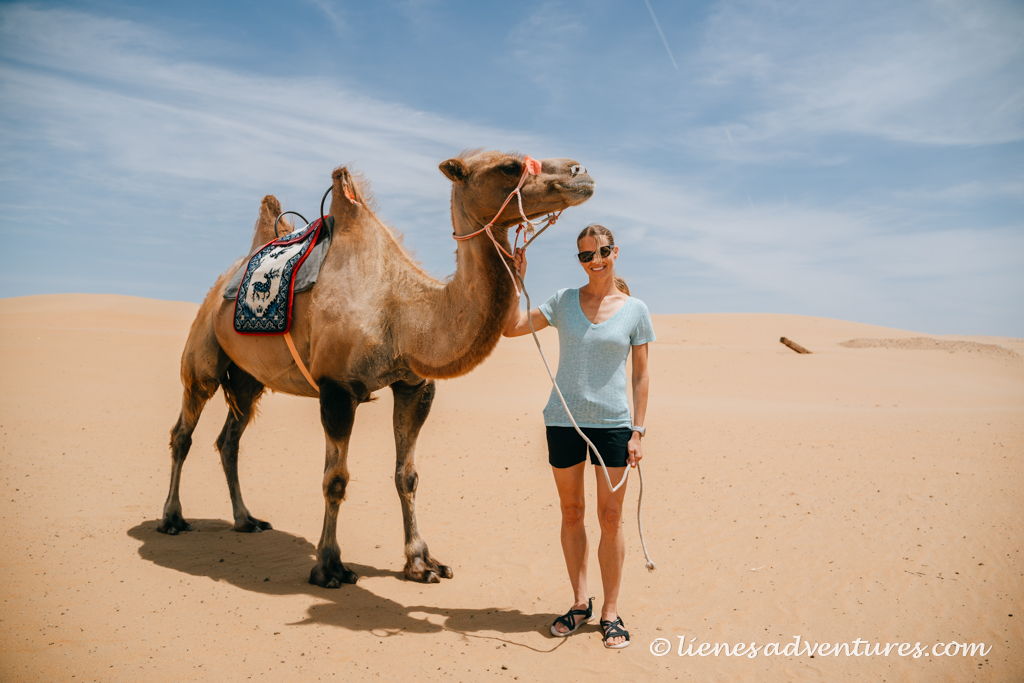
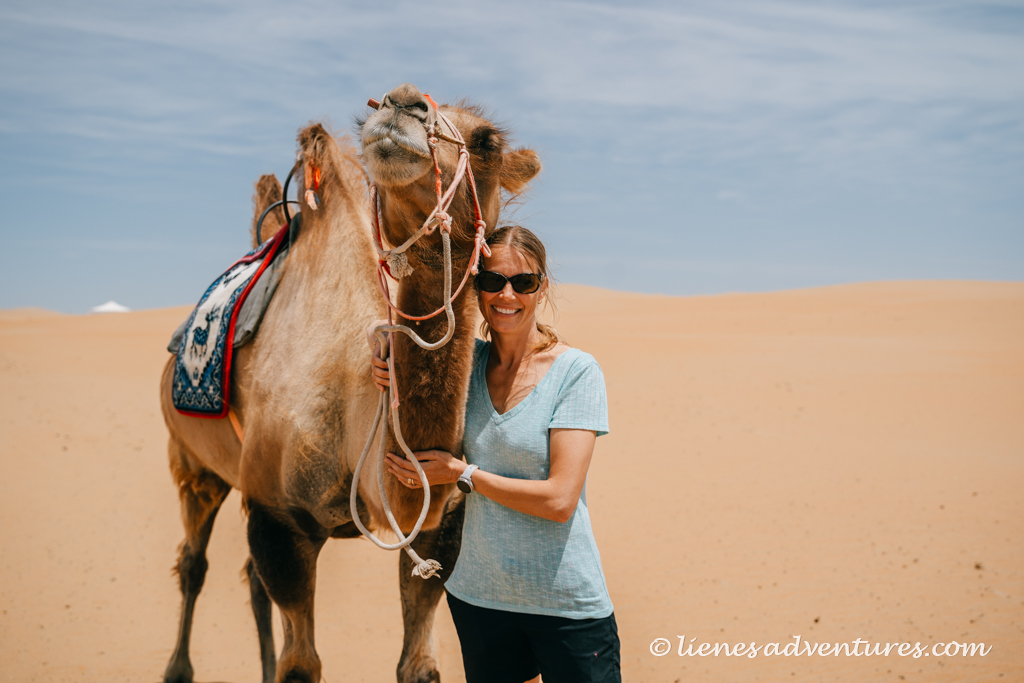
As we woke up in the morning, we did not quite want to leave yet. The day before, somewhere in the Visitor Center I had spotted a brochure stating that it was possible to do photo sessions with camels. I walked over and inquired with the workers if such thing was really an option. After some back and forth, and their own internal confusion and several phone calls, they did indeed arrange a photo session for our family with one of their professional photographers. As we walked over to the camel enclosure, a dapper, decked-out and polished camel was already waiting for us. The photographer took many photos of each one of us and then as a family. A day later I received about 20 amazing, digital full-size images in my account. And all that for just 200rmb, including a tip to the camel for being such a patient, well-behaved model. This was the best souvenir we could have ever gotten as memory from the trip!
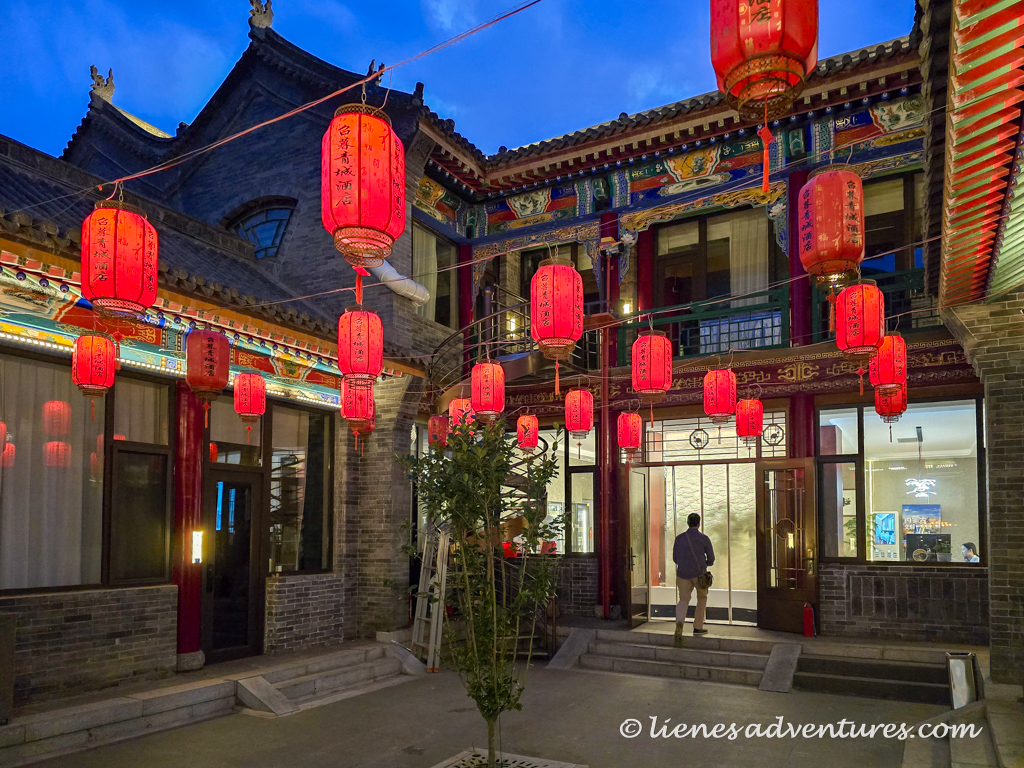
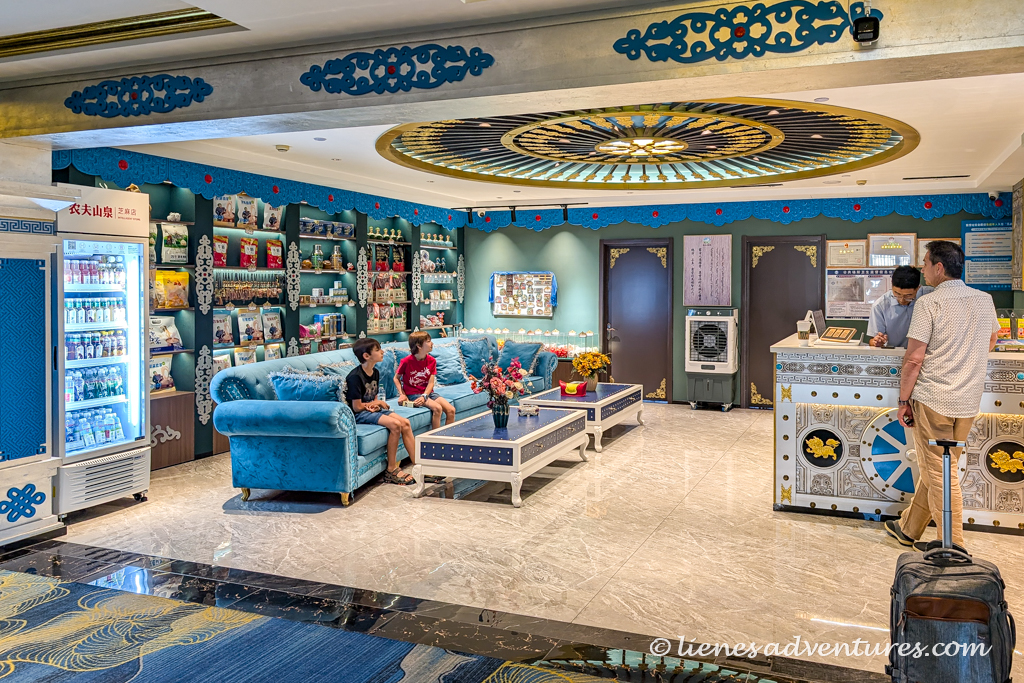
Eventually, it came to the hotel’s check out time, and we had to get on the road to make our way to Hohhot again. This time it was more of a necessity in order to break up the drive back to Beijing. And spending a night in Hohhot was the only logical stopover point. For our 2nd night in Hohhot, I had booked us a different hotel in the historic area. Parking was easy, there were no guards to fight with, and the Mongolian-themed interior design appealed to my husband so much that this became his favorite hotel of the trip.
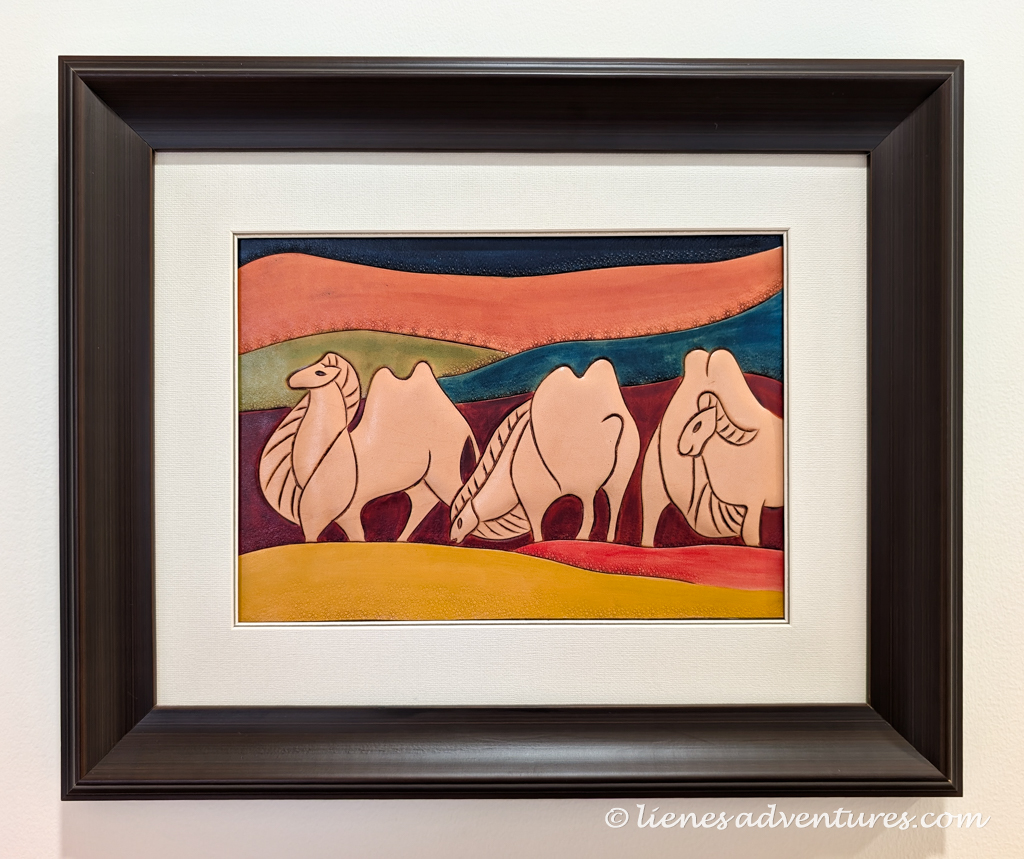
Because we had fully explored this area 2 days ago, this time around we simply focused on finding some meaningful souvenirs to bring home. We wandered into a local artist’s shop. He was creating leather art pieces on traditional Mongolian cowhide. And there it was – a true handcrafted souvenir that spoke to us. 3 desert camels were looking right at us. It was a very appropriate art piece representing our trip. It now hangs on our wall at home, and every time I pass by it reminds me of the fun time we had in Inner Mongolia.
Day 6, June 24 – long road back home to Beijing
Our time in Inner Mongolia had come to an end. All that was left was another 5+ hour drive back home to Beijing. And to conclude, I have to say that Inner Mongolia really surprised me. It had a heart and spirit of its own. Their traditions, culture and way of life were truly shining, and they were very proud to show off their heritage to all the visitors. And that is exactly what I love about traveling – seeing different perspectives, experiencing varying cultures and appreciating the diversity and uniqueness that we each possess.
P.S. Camel is my favorite animal now!
These were the hotels that we were able to successfully book ourselves and stay at as foreigners:
Grasslands: Huiten Siler Prairie Homestay Star Resort (Yurt)
Volcanoes: Yilanxuan Volcano Grassland Homestay, Ulan Hada Branch
Hohhot: 1st night Zhaomu Qingcheng Hotel; 2nd night Cloud Tribe Mongolian Yuan Culture Hotel
Desert: Yemingsha Hotel