SOUTHERN JAPAN FROM BEPPU TO HIROSHIMA - HISTORY AND CULTURE WITH A TWIST OF HOT SPRINGS AND MONKEYS
-
Hits: 1822
The start of our Japan adventure can be read here: OUT OF THE ORIDINARY. FIRST TIME IN JAPAN - EXPLORING TOKYO AND VISITING MOUNT FUJI
After we had spent our initial few days getting to know Japan’s capital Tokyo and visiting Mount Fuji, we were ready to explore other areas of the country. As we had relatives living in Iwakuni, that was where we headed and based ourselves for the remaining 10 days of our Japan adventure. It was nice to finally get to unload our suitcases, have separate rooms for the kids, and have a functional kitchen with much needed washer and dryer.
While we spent a lot of time with our family celebrating Thanksgiving and exchanging (early) Christmas gifts, we also got to travel around and explore the southern part of Japan.
IWAKUNI
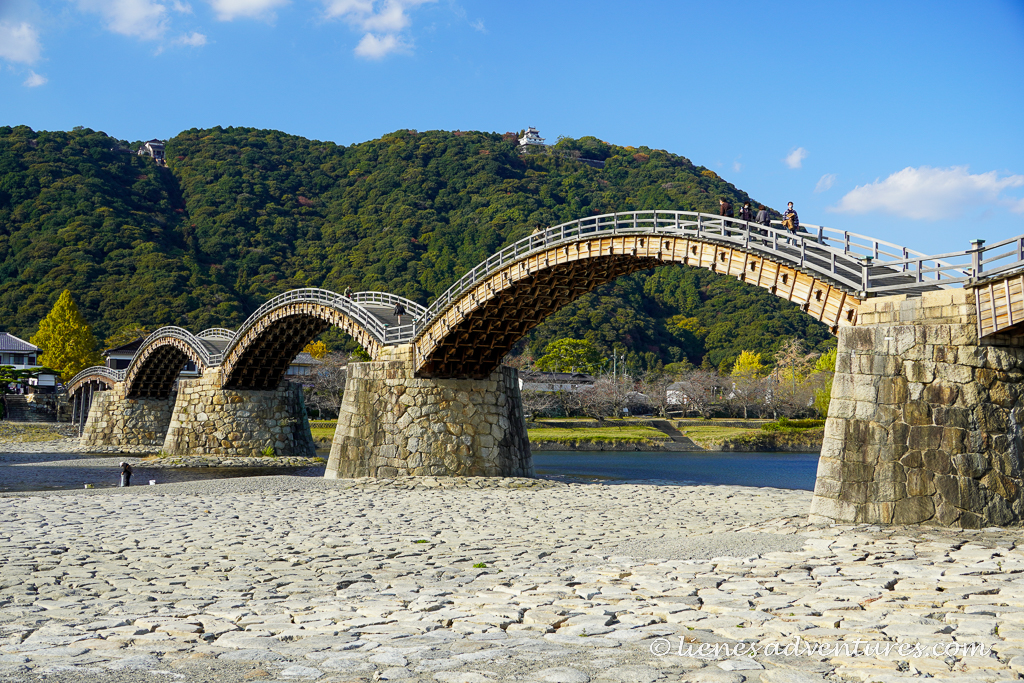
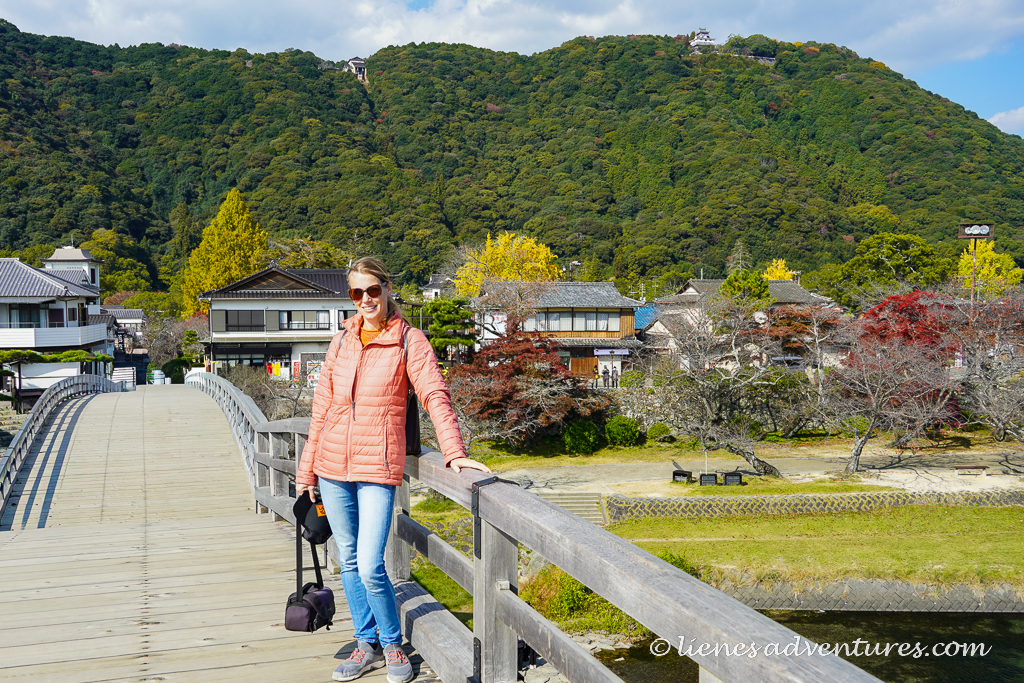
We started off with a local trip right in Iwakuni to see Kintaikyo Bridge. The pedestrian bridge was built in 1673, spanning the Nishiki River in a series of five wooden arches. Do I even need to say how much fun my boys had running up and down the waved arches of the bridge? It was like a rollercoaster!
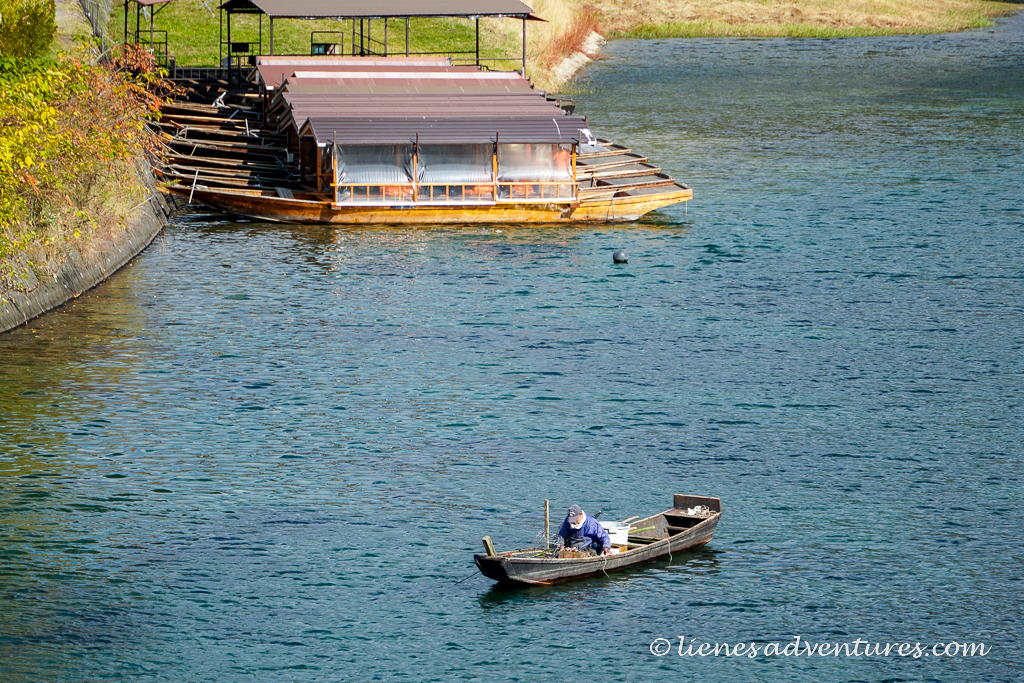
As we crossed it, we watched fishermen with nets trying their luck at scoring the big catch!
There were beautiful rolling mountains here and the riverside was lined with traditional style Japanese houses. Seemed like such an iconic postcard scene – just what I imagined Japan to be.
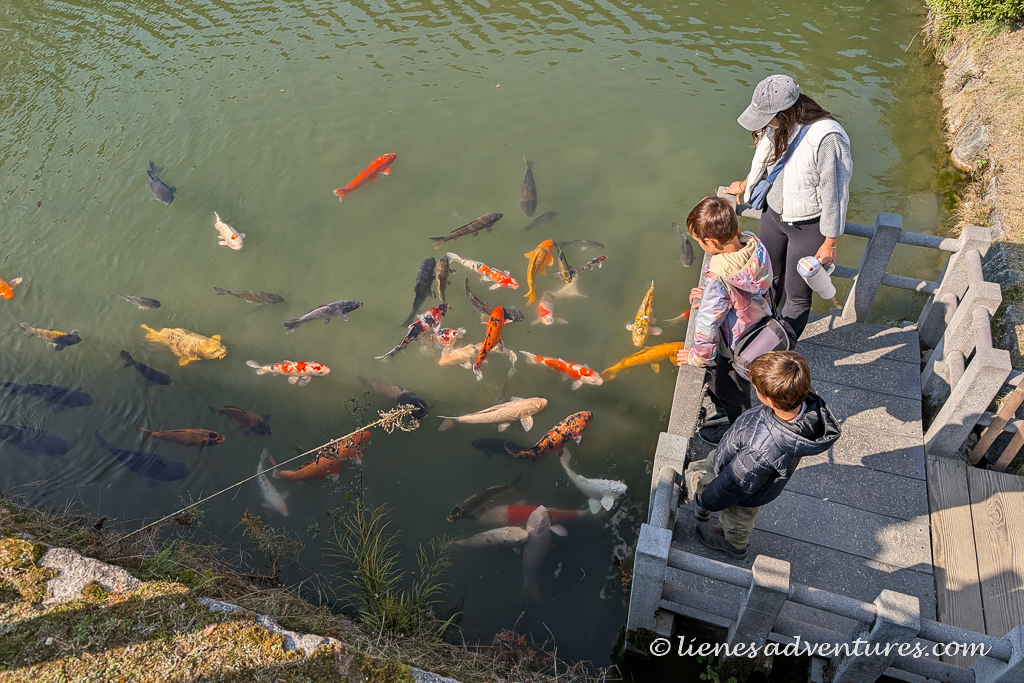
On the other side of the bridge was Kikkou Park with lush greenery, stone pathways and fishponds. The fish here were used to being fed, because the second we walked down to the water, they gathered right around us expecting some handouts.
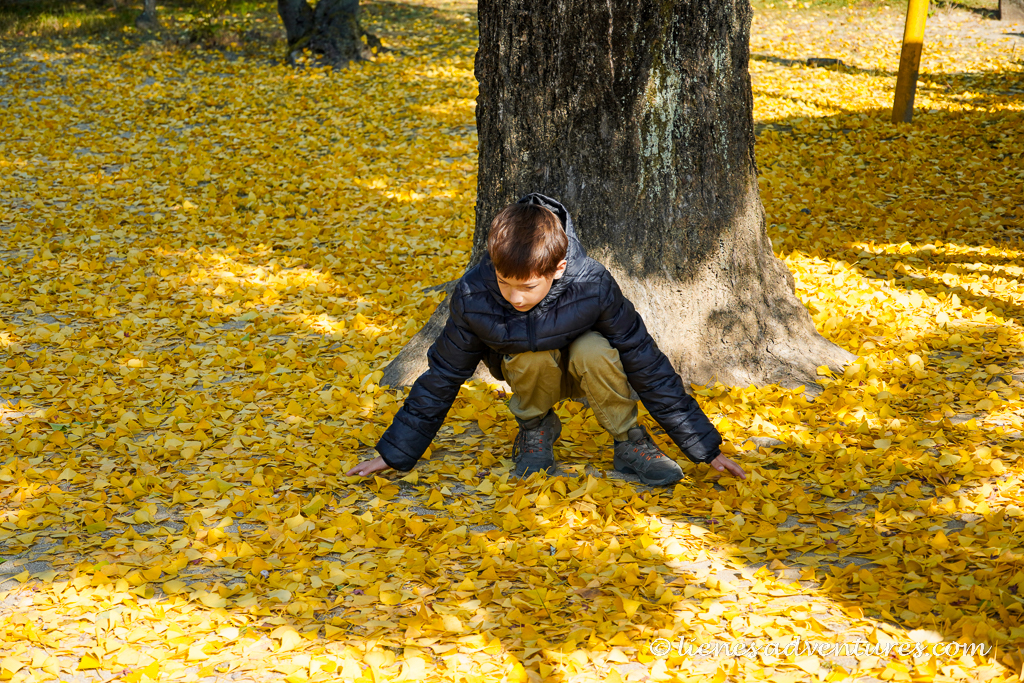
The fall colors were at their peak with golden gingko trees and bright red Japanese maples. I truly think fall was the best time of year to visit Japan! It was just so beautiful!
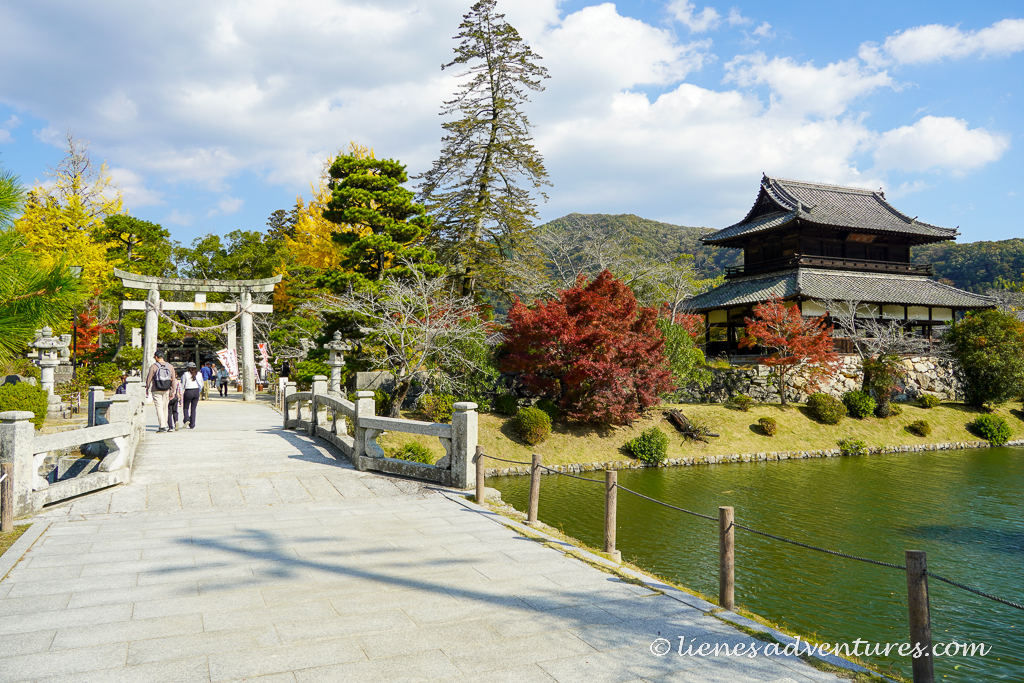
And what would a Japanese park be without a temple or shrine? Of course, there was one here. Although we did not enter the temple itself, we walked the grounds and stopped by a playground, per our boys’ request.
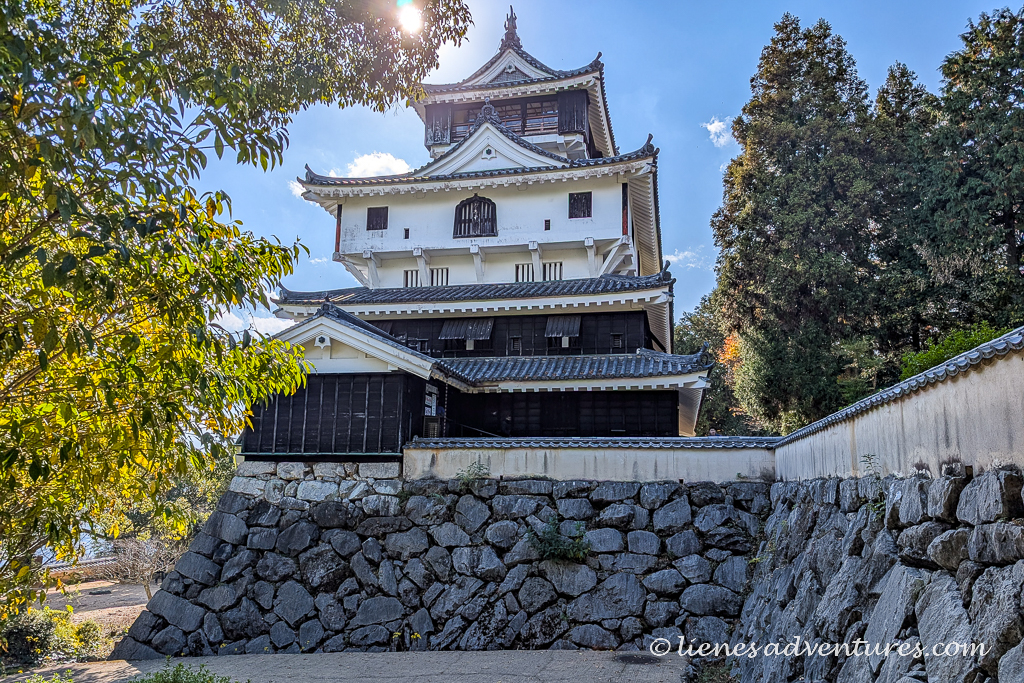
After we were done exploring the park, we boarded the aerial tram that would take us up the mountainside to Iwakuni Castle. Originally built in 1601, it was later destroyed with its replica constructed here in 1962. Back in the day, the arched Kintai Bridge that we crossed earlier was the main bridge leading to the castle’s front gate.
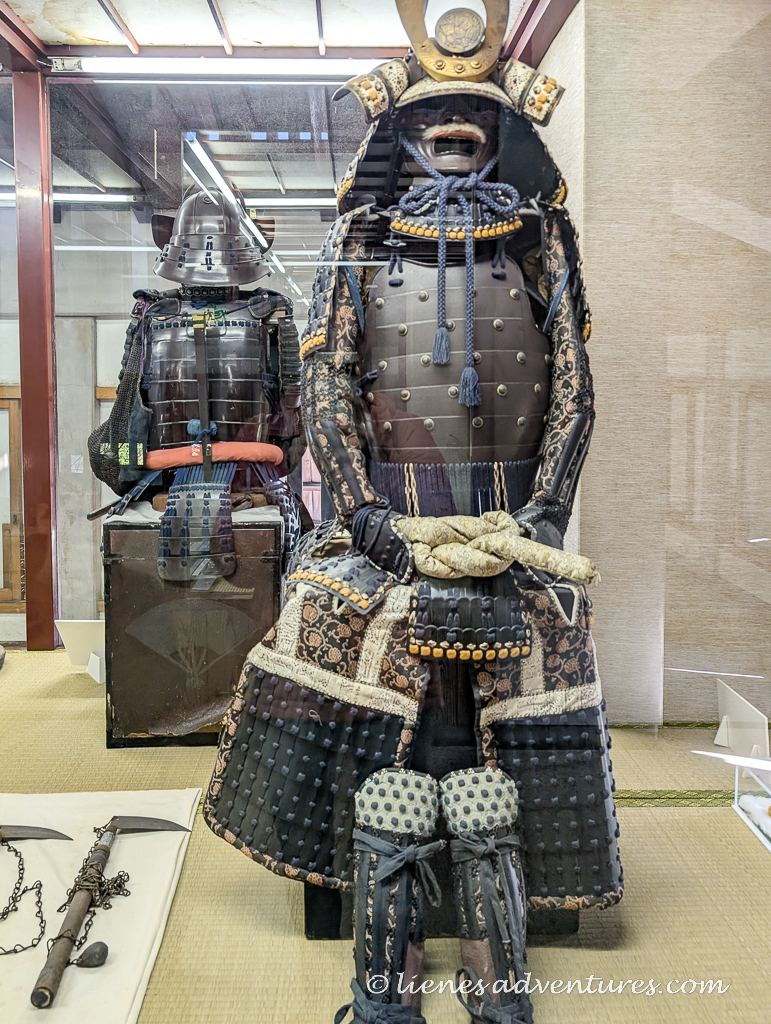
Inside the castle was a small museum where our boys had a great time looking at all the historic, engraved Samurai swords, war attire and other artifacts.
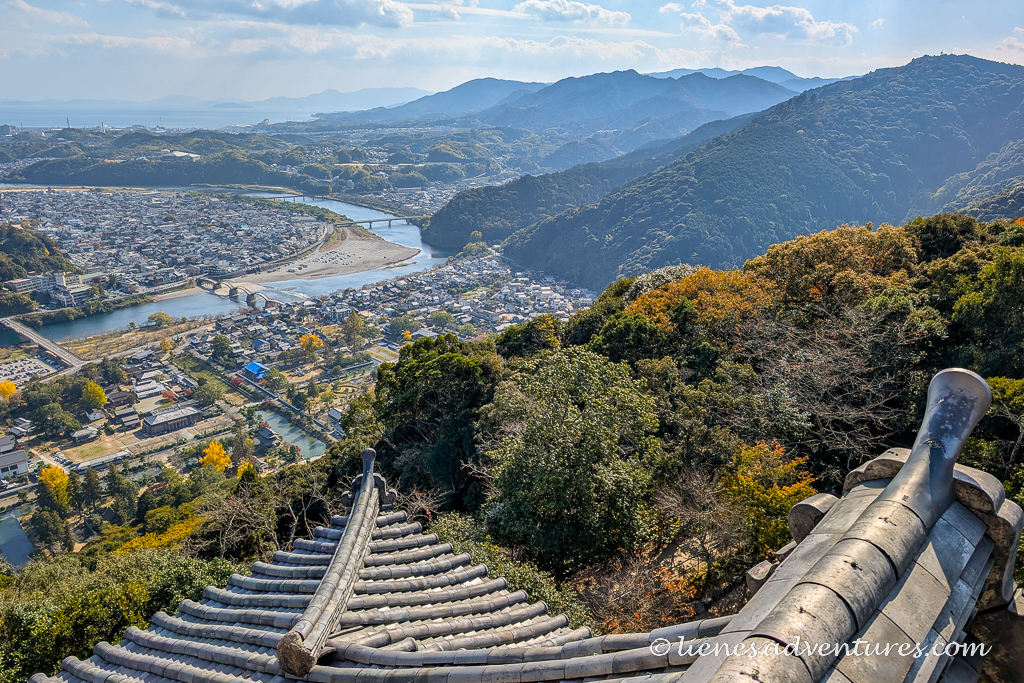
The top deck of the castle was an observation platform providing amazing views over the surrounding landscape. I just could not get enough of the view and kept walking to every window over and over again.
With that our little outing here was over. On our walk back, we stopped by one of the ice cream stands. I decided to be adventurous and got myself a matcha ice cream. Although I was not a fan of matcha tea, matcha ice cream was surprisingly tasty. It was so good that for the rest of our time in Japan, matcha flavor was what I got every time we stopped for an ice cream.
MIYAJIMA ISLAND
Our next day trip took us to Miyajima Island. I was very much looking forward to it as this was probably one of the more well-known places that I had seen online before. The big torii gate and free roaming deer were attracting tourists from near and far. But to get to Miyajima, we had to take a few different modes of transportation.
We started off with a 40-minute train ride to the ferry terminal. This was our first experience with inter-city Japanese trains. Although this was not the famous high-speed train (as the distance was just too short), it was still fun to experience it and watch the scenery along the way.
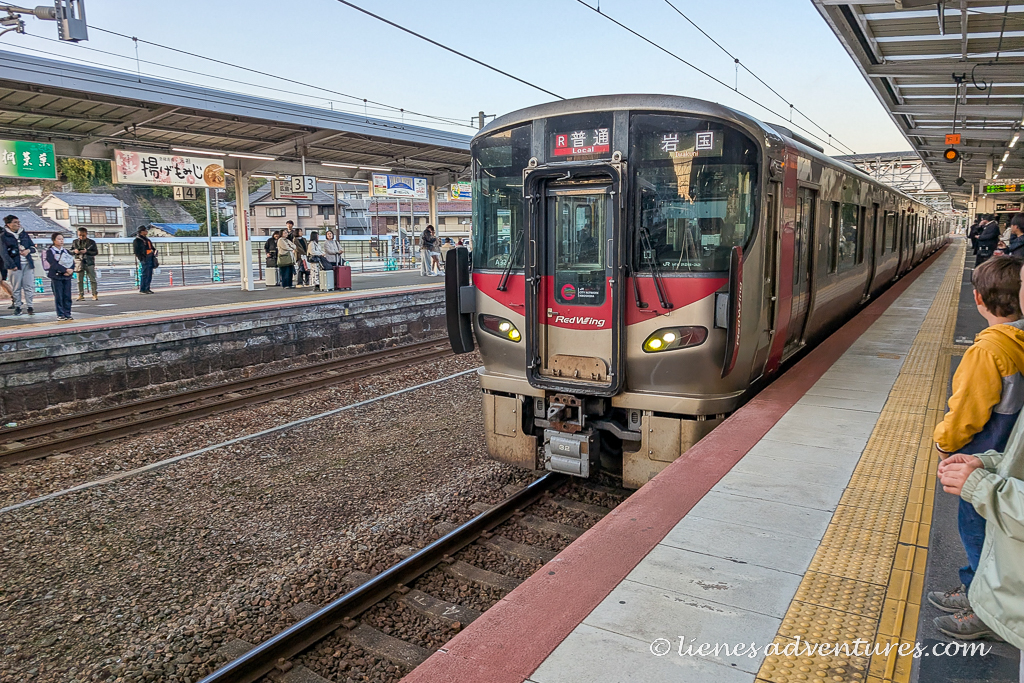
Once we got to the ferry terminal, we had a short 15-minute boat ride to the island.
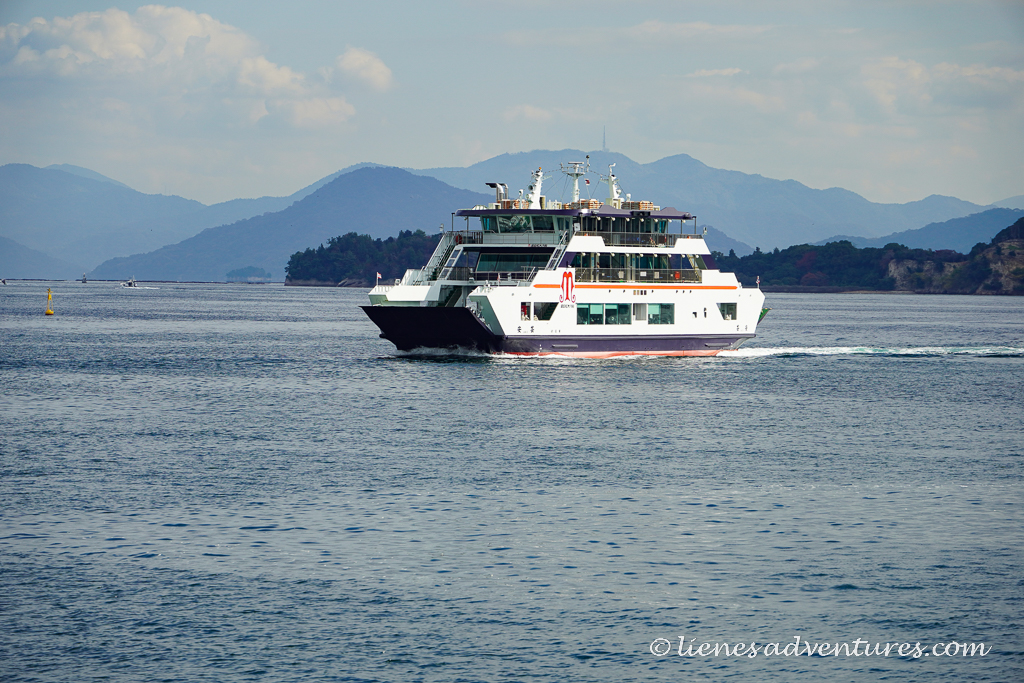
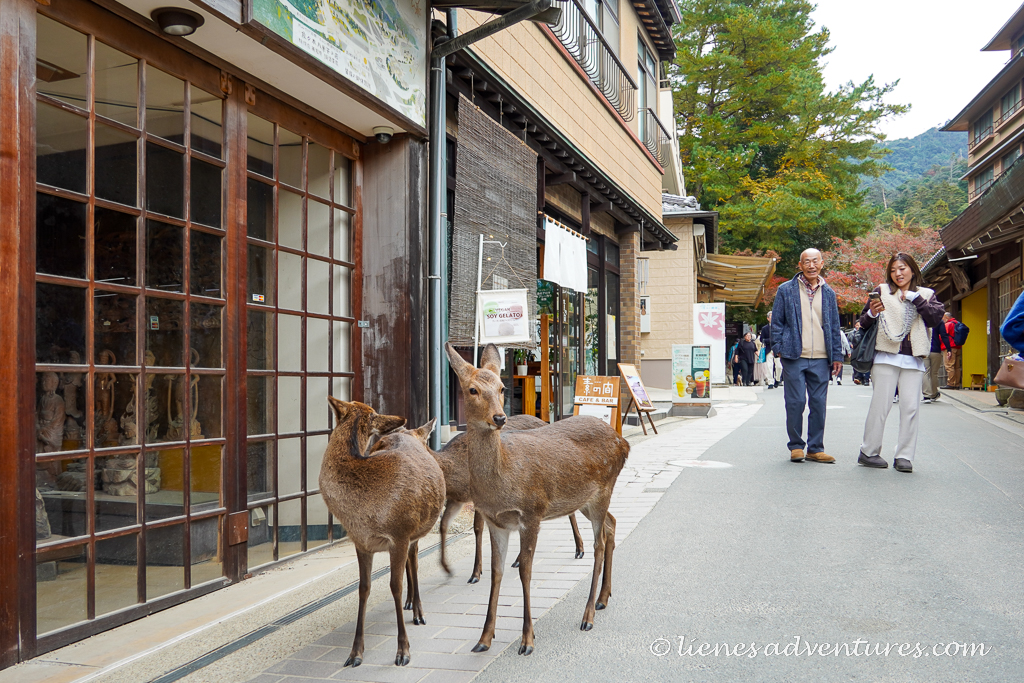
As soon as we stepped off the ferry, our boys started spotting deer in all directions. These wild deer had become accustomed to people. During the day, the deer wandered around the same sites as the tourists, and in the evening they slept along the walking paths.
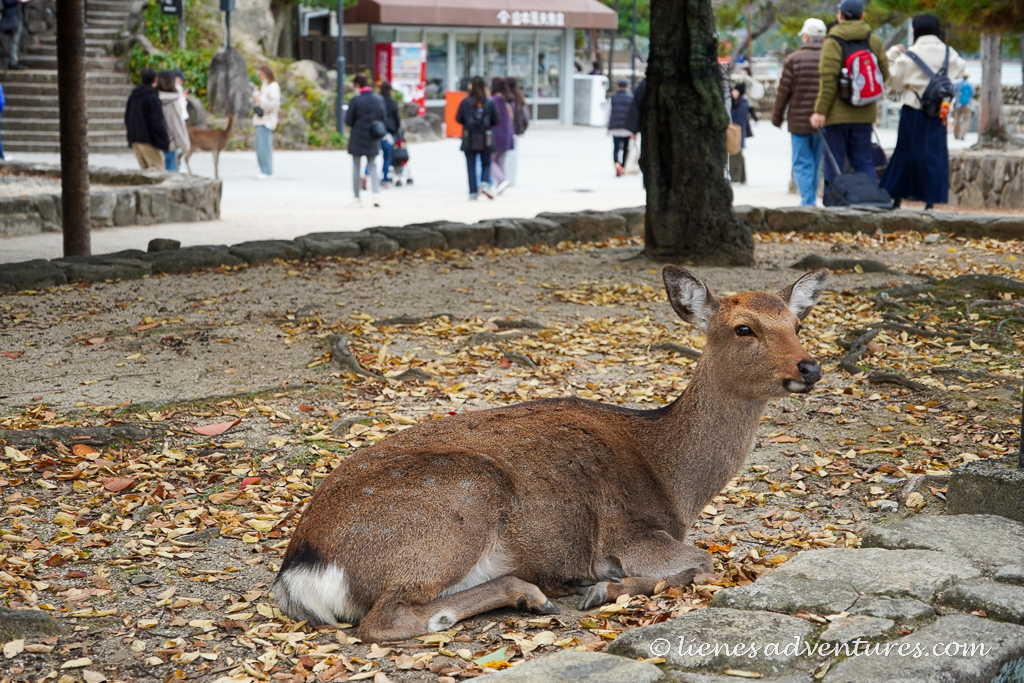
Unlike in Nara (another popular wild deer location in Japan), the deer on Miyajima could not be fed. That did not stop the deer from attempting to snatch tourists’ snacks or take a bite out of a pastry bag…
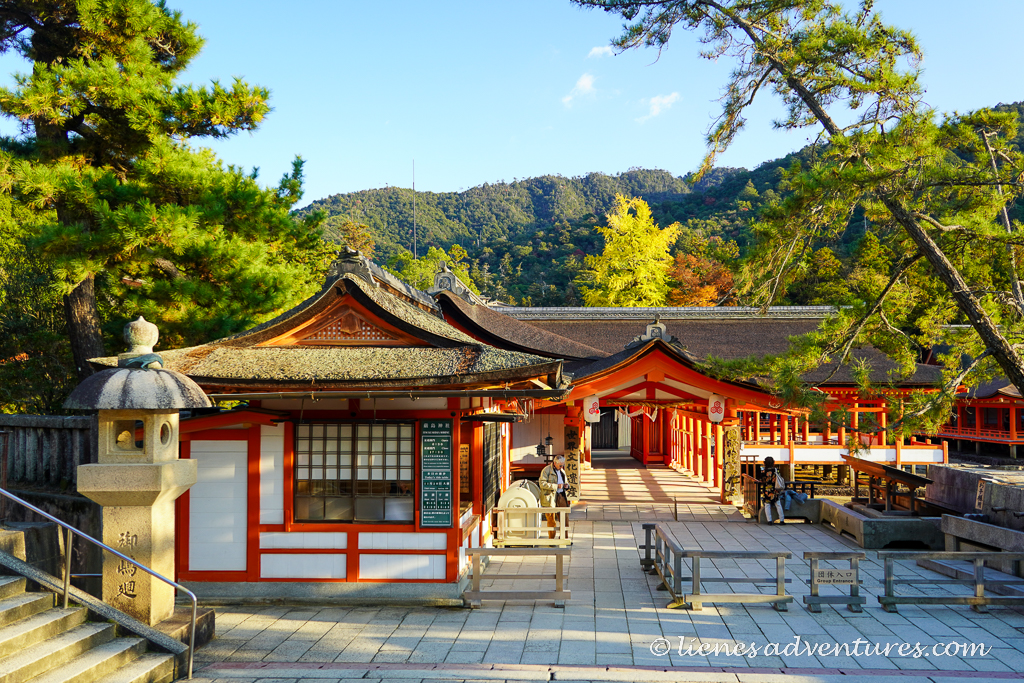
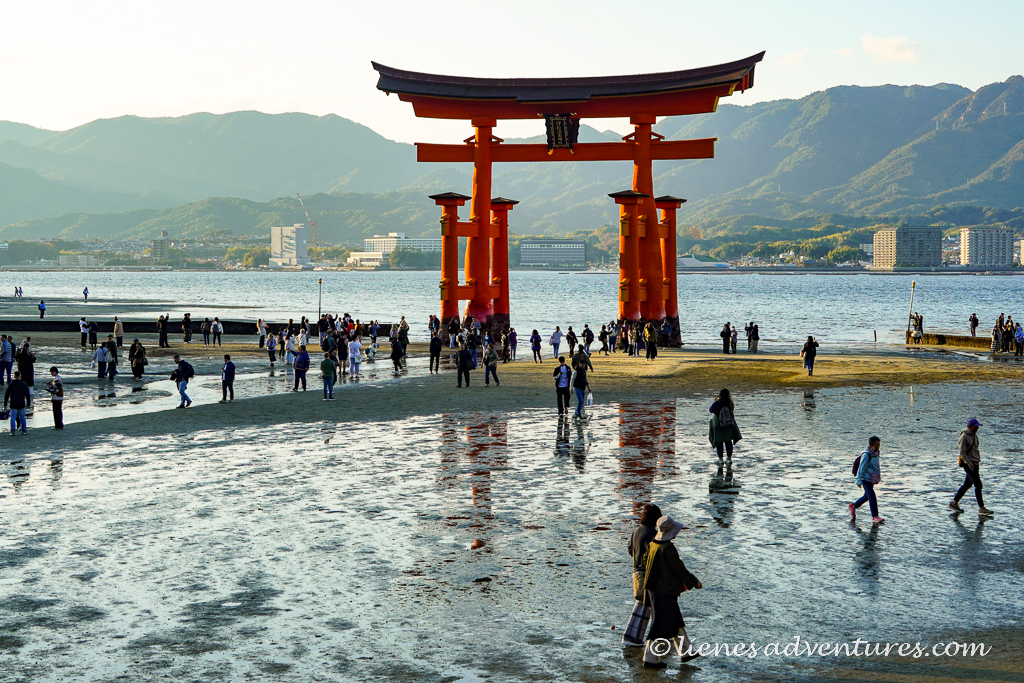
As we made our way along the beach, the famous red torii gate came into view. During high tide, the water made an illusion that the gate was floating on water. Its bright paint contrasted with the subdued pastel colors of the rest of the landscape.
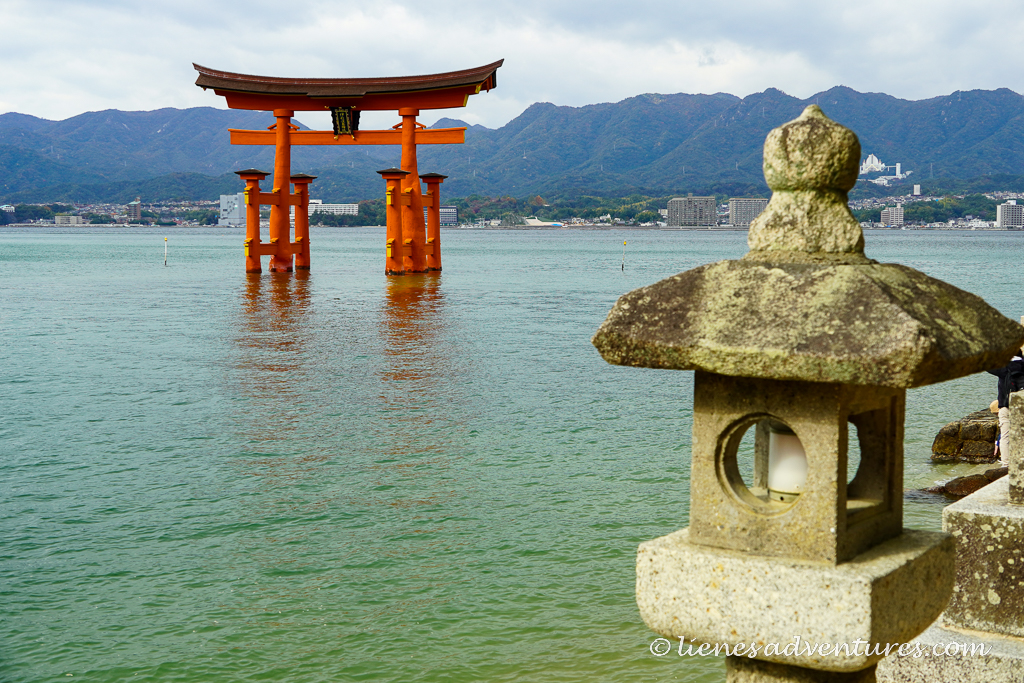
Although one of the more popular attractions of the island was visiting the Itsukushima Shrine that overlooked the torii gate, we decided not to go inside.
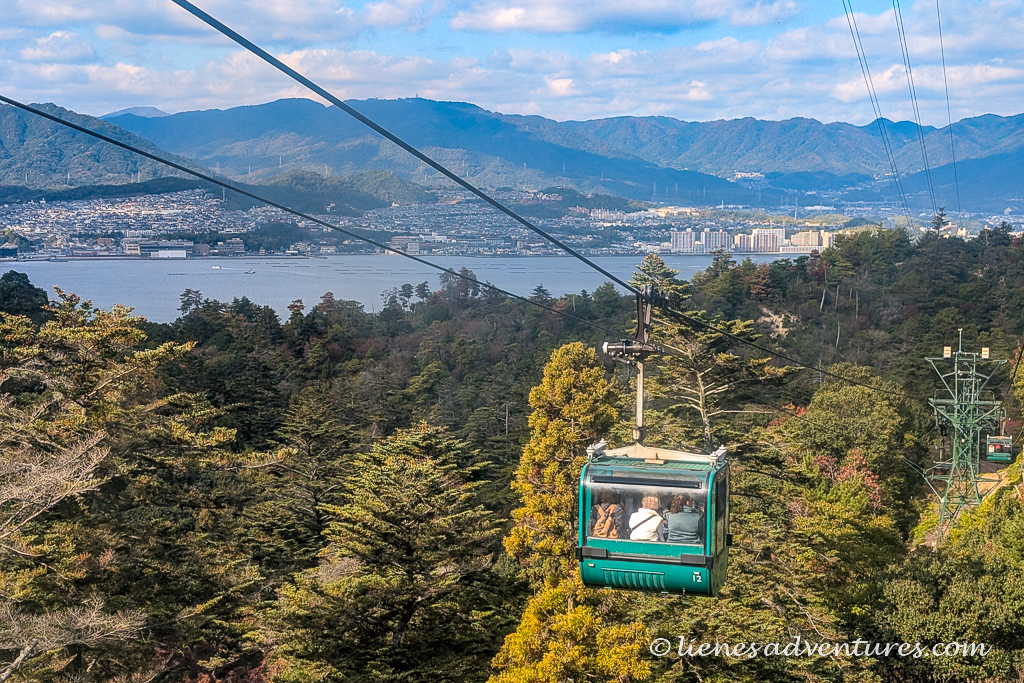
Instead, we set our sights for Mount Misen. At 500m (1640ft) above sea level, it was the highest peak of the island. To get to the top, we needed to take a set of 2 different ropeways. As I have fear of heights, this was a little bit out of my comfort zone. The aerial tram went very high over the valleys. But those views!
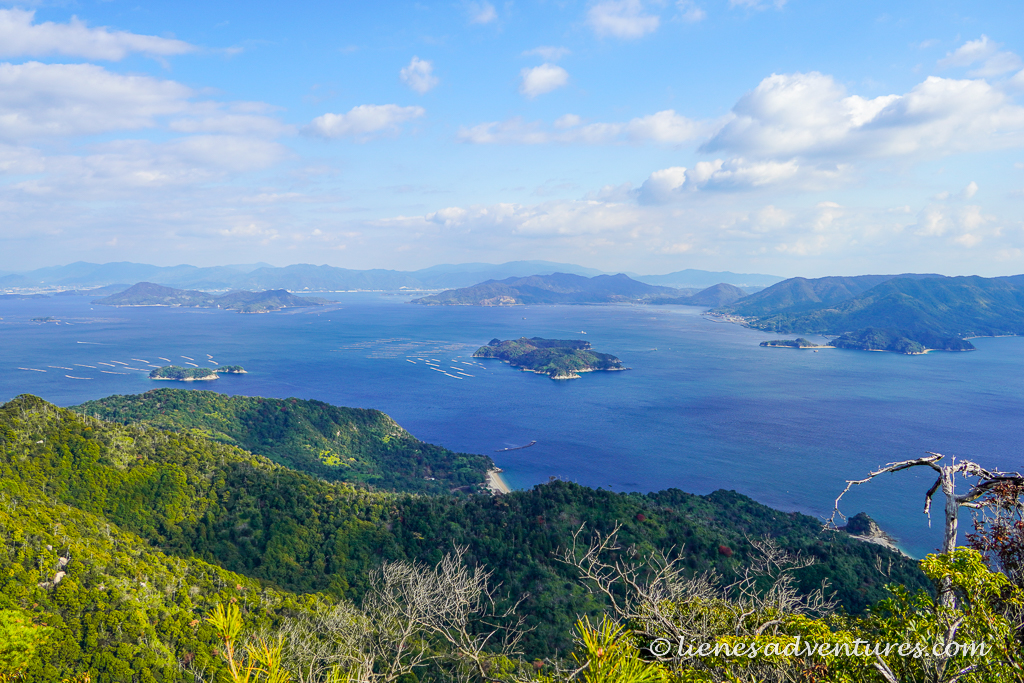
Right as we exited the tram, there was an observation platform that offered spectacular views of Seto Inland Sea and many other smaller islands scattered about.
However, the actual top of the mountain still required a half an hour-long hike with another 100m (330ft) elevation gain. I had no complaints though, as the walk was beautiful.
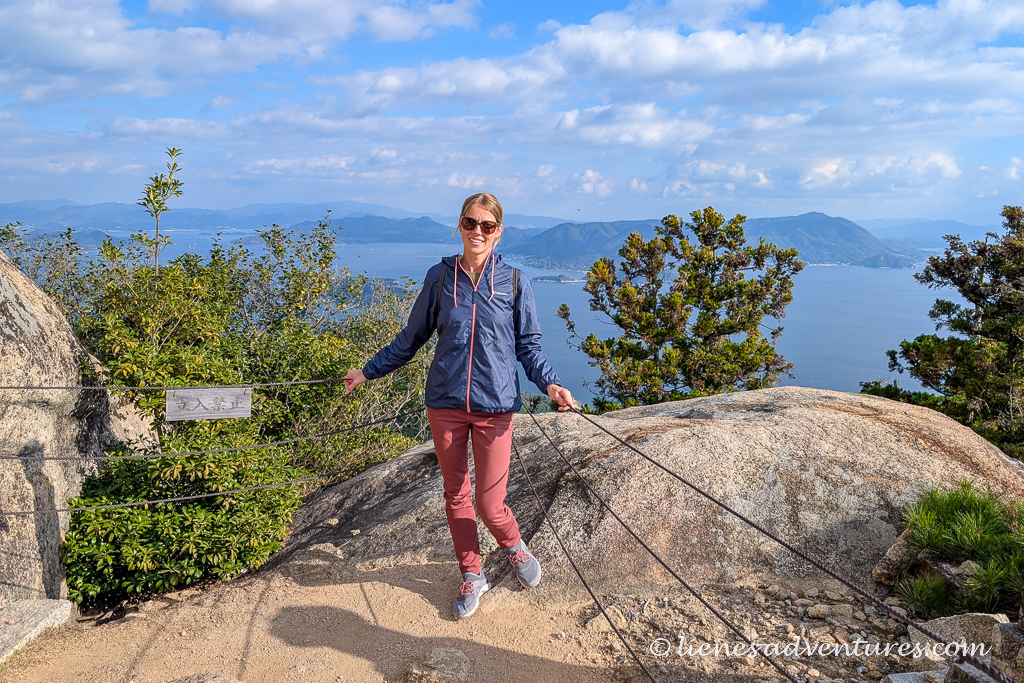
At the very top of the mountain there was an observation platform that offered 360-degree views all around. And due to the seasonal (winter) haze, the landscape looked like it was wrapped in a blue blanket. We could barely make out the lined layers of the mountain ranges in the distance, yet it gave the landscape a mystical look.
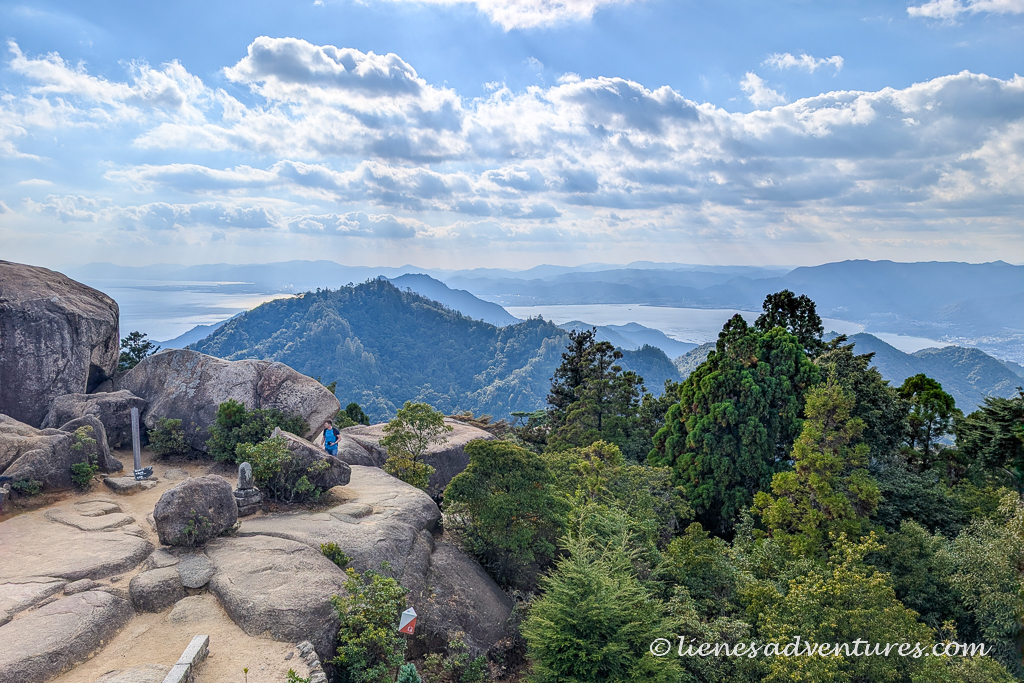
Going down we had an option to either hike or take the ropeway again. We decided that we did not want to stand in an hour-long line waiting for the gondola, so the boys and I opted to just hike back to the bottom of the island. And they had plenty of energy that had to be put somewhere anyway. Altogether, the hike up to the lookout and back down was close to 6.5km (4 miles) and took us about 2.5 hours including a long photo stop at the top.
Once we reached the sea level again, the tide had receded and it was a very different scenery than in the morning. The sea had backed up so much that it was possible to walk all the way to the torii gate now, while in the morning it was all under water.
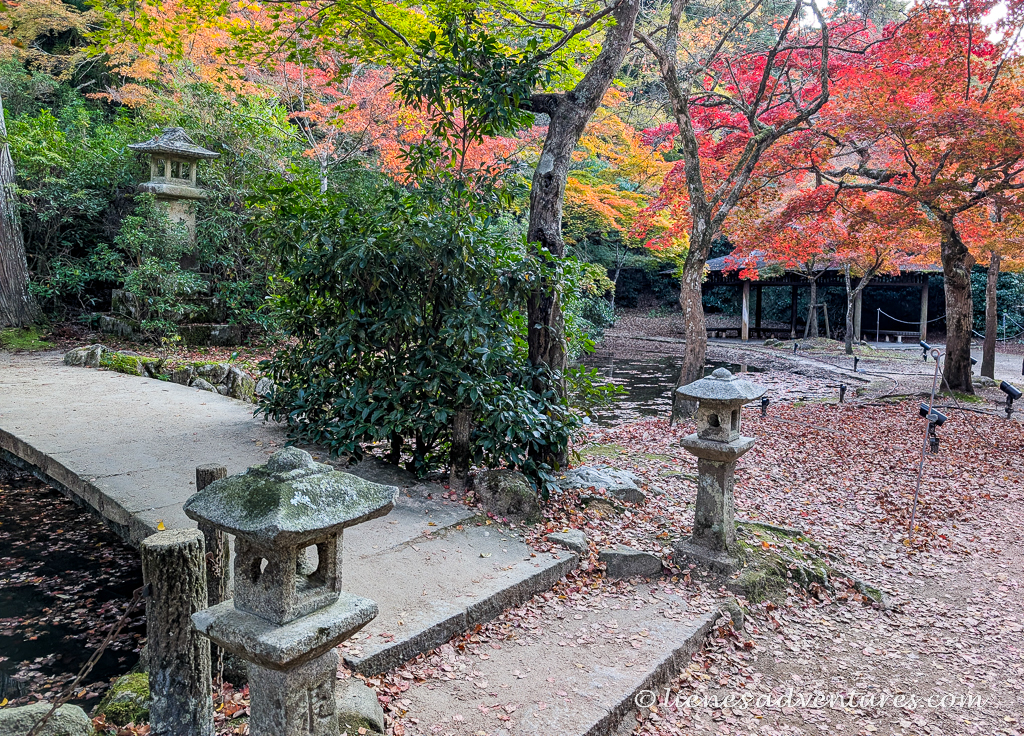
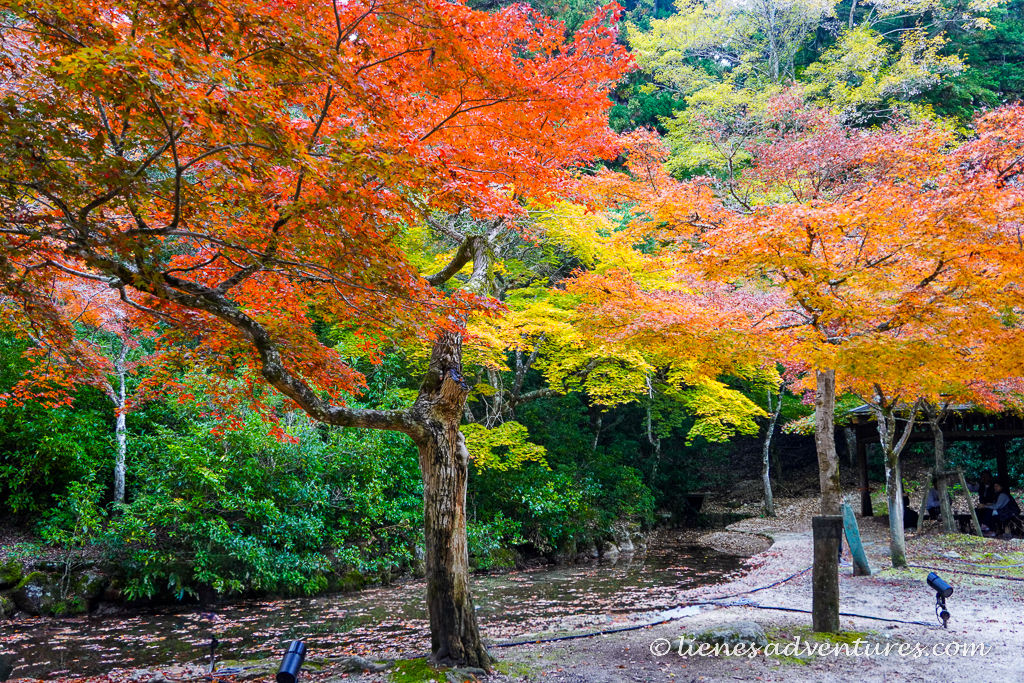
Besides the main attractions, the rest of the island was very beautiful as well. The fall was here – with colorful trees, gurgling streams, mossy rocks and bright red bridges. Miyajima was a very scenic and beautiful place to spend a day at.
HIROSHIMA
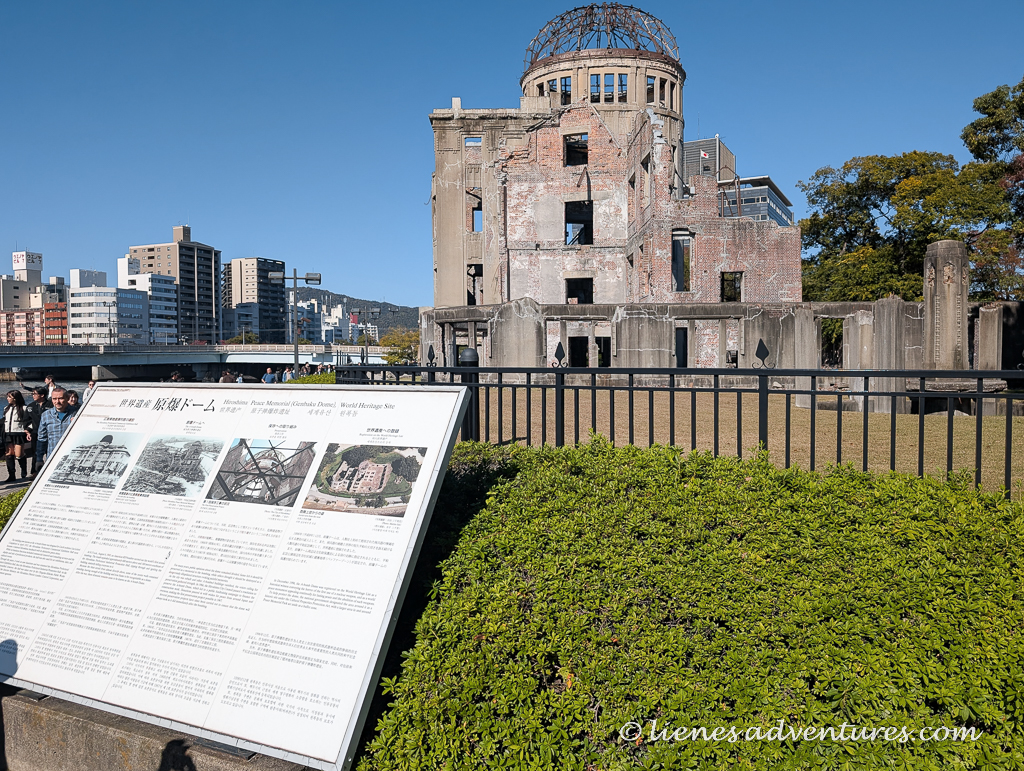
I had mixed feelings about visiting Hiroshima. It was definitely a place worth seeing. But just knowing about the events that had taken place here, the overall mood was not going to be very vacation-like. Yet, being a short drive away, it was decided that we would go and explore the city. We started out with the Hiroshima Peace Memorial and its most recognizable landmark - A-Bomb Dome which was designated a UNESCO World Heritage Site in 1996.
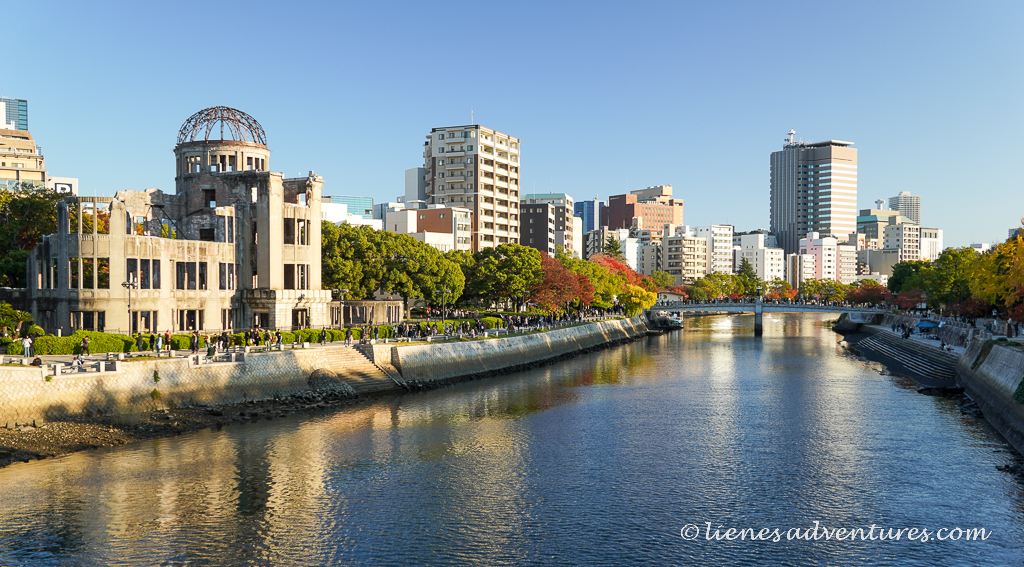
Hiroshima was the first military target of a nuclear weapon in history. This occurred on August 6, 1945 when the United States Army Air Forces dropped the atomic bomb "Little Boy" on the city. Because the hypocenter of the explosion was almost directly overhead the dome, the building kept its shape. Its vertical columns resisted the blast's nearly vertical downward force, and parts of the concrete and brick outer walls remained intact. It was the only building that remained standing. Therefore, it became the symbol of resilience and a memorial to those lost.
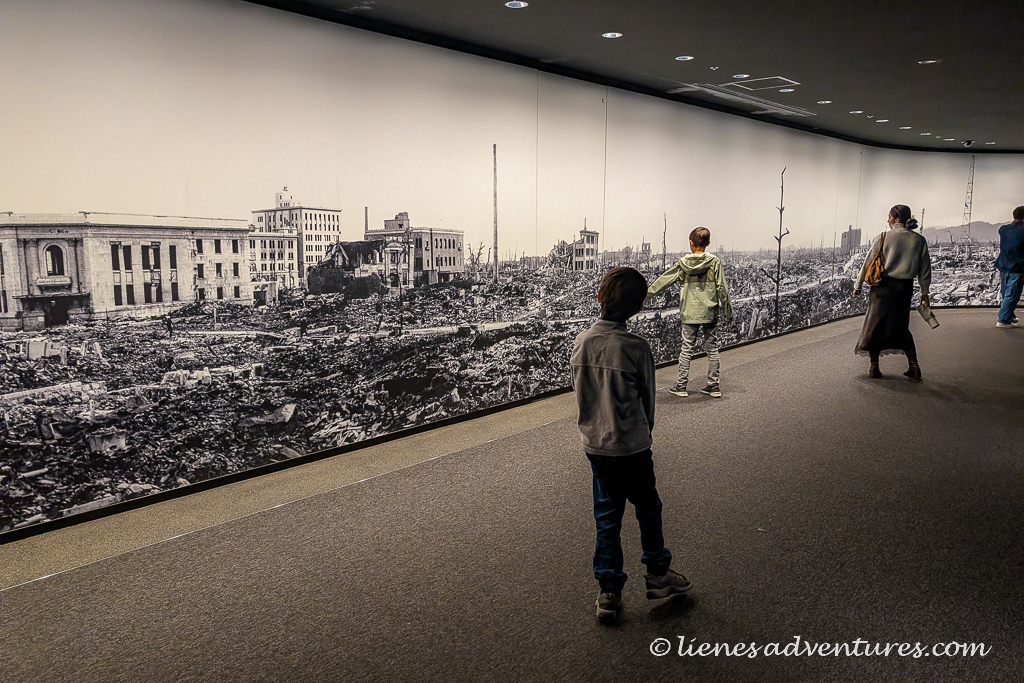
Part of the Peace Memorial was also a museum where there was a collection and displays of belongings, photographs and other items left behind by the victims. As expected, it was a very depressing place to visit, especially with little kids and all the graphic images and eyewitness account videos. We were not trying to shield our children from the horrors of the world by any means, but this was a lot to take in. Hence, our visit here was a little hurried and short.
To lighten up the mood, we went for a long stroll through Hiroshima’s streets.
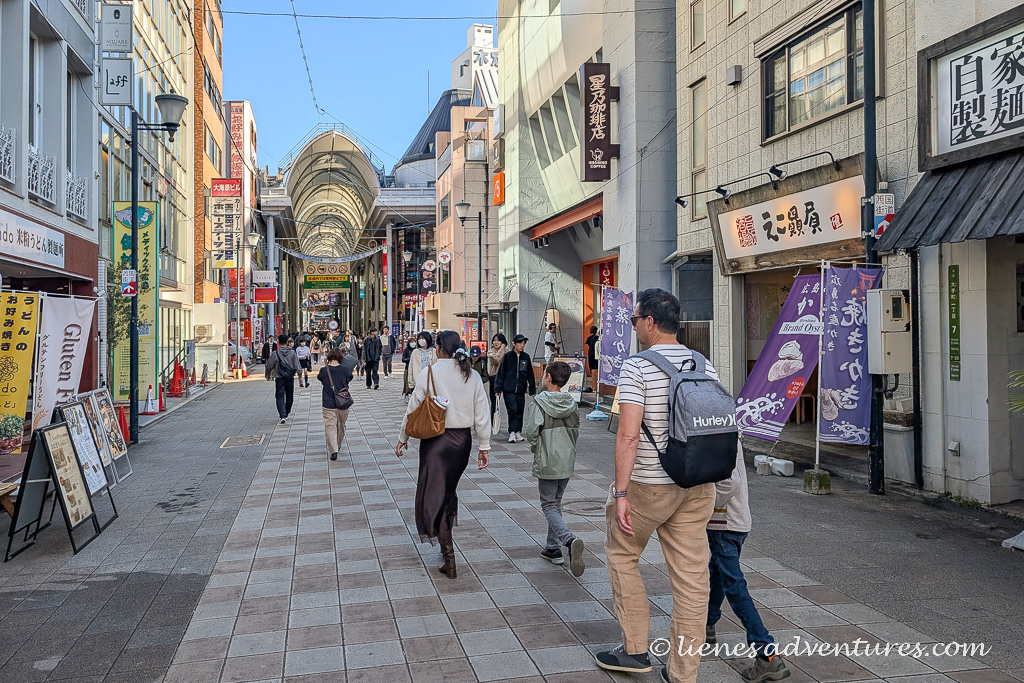
There were fun shops and eateries. We had some ramen for dinner with doughnuts and coffee for dessert. That was a good ending to a day that started out quite heavy.
TOKUYAMA ZOO
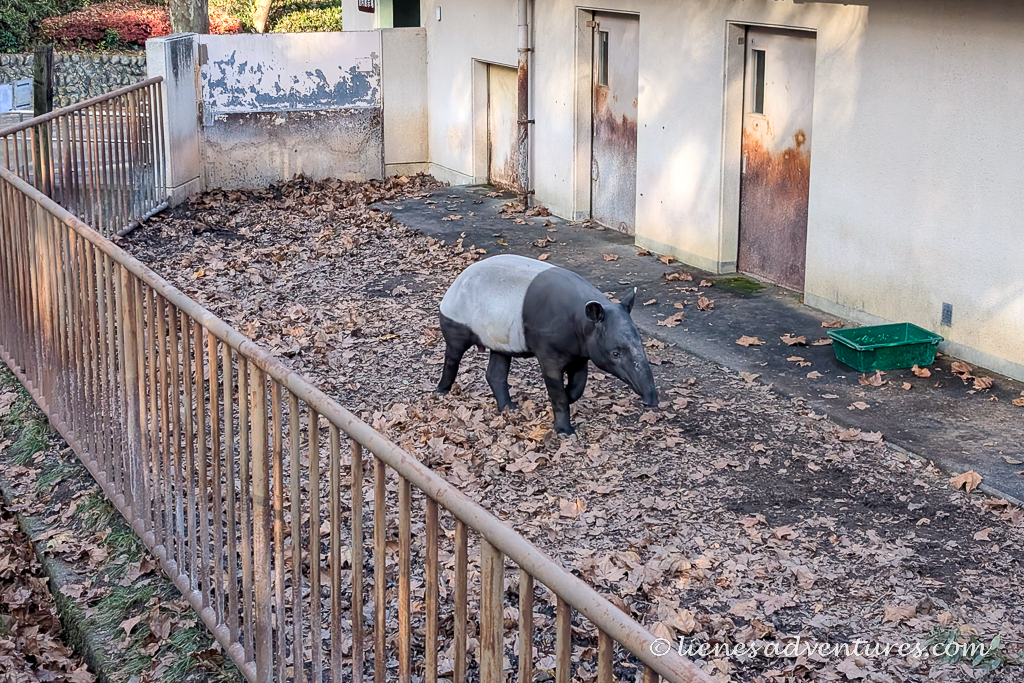
With a couple of days of spare time, we decided to take our kids to a local zoo near Iwakuni. While I was not a big fan of zoos in general, I had been to quite a few nice ones over the years. Well, let me tell you – this one was not it. The enclosures were absolutely tiny, many of them just plain, barren cement. There were no enrichment toys for any of the large animals – no hanging branches, ropes or balls; no big tires to push around or jump on. These items would be so cheap and simple to install, yet so fun for the animals.
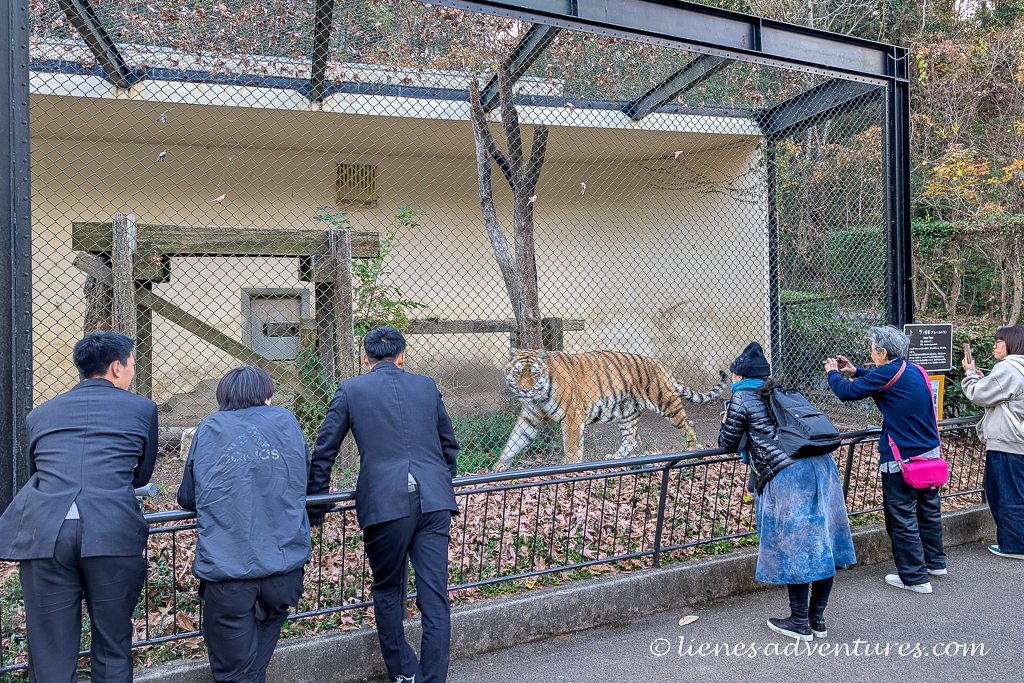
A tiger had the smallest enclosure I had seen anywhere in the WORLD. It was extremely narrow, and maybe three tiger leaps long at best! To be honest – even the children’s playground area was 4 times bigger than what the tiger had to live in.
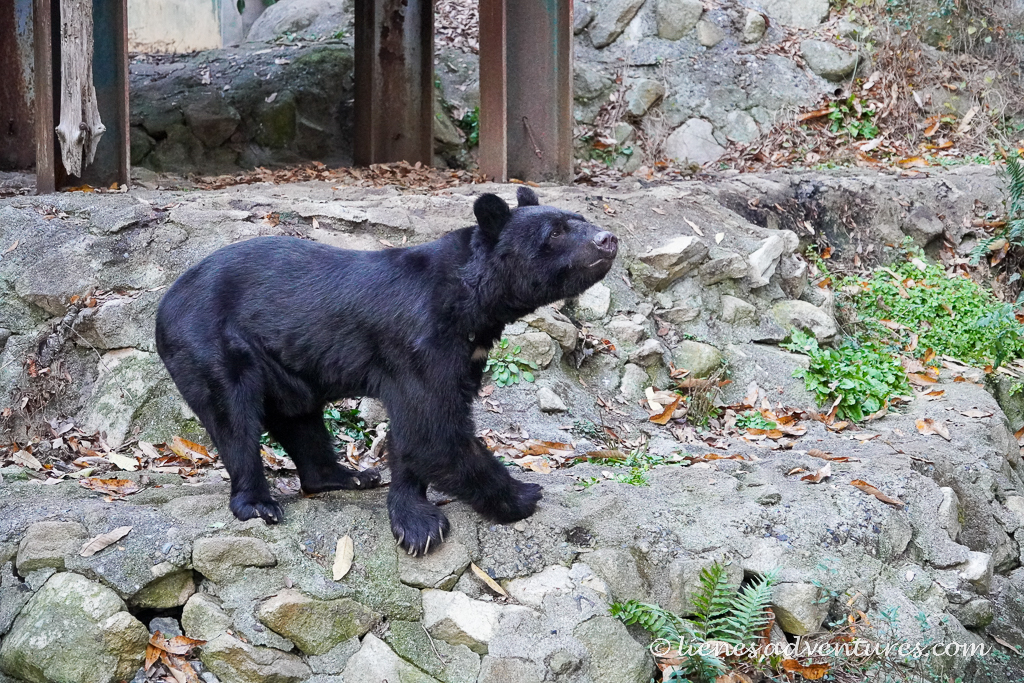
Elephants, big cats and bears were in a state of zoochosis – just pacing back and fort or repetitively swinging their heads left to right over and over and over again… Japan being such an advanced, developed country, this came as a shock to me. I thought maybe this was just a one-off, taking into account that this was not a big tourist spot, but rather a small local zoo. However, upon researching the subject online, I discovered that Japan had long faced strong criticism over their cramped, depressing zoos and complete lack of animal welfare. Apparently, in contrast to other developed countries, there weren’t even any laws in Japan that protect zoo animals. So, at the end of the day – nobody was being held accountable for the sad state the animals were in.
Being such an advanced and modern country, Japan must do better! This zoo visit was eye-opening, and to an extent - a sad trip we wished we had not done. It was definitely not a good look for Japan.
BEPPU and FUKUOKA
Beppu Day 1
Our trip to Beppu was part of a longer 3-day road trip from Iwakuni to Japan’s southern Fukuoka and Oita prefectures. Though I had not heard of Beppu before, the relatives we were staying with were interested in visiting the area. Apparently, Beppu was a resort city known for its hot springs, geothermal features and onsens, producing more hot spring water than any other place in Japan. Sounded intriguing enough, and off we went!
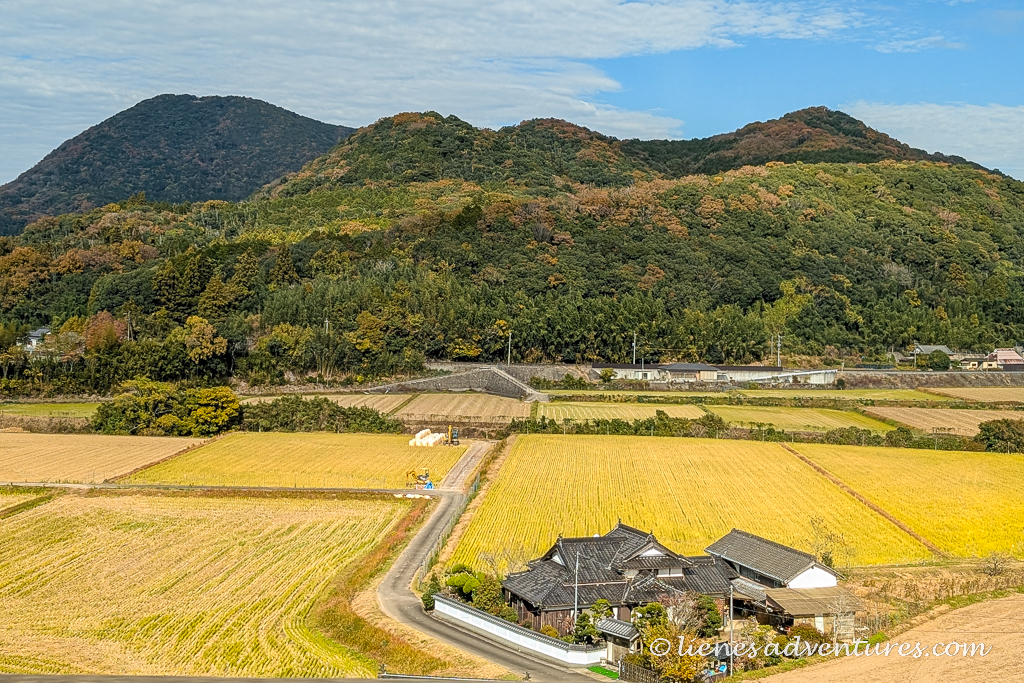
It was a 3-hour drive, but it never got boring - the road took us along picturesque mountains, valleys and towns. In November, the rice fields were golden yellow and looked unique.
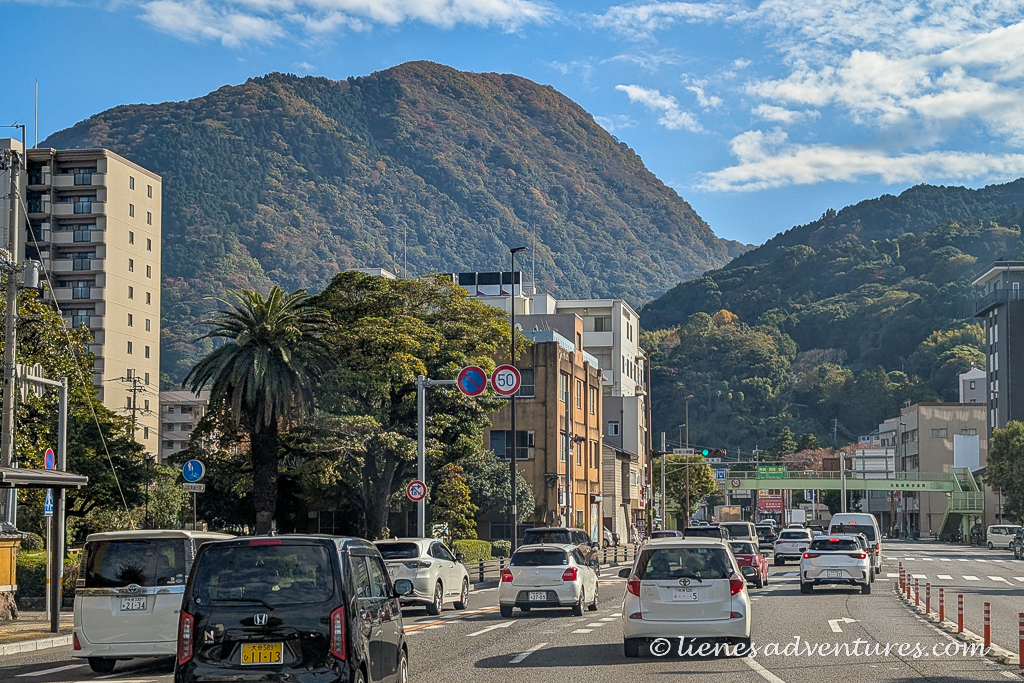
Beppu itself was quite a large town situated on the western part of Seto Inland Sea. On the backside, it was surrounded by various mountain peaks and hills.
As it was approaching early afternoon, we decided to leave all the hot springs adventures for the next day and, instead, use the remaining few daylight hours to visit with some cute monkeys.
Takasakiyama Nature Park was a unique place where visitors could see many wild Japanese macaques. There were no enclosures here, or fences. It was not a zoo. The monkeys were free to come and go as they pleased. And although some of them had left the troop for an extended absence, most eventually returned to the area sooner or later. And why would they want to stray far, when there was daily food provided here, clean water and safety?
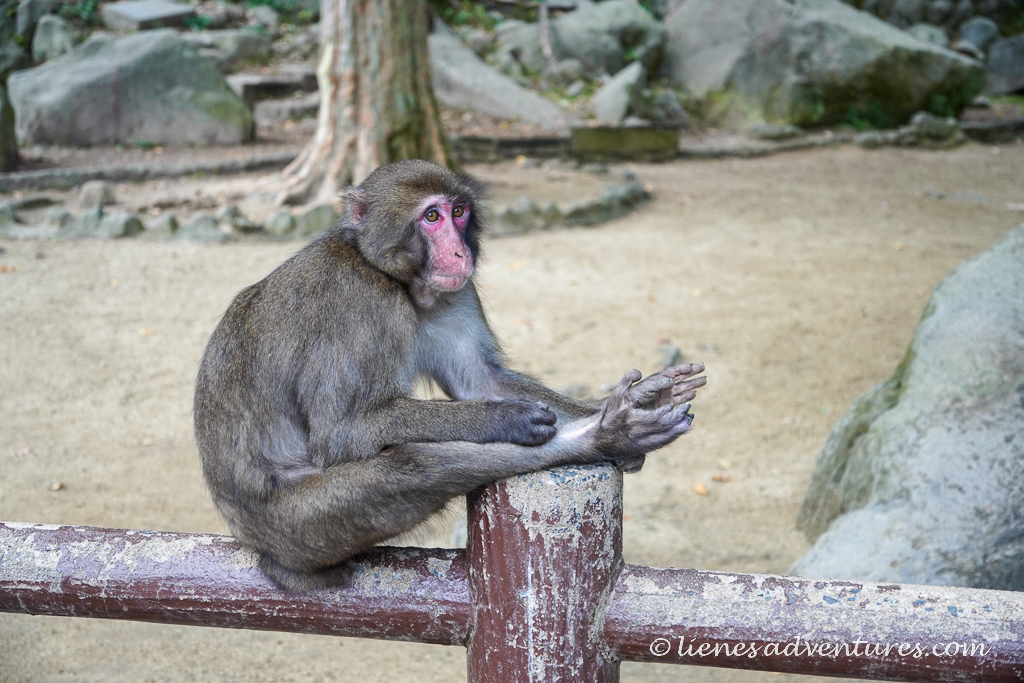
From the entrance station it was a short 10-minute walk uphill to the main monkey gathering area. Along the way we met several macaques playing in the woods. They seemed quite fearless and determined. If they had decided to cross the road, walking right over people’s feet to get wherever they wanted to go was no issue at all. We were more cautious of them than they were ever of us. We had to give way as this was their home.
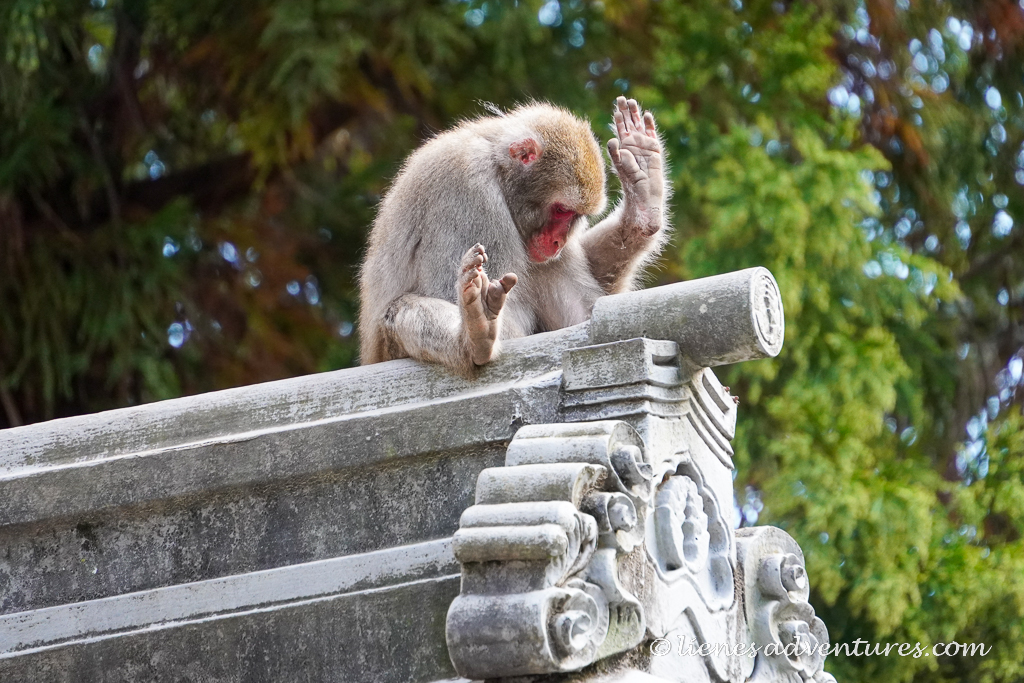
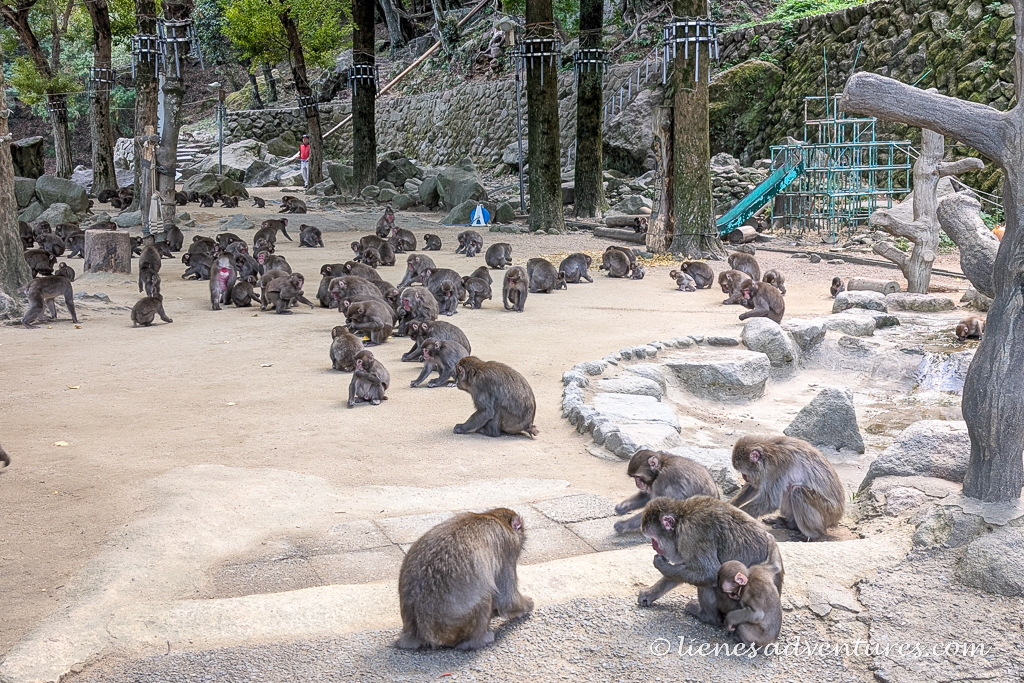
Once we made our way to the top, there were so many monkeys everywhere! They were playing on rooftops, running up and down the mountain, jumping fences and climbing trees. Although it looked like complete chaos, they had their own strict hierarchy. There were over 1500 monkeys in the reserve with 2 established troops (each with 700-800 members), and a big, mean-looking alpha male as the leader for each troop.
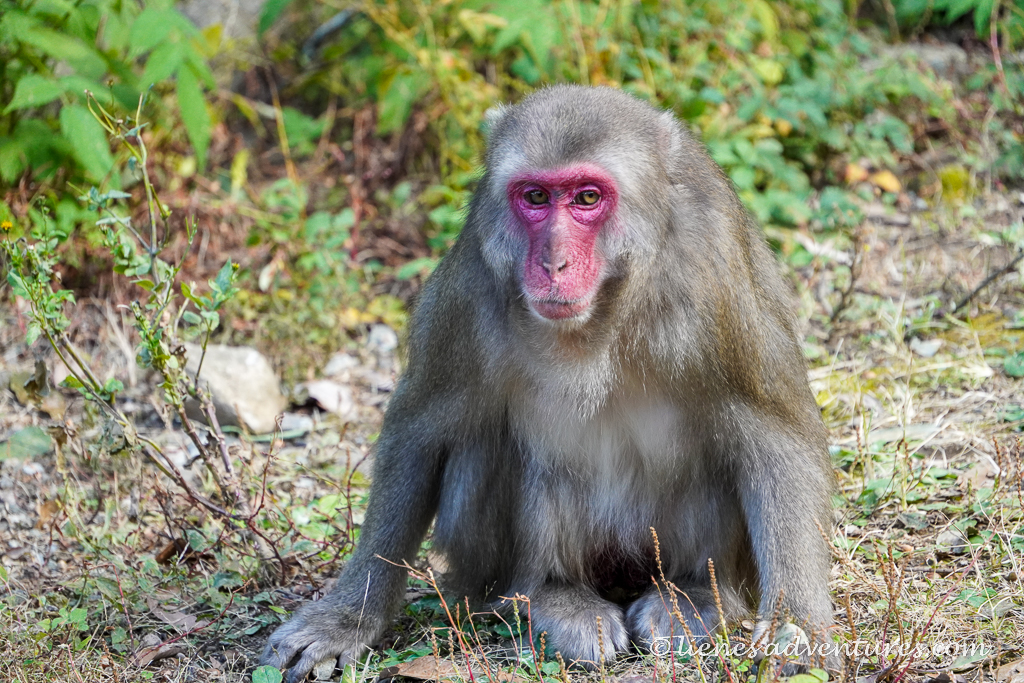
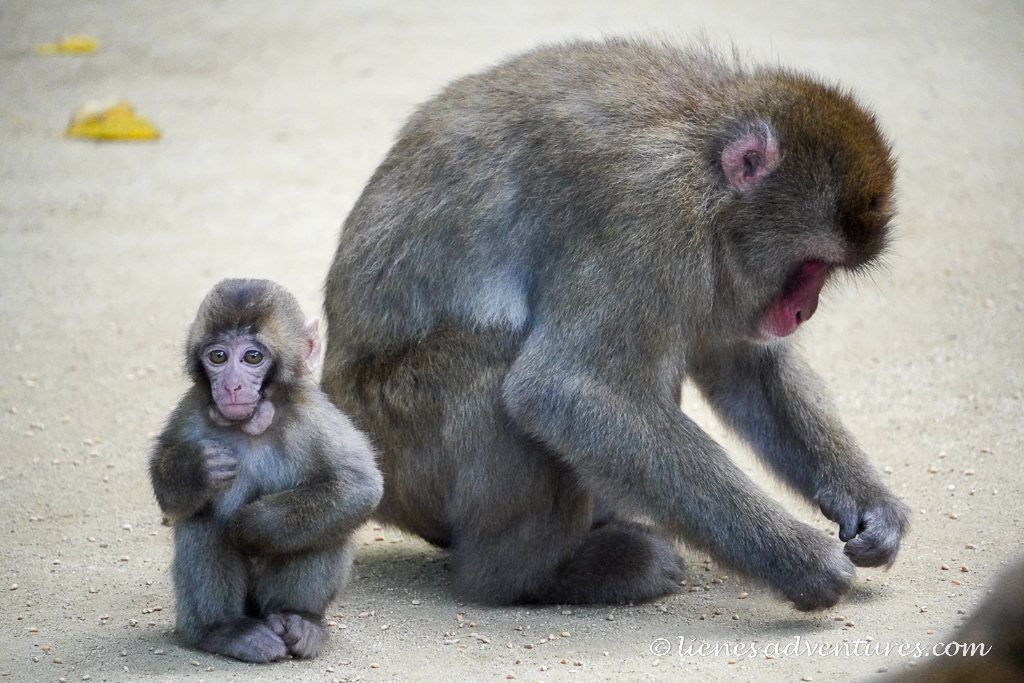
And the babies! There were so many adorable babies. The workers had set up human playgrounds for the baby monkeys here with slides, swings, ropes and ladders! And the babies had a blast!
Once the feeding time came, over a hundred monkeys gathered in the area, coming down from all their hiding and climbing spots. Free meals were always appreciated!
We spent almost 2 hours here, and it was a lot of fun.
With monkeys fed, it was time for us to get a proper meal ourselves. We picked a Japanese restaurant with traditional low tables and tatami mats. We wanted the whole experience. Although it seemed like fun at first, sitting on the floor crisscrossed for an extended time while trying to manage eating with chopsticks was not all that comfortable. It was a unique experience though!
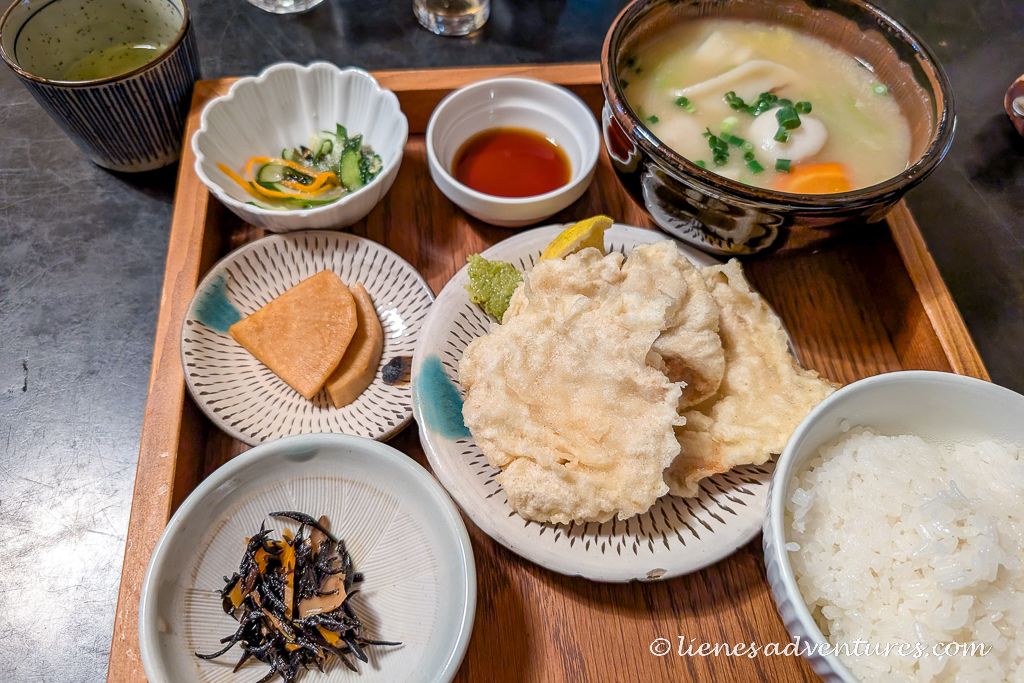
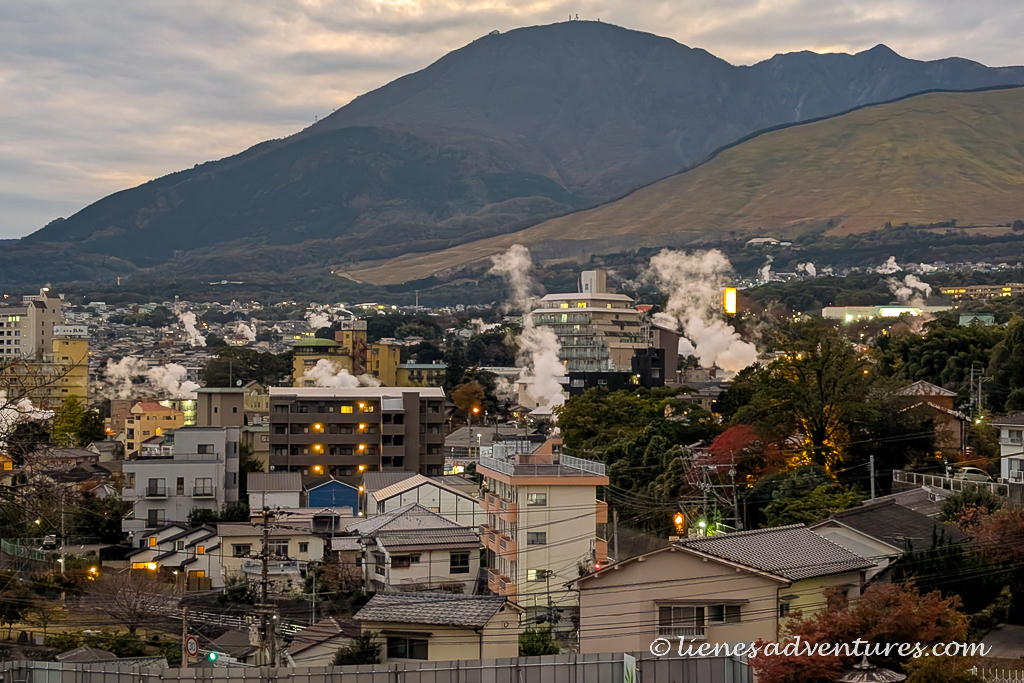
Our lodging for the next 2 nights was an AirBnB – a traditional Japanese style home. It had sliding doors for room separation and even its own little hot spring stone hot tub. The view from the second floor overlooked Beppu with hot springs steam rising into the sky all across the town.
Beppu Day 2
We started our second day in Beppy with a visit to a place with a peculiar name – the Seven Hells of Beppu (Jigoku Megori). The “seven hells” were seven unique, naturally occurring hot springs famous for their spectacular, often colorful, boiling waters and steam. If you know of YELLOWSTONE NATIONAL PARK IN THE USA, then this was like a miniature version of it.
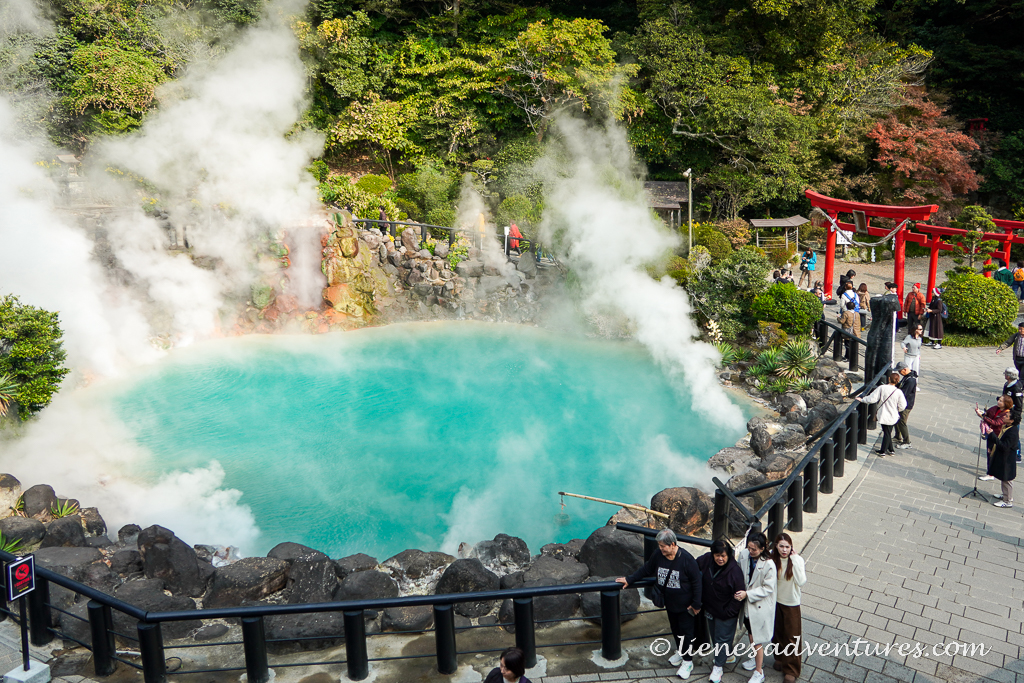
Hell #1 was Umi Jigoku (Sea Hell) - a vast, cobalt-blue hot spring with strong steam, featuring beautiful gardens and a lotus pond.
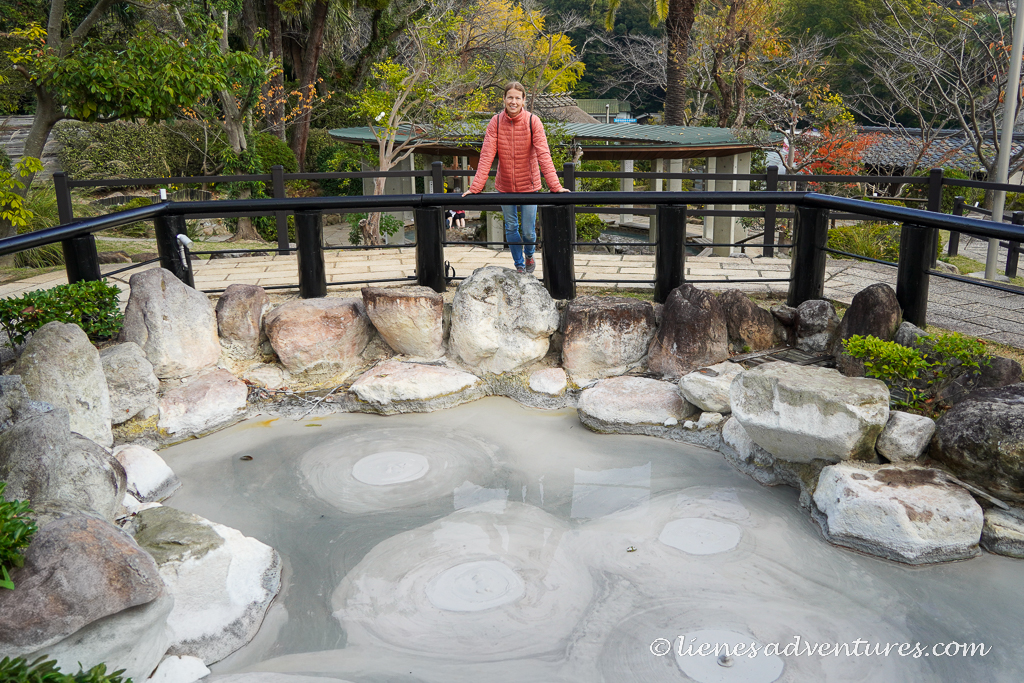
Hell #2 was Oniishi Bozu Jigoku (Monk’s Head Hell). This was a pond with boiling mud which, apparently, resembled a round, shaved monk’s head.
Hell #3 was Kamado Jigoku (Cooking Pot Hell) which featured multiple colorful ponds, mud pots and a demon statue. But the most interesting area for us was the steam “kitchen” for cooking food. There were eggs, buns, corn and other edible items cooked right over the hot springs steam.
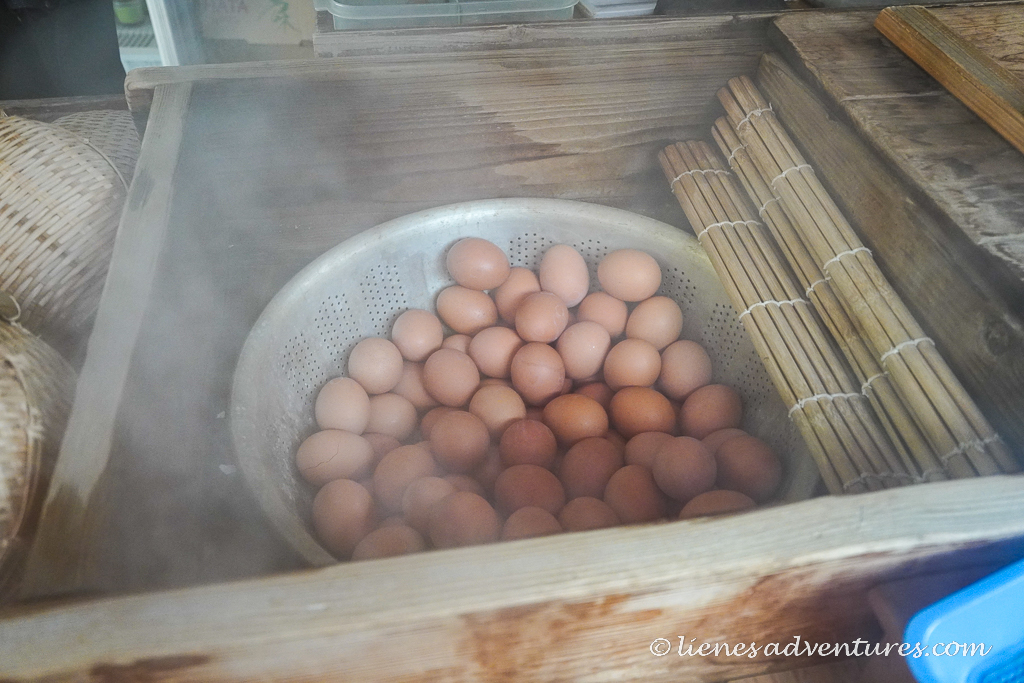
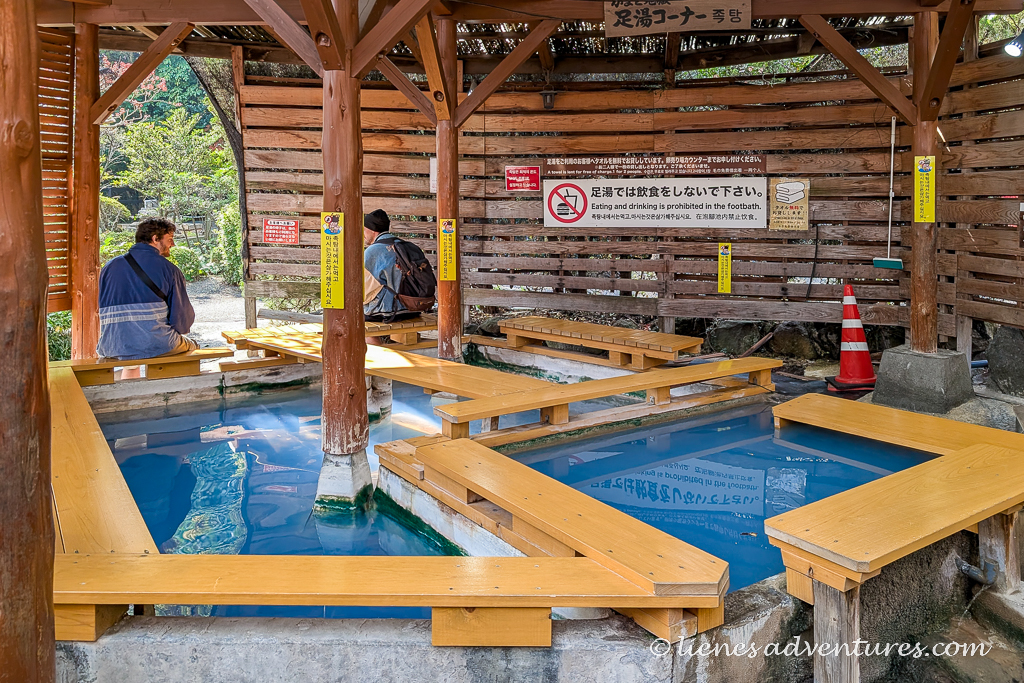
And while we were enjoying our hot spring cooked eggs, we could also sit down on one of the many benches and dip our feet into the blue hot spring water which was said to have therapeutic properties.
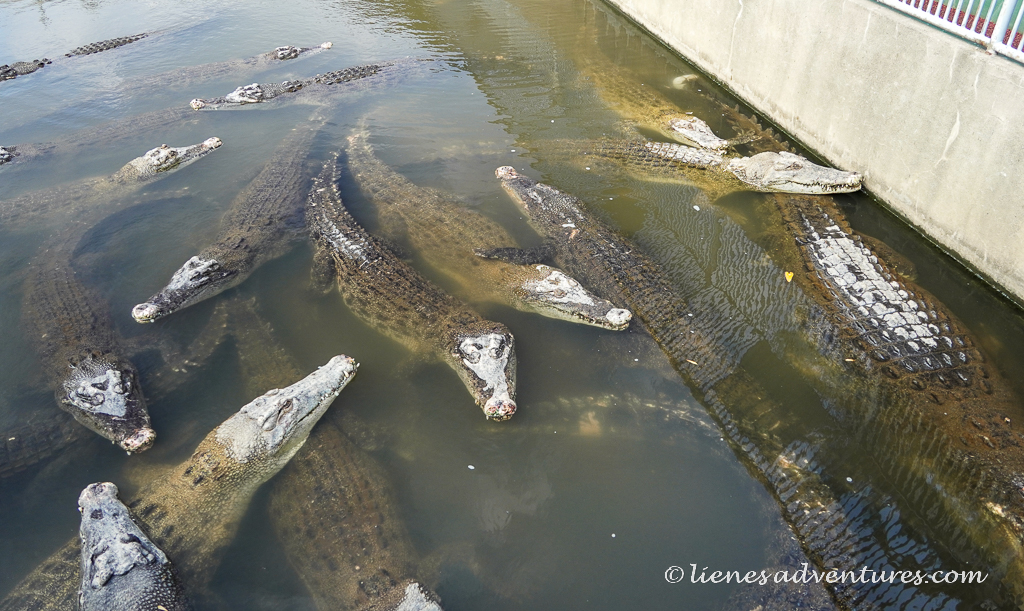
Hell #4 was Oniyama Jigoku (Crocodile Hell) where around 80 crocodiles were basking in the warm hot spring waters. Since 1918, Oniyama Jigoku had been used for raising reptiles, thanks to its 98°C (208°F) spring water, which provided intense heat and high humidity—ideal conditions for crocodile breeding. As most of the information was only in Japanese, it stayed quite unclear to me what the purpose of the breeding was.
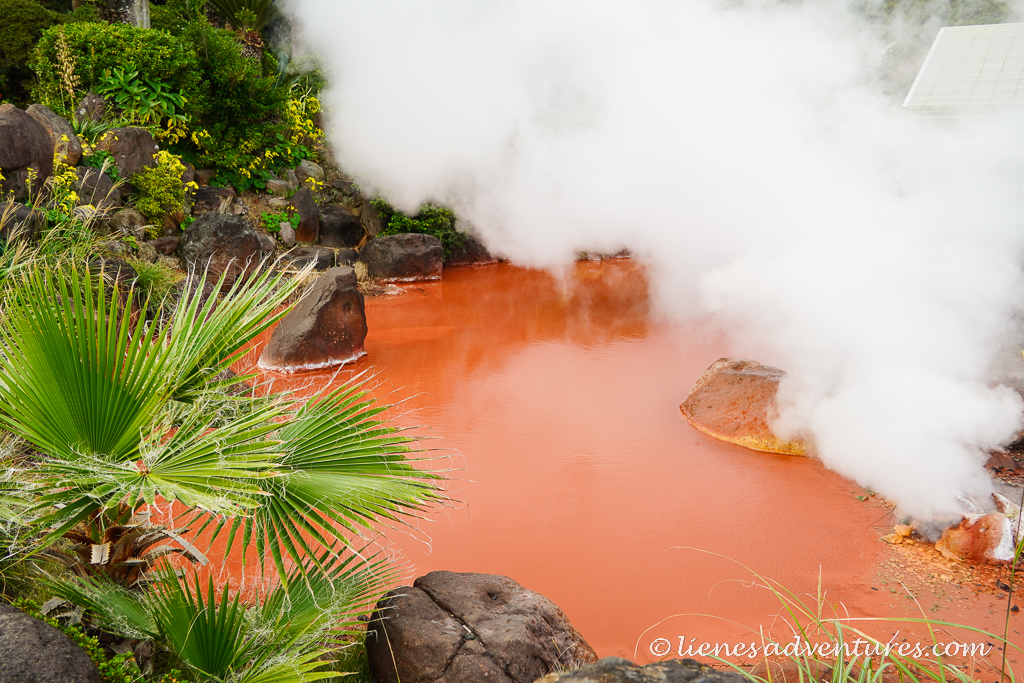
The remaining 3 hells were Hell #5 Shiraike Jigoku (White Pond Hell); Hell #6 Chinoike Jigoku “Blood Pond Hell” and Hell #7 Tatsumaki Jigoku (Geyser Hell). Shiraike housed a small aquarium with fish and turtles. Chinoike had a dark red-ish colored water hence the “blood pond”.
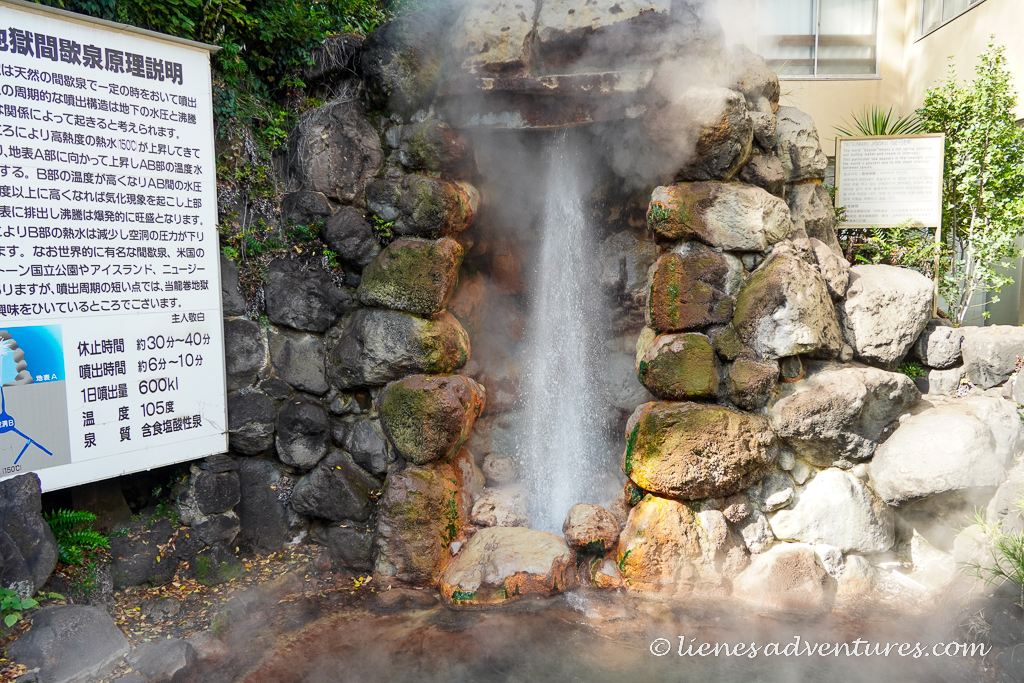
And the Geyser Hell, of course, had a geyser whose eruption we missed by a mere minute and caught just the very tail end of it. There was a stone enclosure around the geyser to contain its spray, as it used to damage nearby houses and vehicles with its acidic water sprays.
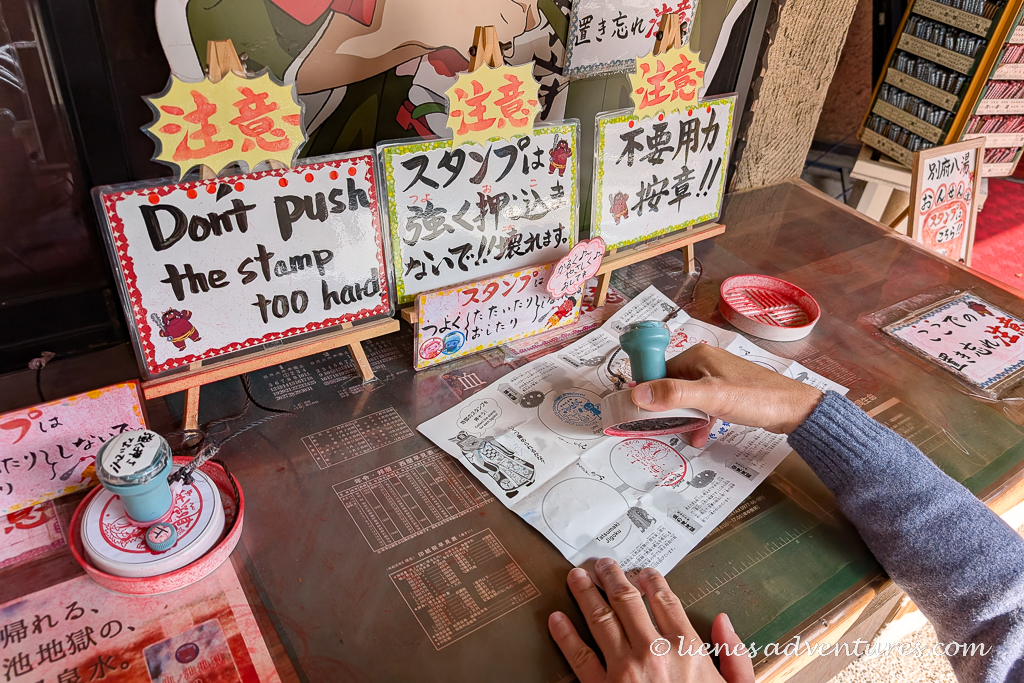
Overall, walking all 7 Hells took us several hours. And kids had a lot of fun collecting special souvenir stamps from each of the Hells.
Our next adventure was taking the Kintetsu Beppu Ropeway to the top of Mt Tsurimi. It was a 1375m (4511ft) high “quiet” active volcano (last eruption in 867) that provided all the geothermal energy in Beppu area, creating the hot springs phenomenon we had witnessed earlier. Although the weather was not in our favor, we still decided to take the gondola up in hopes of improvements. Well, let me tell you – that did NOT happen! Over a few short minutes, the weather dramatically deteriorated. Rain turned into icy snow, the wind picked up in huge gusts and a lightning suddenly struck right by our gondola. The tram came to a halt swinging left and right in the wind, dangling us over a deep, dark valley far below. It was so scary! And we did not know what had happened. The attendant in the gondola explained that the lightning strike had engaged the emergency brake system and we had to wait for the weather to improve. We were hanging over such a steep slope, that all I could pray for was that we did not start rolling back, crashing into the station below… After some 10 minutes, the gondola started working again and pulled us all to the top. I had never been so happy for my feet to touch the ground!
Needless to say, there was not much view from the top as everything was hidden in deep storm clouds.
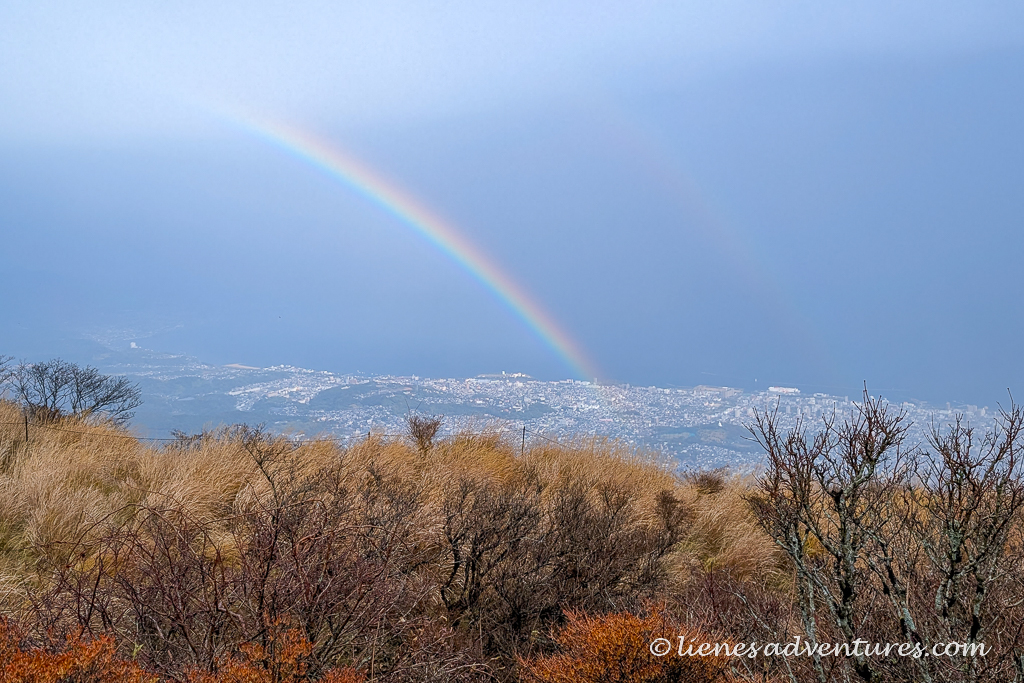
I was already dreading our gondola ride down but thankfully going down went much smoother. And even the visibility had improved some.
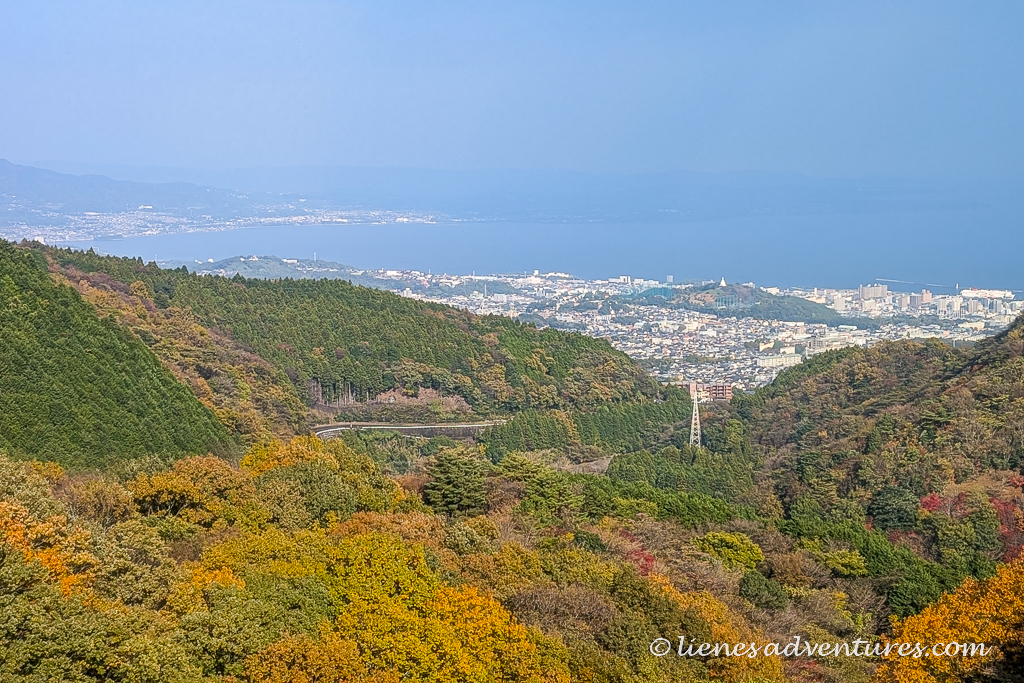
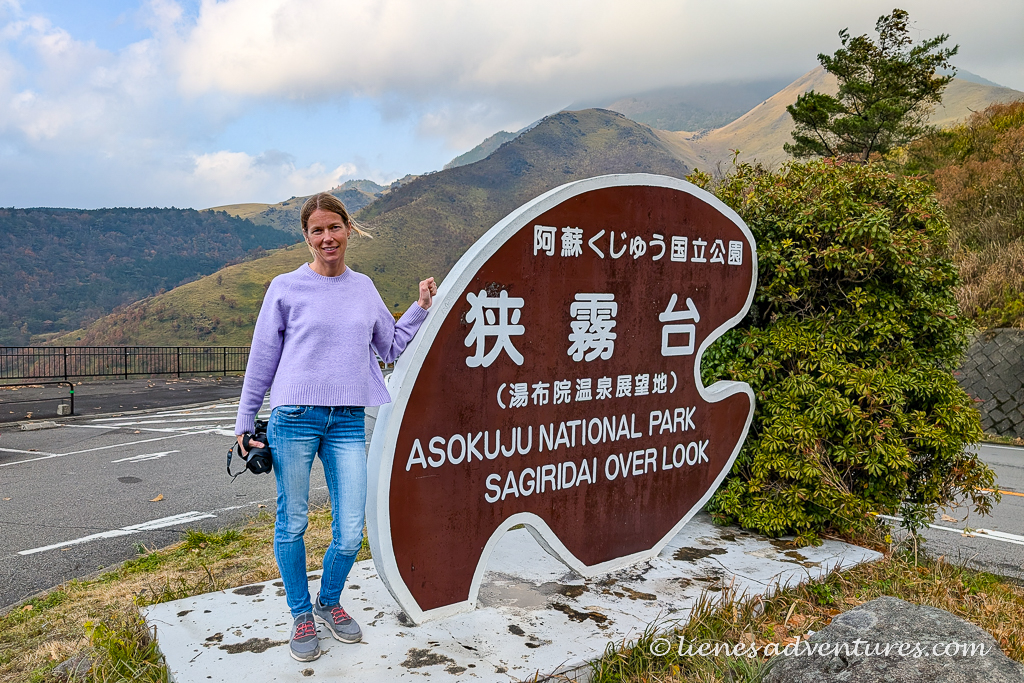
With the day only half-way through, we decided to go on a little road-trip through Aso-Kuju National Park. It was a very scenic area with mountains, valleys and a small 2-lane road weaving through it.
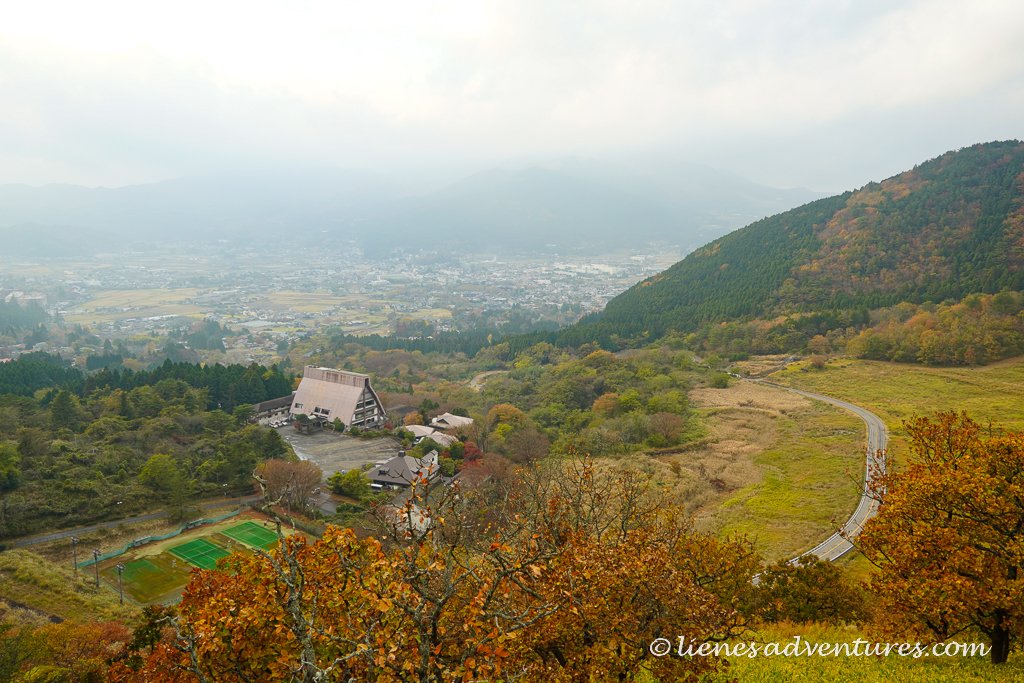
Although inauthentic, touristy places usually weren’t something I was interested in, Yufuin Floral Village seemed cute enough for a short stop. Yufuin was a very popular, picturesque themed attraction designed to resemble an English countryside village (like the Cotswolds) with shops and Ghibli-esque vibes, featuring character stores and animal cafes.
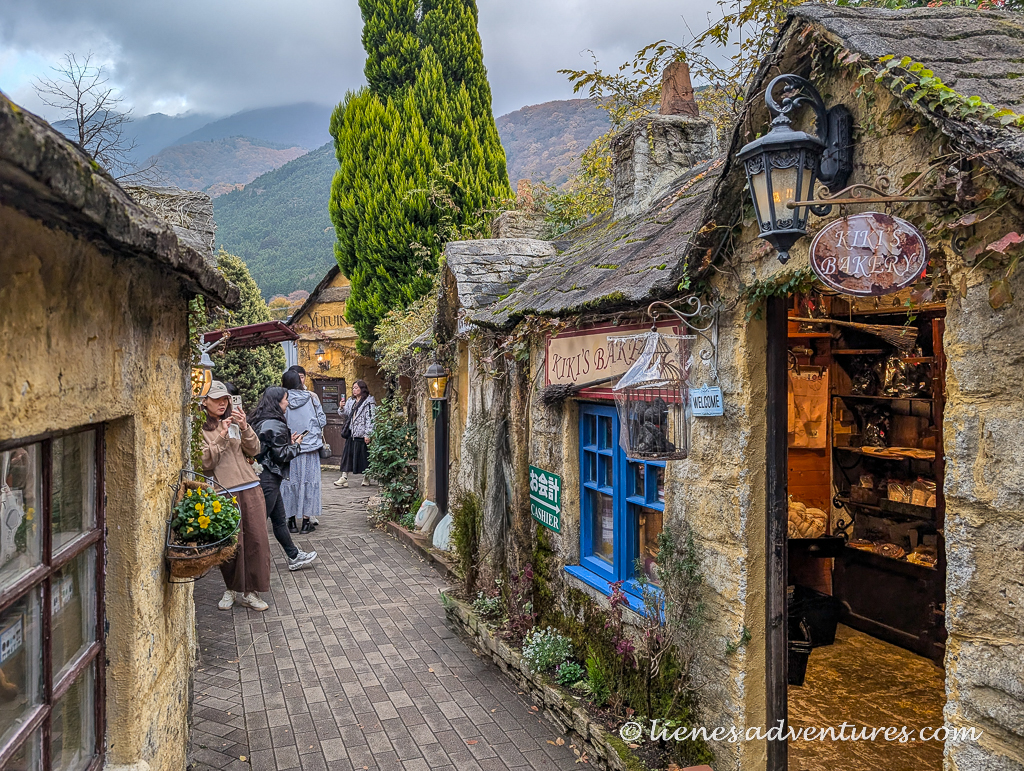
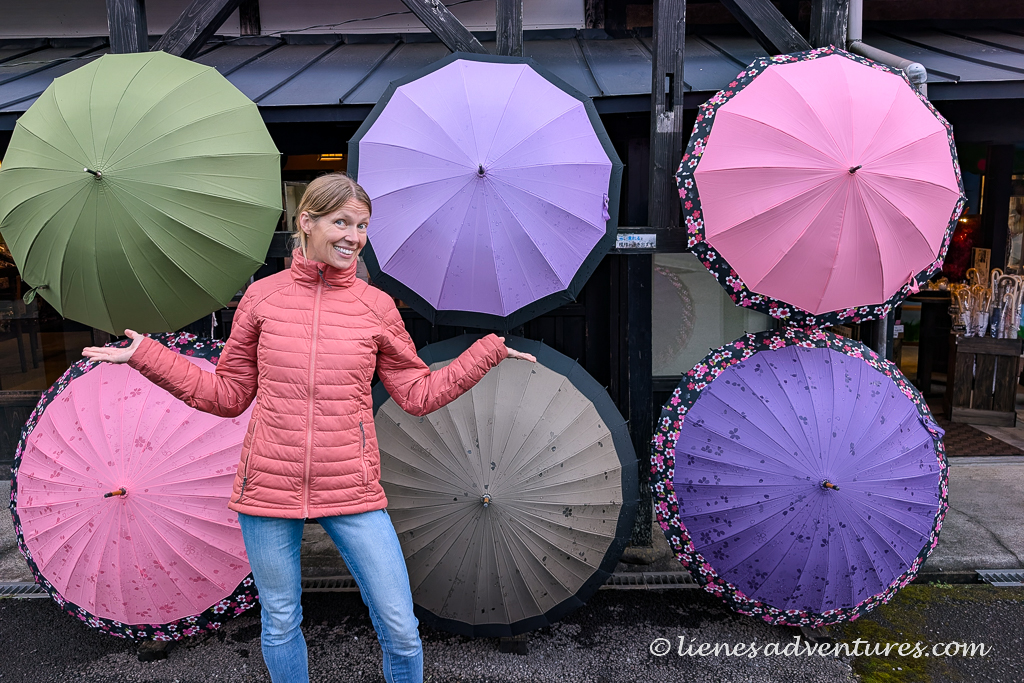
It was one of those perfect places for photos to put on one’s Instagram or TikTok… But for us, it was just too artificial and much too crowded. It was fun to walk around and peek into the little shops, but as we were not interested in buying things, an hour was enough here.
Driving back to Beppu would take us over an hour, and it started to get dark, so it was time to go. Along the way, I wanted to make a short stop at Ryuushou waterfall. Finding parking proved to be a challenge. We passed the parking spot back and forth several times, until we realized it was in someone’s front yard along a rice field. And a little wooden box nailed to a tree was an honors system parking fee collection “attendant”. Only in Japan.
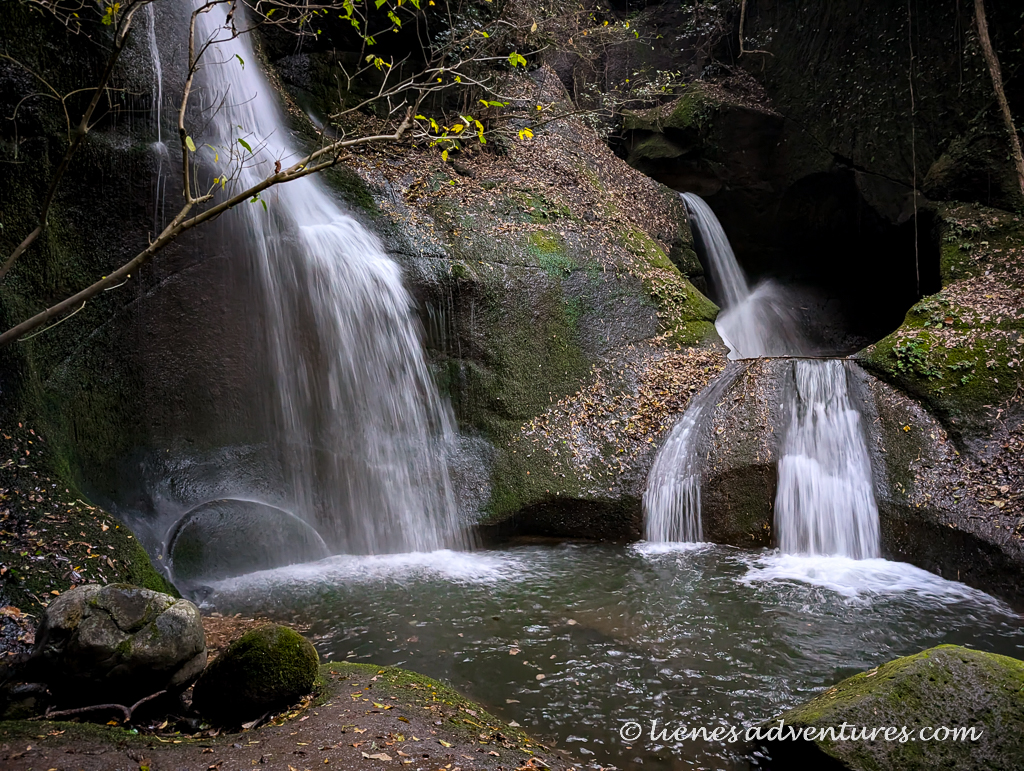
In half-dark we made a slippery climb down to the waterfall for a few photos, and then quickly back to the car for our drive to Beppu.
Although it had been a long day already, we still had one more thing left that I had made reservations for. We could not leave the most famous geothermal area in Japan without testing out these waters for ourselves! I had made reservations at Hyotan Onsen – the only Michelin 3-star onsen in Japan. We got a private room with a stone bath and free flowing 100% natural hot springs water; a hot steam sauna; showers, and a private changing room. All that just for us for 1.5hrs. And you would think it cost an arm and a leg? No, for the 5 of us, we paid only 3900yen ($25). I could barely believe that! Being used to the USA pricing, I expected to part with at least a couple hundred dollars. Nope, not here!
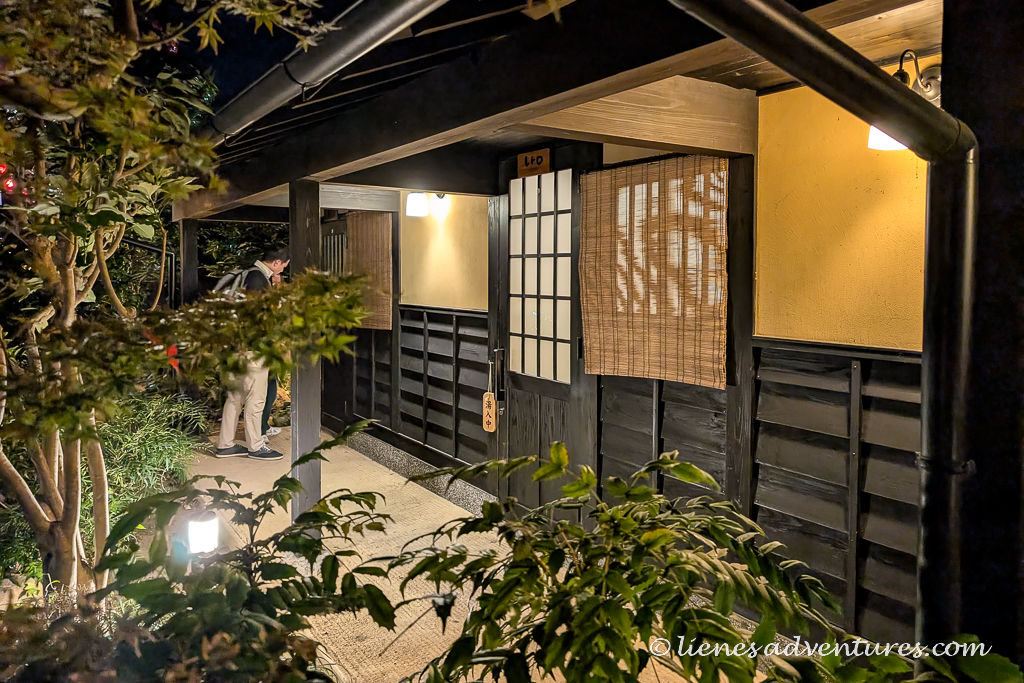
It was a much-needed relaxation after a long day of exploring. The kids had a ton of fun switching between the hot springs pool and the ice-cold water tub. And then trying to see who could stay in the sauna the longest… 90 minutes went by much too quickly.
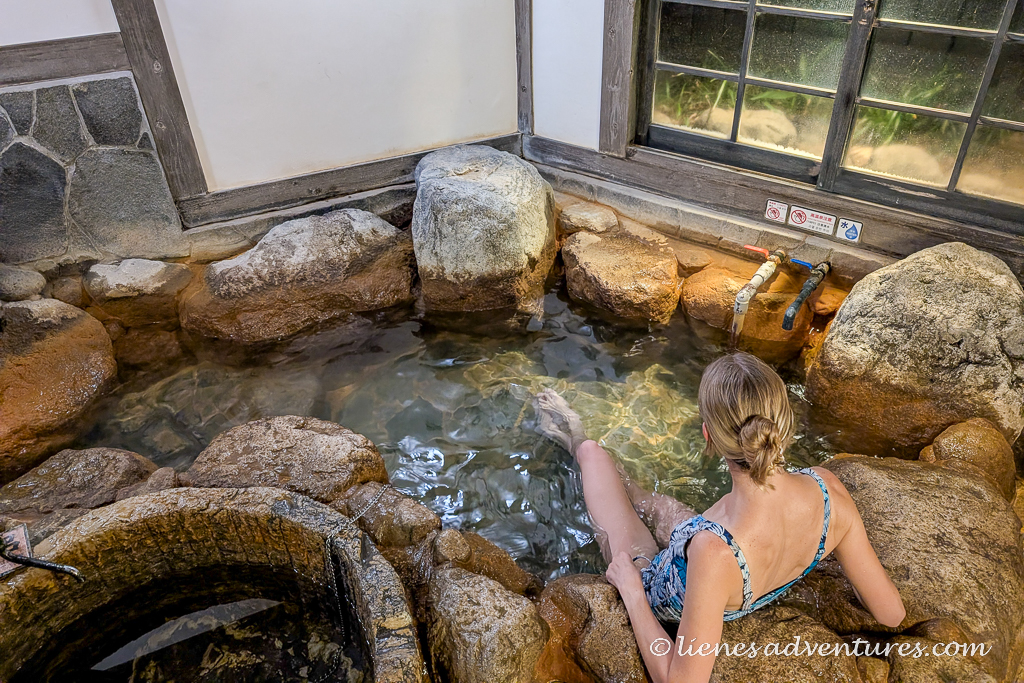
It was a perfect and fitting ending to our Beppu adventure. As we got to our AirBnB, we fell asleep very quickly. Must have been the magical waters of the volcanic hot springs!
Fukuoka Day 3
Today we were heading back “home” to Iwakuni. But not without several exciting stops in Fukuoka along the way. An hour’s drive away from Beppu, we made our first stop at Nyoirinji Frog Temple. As the name implies, we were to expect frogs here. Unfortunately for my boys, they were not the live, hopping-around, croaking kind of frogs they were hoping to see.
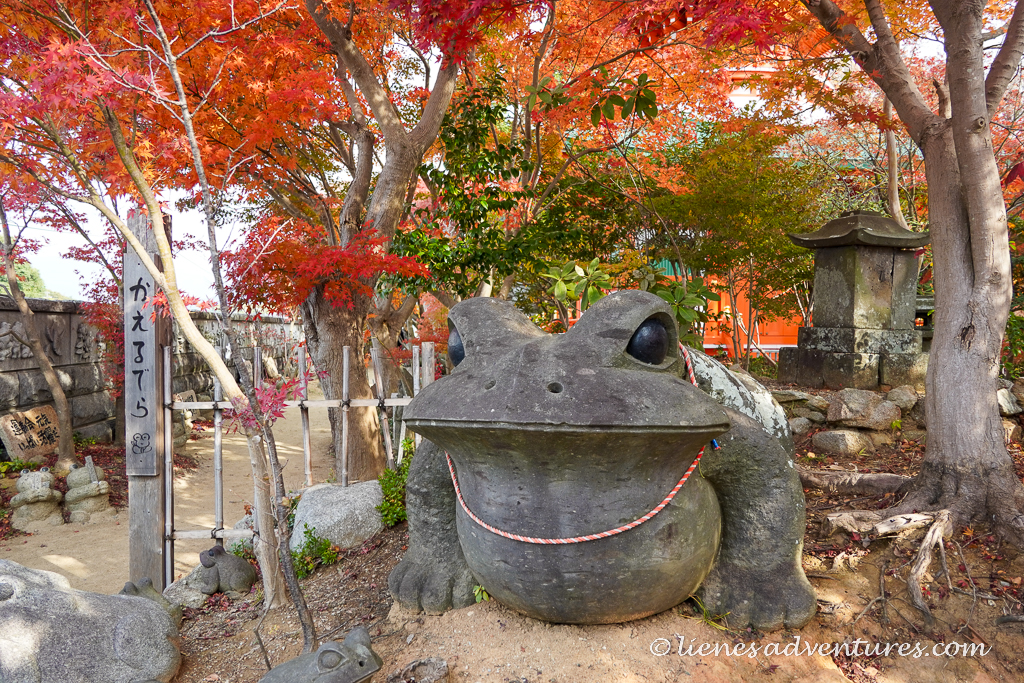
A story goes that the former chief priest of Nyoirin-ji Temple went on a trip to China, brought back a frog figurine made of jade and placed it in the temple. With that as a starting point, he began collecting frog figurines in 1992 with the goal of changing the atmosphere of the temple and attracting young people to visit. There were now more than 5,000 figurines placed in the temple – in all sizes, colors and shapes.
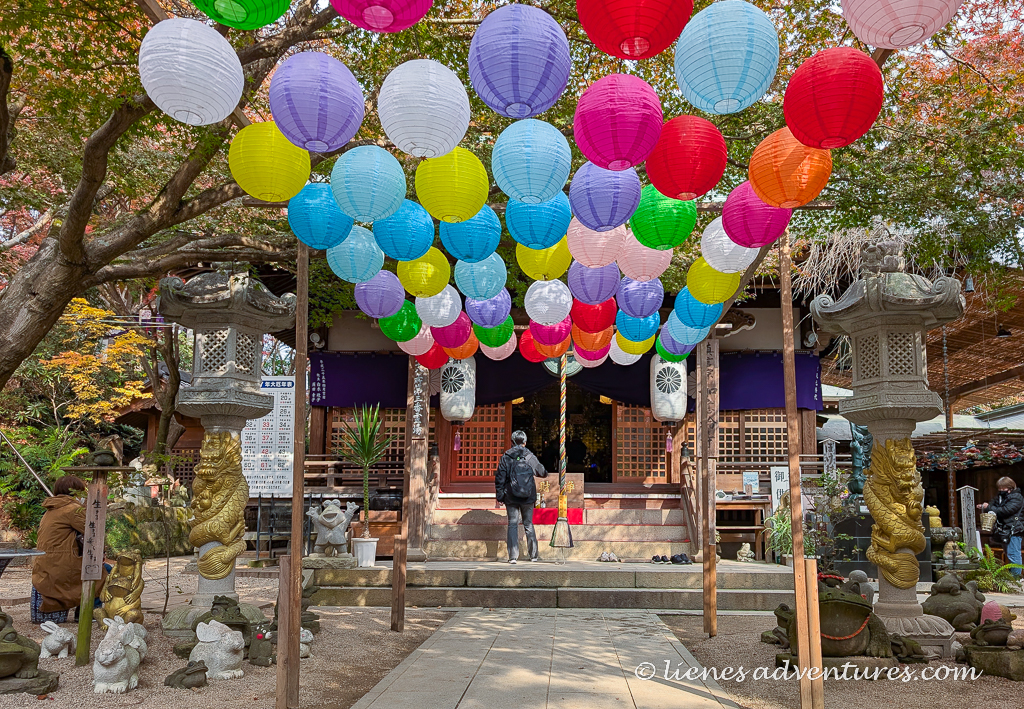
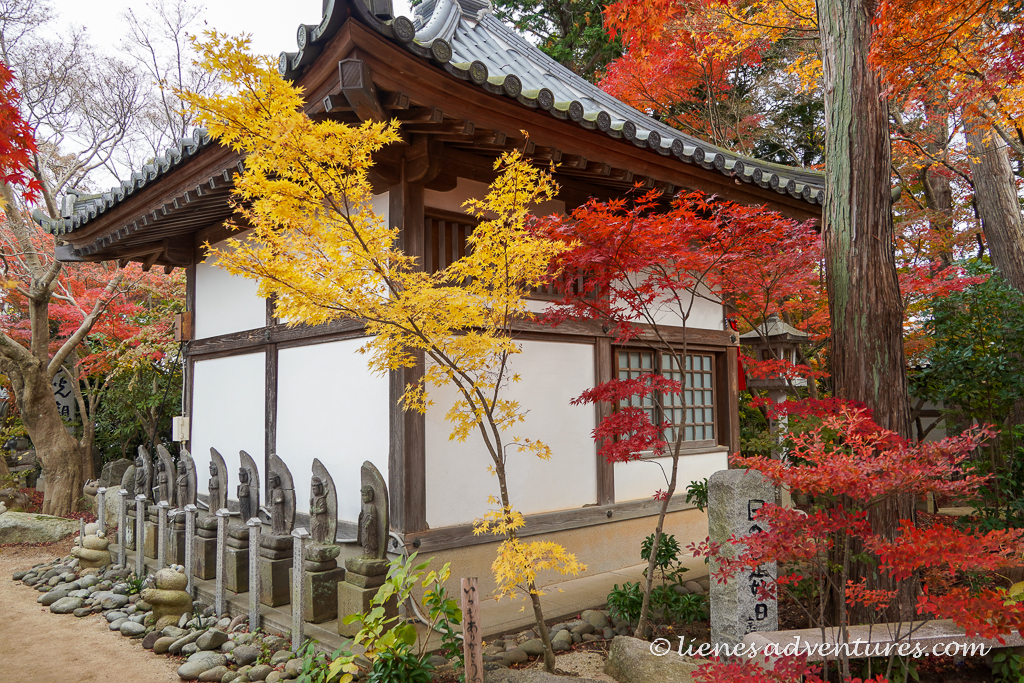
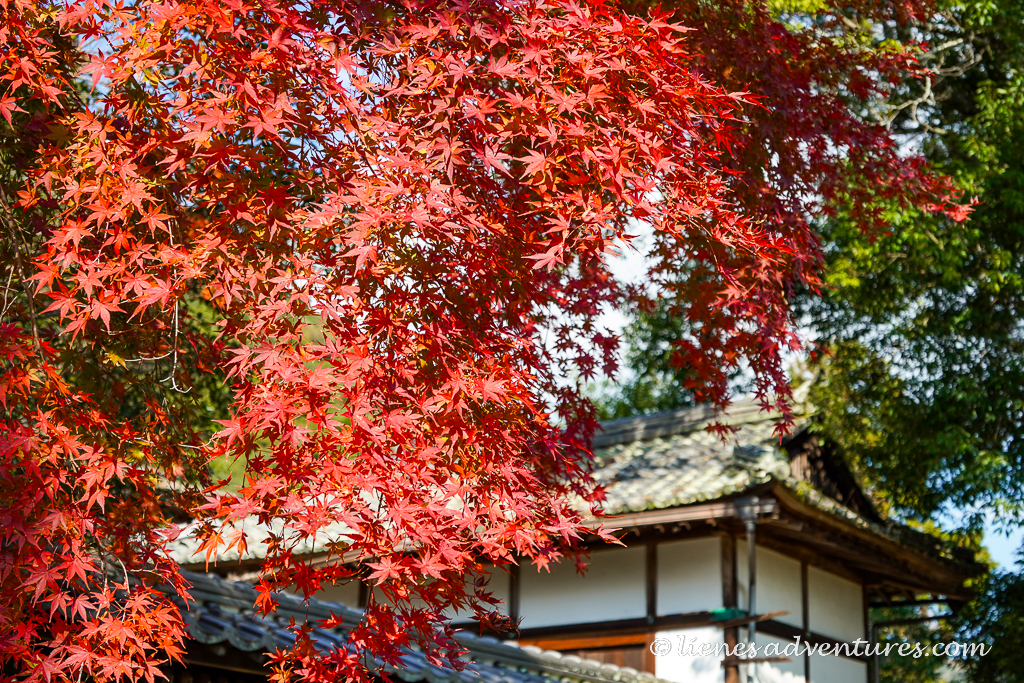
It was a very fun place to explore with large gardens, many pathways and hidden frogs all around. And the Japanese maples in their full fall colors were just stunning!
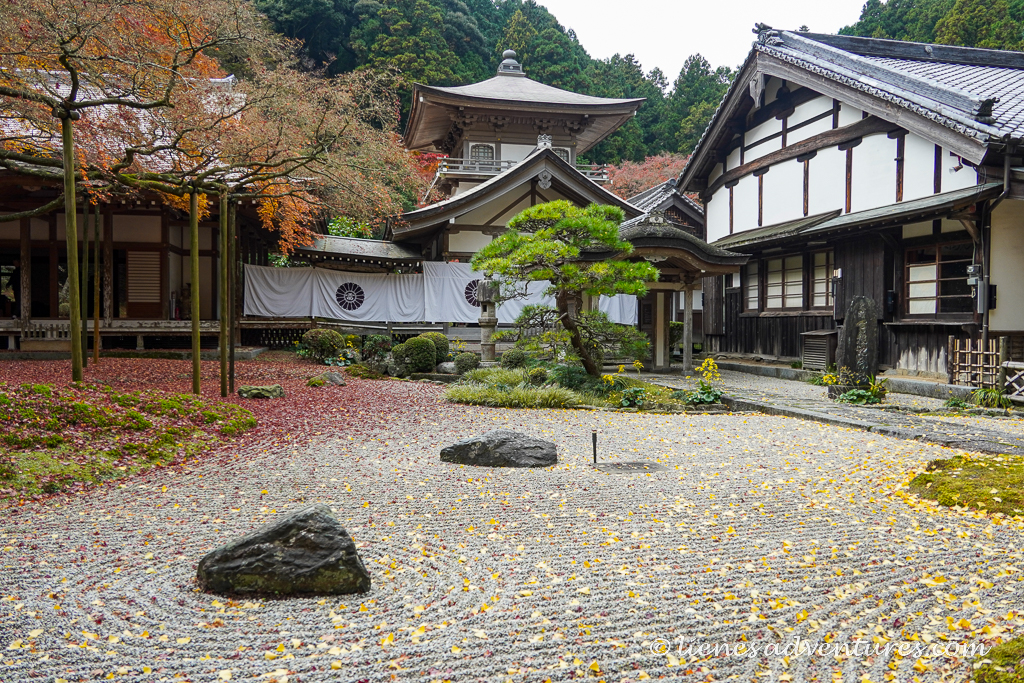
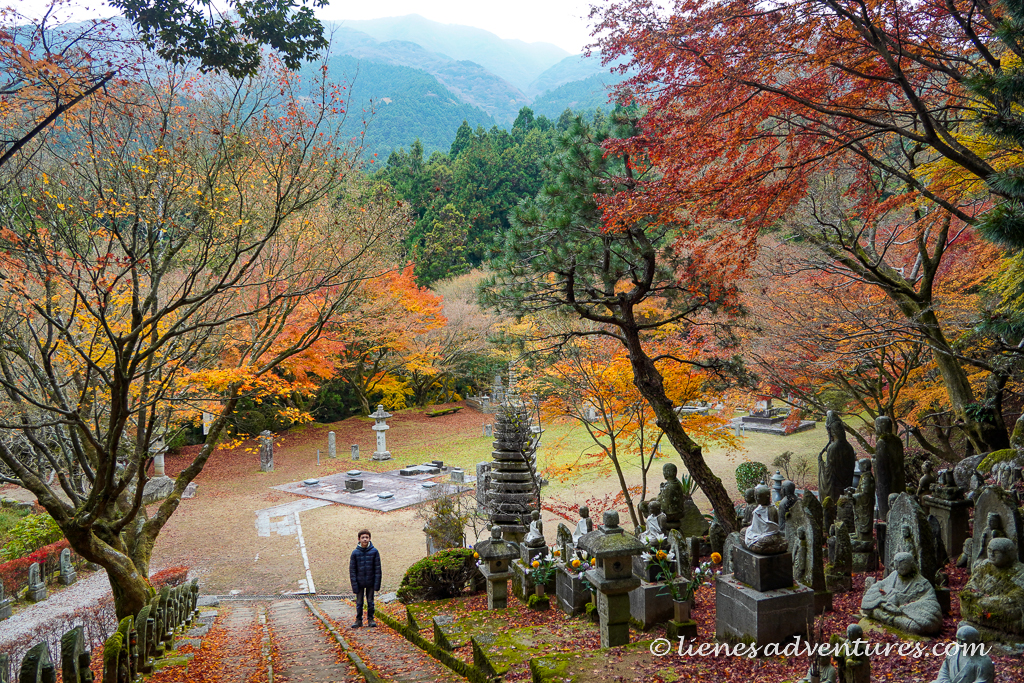
Our next stop was yet another temple - Raizan Sennyoji Daihioin Temple. It was founded in 178AD. In 1753, the present-day main temple was built by the lord of the Fukuoka Domain.
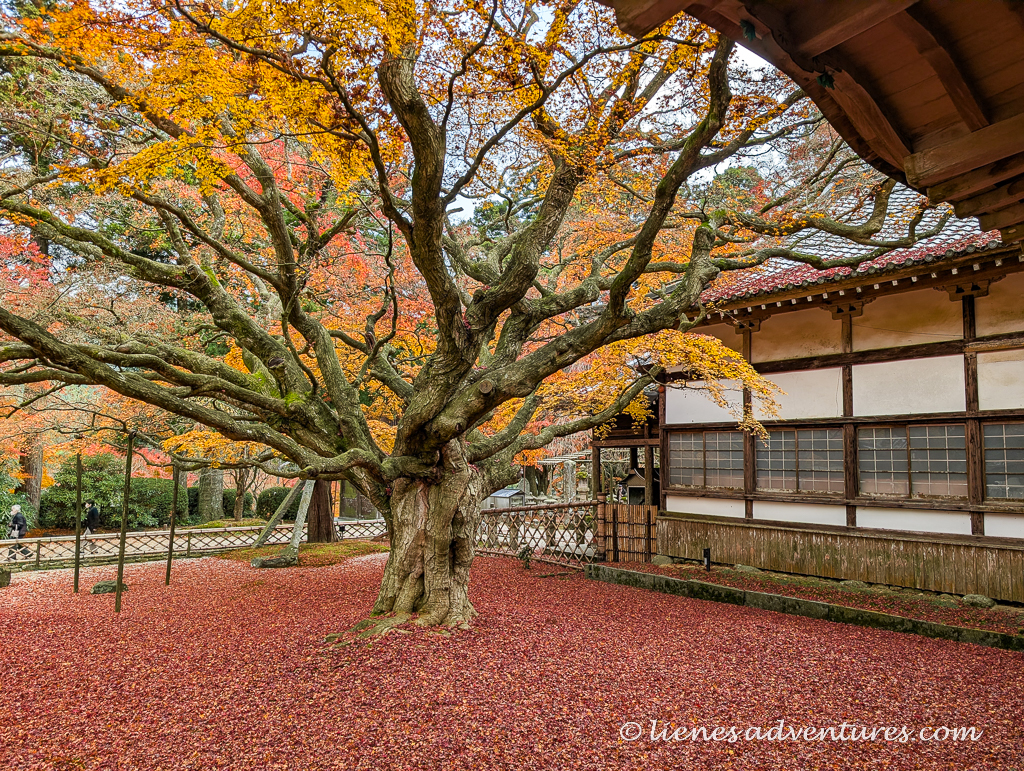
He also planted the now 400-year-old maple tree, which still turned an impressive hue of vivid orange in November every year.
Due to the temple’s location halfway up a mountain, there were beautiful views everywhere. And Japanese-style gardens of moss and stone surrounded the temple grounds and buildings.
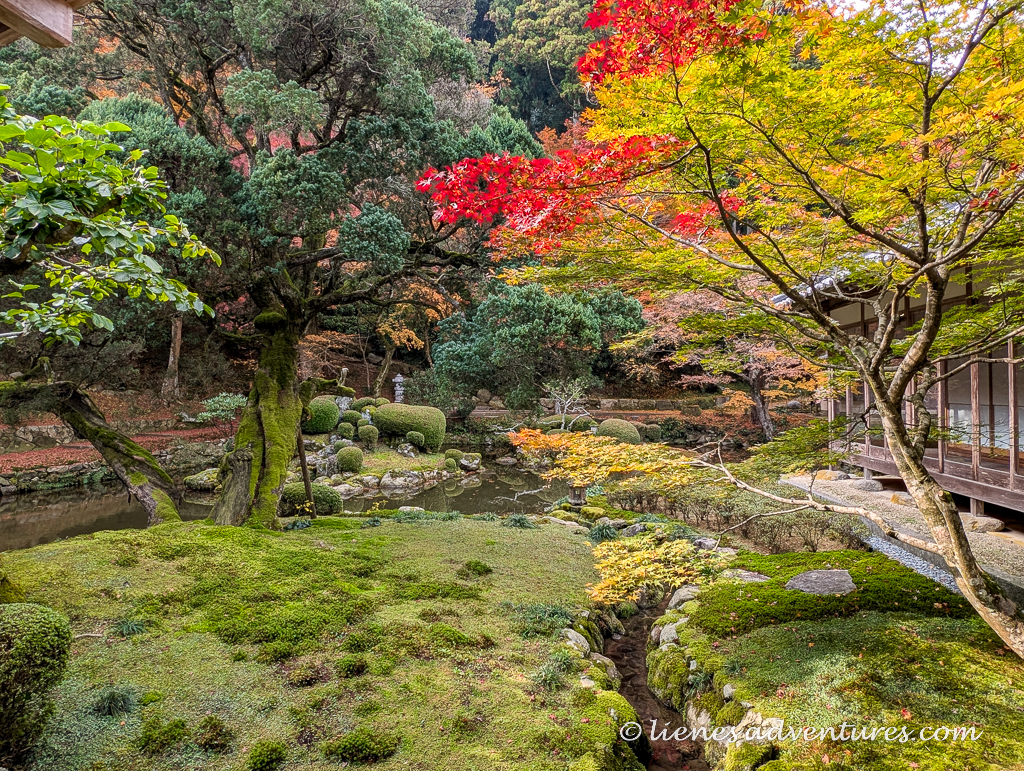
For a small fee, we entered the interior of the temple, walked its many rooms and corridors, and could take part in a prayer (which, this time around, we chose to just observe).
For its serenity, views and special atmosphere, this became my favorite temple (and gardens) out of many that we saw in Japan.
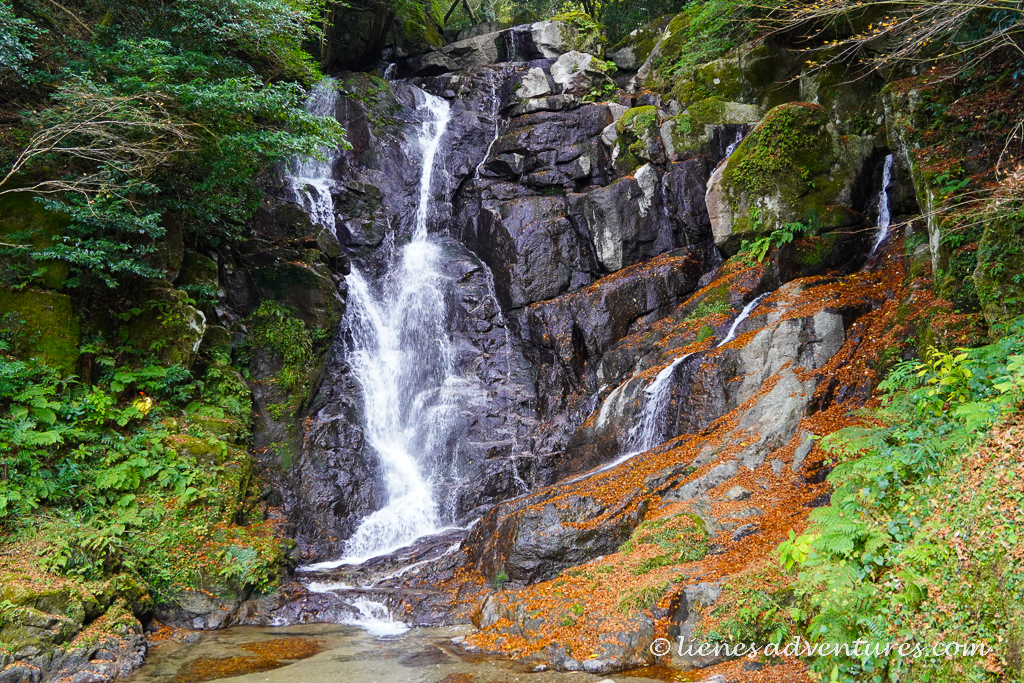
Not far from the temple was the 24-meter (78ft) tall Shiraito Waterfall. We drove down Mt Raizan, crossed the valley and then up Mt Haganeyama where the waterfall was located.
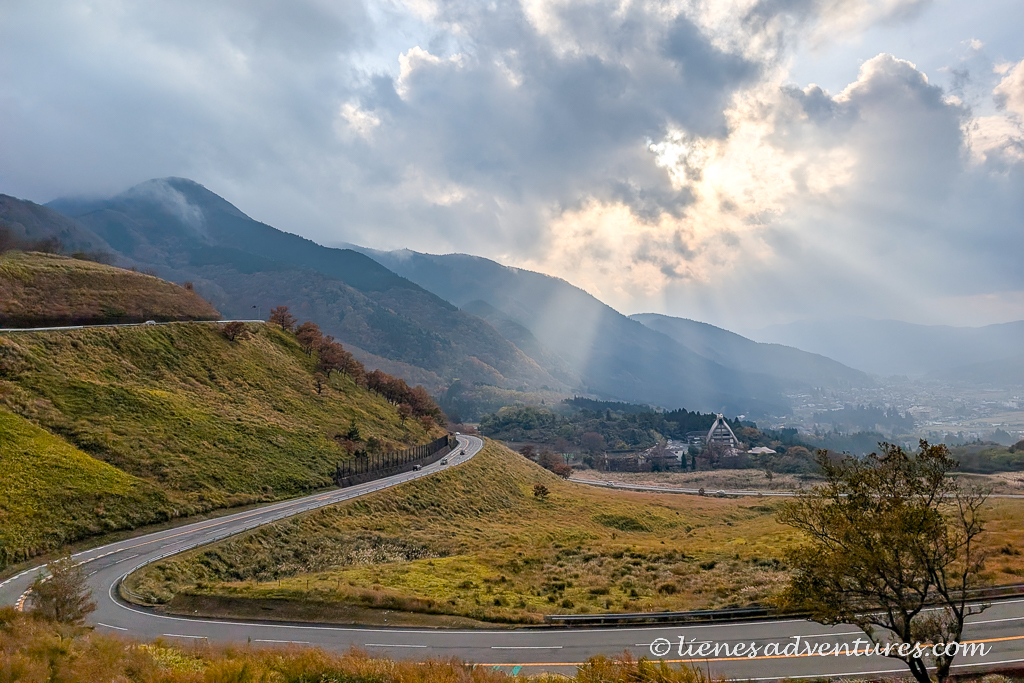
Although the waterfall was nice, I was more impressed with the scenic, windy and narrow mountain roads that were leading up to these sights. The fall colors were everywhere, small mountain houses of locals stood scattered about with golden yellow, layered rice patties. This was a remote and removed area with a countryside vibe, and I truly enjoyed seeing it and being a part of it. It was like we got a glimpse of daily lives that were true, honest and not made for tourist entertainment.
If there was a specific sight that I associated Japan with, then torii gates were definitely one of such things. The most popular gate in Fukuoka was Sakurai Futamigaura Torii. Named as Japan’s top 100 sunset beaches, the site attracted many visitors with its white torii gate and cobalt blue waters of Genkai Sea (a part of Sea of Japan).
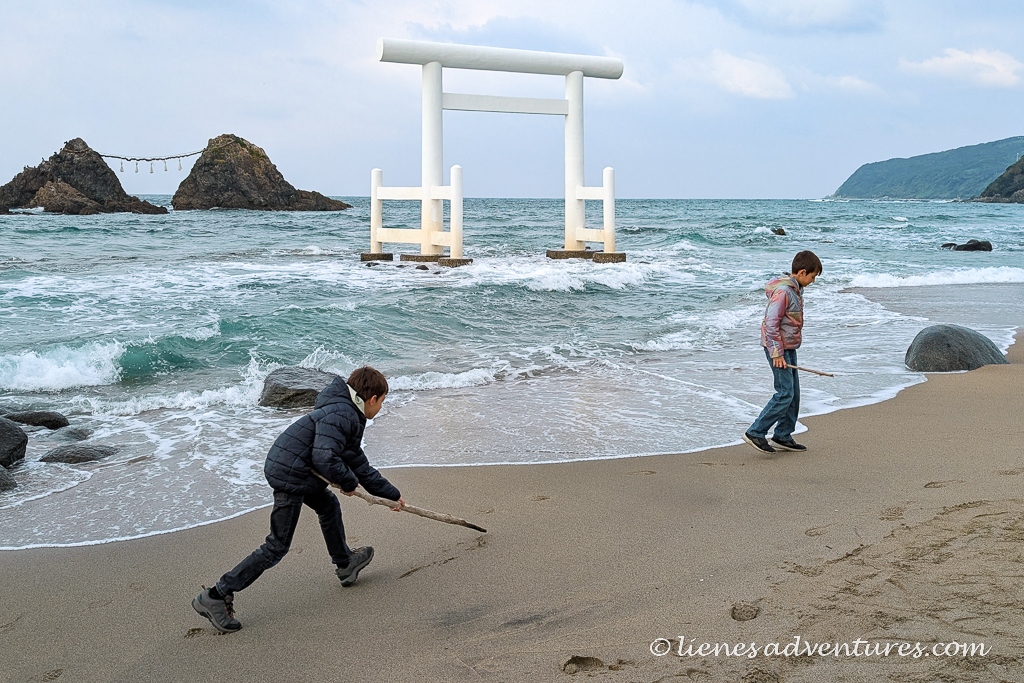
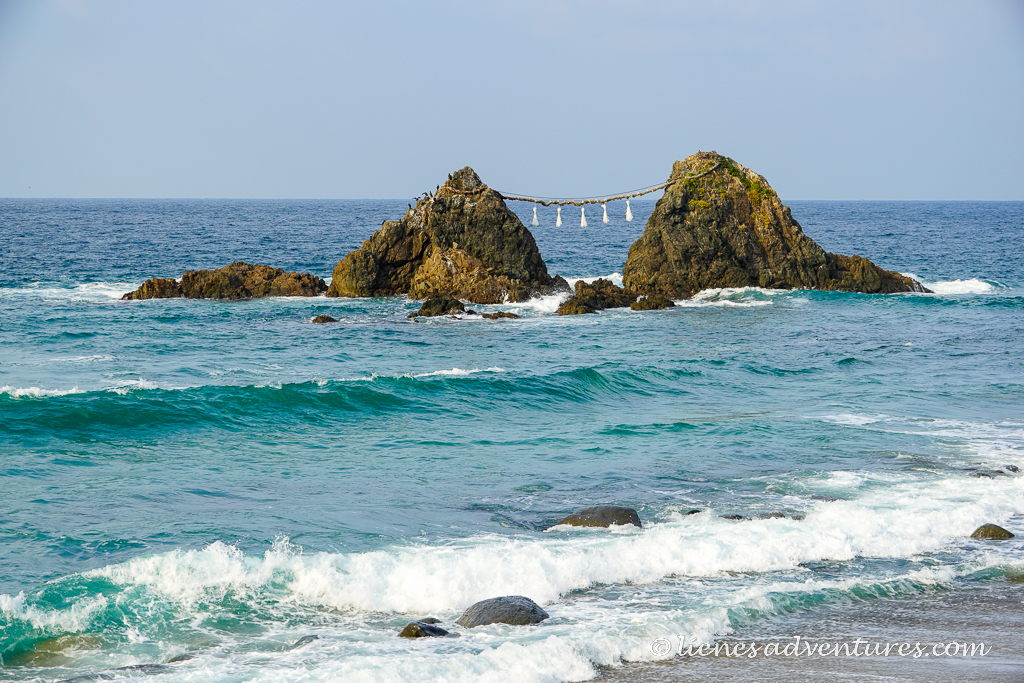
Out past the white torii gate was Meotoiwa (Couples Rock), a double-peaked islet that appeared to stand together like a man and wife. Lying some 150 meters (500ft) off the coast, the two parts of the islet were bound together by a shimenawa rope. The islet was a sacred site of the Sakurai Shrine.
As this was our last stop before starting the 2.5-hour drive home, we lingered here a little to stretch our legs and let the boys run around for a while. It was a beautiful area, albeit crowded.
***
After completing our Beppu and Fukuoka road trip, the remaining few days in Japan were spent with family. We celebrated Thanksgiving and a (very) early Christmas. We read books and watched movies. We went for walks and did quite a bit of just good old nothing. And that was great, as our weeks in Japan had been packed with sightseeing, so a small break was welcomed before heading on to our next destination.
Japan had been on my bucket list for a long time. Not at the top of the list, but I did want to see it one day. And now I had. Although I was extremely grateful for the opportunity to visit Japan, I was leaving with a feeling that it “wasn’t my place”. When you travel, there are those places that just steal your heart and you think “Yes, I could see myself here!” Japan wasn’t it for me; it didn’t steal my heart. But that is not to say it wasn’t worth visiting. I am happy we did. I am grateful for all the experiences we had here, and all the places we got to see. But now it is time for us to march on towards new countries, towards new adventures!