
DAY TRIP TO TIANJIN CITY FROM BEIJING, CHINA
-
Hits: 1895
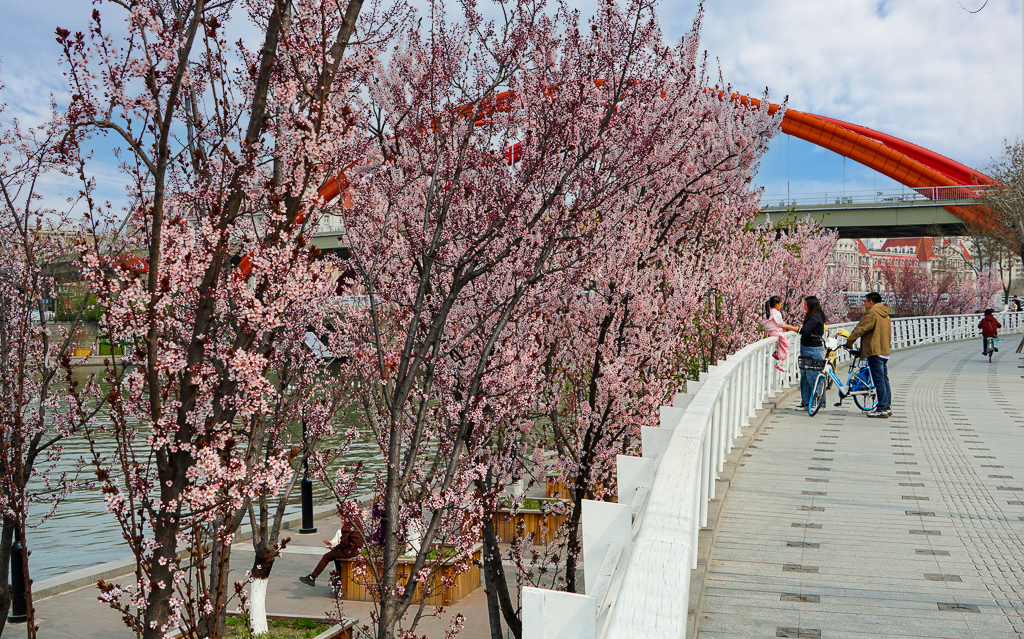
Spring had finally arrived in northern China – trees were showing hues of green; pink cherry blossoms were about to be in full bloom; and the air had noticeably warmed up. It was a weekend that I refused to waste by just sitting at home or running errands. We moved to China to have an adventure, so I was determined to come up with one!
From our colleagues and friends, I had heard ‘Tianjin’ mentioned quite a few times. Although I was not keen on city-tourism and much preferred nature destinations, I figured it couldn’t hurt (in a crunch) to visit another city for a day.
I had seen Beijing to Tianjin day trips offered on several travel platforms. The quickest way to get there was by taking a short 30-minute high speed train ride. However, as we had our own car, I opted to explore Tianjin by driving there, which, including traffic, took us about 2 hours to reach.
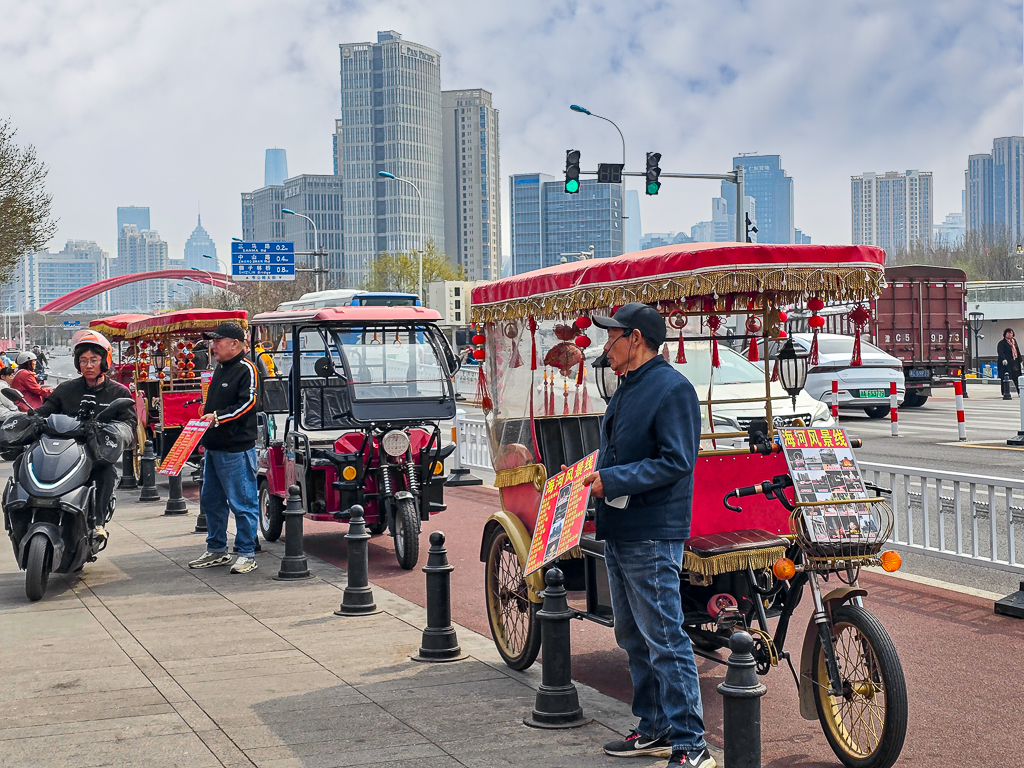
Getting to the first sightseeing stop of my must-see list wasn’t an issue. The issue (as in any big city) was finding parking! Obviously, all the signs and information were in Mandarin (which we could neither speak nor read). And where the GPS map showed parking ”P”, there was no parking, or it was a private restricted parking lot. All the construction and going around in circles didn’t help either.
Finally, we saw a “P” that was actually a paid public multi-story car park. Whew! But – the entry QR code refused to read our AliPay account information. We tried my phone, my husband’s phone, the work phone… None wanted to cooperate. The big metal arm stubbornly refused to lift up. The parking attendant (with zero English knowledge) but many expressive arm gestures made us position our car this way and that way, in hopes of resetting the parking scanner, but it didn’t budge. Eventually, he waved at us to just back out of the entry line. We were absolutely confident he was making us leave and go try our luck elsewhere. But no, he went around the corner and opened a gate for us to park in a free employee lot instead. We had to double-check that he was really ok with us parking here… But he just smiled and gave us a thumbs up. What a nice welcome to Tianjin!
Having resolved the parking issues, we were ready to head out and see what Tianjin had to offer.
Tianjin Eye
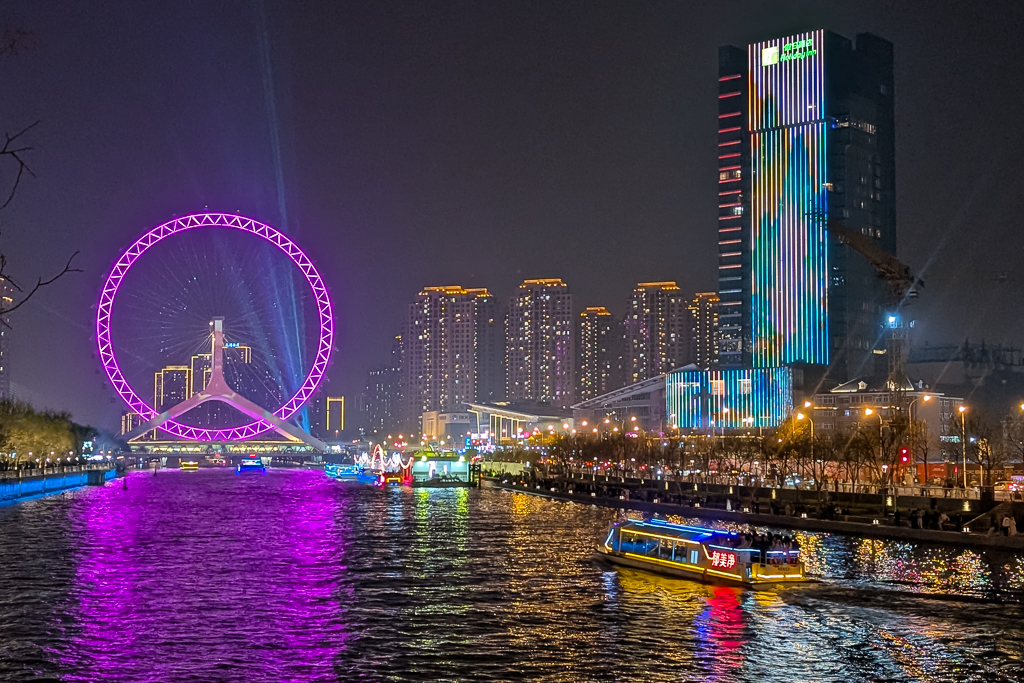
Having parked right next to the Tianjin Eye, we decided to start with that. Officially named The Tientsin Eye, it was a 120-meter (394 ft) tall giant Ferris wheel built above the Yongle Bridge. The wheel opened to the public in 2008. A fun fact - at the time of its completion in 2008, there were only 3 Ferris wheels in the world taller than this one. They were the 135m (443 ft) London Eye, 160m (525 ft) Star of Nanchang, and 165 m (541 ft) Singapore Flyer. Now, in 2026, Tianjin Eye is the 10th tallest Ferris wheel in the world.
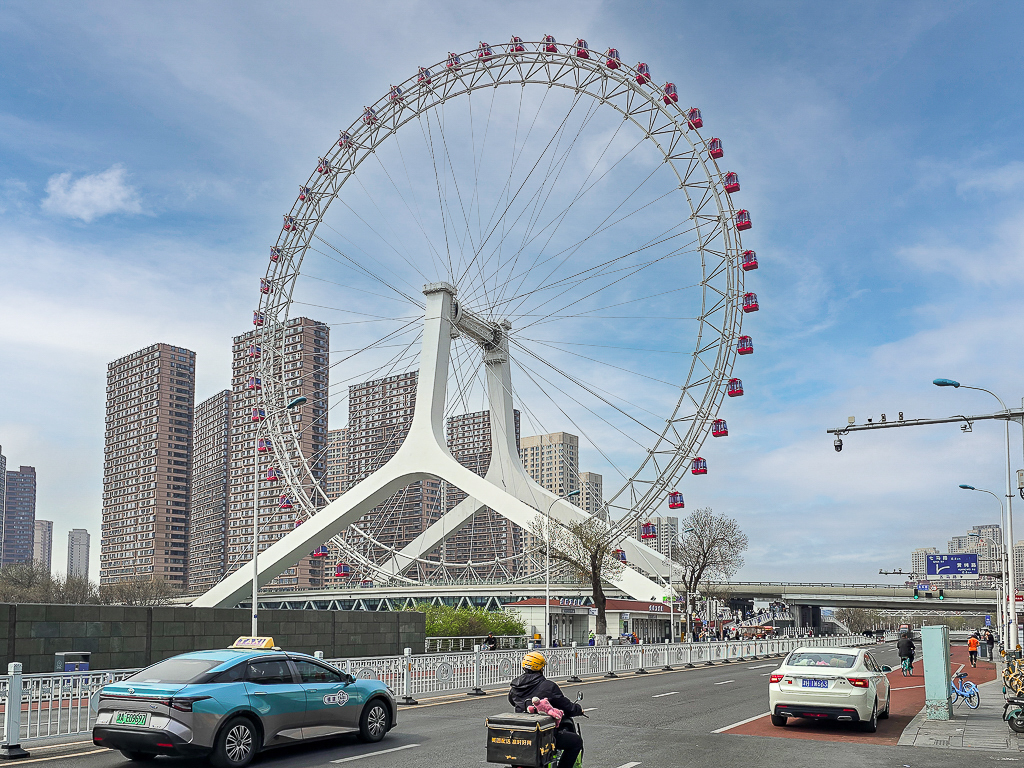
Although night-time rides were more popular as they gave an opportunity to see all the city’s skyscrapers lit up, our boys insisted that they wanted to ride the wheel now instead. So, we obliged as it promised to be a fun experience either way.
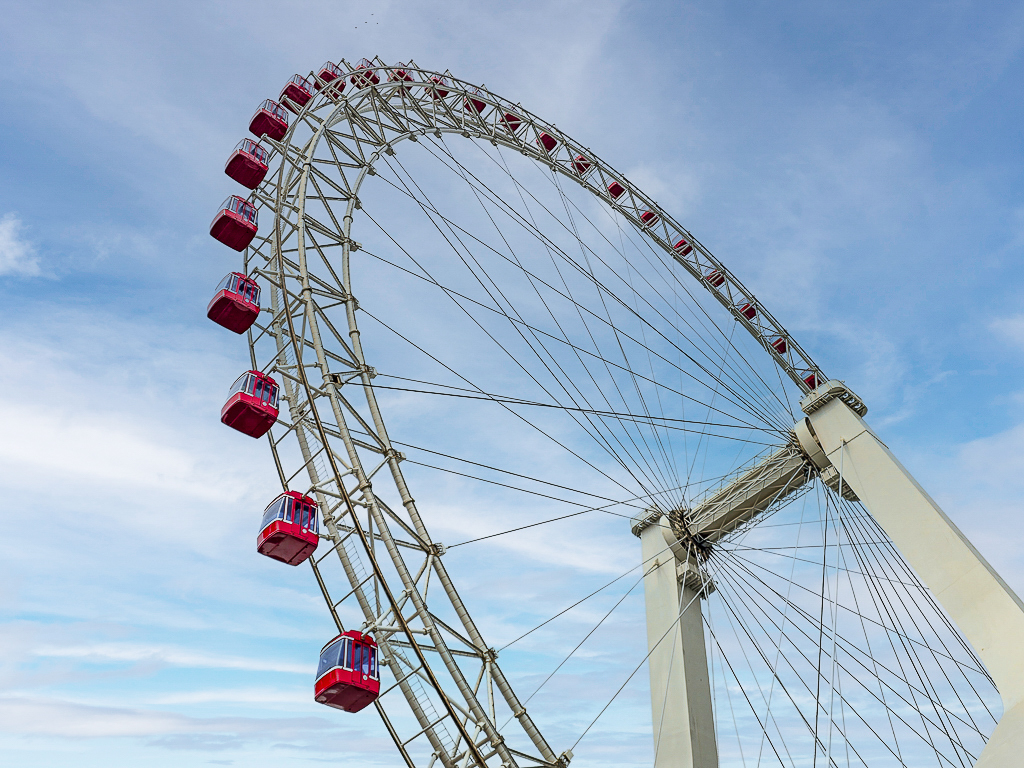
We were surprised that an adult ticket cost only RMB 100 ($14) with kids getting half-price tickets for $7. In comparison, the London Eye currently costs $53 per ticket, or the Singapore Flyer $32 (which we visited back in 2015). Traveling and sightseeing in China is very budget friendly!
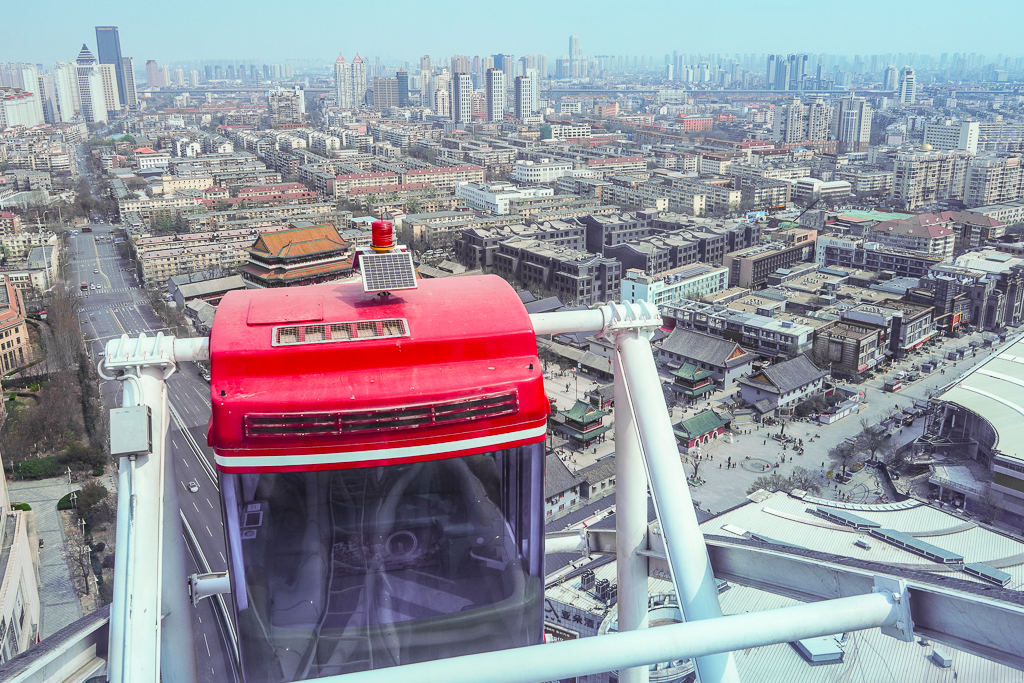
The line was quite short, and after just a 10-minute wait we took seats in one of the 48 capsules and started our way up. It took 30 minutes to complete a full rotation. And with me being scared of heights, the kids got a good laugh at my expense. I did have to cover my eyes a few times…
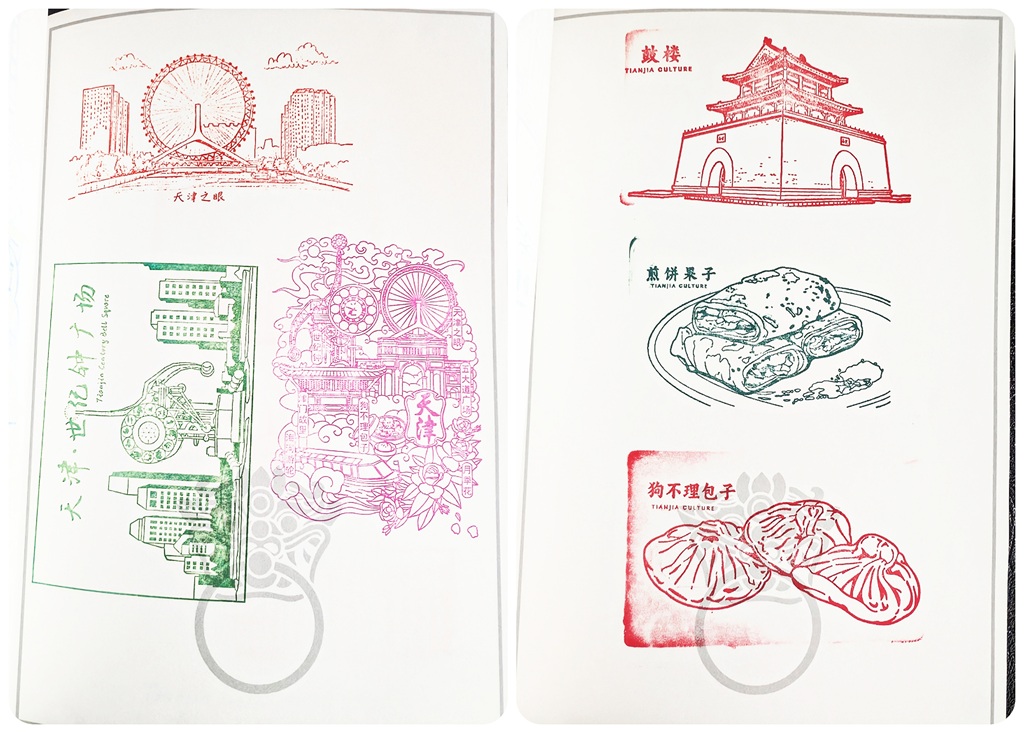
After we completed the ride, I walked over to a souvenir shop to get my stamp. Many attractions, museums, parks and the like had their own souvenir stamps here in China that tourists could collect. Most of the time they were free of charge, and very seldom did they require a small purchase (like a postcard or a magnet) before the stamps were given out. Collecting these souvenir stamps had become a fun activity for me here as they were often large, very detailed and sometimes even colorful. I collect them all in one big book which has become like a memory book in itself. Better than any plastic souvenir!
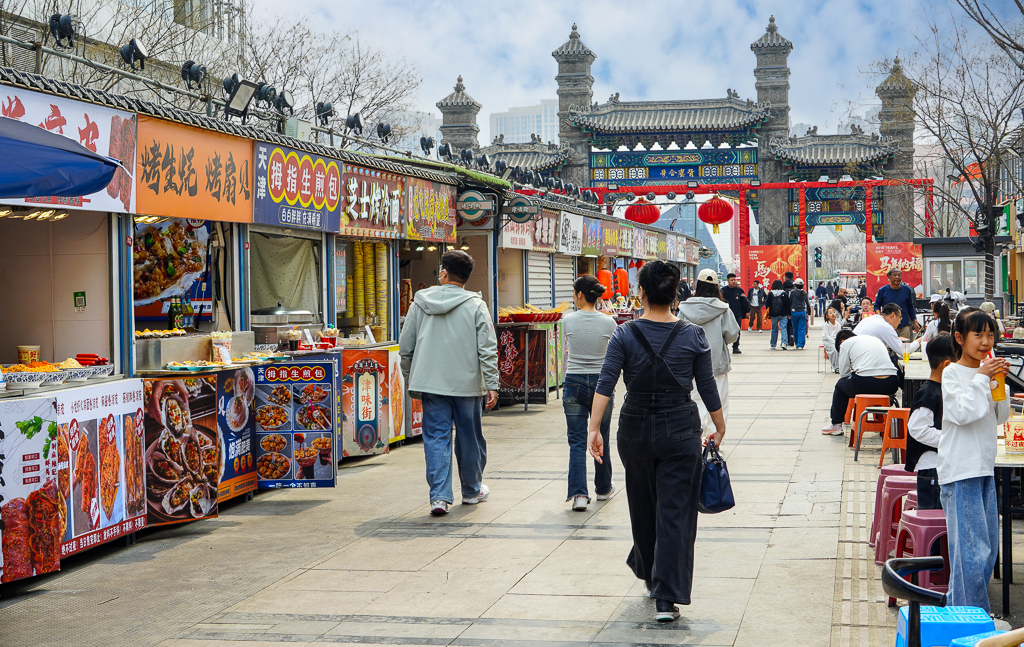
By now it was coming to noon and all 3 of my men were ready for food. At the bottom of the Ferris wheel there was a market street with vendors starting to open their stalls for lunch.
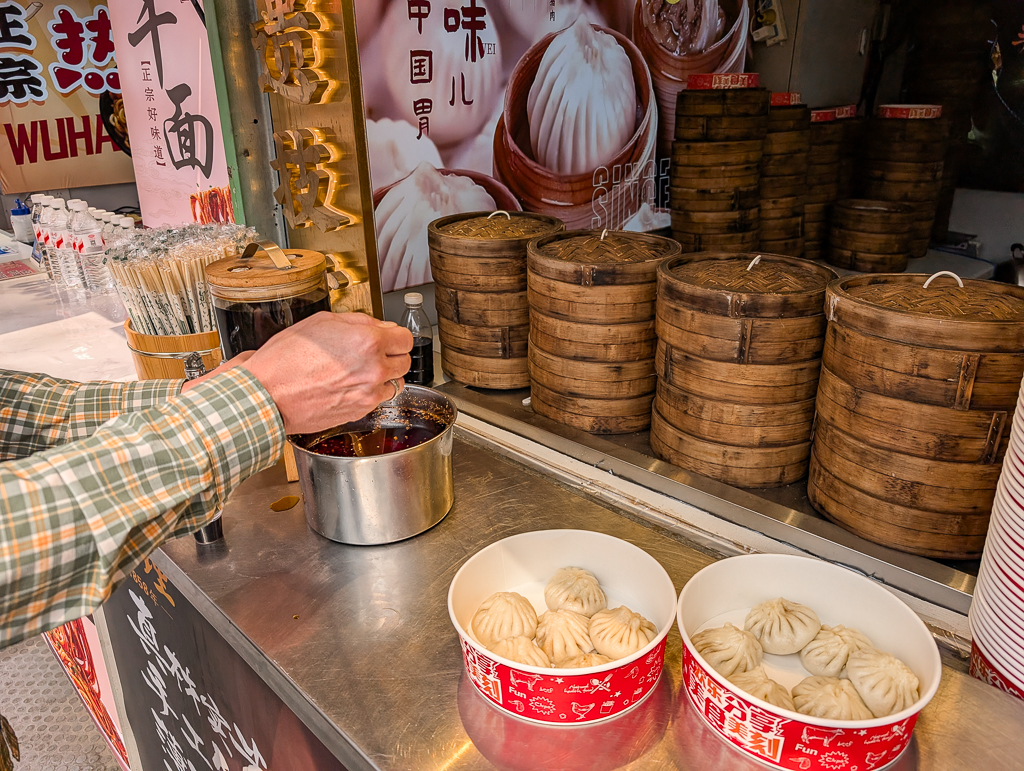
A famous Tianjin food was Goubuli Baozi - steamed buns stuffed with meat. It was said to always have exactly 18 wrinkles. We got a little cheated as some of our buns had 16 or 17 wrinkles… But it didn’t make them taste any less delicious, and we even went back for a second order.
We wandered past many other vendor stalls suspiciously eyeing the strange-for-us octopus’ tentacles, duck feet and roasted crickets...
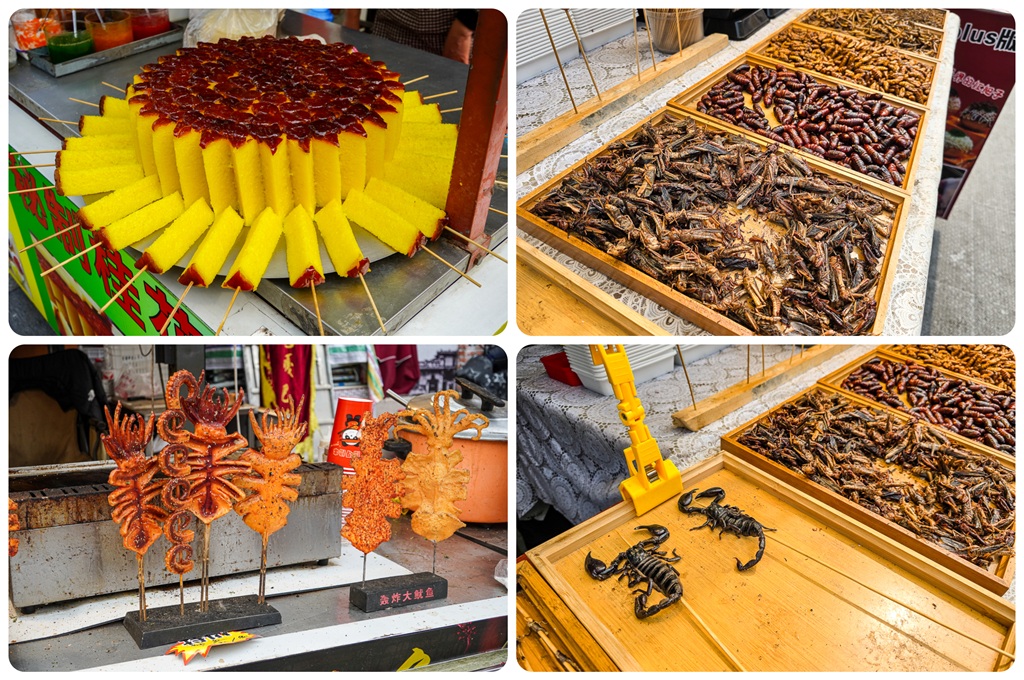
But then something else caught my attention. A stuffed glutinous rice pastry with honey and powdered sugar. I got 3 to try and we ate them all right there by the stall. They were so delicious that I went back and ordered another 3 to take along with us. While we were standing by the street, rearranging our backpacks to find a place for my pastries, the sales lady walked up to us with a baggie of another 5 pieces and gave them to us as a gift. She was very impressed that we loved her dessert so much that she wanted to give us more of it. People in China are just so sweet and kind!
Ancient Cultural Street
Full of baozi and pastries, we continued on. Next stop on my list was Ancient Cultural Street. Lined with a variety of shops, it was a vibrant thoroughfare that offered a fascinating glimpse into Tianjin’s traditional culture.
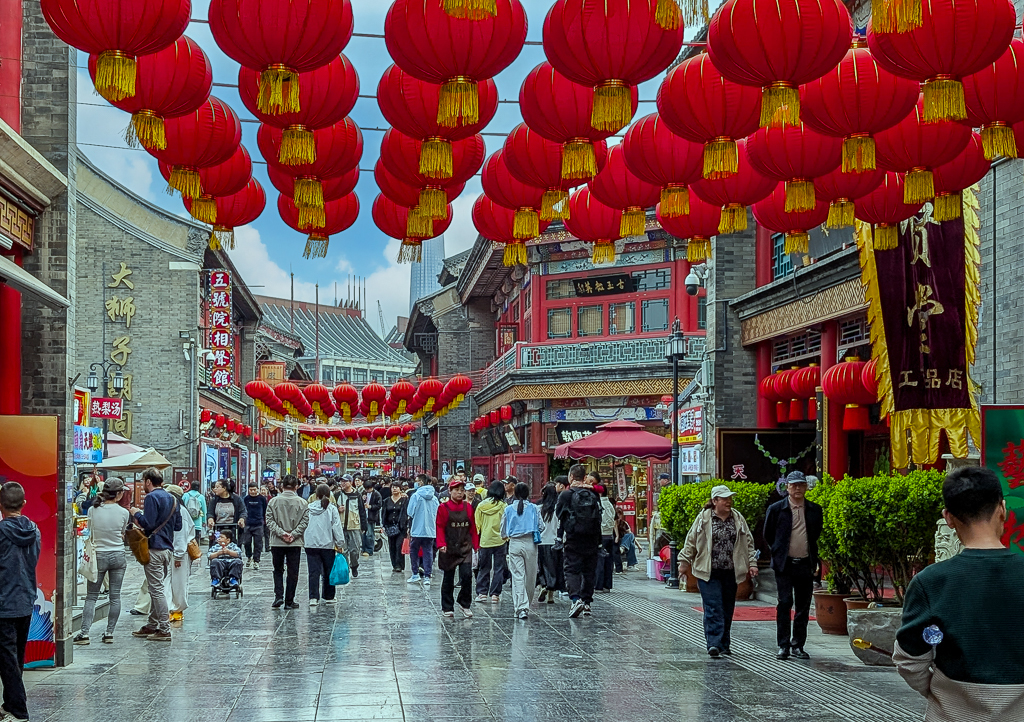
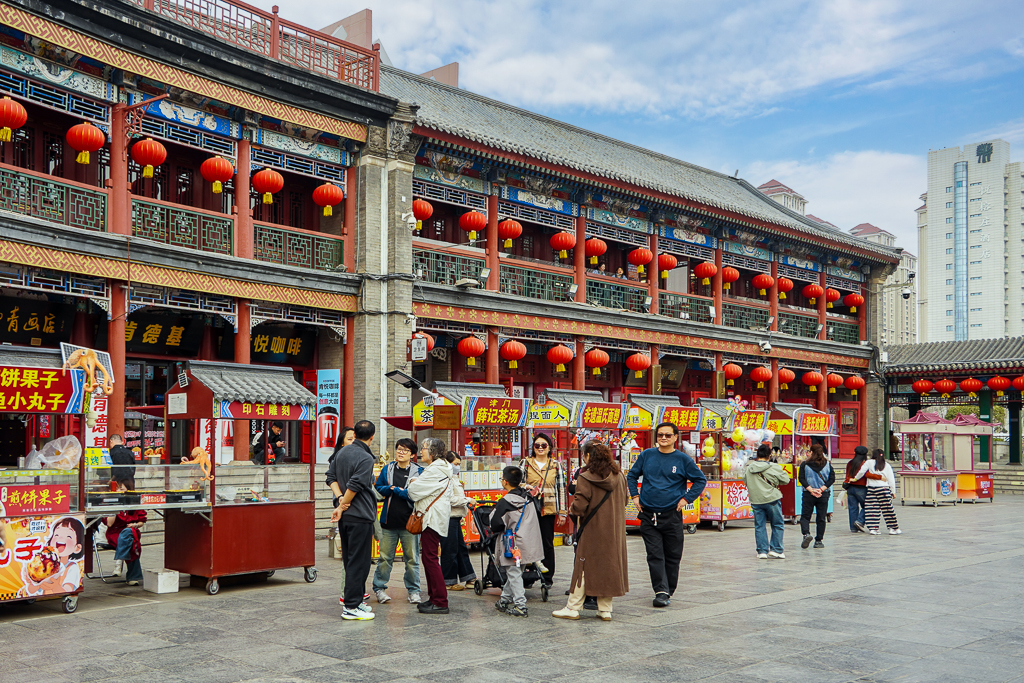
From red-lantern-dotted Chinese style architecture to authentic local handicrafts, this area was like a step back in time, allowing visitors to immerse themselves into China’s past. Although we had no need to buy anything, it was still interesting to peak into all the little shops.
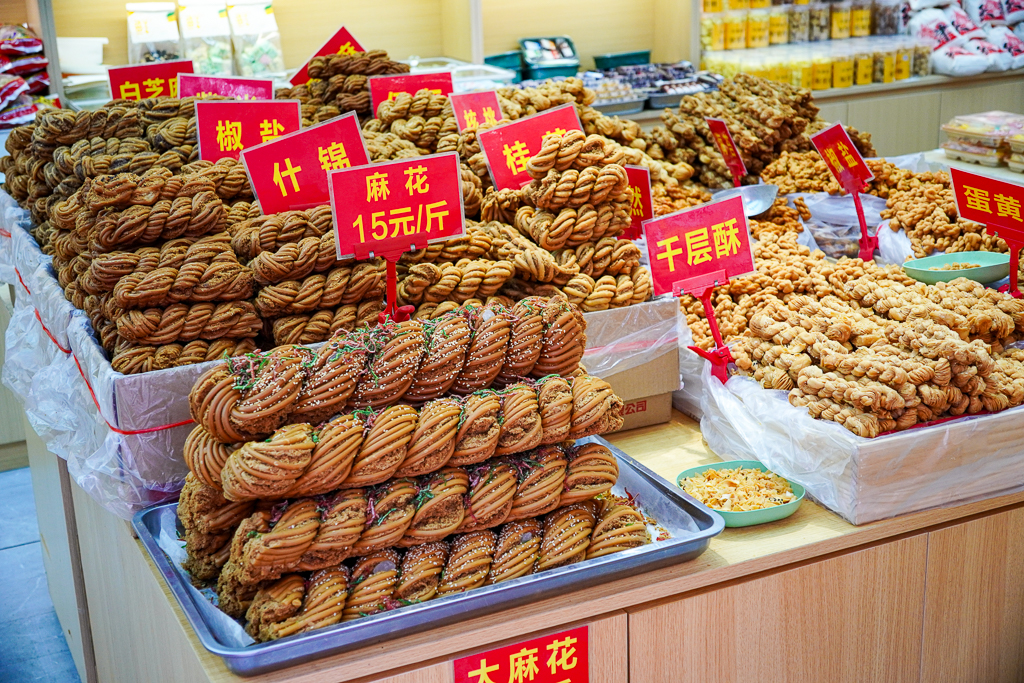
Mahua (fried dough twists) seemed to be a very popular treat here, which we could not pass up. They came in both sweet and savory flavors and after sampling a few, we decided to go with the pistachio and walnut ones. They ended up traveling home with us and quickly disappeared with coffee the next morning. I wished I had bought more of them as I had not come across these little snacks anywhere in Beijing yet. But they were tasty!
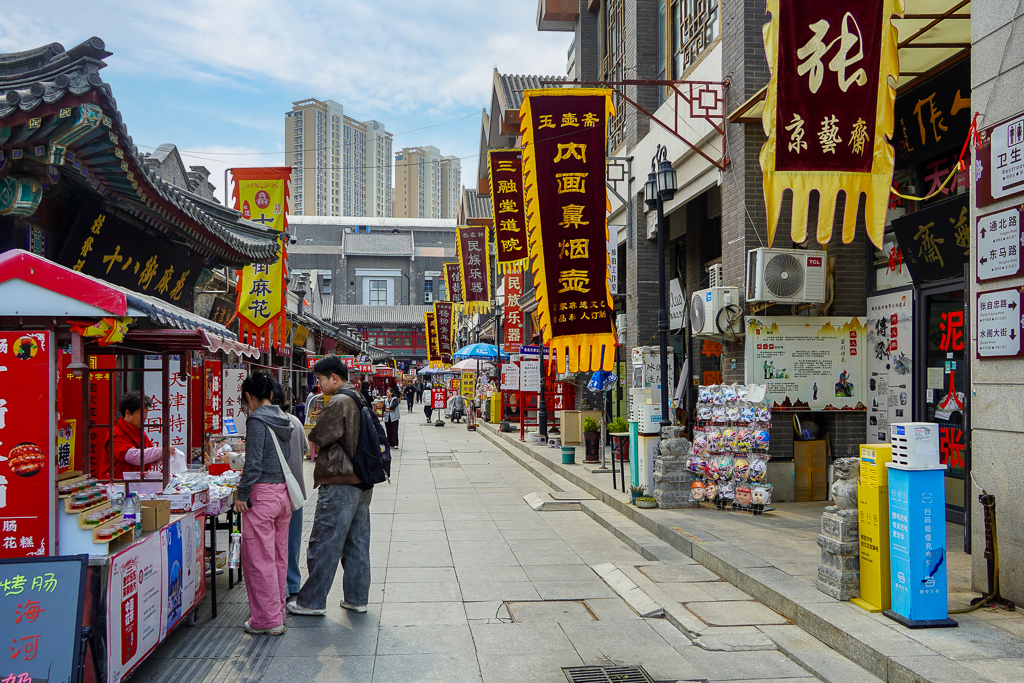
As we made our way through the neighborhood, there were little art galleries, handicraft shops and restaurants. The atmosphere reminded me a little bit of Pingyao Ancient City, just on a much smaller scale.
Italian Style Street
Located around Marco Polo Square, this area was known as the former Italian Concession in Tianjin after Italy invaded China in 1900. It was built and developed between 1902 - 1943 with European style architecture, unique buildings, squares, tree-lined streets and decorative European designs. In 1943, Italy announced the abandonment of this area, and it was returned to Chinese jurisdiction. In 2002, the Tianjin Municipal Government made this area a protective development and started historic renovations which were completed in 2005. Nowadays, with its pedestrian-only streets and many French, Italian and German restaurants and cafes, the area was a big tourist draw.
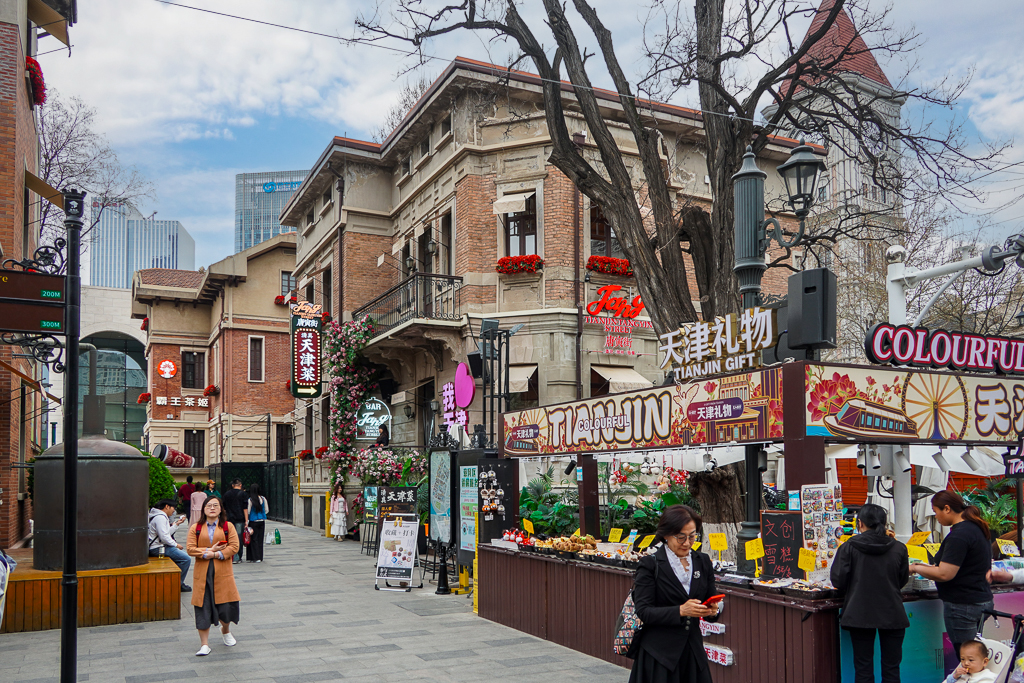
While it was a unique change of scenery (being in China), we ended up spending very little time here. Having lived in Europe for many years, a block of streets and a few restored buildings did not quite grab our attention. However, for local Chinese who were limited in their travels and could not just hop on a plane and fly to Europe, this was definitely a very special area to visit and immerse themselves in. It was a very popular neighborhood for influencer photos and social media selfies...
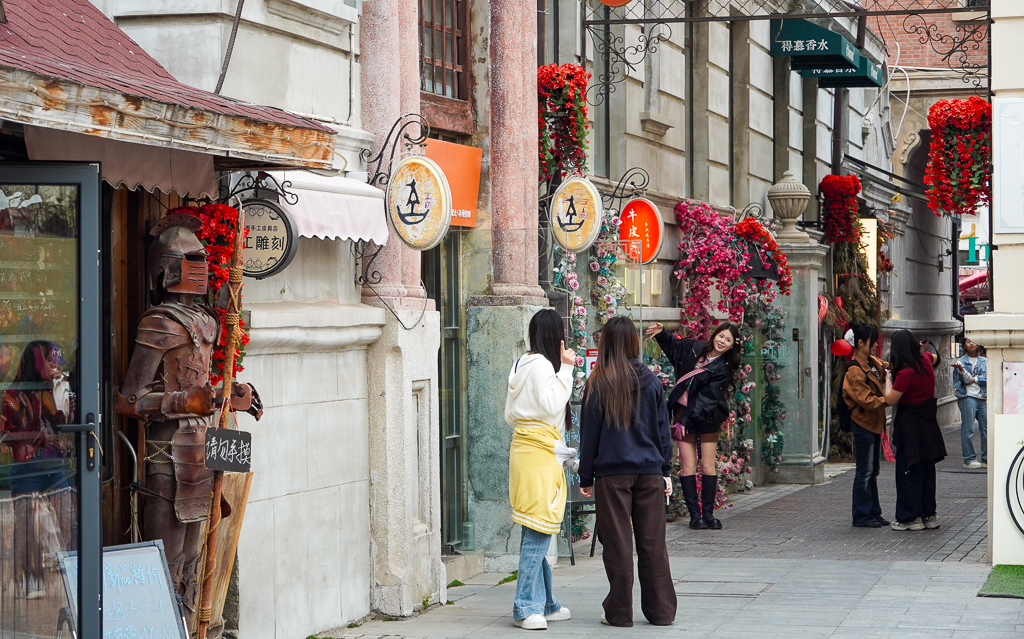
Once we left the safety of the pedestrian street, we were in the midst of Chinese street chaos again.
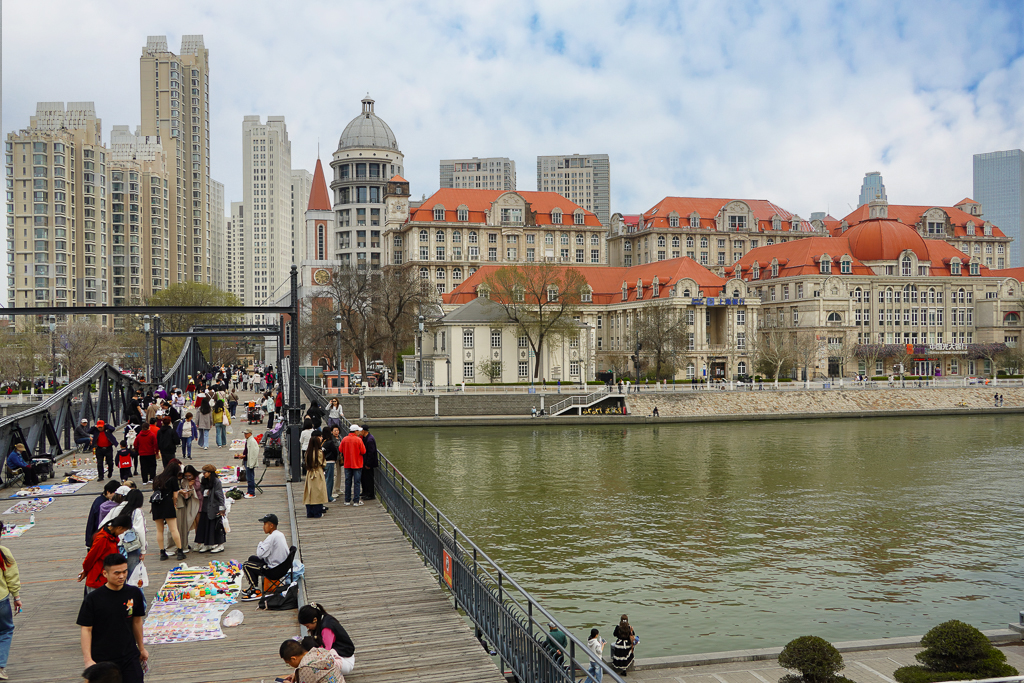
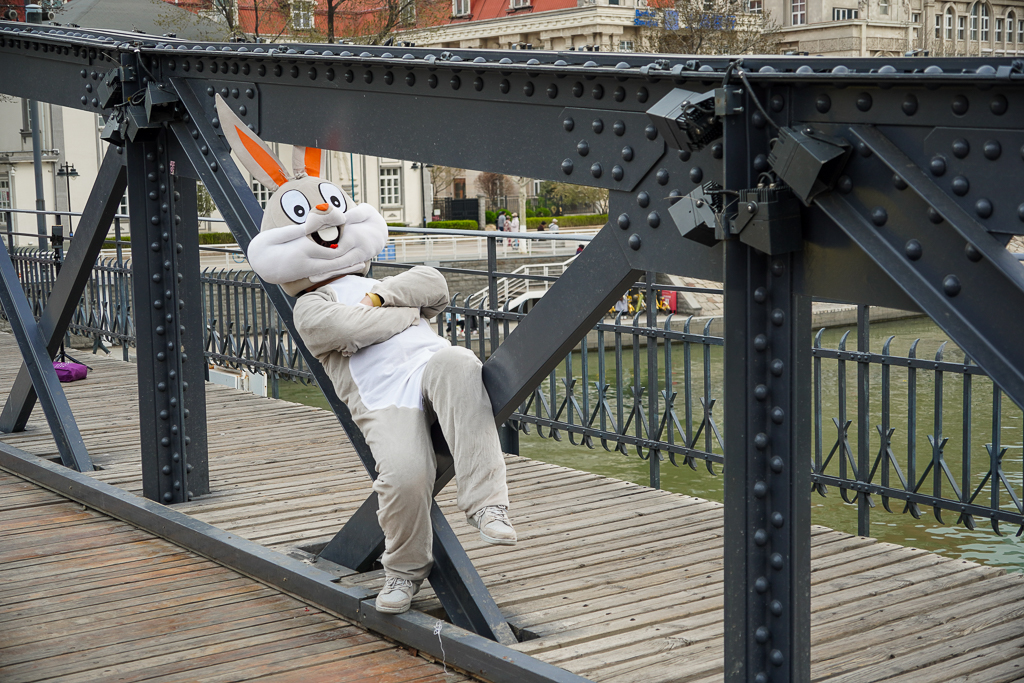
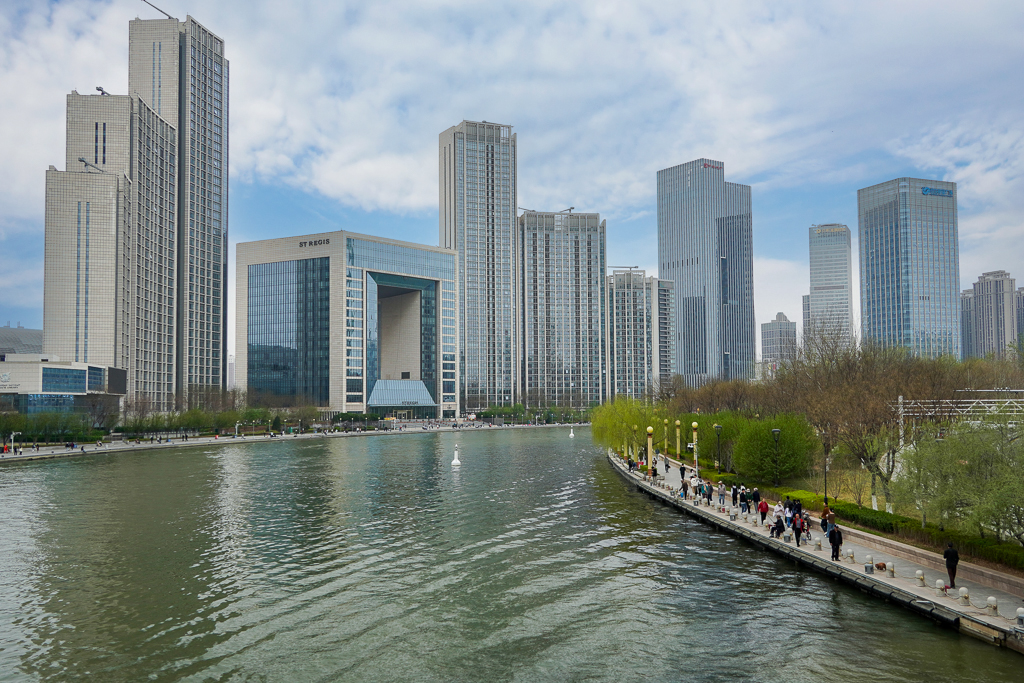
It was a 2km (1.2mi) walk to our next stop, so we admired the varied street scenery along the way – from bridges to buildings to sculptures, promenades and parks.
Porcelain House
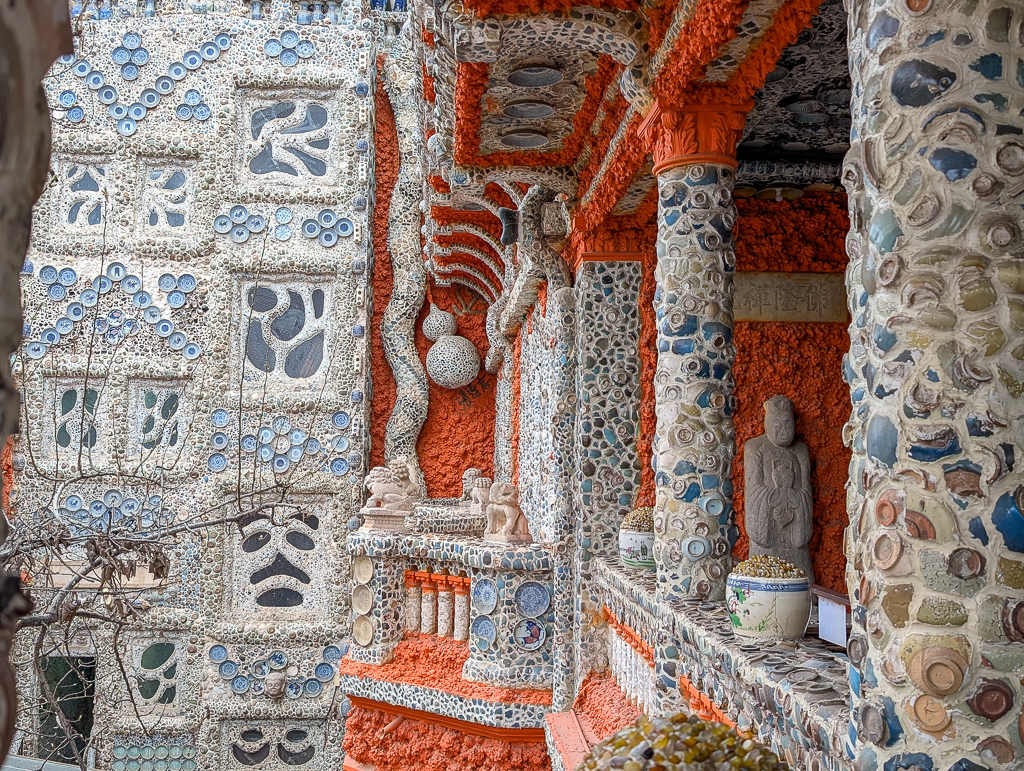
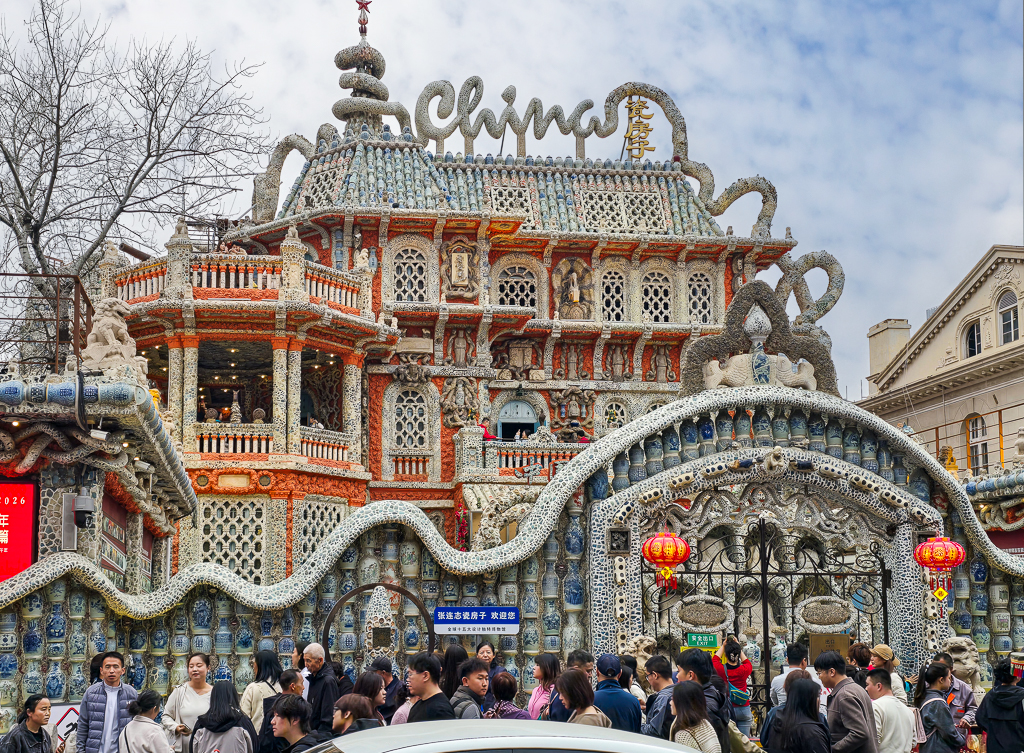
The Porcelain House was a rather strange but eye-catching attraction. The House was a private museum decorated with about 400 million pieces of ancient Chinese ceramic chips, and over 13,000 ancient Chinese porcelain vases, plates and bowls; 300 white-marble carvings, and 20 tons of natural crystals. The porcelain here dated from the Tang (AD 618-907) to the Qing (1644-1911) dynasties. The owner was said to had spent over 20 years collecting materials, and five years completing the decoration at the cost of approximately 2 billion yuan ($315 million).
This was the most crowded place we had seen anywhere in Tianjin so far. The sidewalk and street in front of the house was just a big swarm of people pushing and shoving shoulder to shoulder. Those who did not actually enter the property wanted to get their Instagram shot through the front gate, which, in return, caused awful crowding all through the area.
With a ticket costing only RMB 50 ($7.50), we decided to go ahead and purchase entry tickets. Although quite funky, it was a peculiar place to explore. There were so many little details everywhere from ornate tile pieces to mosaics on the ceilings and walls.
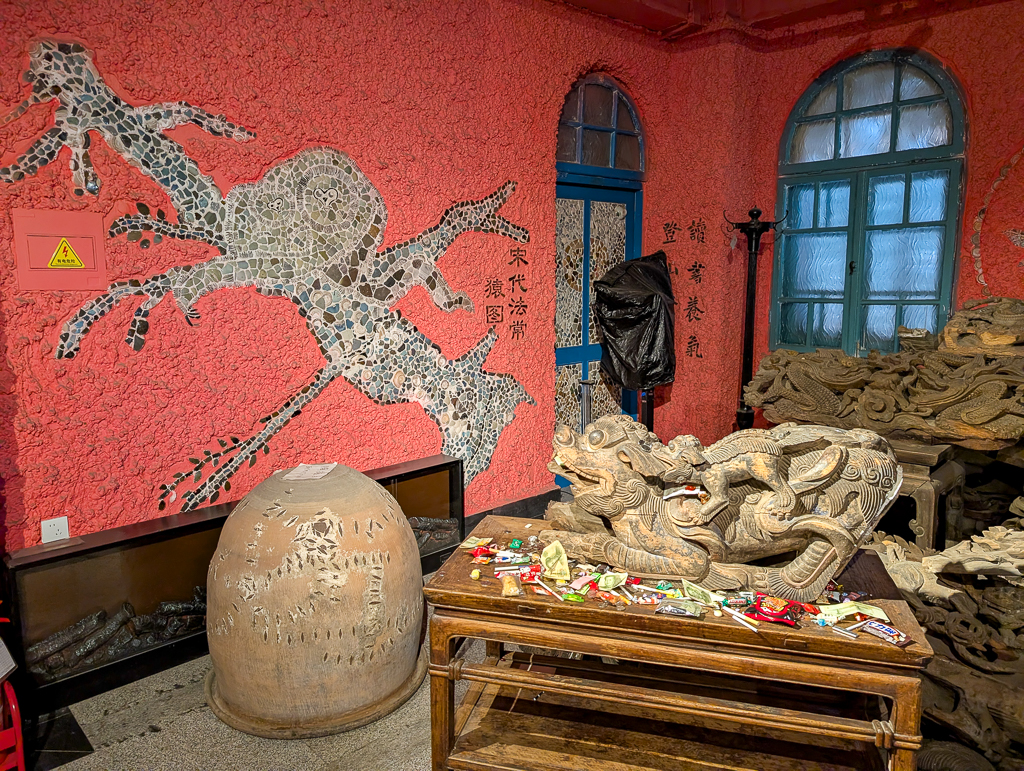
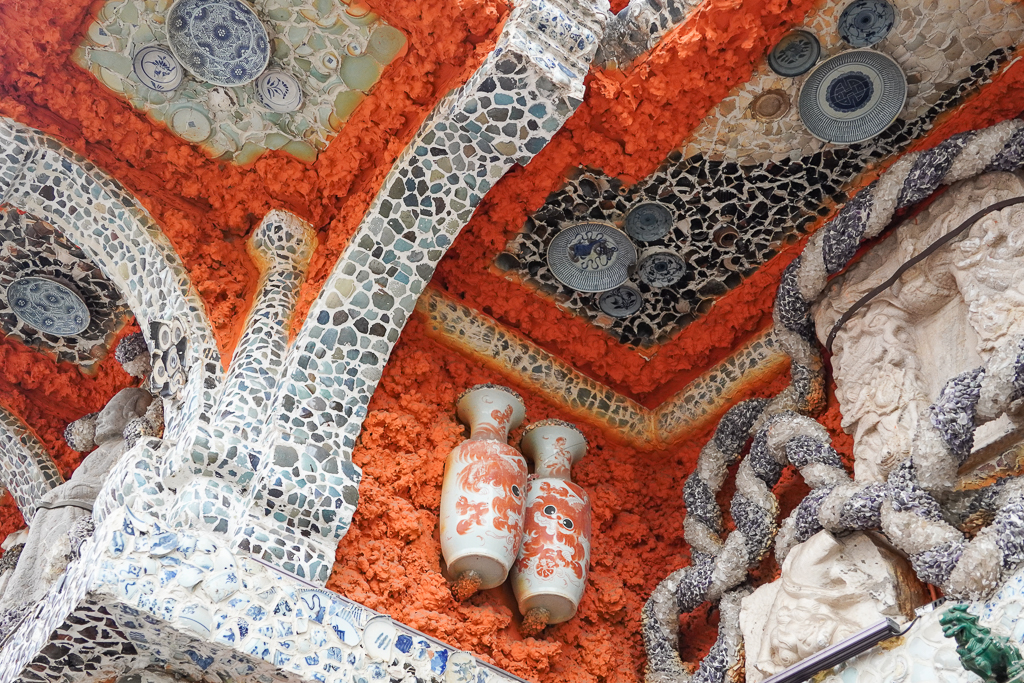
And throughout the rooms there were collections of antique Chinese furniture, some many hundreds of years old. And with indoor and outdoor areas to explore across 4 floors, we eventually left the building just shortly before its closing time.
Wudadao Culture Tourist Area
Although it was slowly starting to get dark, there was still one last place I wanted to have a quick look at – Wudadao Culture Area.
The history of Wudadao could be traced back to the late 19th century to the early 20th century. At that time, as a treaty port, Tianjin had concessions established by foreign powers, and the area where Wudadao was located, mainly belonged to the British Concession and the German Concession. During this period, many foreign nationals, compradors, and bureaucrats built residences and villas here, gradually forming a large-scale Western-style building complex. Its main feature lied in the collection of architectural styles from many countries such as Britain, France, Italy, Germany, and Spain, thus earning it the reputation of "World Architecture Expo".
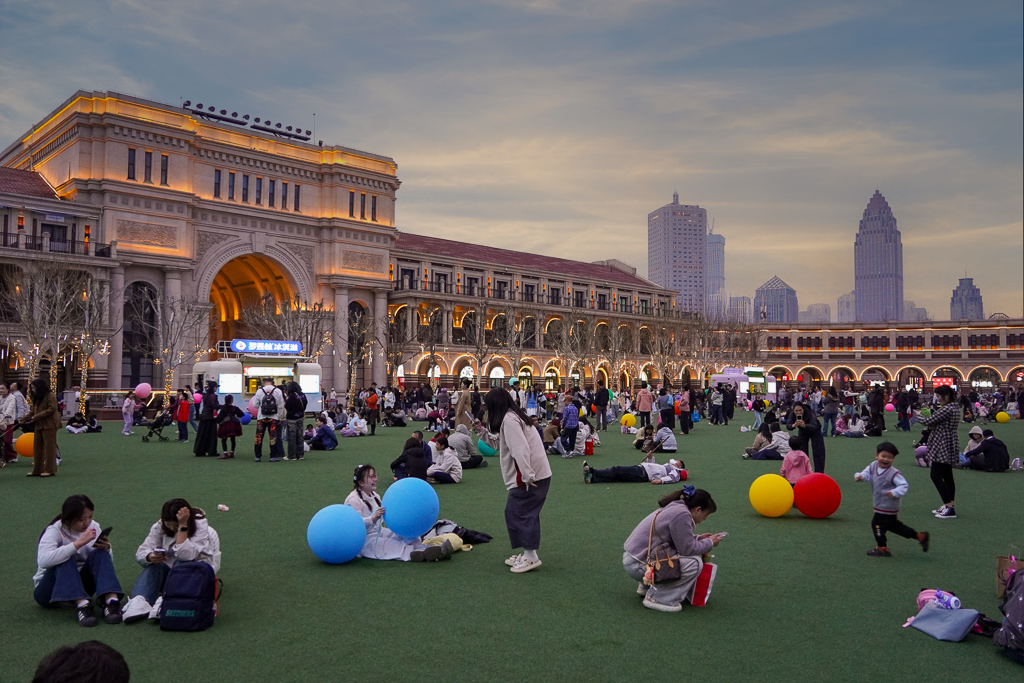
Tired and hungry, we found ourselves at the Minyuan Square area. Originally built in 1920s as a British sports stadium, it was now a public park with shops and restaurants. As we had not properly eaten since getting Goubuli baozi at the Tianjin Eye in the morning, we started looking around for a place to have dinner. Meanwhile, the kids got some oversized balloons from a street vendor and started playing with other children in the park.
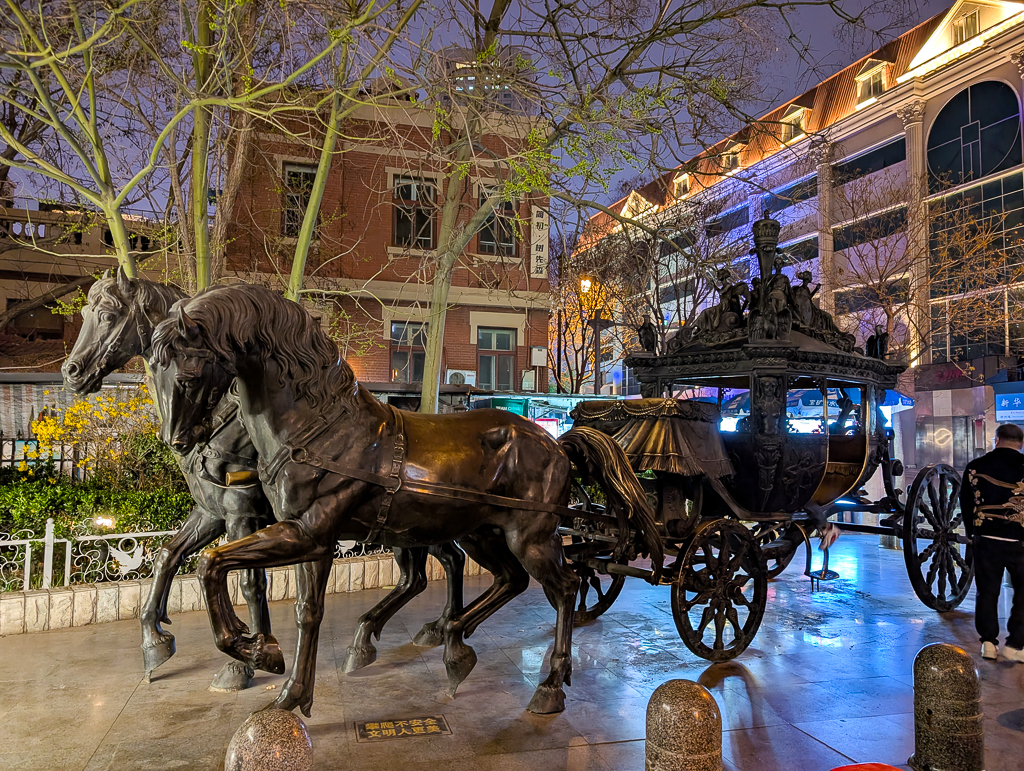
By the time we were done with dinner, we were just too tired to continue with any more walking. We had been on our feet for over 8 hours straight, covering nearly 10 miles (16km) across the city. Besides, it was completely dark outside now, so there was not much architectural beauty left to be seen. We decided to call a Didi (Chinese Uber) and get a ride back to our car.
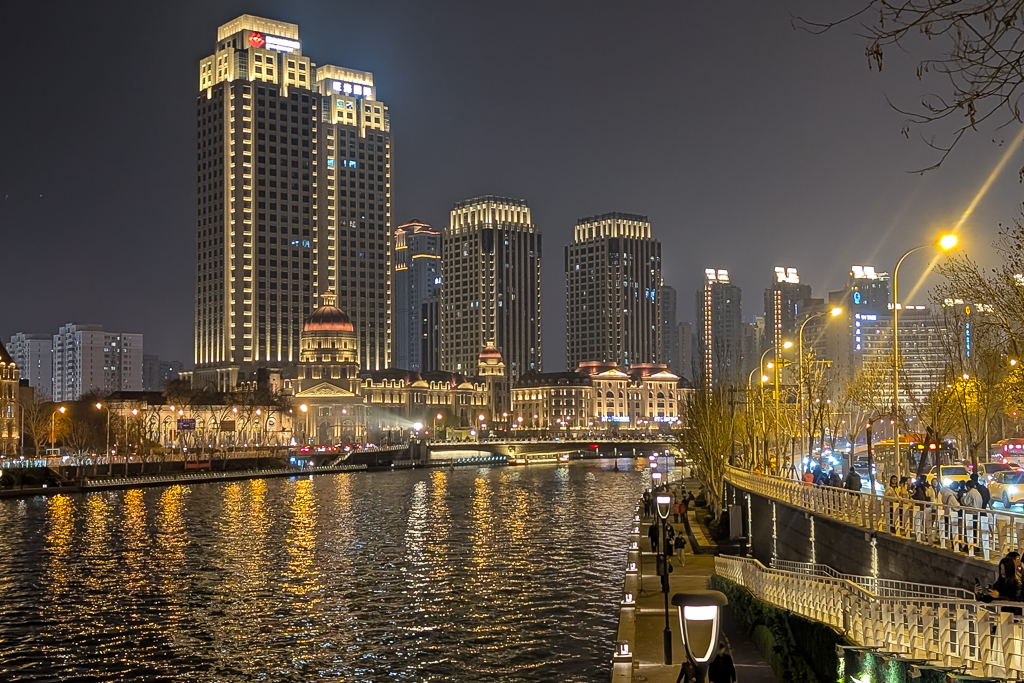
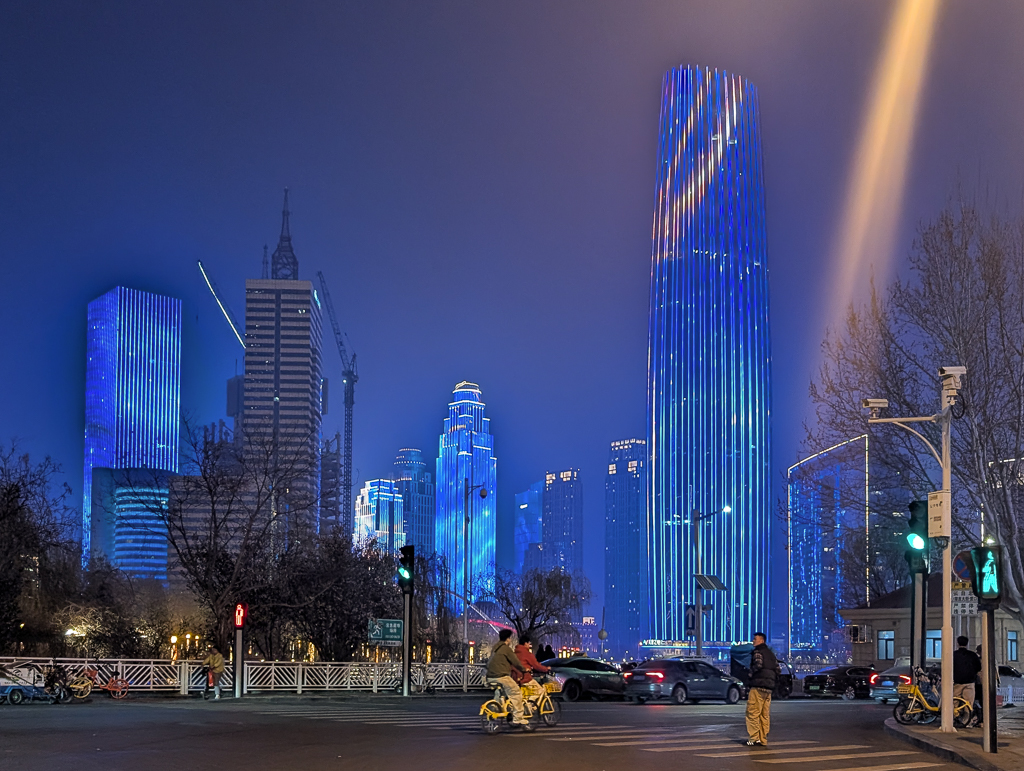
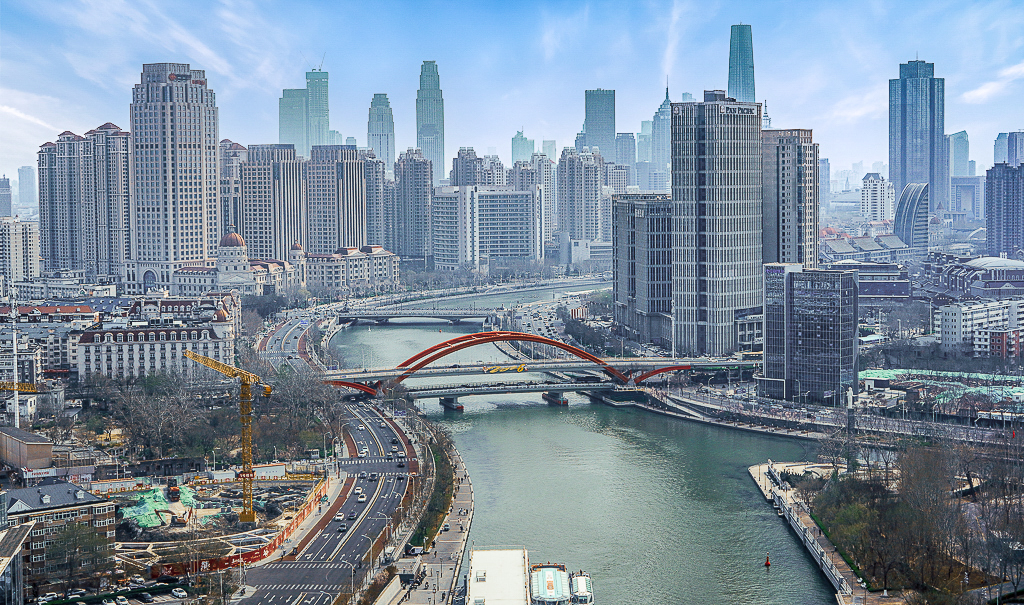
The main tourist areas had, surprisingly, become more crowded than they were during the day. As we were making our way back through the city in a Didi, we observed that lots of people were out to party. The skyscraper district was brightly lit up with many of the buildings displaying synchronized light shows. Everything was bright and colorful, including the Ferris wheel. Tianjin was definitely a place worth sticking around to until dark when everything seemed to light up and acquire a different vibe than during daytime.
Didi dropped us off right by our car, which was the only one left at the employee parking lot. By now, the guard shift had changed and the person who let us in was not here anymore. However, nobody asked any questions. The new guard opened the gate and waved us ‘goodbye’ as we left the lot. With less traffic than in the morning, we reached Beijing in 1.5 hours. Altogether, it was exactly 12 hours door to door – we left around 9 in the morning and got back right around 9 in the evening.
Would I say that Tianjin is an absolute must-see location when in China? – Probably not. But for a day-trip or a weekend getaway from Beijing with nothing else to do, it was definitely more fun than I expected.
Other travel articles about China:
HIKING ALL 4 PEAKS OF MOUNT HUASHAN WITH KIDS AND A SPONTANEOUS VISIT TO TERRACOTTA WARRIORS
CHENGDE - IMPERIAL GARDENS AND TIBETAN TEMPLES. A WEEKEND TRIP FROM BEIJING, CHINA
CHINESE NEW YEAR AT PINGYAO ANCIENT CITY (AND A VISIT TO WANG FAMILY COMPOUND)
3 DAYS AT HARBIN INTERNATIONAL ICE AND SNOW SCULPTURE WINTER FESTIVAL IN CHINA
*Title image rights: Xinhua News*