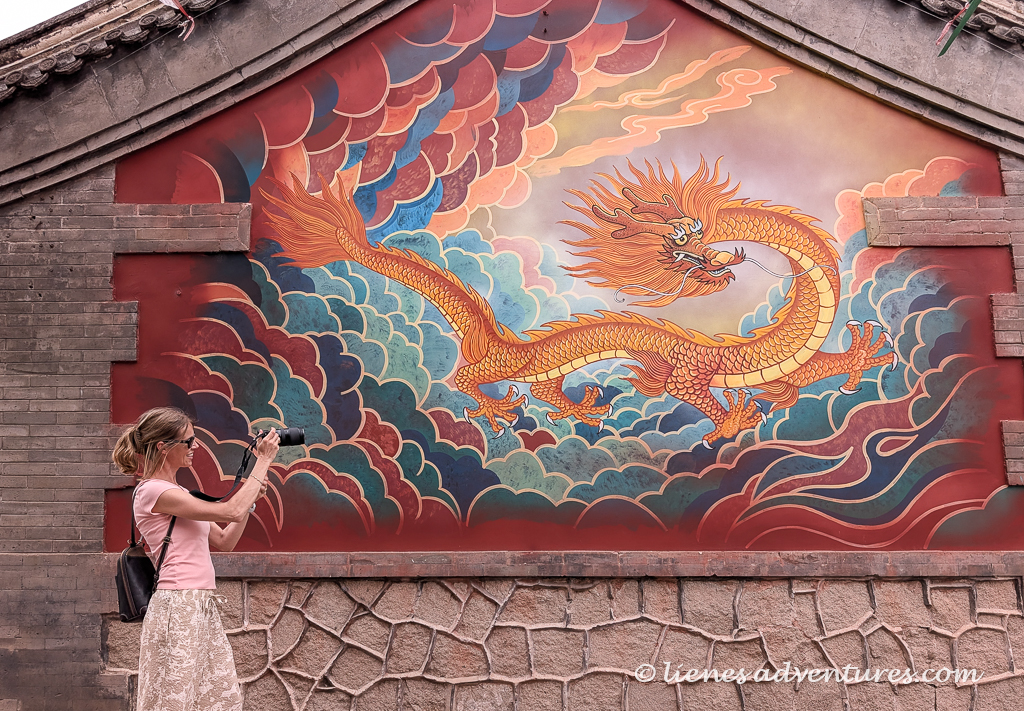
CHENGDE - IMPERIAL GARDENS AND TIBETAN TEMPLES. A WEEKEND TRIP FROM BEIJING, CHINA
-
Hits: 500
After many cold winter months in Beijing, warmer temperatures were finally here to stay. And we were looking forward to all the little road trips we could finally take to explore our new host country, China. Just a few weekends ago, we had completed a DAY TRIP FROM BEIJING TO TIANJIN. And on this April weekend, our sights were set to Chengde.
Established by Qing-dynasty emperor Kangxi, Chengde was known for its Imperial Summer Residence and 8 outlying Tibetan style temples. We visited the Imperial Summer Palace in Beijing and enjoyed it a lot. Therefore, we only deemed it appropriate to visit its sister property in Chengde as well.
While, in a time crunch, Chengde can be completed as a day trip from Beijing, we opted to spend 2 days in Chengde. We had the whole weekend available, so why not?
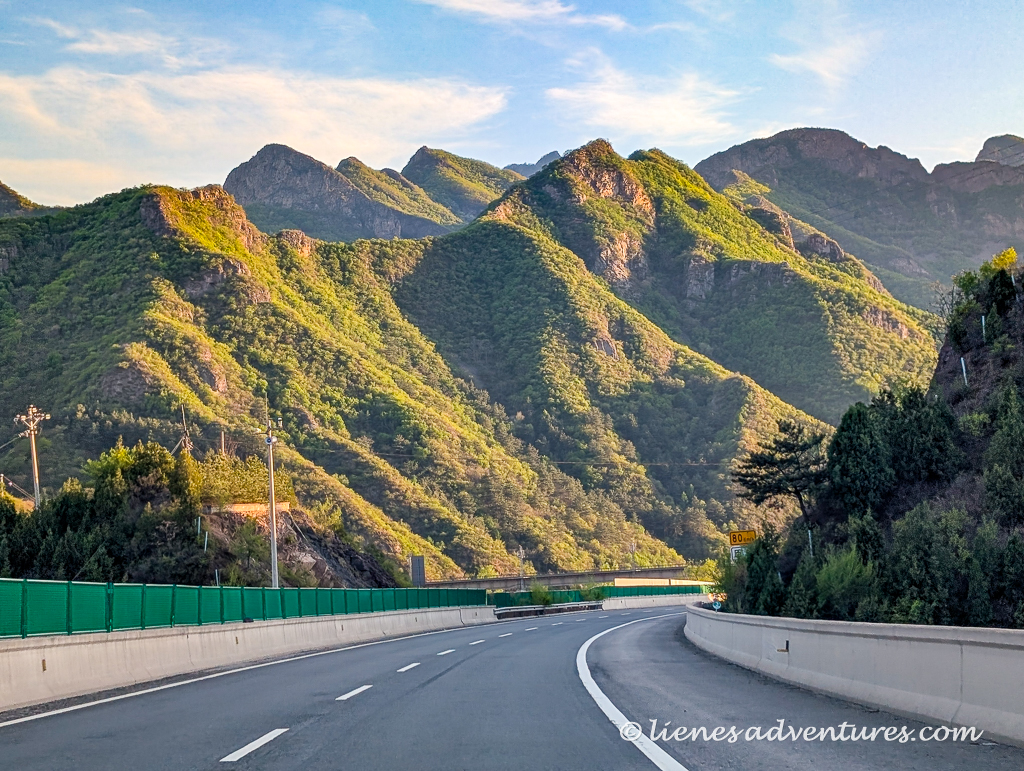
The drive from our house in Beijing was uneventful and (on the expressway) took only 2.5 hours.
We reached Chengde right around noon and decided to dedicate the first day to exploring the temples.
‘Outer Eight Temples’ was the general name used for the 8 Tibetan Buddhist temples. They were successively built between 1713 and1780. The temples got this name because Chengde was located outside Beijing proper and the Great Wall. The 8 temples included Puren Temple, Pushan Temple (no longer existing), Puning Temple, Anyuan temple, Putuo Zongcheng Temple, Shuxiang Temple, Xumi Fushou Temple and Guangyuan Temple.
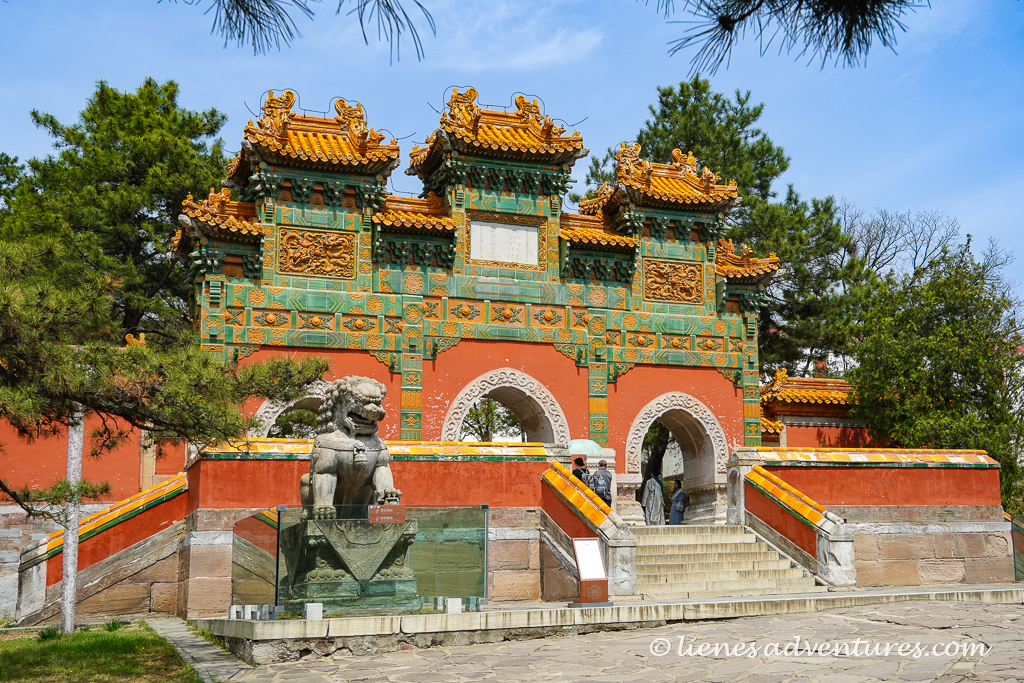
Out of these, we decided to visit just the 3 or 4 main ones, depending on our energy levels and available time. As we pulled up to our first temple, finding car parking was not an issue as each temple had its own dedicated parking lot. And there was also no need to book tickets online days in advance - each temple had a readily available ticket sales booth right by the entrance (with no lines or crowds during our visit).
We started our sightseeing with the biggest temple of them all!
Putuo Zongcheng Temple
Putuo Zongcheng Temple, also known as "little Potala", was a Buddhist temple modeled after Potala Palace in Tibet. Visiting this temple was as close and authentic as anyone would get to Tibet, without actually going to Tibet itself.
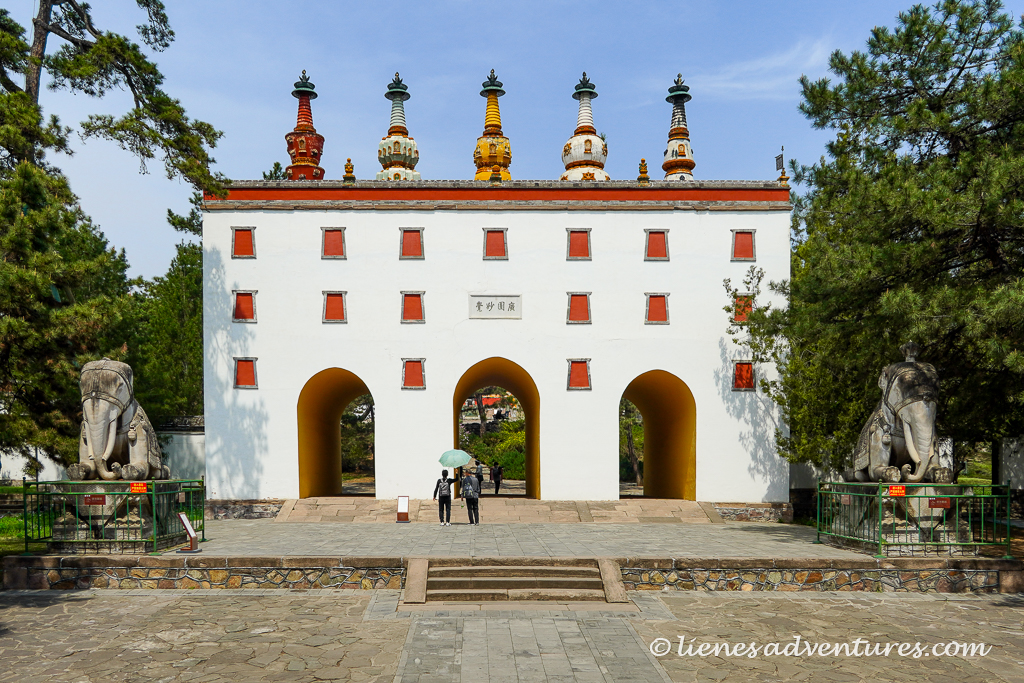
Putuo Zongcheng was built by Emperor Qianlong in the Qing Dynasty to celebrate his 60th birthday. The main building was located on top of the mountain with a height of 43 meters (142ft).
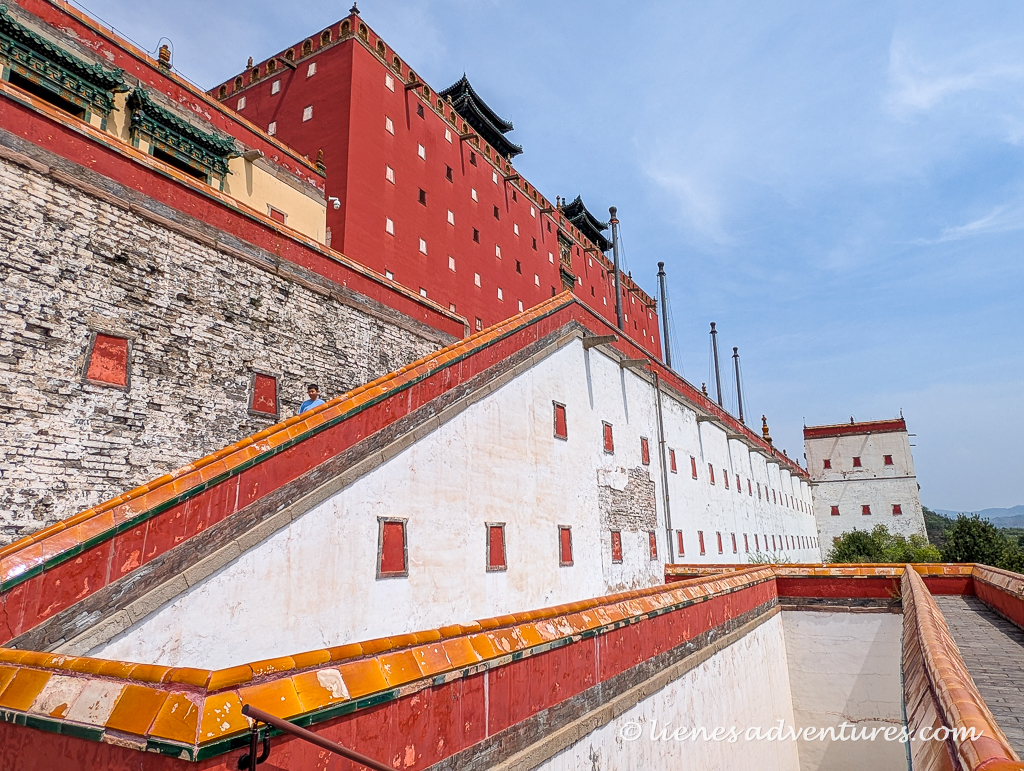
Seeing Putuo Zongcheng Temple gave us a glimpse of the magnificent Potala Palace located in Lhasa, Tibet. Maybe one day we will visit Tibet, but for now, this was impressive enough!
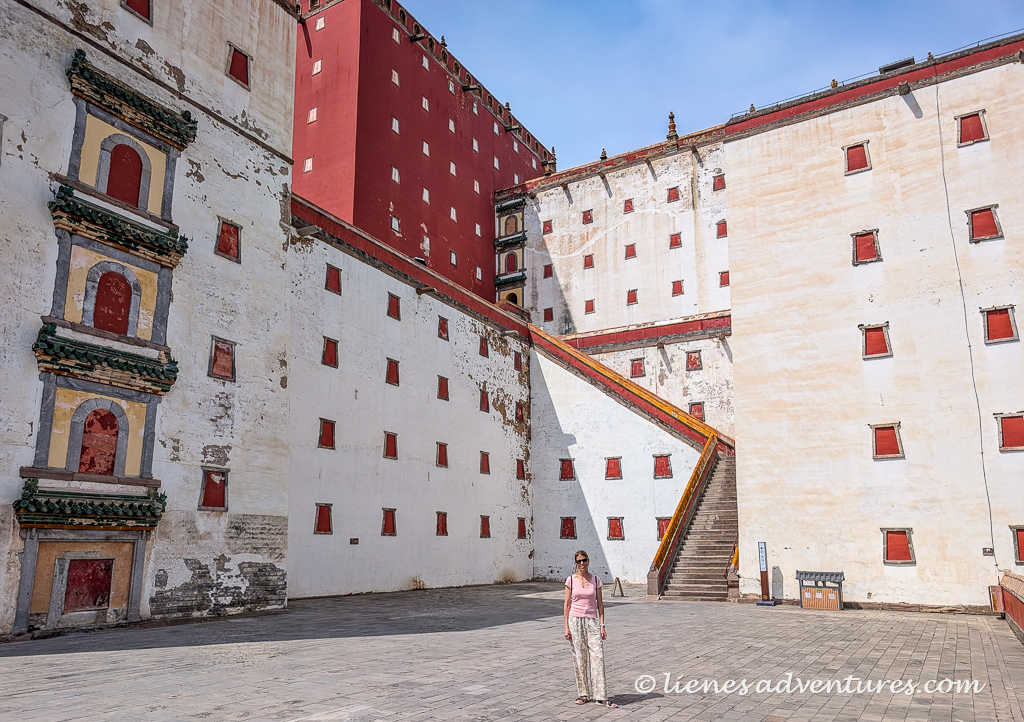
I was truly amazed by its white and red architecture. And many of the temple’s interior rooms, terraces and walkways were open to visitors.
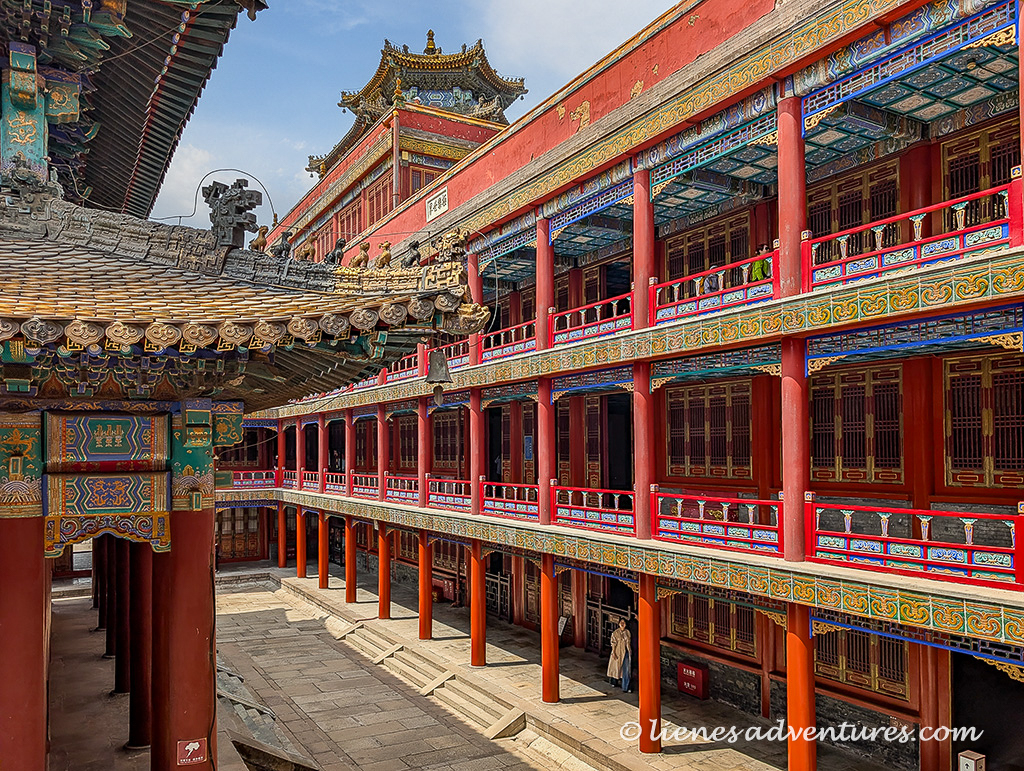
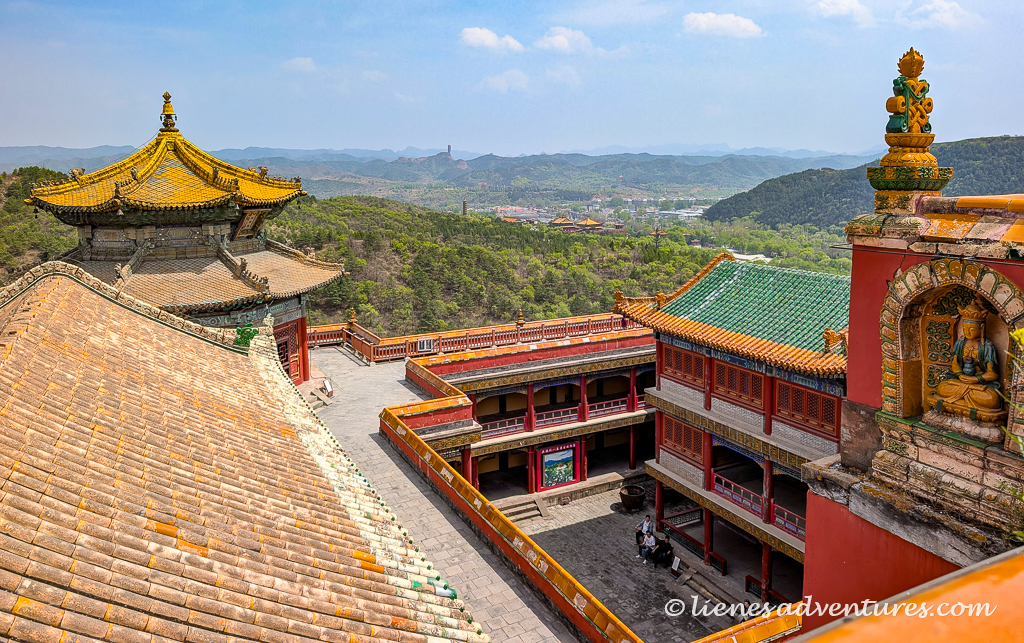
As we made our way through all the corridors and stairways, we found ourselves at the top of the building overlooking panoramic views of the surrounding area.
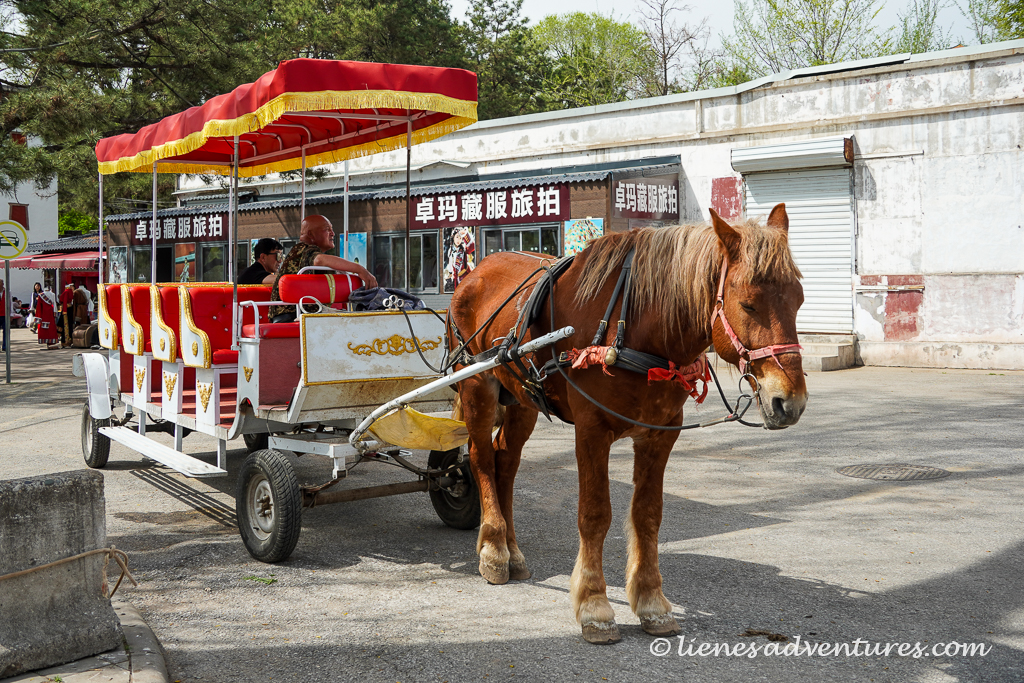
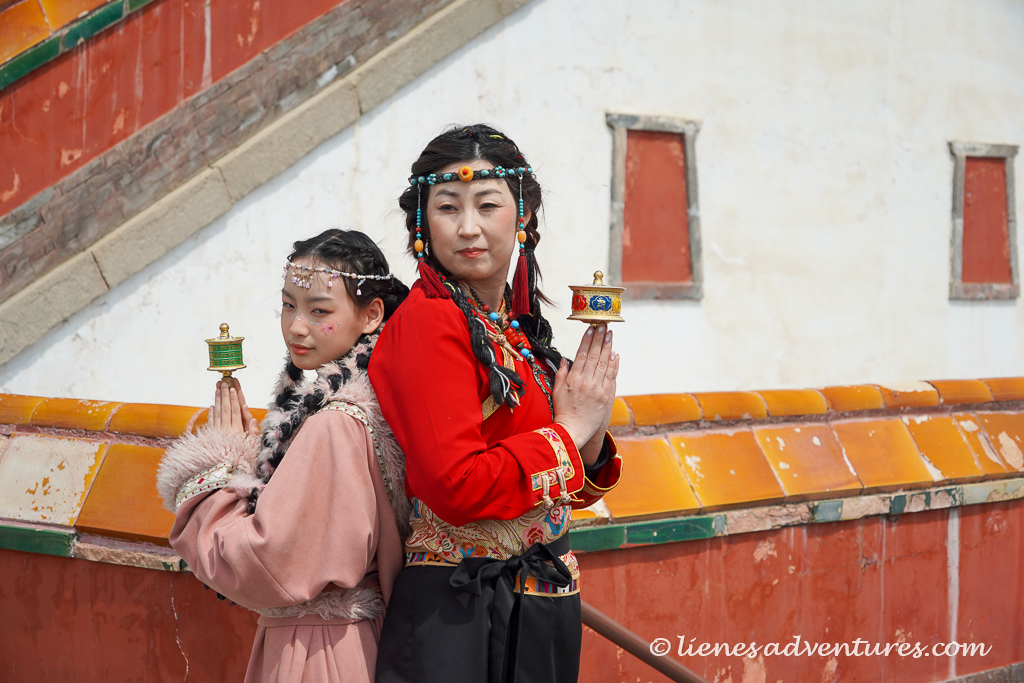
Just like in many other places around China, dressing up in traditional outfits and taking professional photos was a popular thing to do here as well. While I have not done this myself yet, I am very tempted to try it one day.
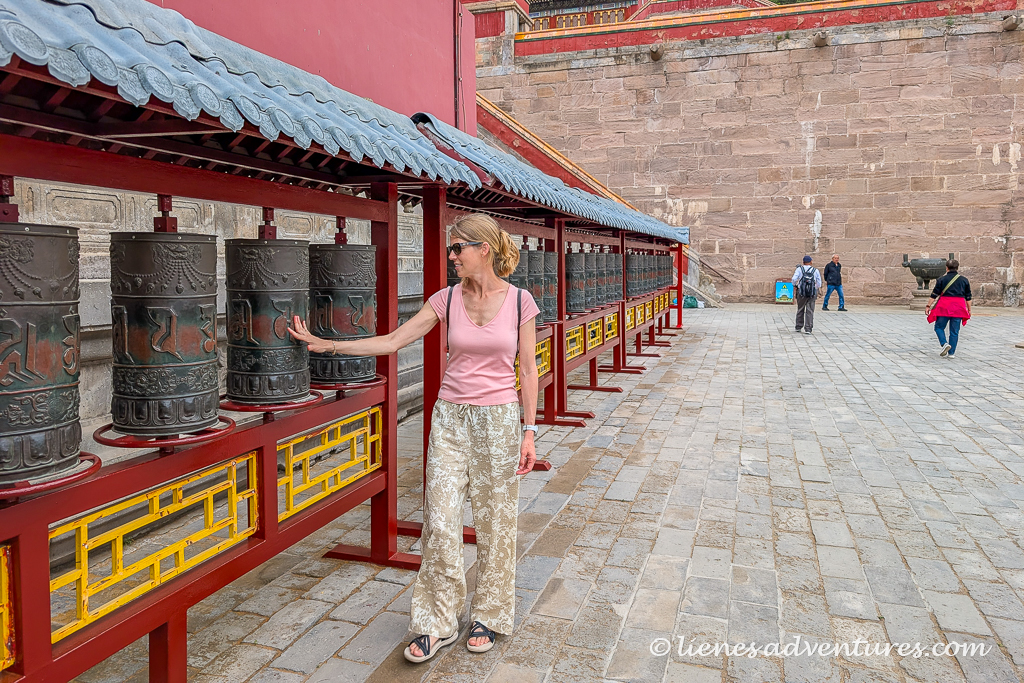
Overall, we spent over 2 hours just at this one temple, and if we wanted to see the rest of them, we had to move on. Just a short 5-minute drive up the road was our second stop.
Puning Temple
Puning Temple was built in Qianlong period of Qing Dynasty combining Han and Tibetan characteristics. The first half of the temple was predominantly Han style, while the second half - Tibetan style built after Samye Monastery in Tibet. Two different styles of architecture were seamlessly integrated into one.
Once we reached the upper sections of the temple complex and looked back over the courtyard, the white and red Tibetan buildings, towers and stupas dotted the landscape.
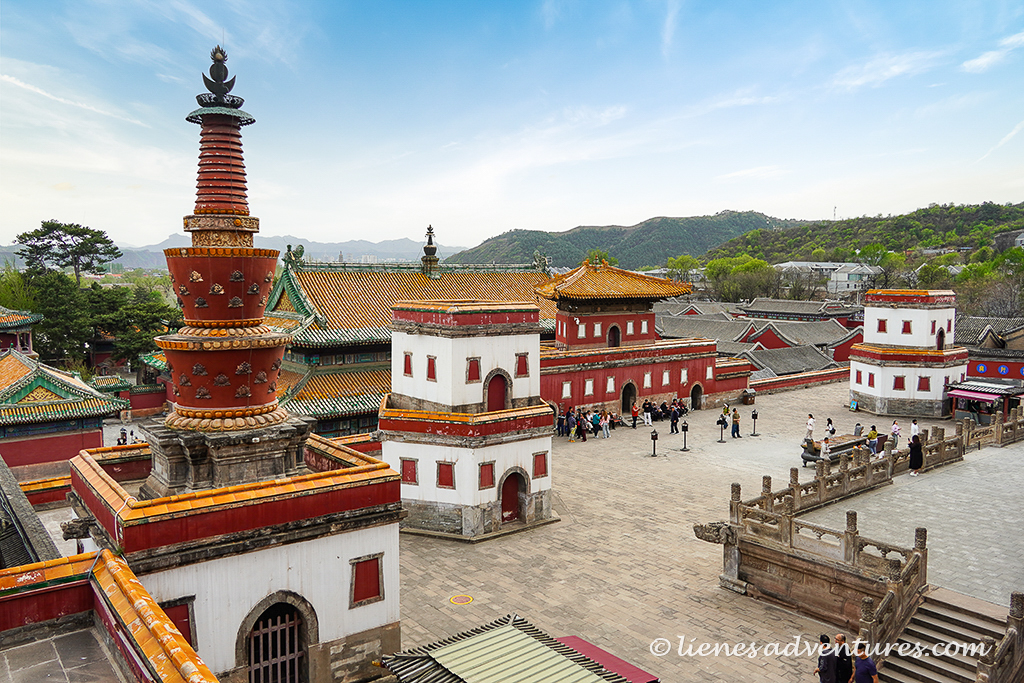
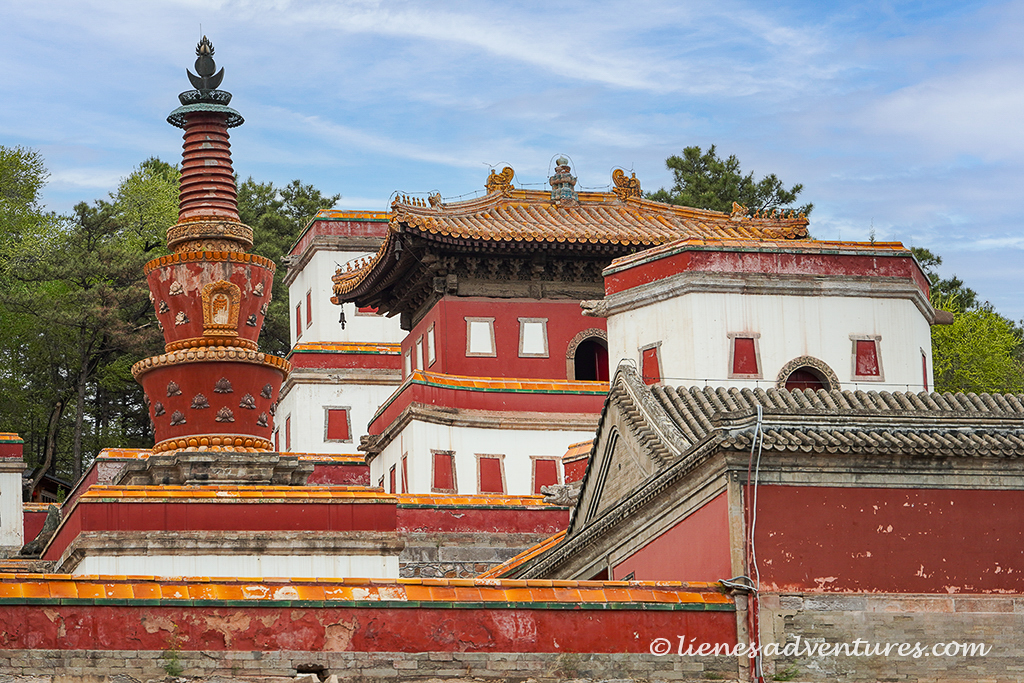
The whole temple was magnificent, covering an area of 23000 square meters. The main statue of the Buddha in Puning Temple was a 27-meter-tall (88ft) Avalokitesvara with a thousand hands and thousand eyes carved in wood and lacquered in gold. While it was not allowed to take pictures of the main Buddha, many smaller temple buildings around it had their own, equally interesting altars.
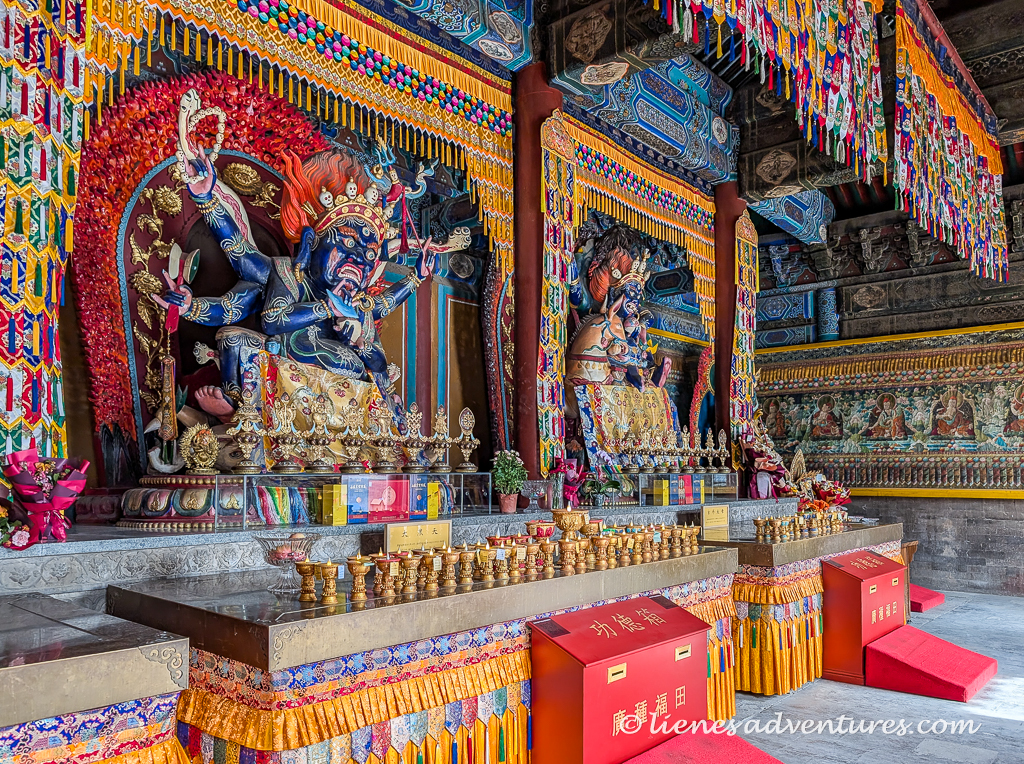
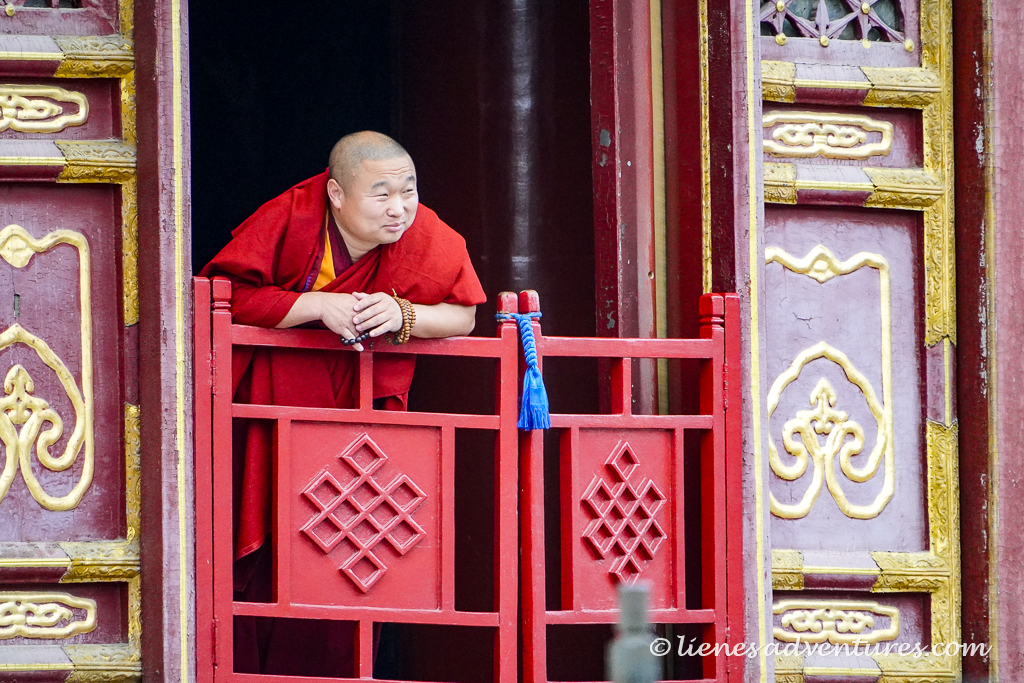
Additionally, several of the temples, including Puning, were practicing temples with monks still residing on the premises. We could see them walking around the temple grounds here in various areas.
Just like before, we spent much more time here than we originally expected. But we really wanted to make sure we did not leave anything unexplored as it was all very unique and intriguing.
By now, it was coming to 4:30PM and most of the temples were closing for visitation at 5PM. I had just 30 minutes left to make a short stop at just 1 more of the remaining 4 temples. Purely due to our close proximity to Xumi-Fushou Temple’s parking lot, this was the temple we settled on. However, neither my husband nor my kids had it in them to see any more temples. They were hungry. So, while I rushed in to take a quick look at my last temple, my husband and kids went to raid the food stalls surrounding the parking lot.
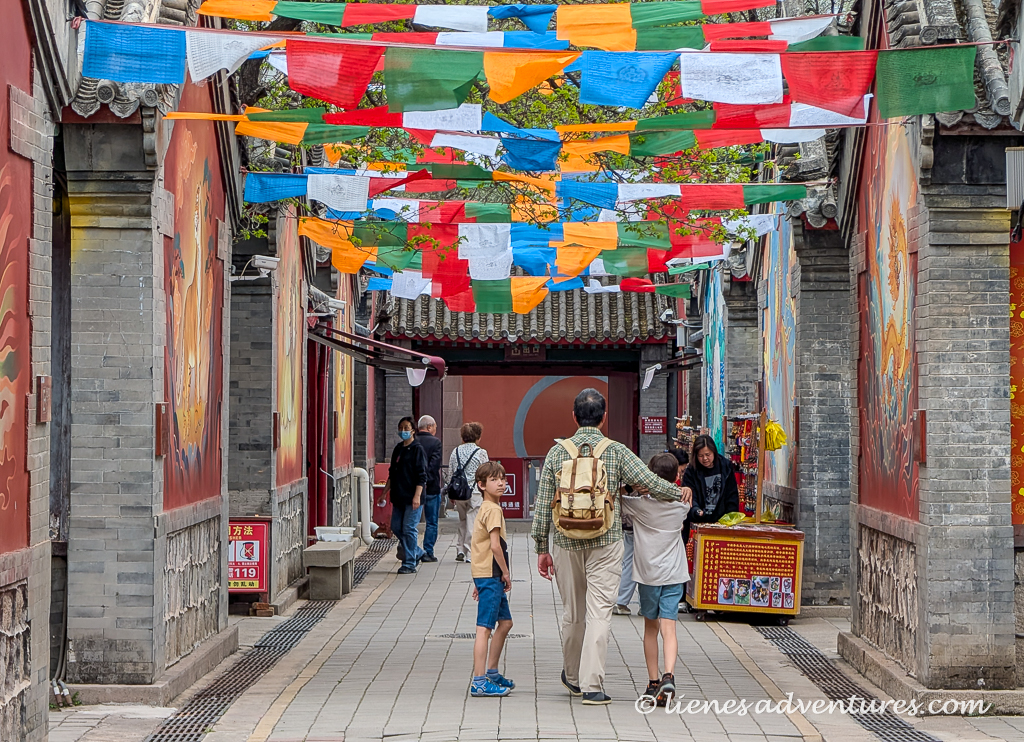
Xumi-Fushou Temple
‘Xumi Fushou’ means blessing and longevity. This temple was built for the 6th Panchen Lama (head of Tibet) in 1780.
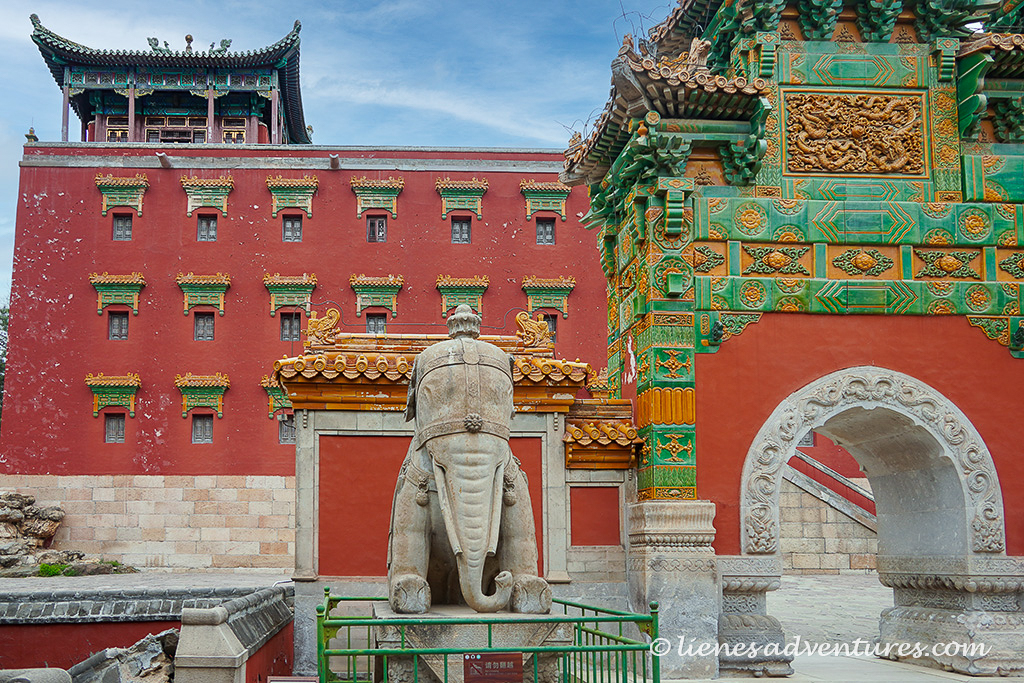
The story goes that Aug.13, 1780 was Emperor Qianlong ‘s seventieth birthday. In order to celebrate it, a master Lama from Tibet spent one year in Chengde. Emperor Qianlong ordered to build a temple for Lama so he can rest and sermonize while staying here. It played an important role in the diplomatic relationship between the Chinese Emperor and Tibet.
With all the buildings in the complex slowly getting closed, I did not have much time to explore. However, 30 minutes were enough to get a quick glimpse. I managed to make it all the way to the mountaintop pagoda and back down through the stone gardens.
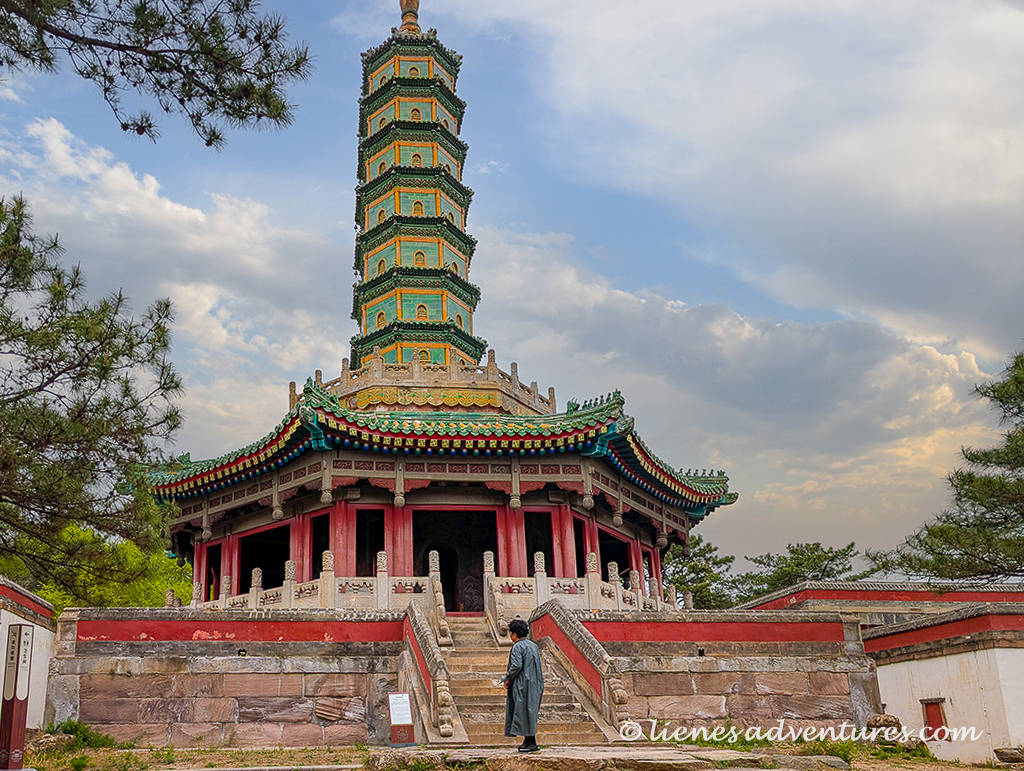
This temple was not as grand or impressive as the main 2 that we saw earlier. However, I was still glad I managed to squeeze in a quick glance, nonetheless.
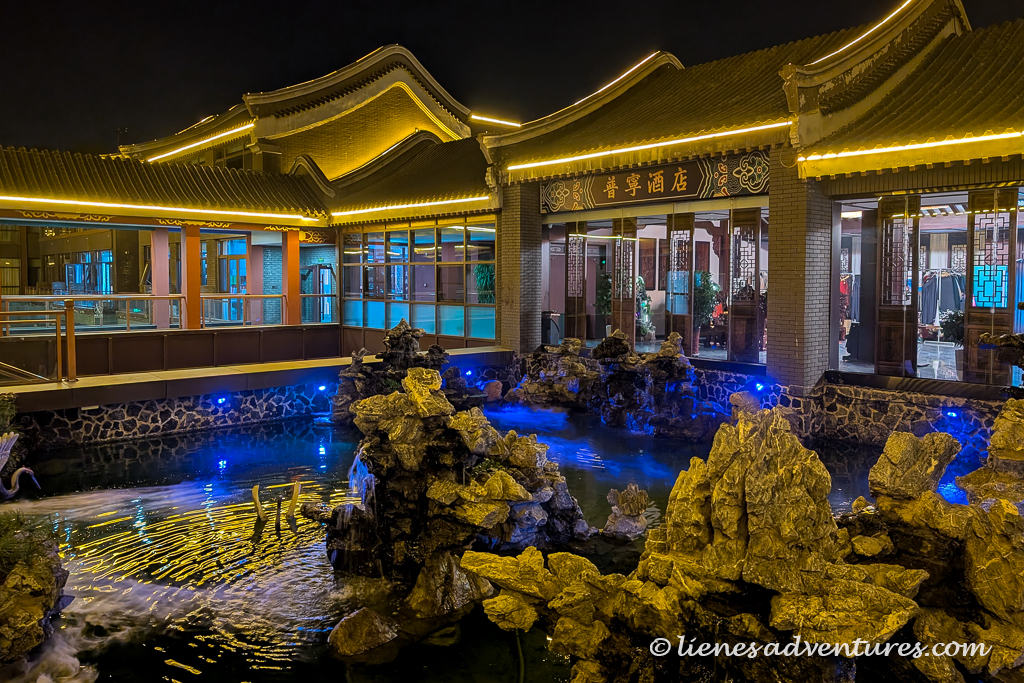
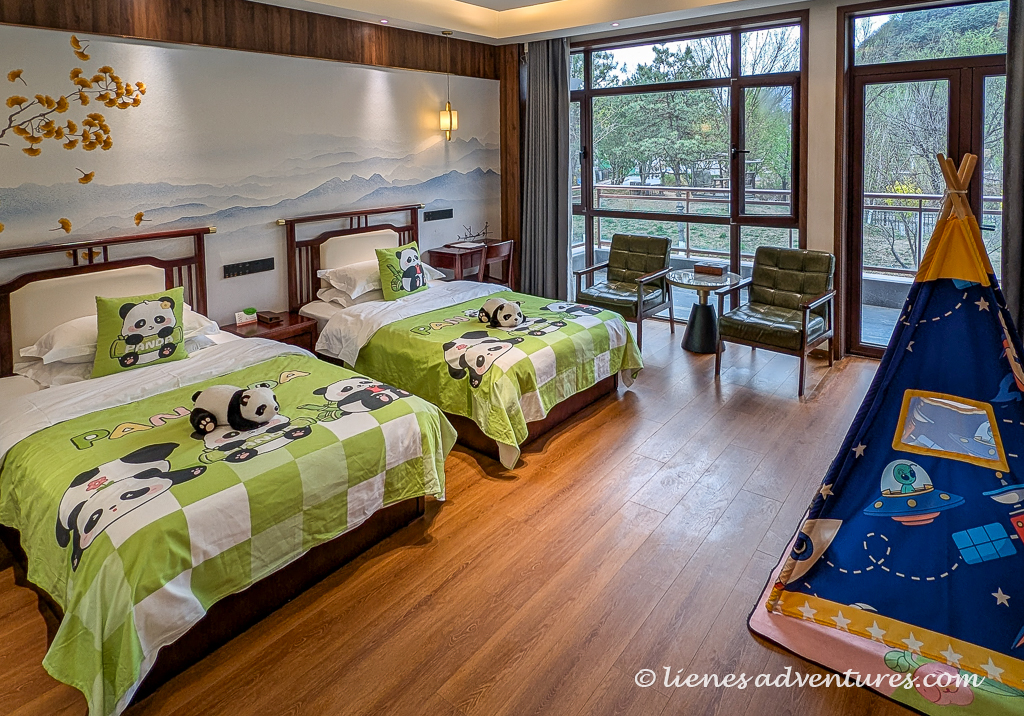
With it being past 5PM, all the temples and attractions were now closed. Hence, our only option was to make our way to the hotel for a well-deserved break. I had booked a family room at Chengde Puning Hotel. It was a traditional Chinese courtyard style building with stone and water garden at the center surrounded by rooms from all sides.
And we were given the most adorable panda-themed room. There were panda pillows, panda blankets and panda plush toys of various sizes. It really felt like China, and created a very welcoming atmosphere.
It was time to look for some decent dinner, but we could not get the food delivery app to synchronize with our location. It kept rejecting the delivery to the hotel. So instead, we decided that if the food was not coming to us then we would go to the food. We jumped in the car and made a short 15-minute car ride into the busier part of Chengde.
While our food choice was truly pathetic (kids requested burgers), what wasn’t pathetic was the illuminated city around us! After we were done eating, we decided to go on a little evening walk to explore more of all the colorful lights and displays all around.
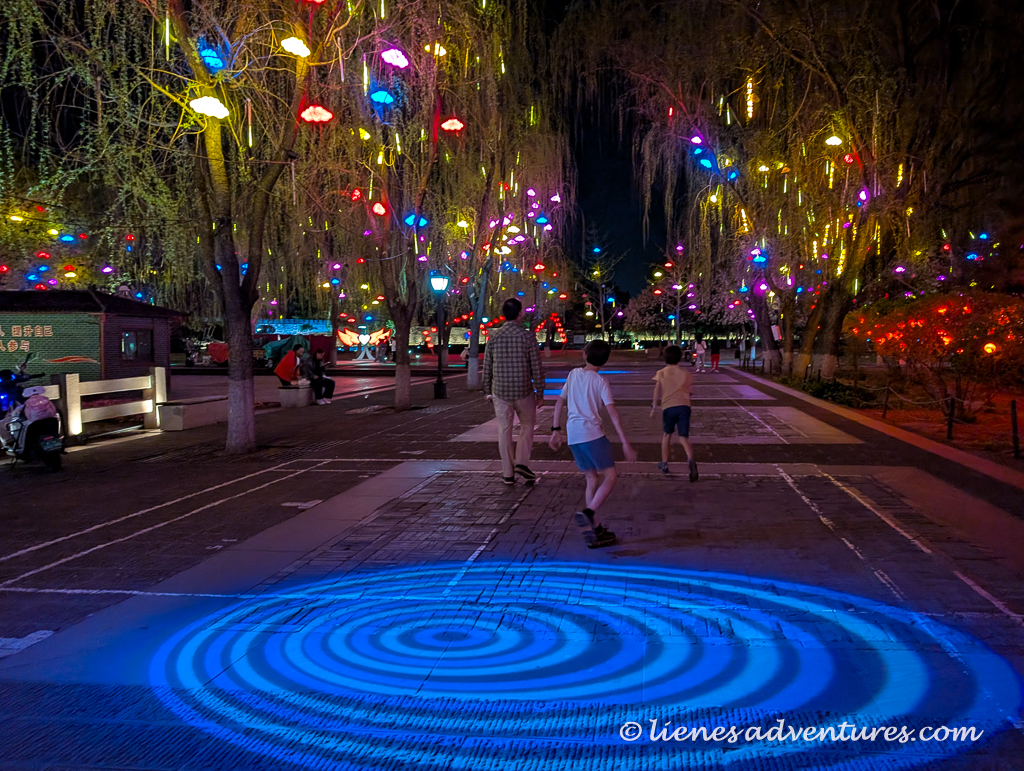
Afterwards, however, it was time to return to our panda-suite and settle down for the night.
Morning of day 2 did not start quite the way we planned. I missed my 8AM alarm, and my husband had not set his alarm at all. I opened my eyes at 9:15AM just to realize we had overslept hotel’s breakfast with the buffet closing… 15 minutes ago. I ran down to the reception to see what our alternatives might be, and they assured me that they would hold the buffet open for us. It was a little odd having all the staff at the buffet serving just the 4 of us, however, we did get to eat breakfast after all.
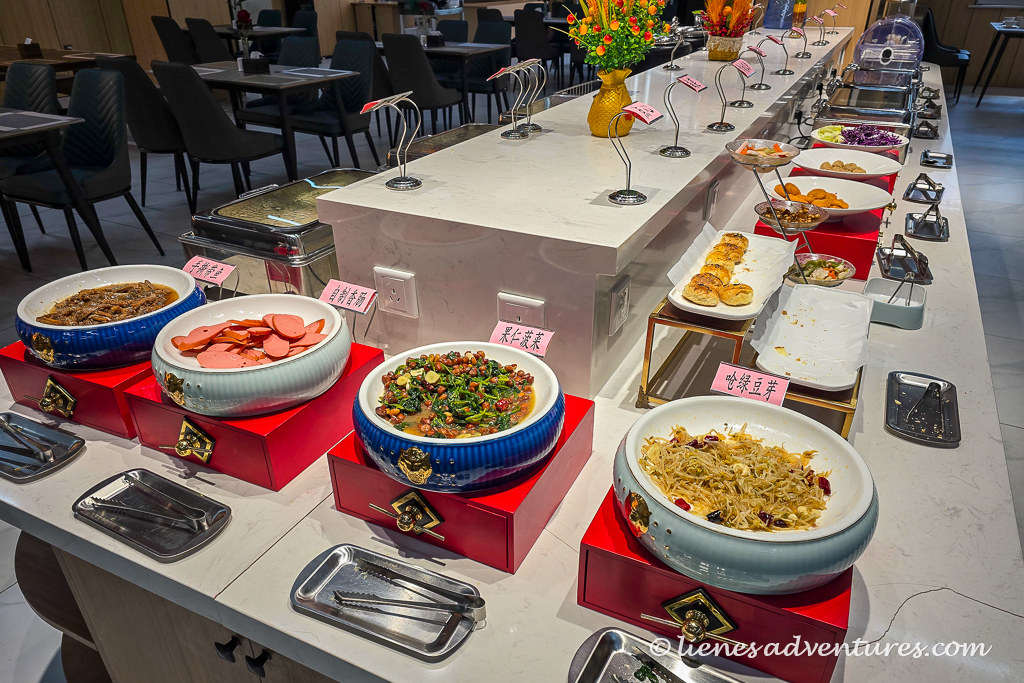
Afterwards, it was time to pack up and bid farewell to all the pandas in the room. We had more sightseeing to do!
Shuangtashan Forest Park
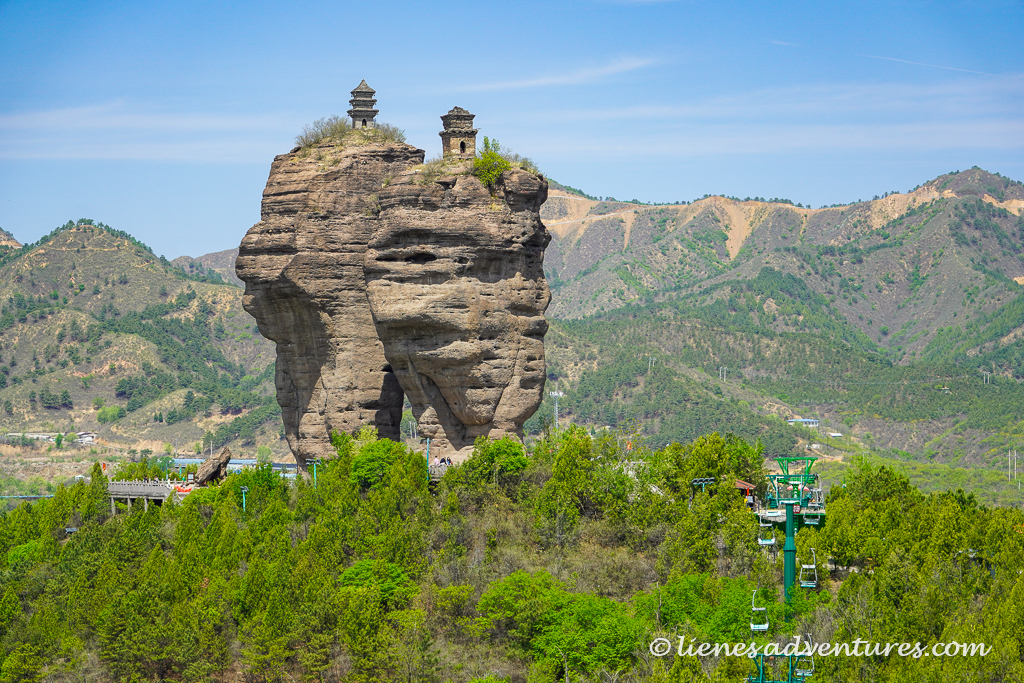
Shuantashan (also called ‘Two-Pagoda Peaks’ and / or ‘Twin Pagoda Mountains’) Forest Park was the largest natural attraction close to Chengde's city area. The most eye-catching attraction in the park were two giant rocky peaks with one brick pagoda built at the summit of each peak by Khitan people 1,300 years ago. That was exactly the image I saw online when researching Chengde, and the reason why I put Shuangtashan Forest on my to-see list.
Also, it did not hurt that a troop of wild monkeys were living here, frequently seen by visitors. Now I definitely had to come here as seeing wildlife was always my #1 priority!
After some hectic street parking arrangements, we finally entered the park. Although it was possible to use the walkways to make one’s way up the mountain, after our morning delays we were a little pressed for time. Therefore, we decided to use the chairlift to make things go quicker. And our kids, of course, were totally excited about that.
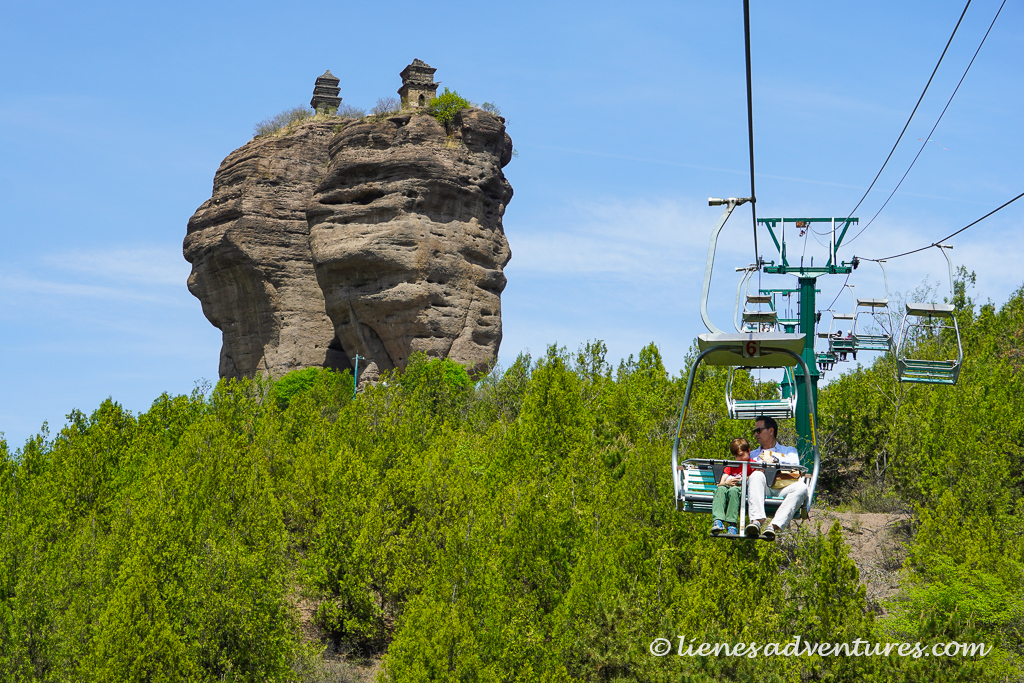
The higher up we went, the more 2 pagodas came into view. Just HOW did people 1,300 years ago get those bricks and construction materials up these two mountain pillars?!? Quite unbelievable, if you ask me!
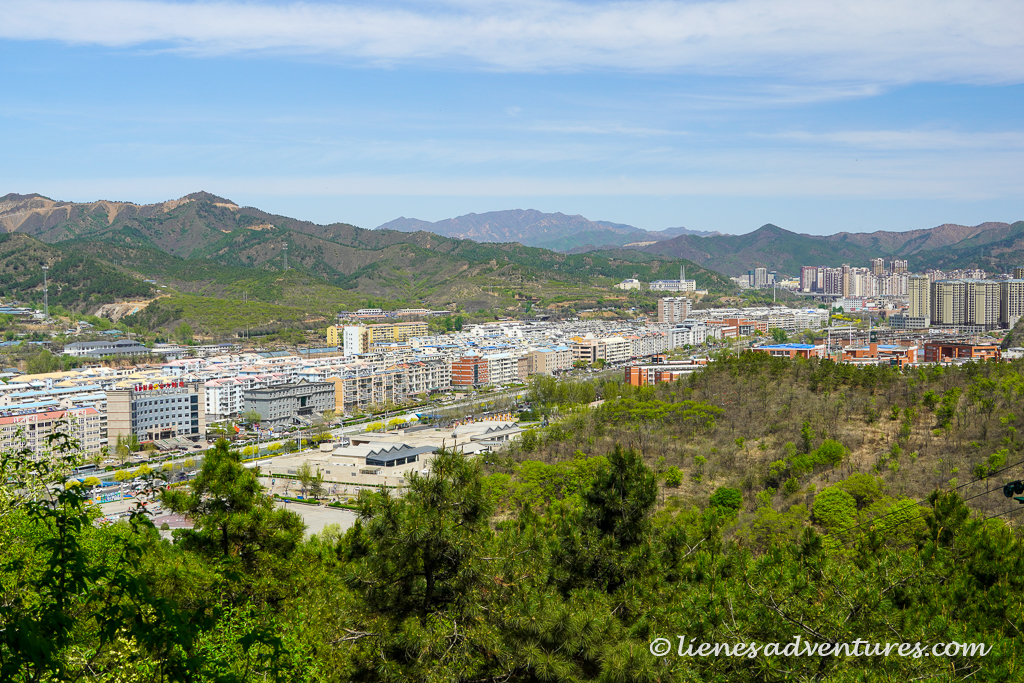
We took a few short mountainside trails to explore the area a little bit more. From here we could see the skyline of Chengde. We did not realize before just how hilly and mountainous this area actually was, with the city stretching long and narrow throughout the valley below.
Of course, we also had high hopes of spotting the wild monkeys. And it didn’t take long - a good indicator was the big crowd of people that had gathered near one of the trail intersections. There were about 10 monkeys here going about their daily monkey business.
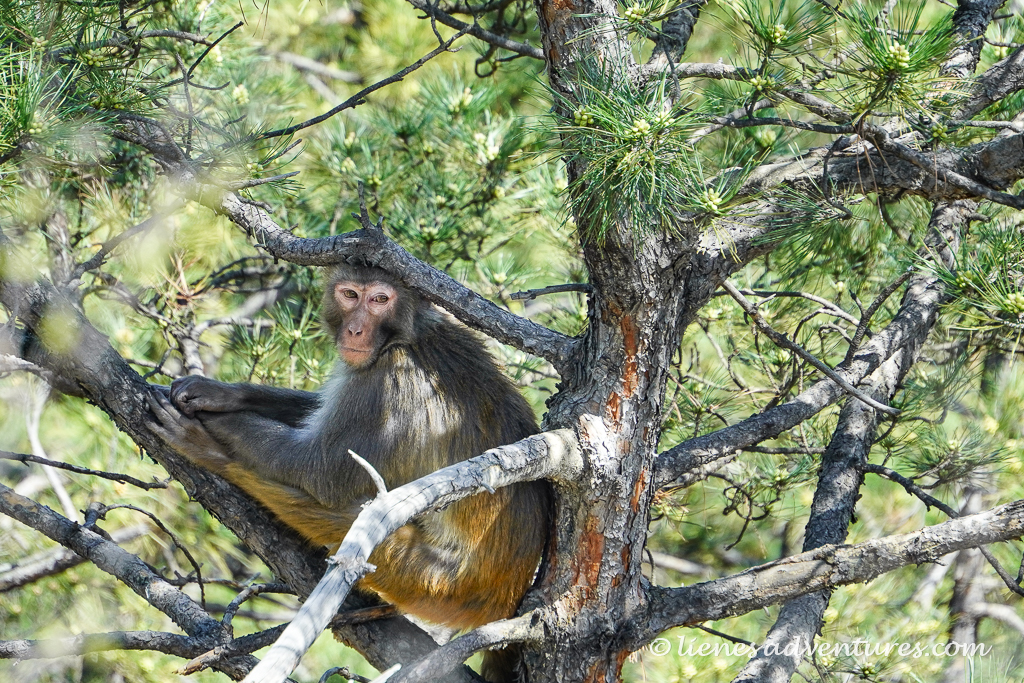
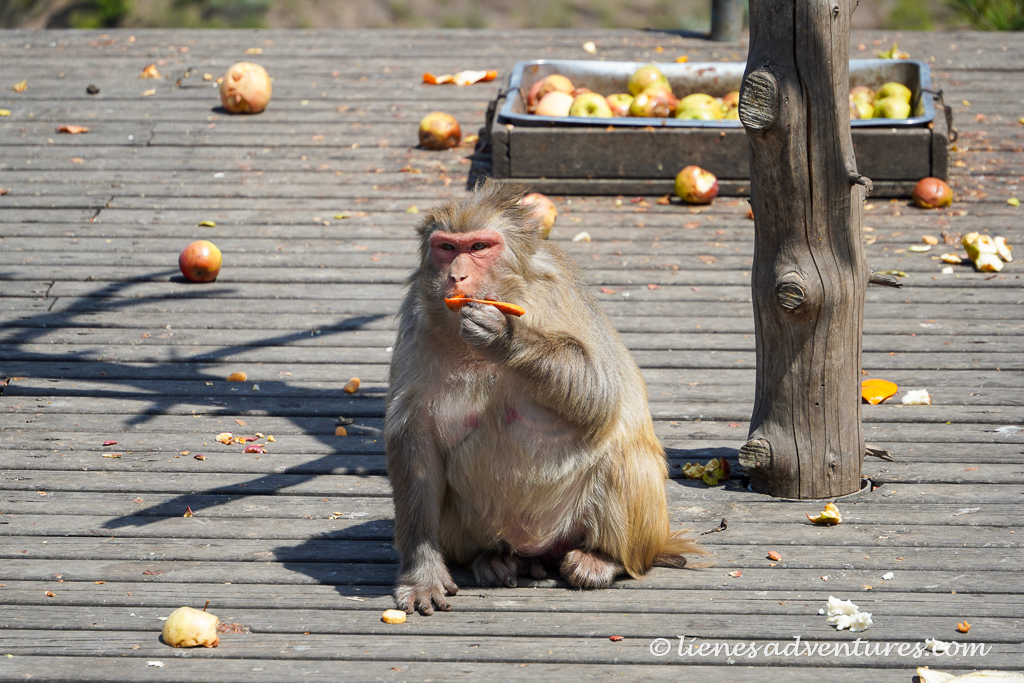
The park personnel had built a small platform for them here, providing the animals their daily dose of fresh fruits and vegetables as the landscape around was quite dry, rocky and not very monkey friendly. And I could not find any reliable information about why, when or how these macaques got here to begin with.
Besides Two-Pagoda Peaks, visitors could see many other natural sights here, like waterfalls, rushing streams, forests, odd-shaped rocks, religious caves, etc. However, our goal was to see the monkeys and Twin Pagodas, and after we checked that off our list, we got onto the chairlift for a quick return ride back down the mountain.
There was just one more attraction left to see. The one that most visitors came to Chengde for – the Summer Mountain Resort.
Summer Mountain Resort
Chengde Mountain Resort, the majestic summer retreat for the emperors of Qing Dynasty, was a large complex known as the perfect combination of Chinese imperial palaces and imperial gardens. The rulers of the Qing regime often spent several months a year here to escape the summer heat in the capital city of Beijing.
Covering an area of 5,640,000 square meters, it was the largest one of the Four Greatest Classic Gardens in China (with other 3 being: Summer Palace in Beijing; Humble Administrator’s Garden, and Lingering Garden in Suzhou).
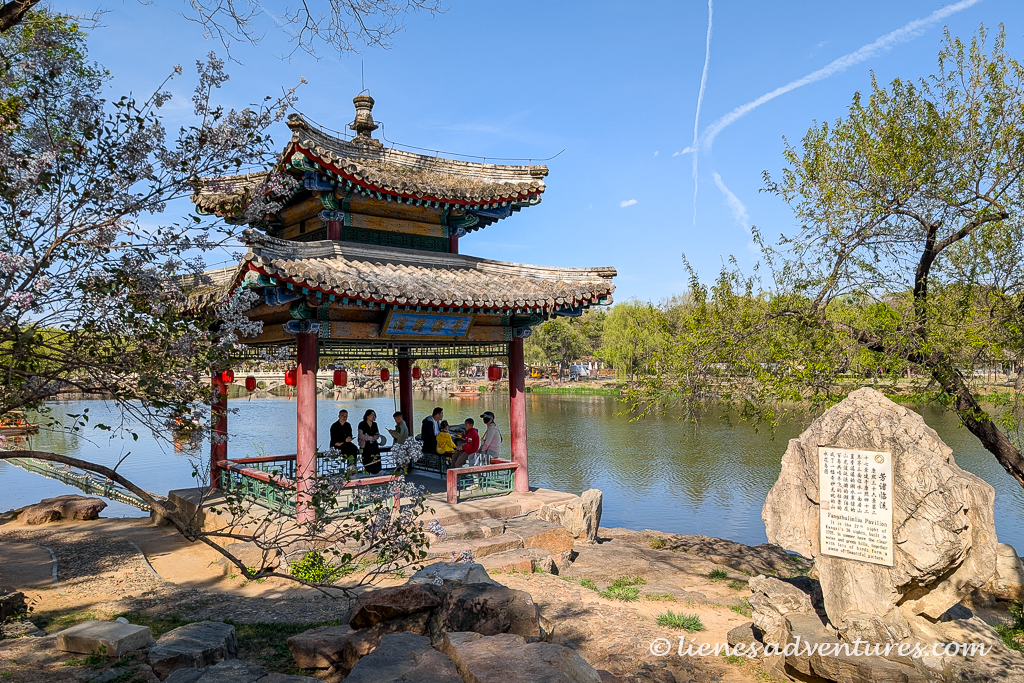
The landscape of the Mountain Resort was designed following the topography of natural hills and waterways and took 89 years to complete. In 1994, the Mountain Resort was awarded UNESCO World Heritage Site status.
The resort was divided into 4 sections: the Palace Area, the Lake Area, the Plains, and the Mountains.
The Palace Area
We started with the Palace Area. The Palace Zone in the southern part of the resort was designed to resemble the Forbidden City in Beijing. It consisted of two parts: a court in front, where the emperor received high officials and nobles of various foreign envoys; and bed chambers in the rear, which were the imperial family's living quarters.
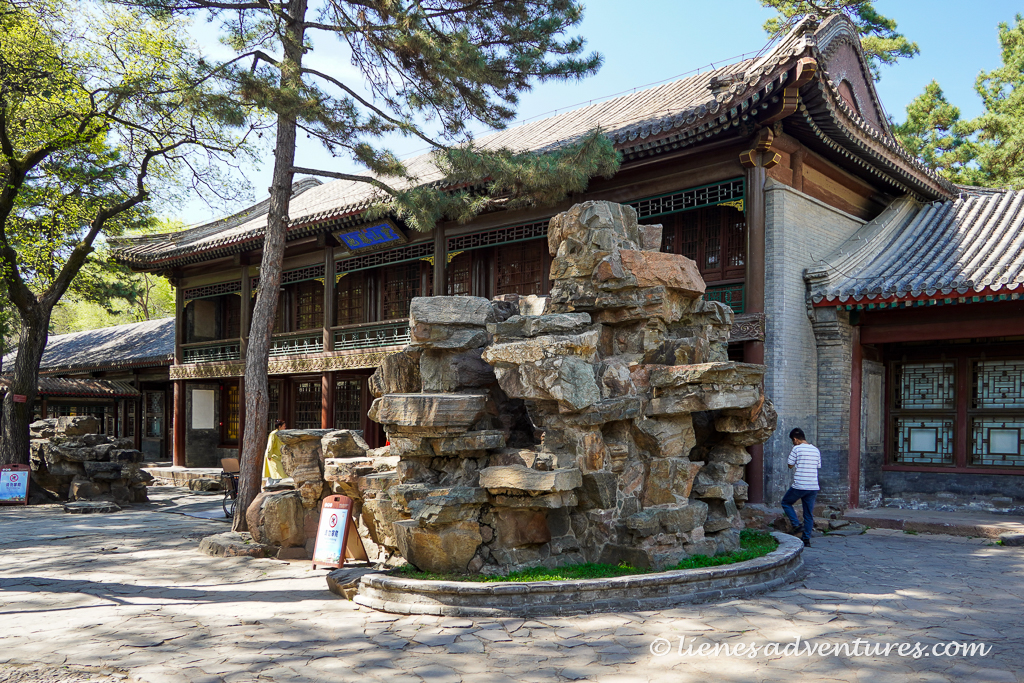
Having seen many of these residences before (including the Forbidden City in Beijing), we walked through here rather quickly and then headed on towards the Lakes Area.
The Lakes Area
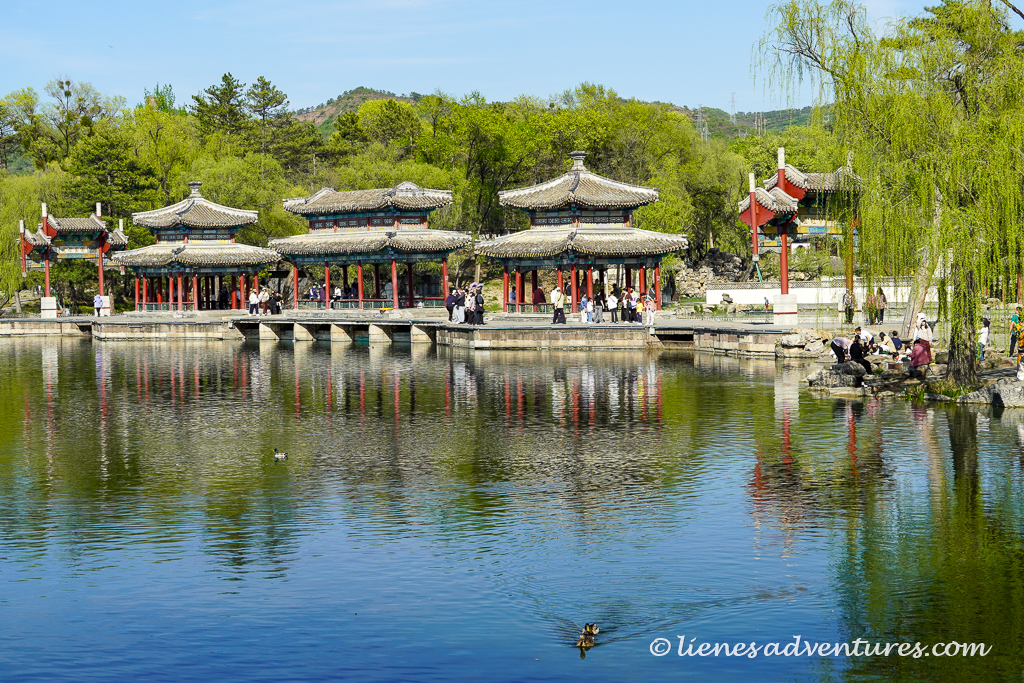
Many of the scenic spots around the resort's lake were copied from famous landscaped gardens in southern China.
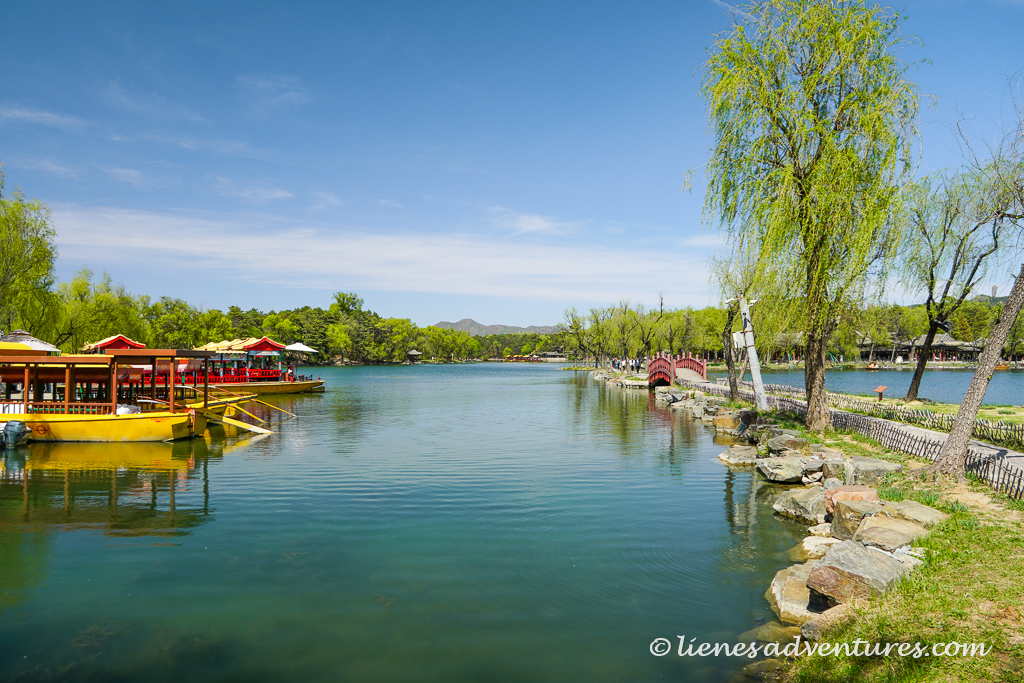
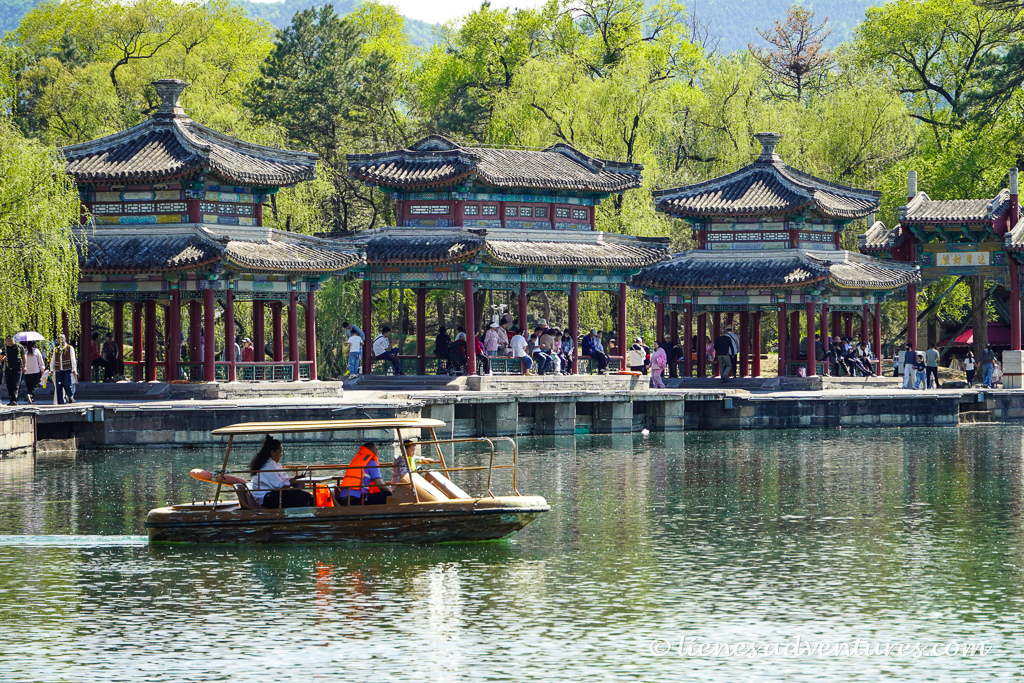
This was our favorite area of the resort, where visitors could also rent boats and head out for a scenic ride around the lake. Various smaller lakes and streams were connected with raised walkways, stone steps or bridges.
The Plains
Having made our way through the Lakes, we reached the Plains which were dotted with Mongolian style yurts and a 70-meter (230ft) tall Chinese stone pagoda.
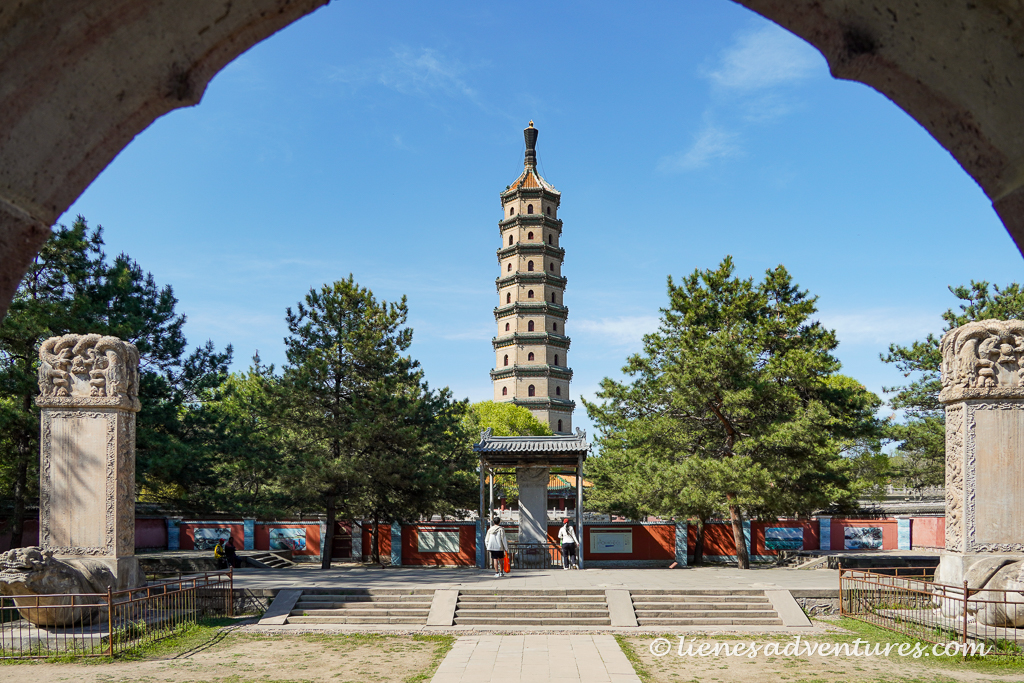
The Plains area was where the emperor held various games and events for his own and his guests’ entertainment. This was the largest continuously flat area of the whole resort, suitable for horse races and many other sporting activities.
The Mountains
The last area of the resort left to explore was the Mountains which were former royal hunting grounds. However, with the Mountains being the largest and steepest section of the resort, we decided to skip it and started making our way to the exit following the lakeside path.

Overall, I was a little underwhelmed by the Mountain Resort. As impressed as I was with the Summer Palace in Beijing, the Mountain Resort in Chengde just did not live up to the hype for me. Most of the structures seemed to be left to weather away needing major repairs, therefore they could only be seen from the outside. The yurt area could not be entered at all. There seemed to be a stage at some point for shows, but that was also in complete disrepair. The whole place just needed a major renovation overhaul. But that was purely my personal opinion because my husband, on the other hand, was totally impressed and said that he liked the vibe of Chengde’s Mountain Resort more than that of the Summer Palace in Beijing. And my kids liked any place that sold grilled sausages on a stick (and China sells them everywhere); therefore, my kids’ opinion was biased and influenced purely by sausage availability (or lack of).
With that, however, the itinerary for our weekend getaway to Chengde was complete. A short 2.5-hour drive home back to Beijing concluded our adventures. But I already had plans for our next trip which promised to be even more exciting and adventurous than this! So, more to come!
To read about our other travels around China, click here:
HIKING ALL 4 PEAKS OF MOUNT HUASHAN WITH KIDS AND A SPONTANEOUS VISIT TO TERRACOTTA WARRIORS
DAY TRIP TO TIANJIN CITY FROM BEIJING, CHINA
CHINESE NEW YEAR AT PINGYAO ANCIENT CITY (AND A VISIT TO WANG FAMILY COMPOUND)
3 DAYS AT HARBIN INTERNATIONAL ICE AND SNOW SCULPTURE WINTER FESTIVAL IN CHINA