SECRETS OF DATONG - 1500 YEAR OLD CLIFFSIDE HANGING TEMPLE AND YUNGANG GROTTOES. A WEEKEND ROAD TRIP FROM BEIJING
-
Hits: 1094
Datong had been on my must-visit list for a few months already. But due to various reasons (bad weekend weather, attraction closures, work commitments etc.) it just kept getting postponed week after week. But on a sunny May weekend, the stars aligned and we were finally on our way to Datong to explore all its wonders. It was a place I was really looking forward to seeing.
As we only had 2 days available, we had to get up at 6 in the morning to hit the road by 7. The drive was relatively long, and it would take us over 4 hours to cover the 350km (220mi) distance. The plan for the first day was to reach Yungang Grottoes by noon and start from there.
YUNGANG GROTTOES
Knowing that many famous attractions in China had daily attendance limits, I had reserved our entrance tickets online a few days prior. However, once we got there, it seemed very quiet for a Saturday and there was no line at all at the ticket booth. We could have easily purchased the passes right here on the spot as well. But better safe than sorry! We scanned the ticket QR codes on our phones and headed in to explore this wonder.
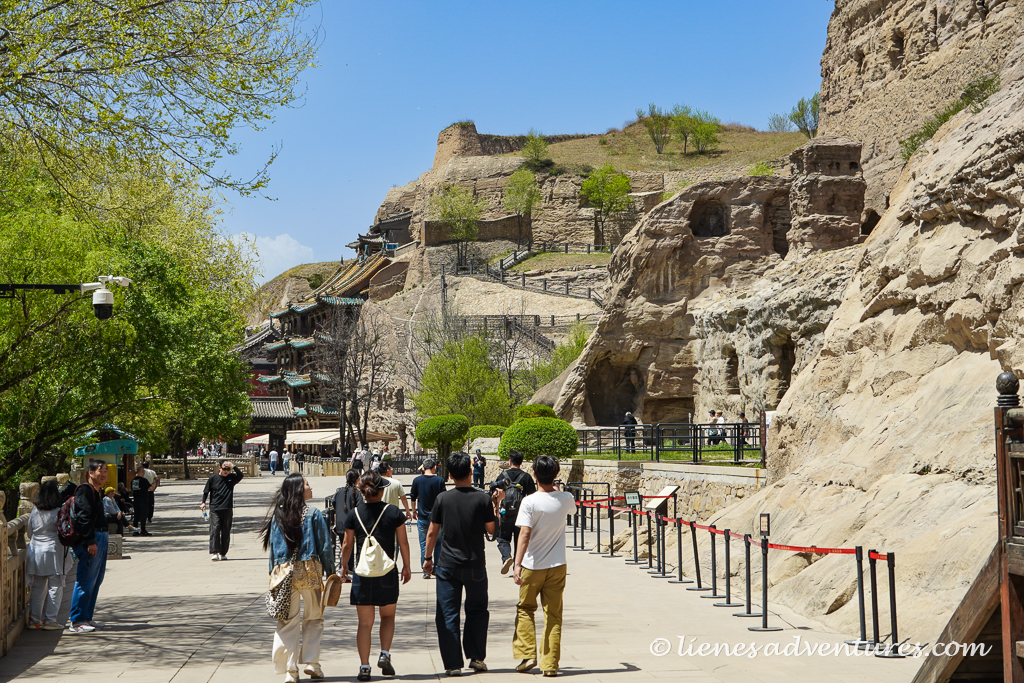
Work on these spectacular caves began in the 5th century, making them over 1,500 years old today. The site contained 45 main grottoes and some 51,000 statues of Buddha in all variety of shapes and sizes. Some statues were as small as 2cm; others ranged as tall as 17 meters (55ft). Overall, the Yungang Grottoes represented the outstanding achievement of Buddhist cave art in China.
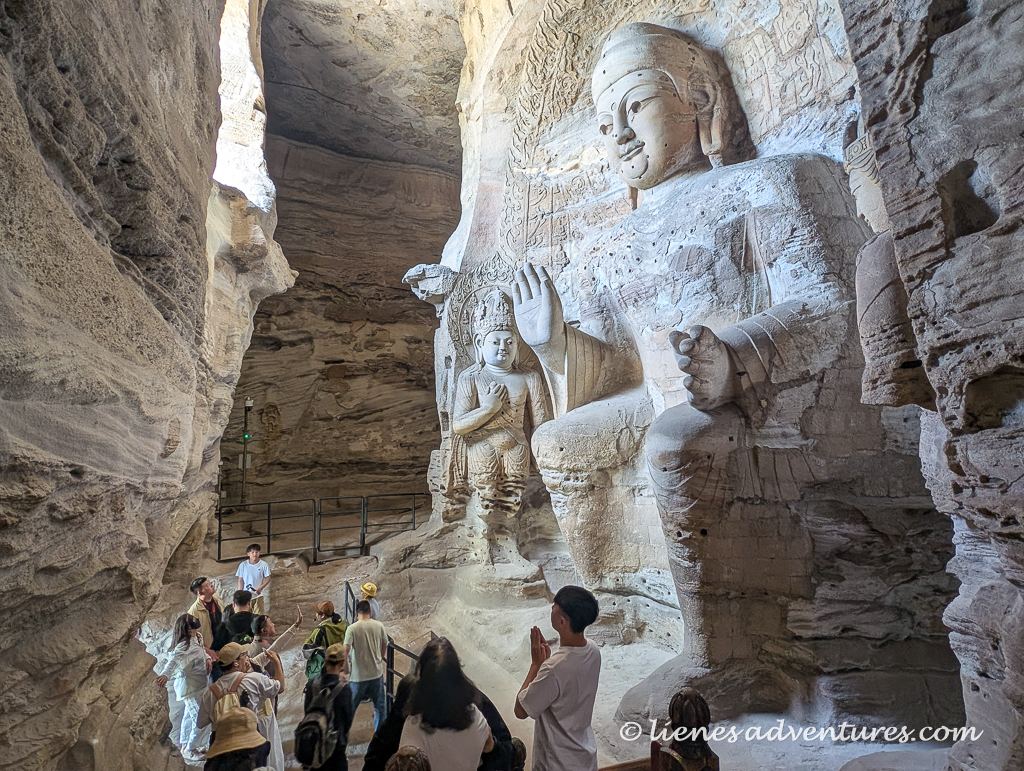
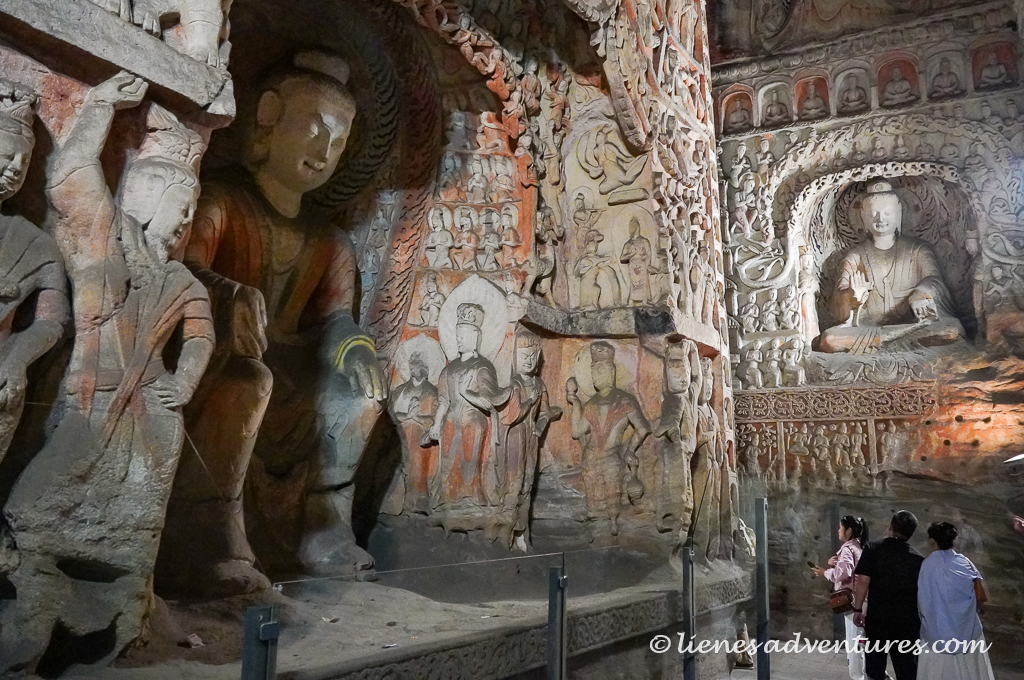
For regular visitors like ourselves, caves 1-20 were the focus of the visit. As caves 21-45 were small, weathered and no longer held much to see, most visitors chose to skip them. With that in mind, we started our exploration. Before our visit, I had not realized just how big some of these caves really were; or the amount of detail that had gone into carving these grottoes. There were thousands of statues, pillars, niches and arches. All hand-carved into the sandstone cliff.
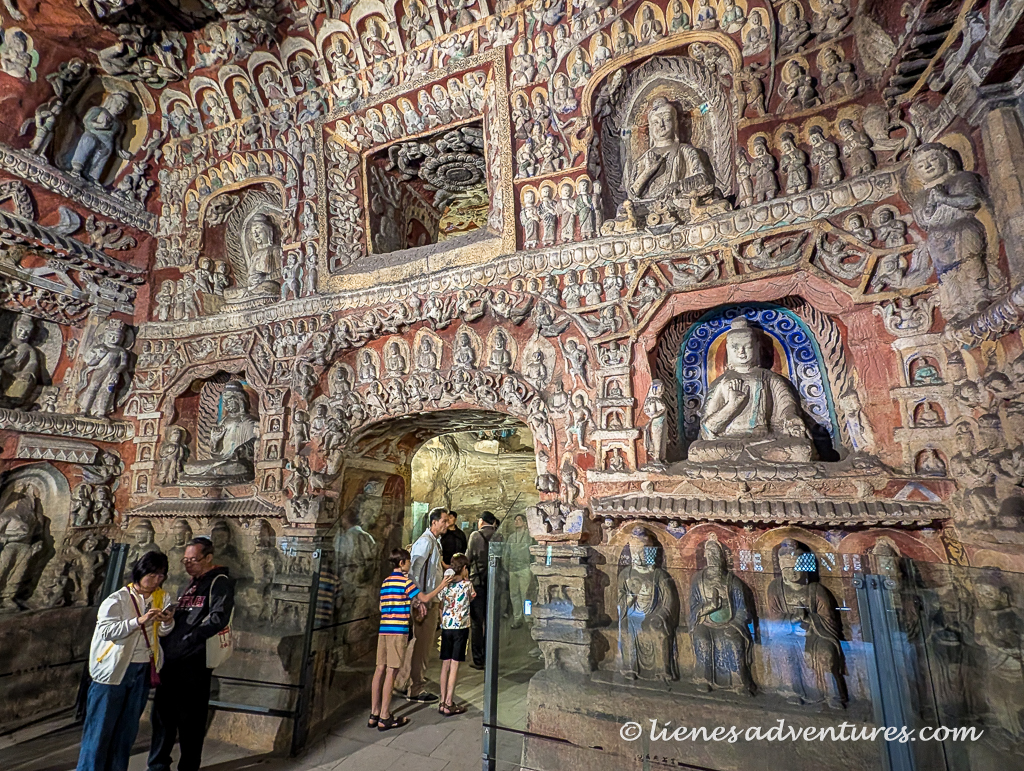
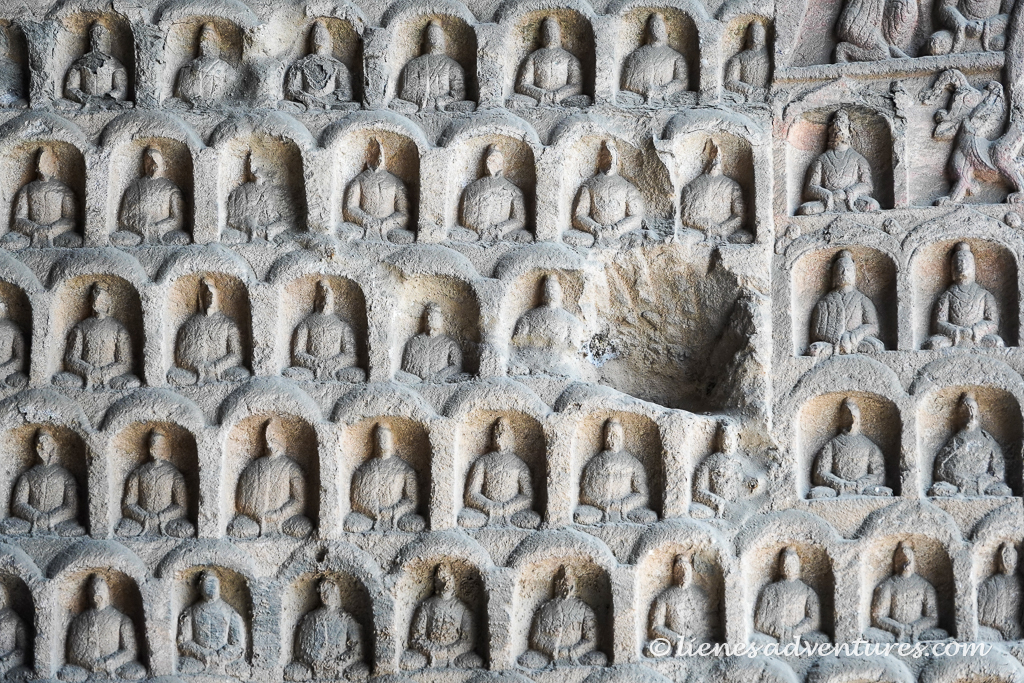
Many of the carvings in various caves were painted, but because the caves had been repainted countless times, determining the original scheme has been difficult. But it was impressive, nonetheless!
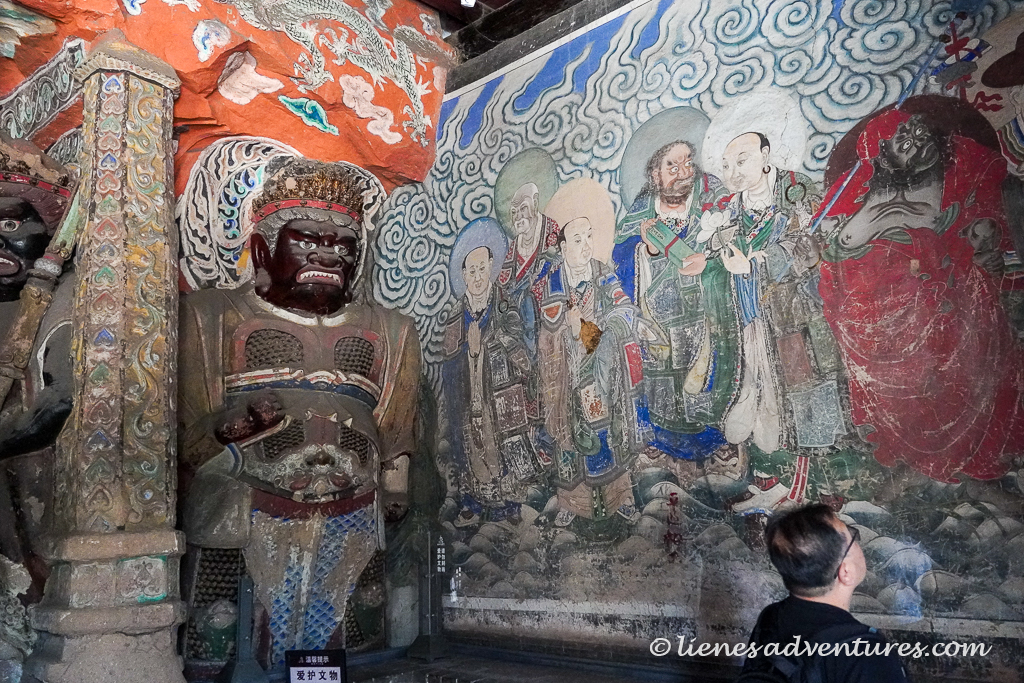
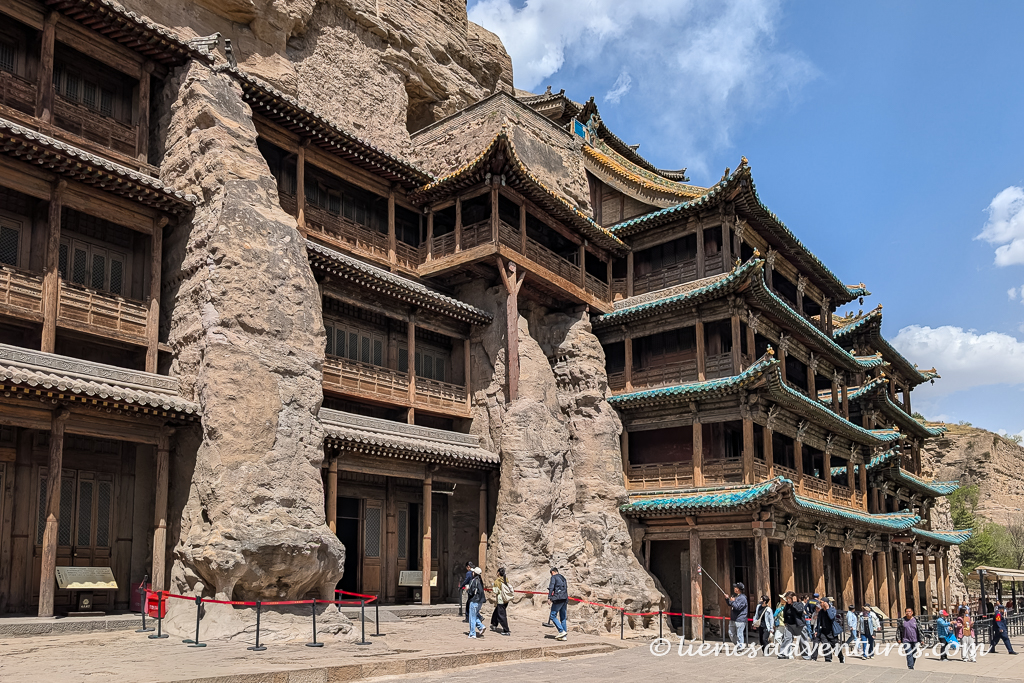
Over the centuries, the sandstone of the grottoes had been subjected to heavy weathering. Many of the grottoes were exposed to the open air and were therefore vulnerable to various forms of pollution and deterioration. Preservation efforts were still ongoing. The wooden buildings in front of Caves 5 and 6 were constructed already back in 1621, during the late Ming dynasty, which were meant to protect the caves from the elements.
Cave 20 was the most striking one. Its front wall collapsed a long time ago, leaving the massive Buddha fully open to the sky. It was the only open-air cave in Yungang and the giant Buddha had become the symbol of the Yungang Grottoes. We would see it on tickets, posters and guidebooks.
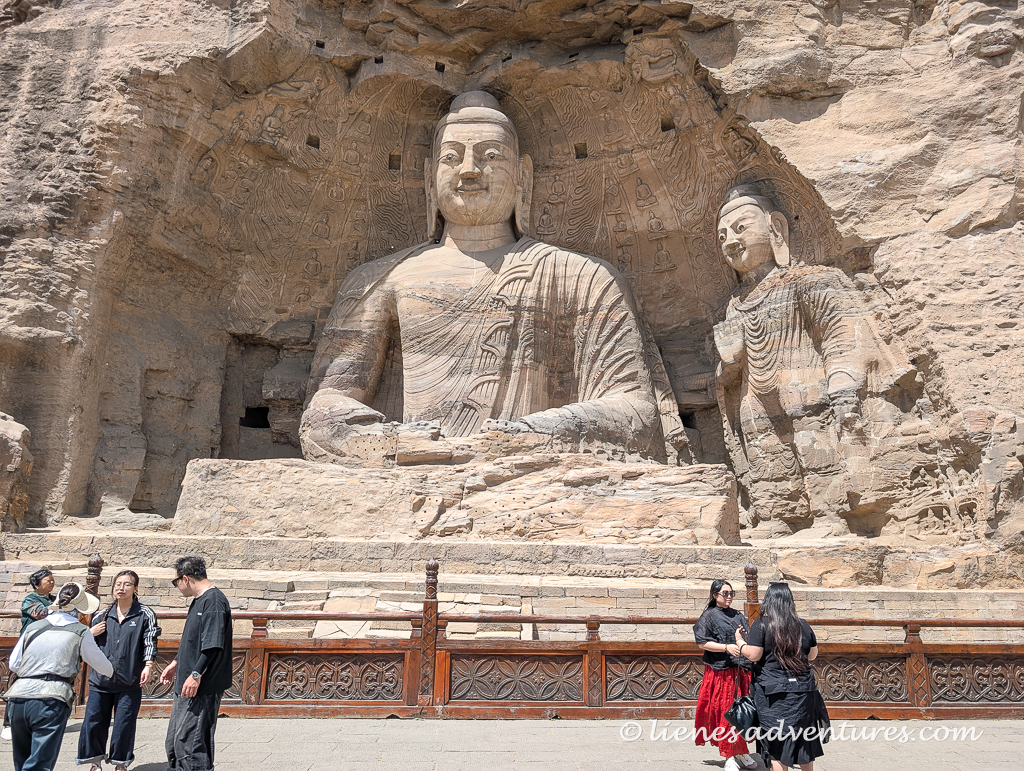
In 2001, the site was listed as a UNESCO World Heritage Site for its excellent preservation, scope and vivid history. And as we walked and observed… we could not agree more! It was a site worthy of a ‘Heritage’ status. In the end, we had spent over 3 hours at the grottoes covering more than 6.5km (4mi) within the scenic area.
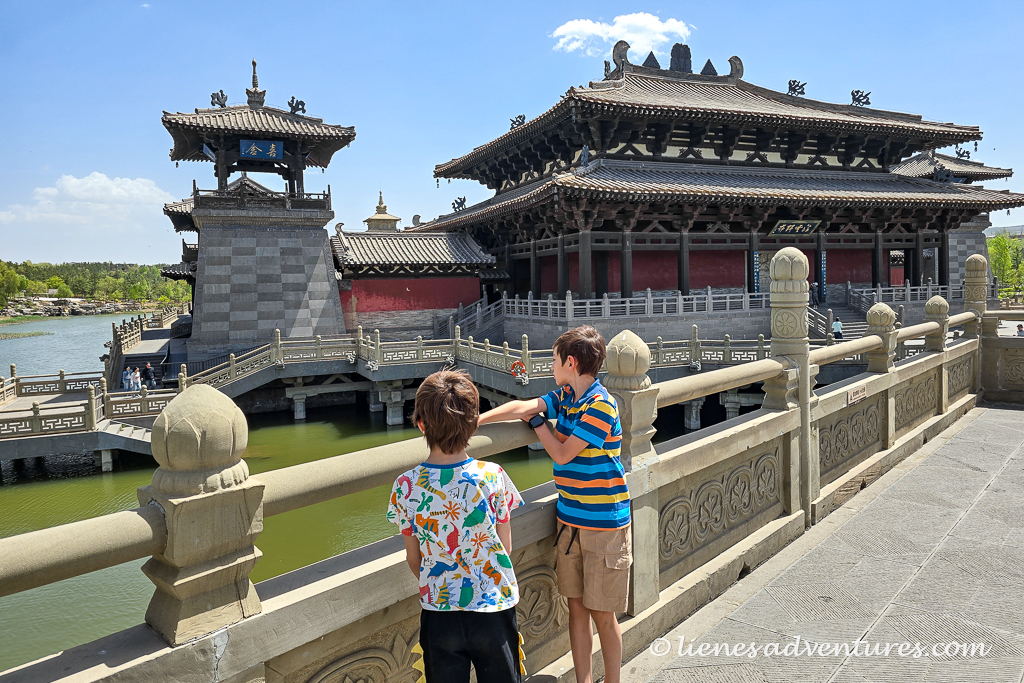
For those interested, there was also a large over-water temple complex near the caves, called Mahavira Treasure Palace. We did a quick walk-through of it on our way back to the car but did not have much energy to explore it in more detail.
The area right outside the Yungang Grottoes paid zone was occupied by street vendors, cafes and restaurants. As the day was hot, we grabbed some iced coffees and boba teas to-go and then headed back to the car.
DATONG ANCIENT CITY
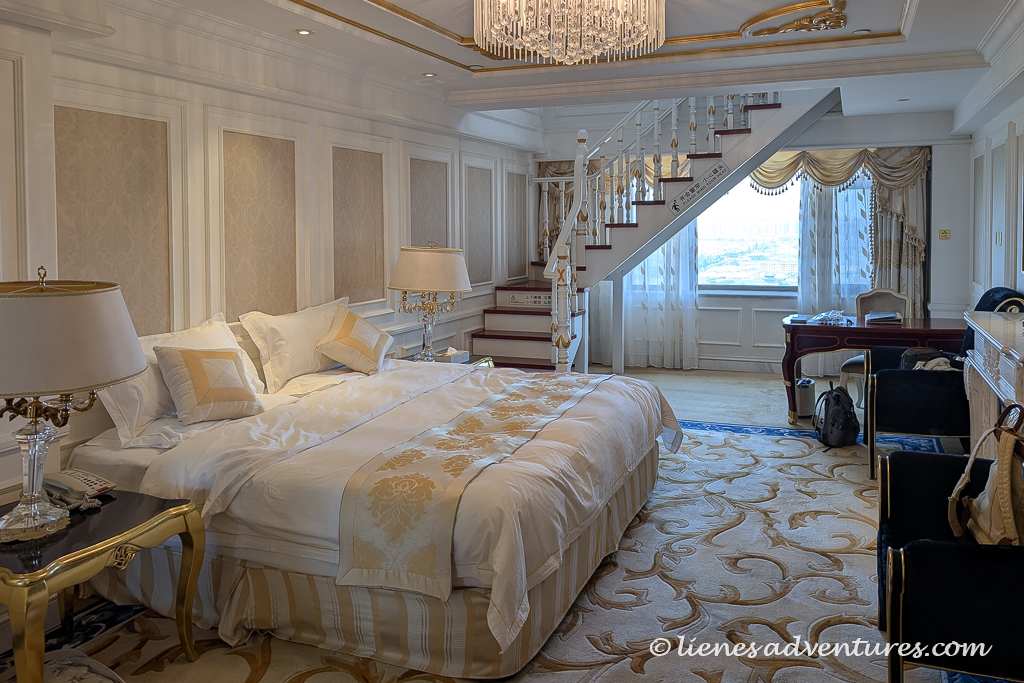
A short 30-minute ride took us to our hotel called Yungang Jianguo Hotel. It was a 5* hotel with our ‘family villa suite’ consisting of 2 floors and overlooking the mountains and Datong’s Ancient City. I have never been the one to waste money on fancy hotels. However, with this room costing only US$110 per night, I could not pass it up. That is a big perk of traveling in China – everything is cheap, including 5* hotels. A room like this back in the USA would undoubtedly cost me $700+ per night.
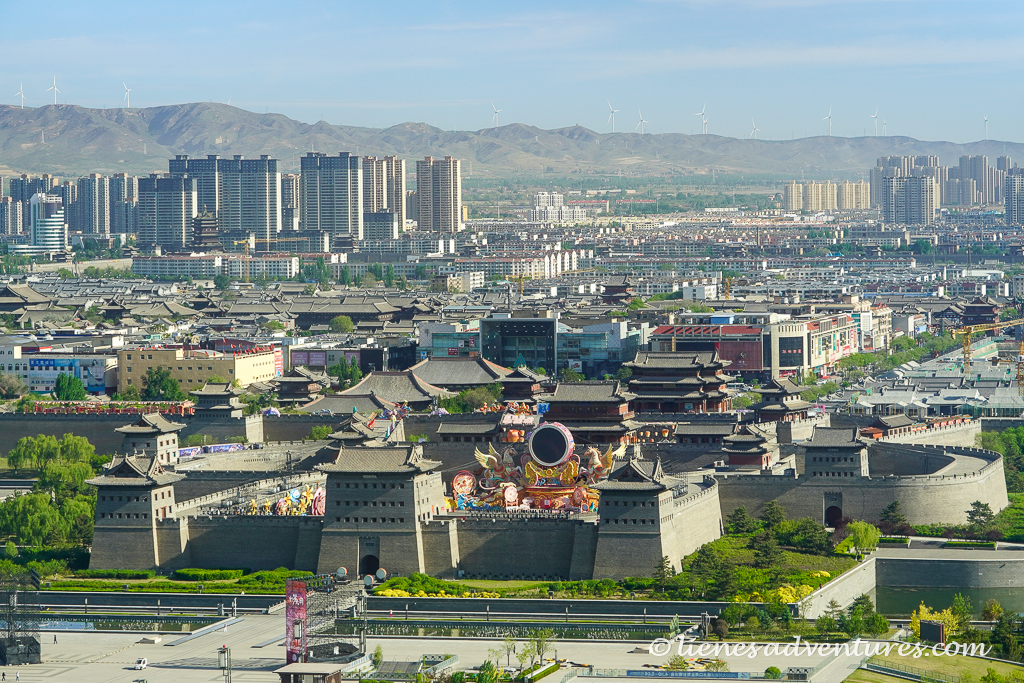
After we had unloaded the bags and rested our feet a little, we were ready to make our way towards Datong Ancient City which was just a 10-minute walk away from the hotel. Besides, we were all hungry, and where else would we find local specialties if not in the heart of the city.
Datong Ancient City was a historically rich fortress city and a vital military stronghold dating back to the Northern Wei Dynasty (386–534 AD). It was celebrated for its imposing city walls, ancient Buddhist temples, and preserved architecture. I had even heard people comparing it to the PINGYAO ANCIENT CITY which we visited 3 months earlier and grew to love. Therefore, we were looking forward to seeing what Datong had to offer.
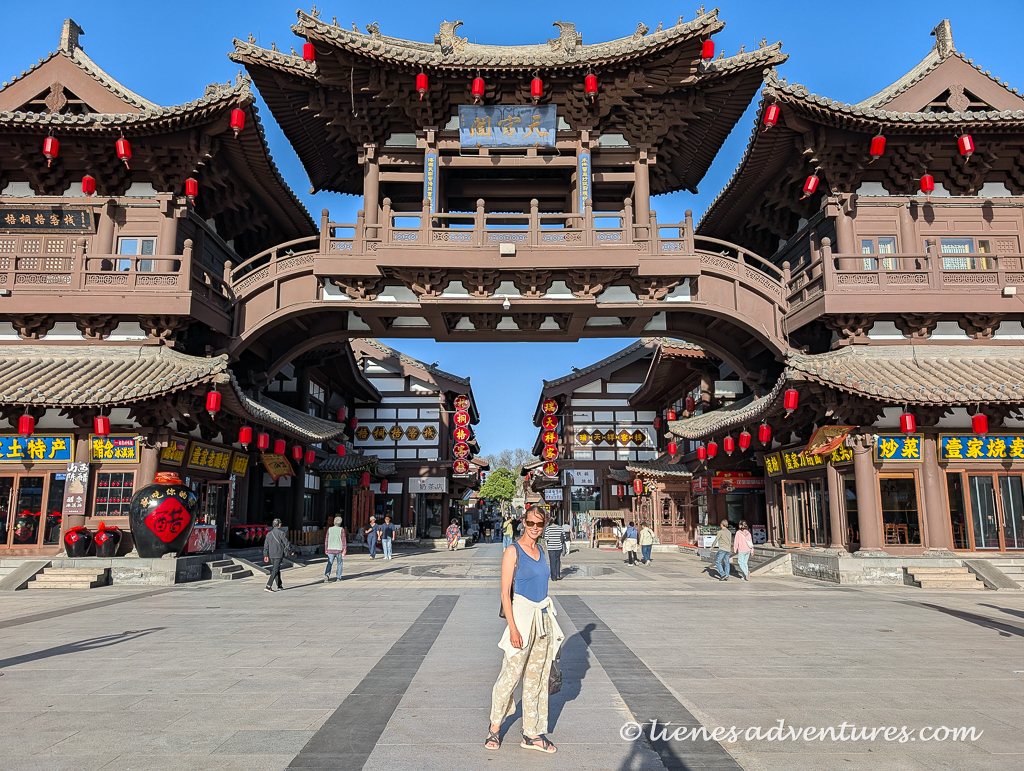
We did not have a definite schedule or a list of must-sees. Our plan was to simply explore – take the little side streets, peek into the alleyways, admire the architecture and sample street food.
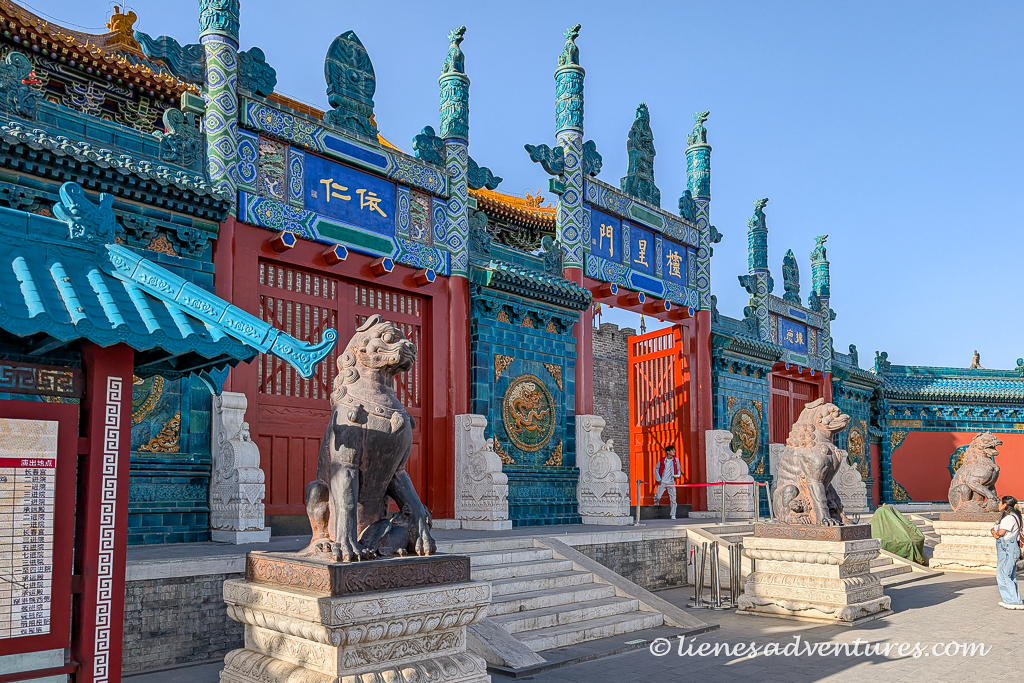
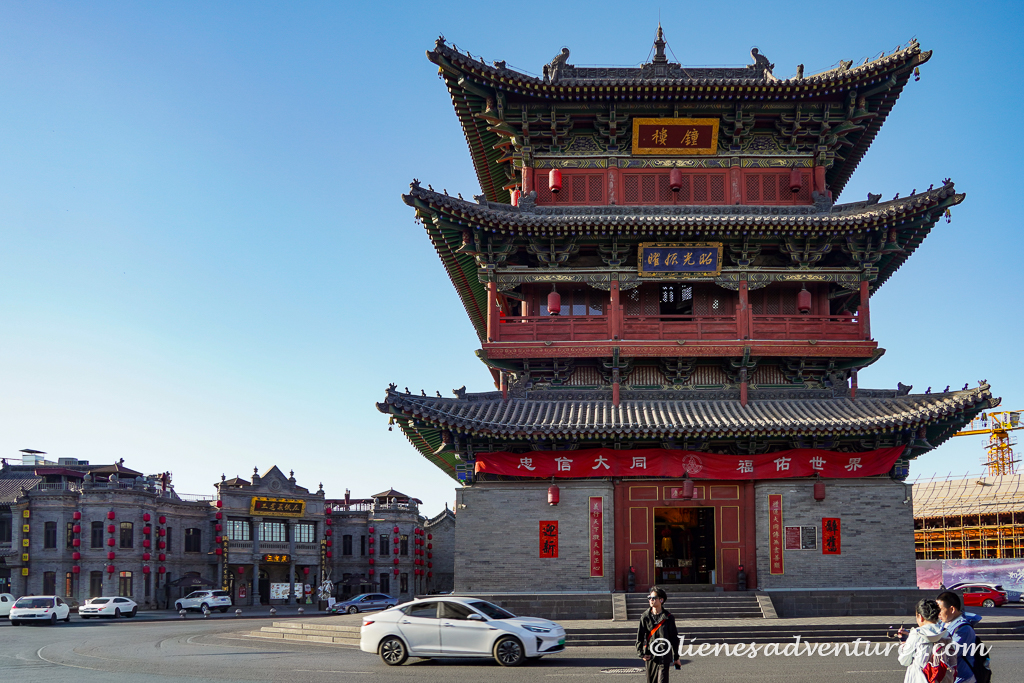
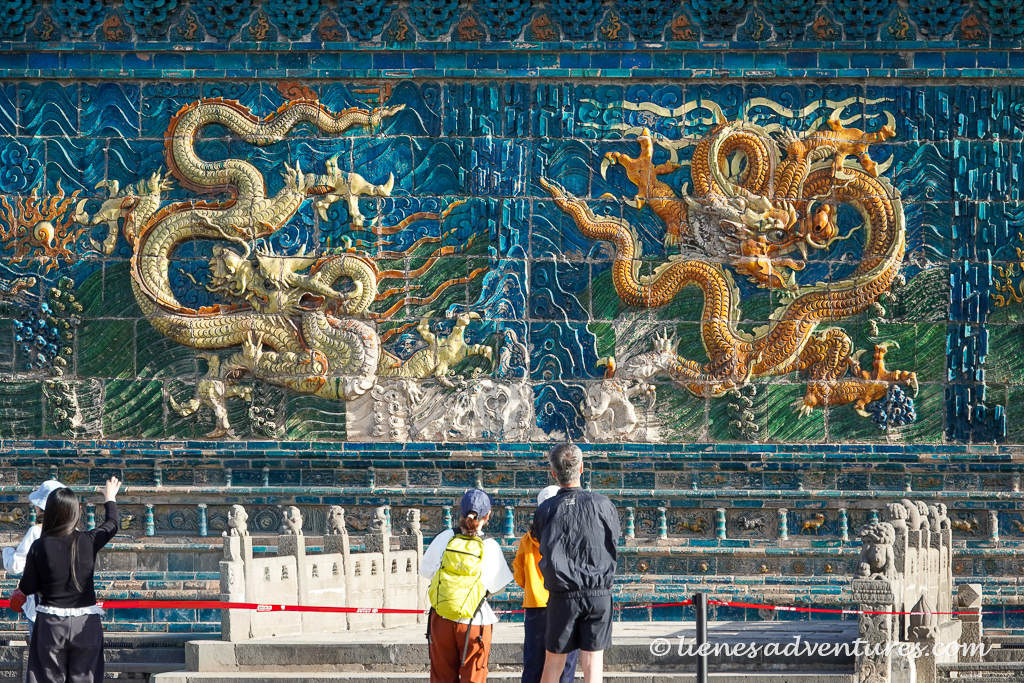
Just like all Chinese cities, there was a Drum Tower and a Bell Tower. There were various temples and shrines. We passed by the famous Nine-Dragon Wall with its colorful and highly detailed, glazed wall tiles.
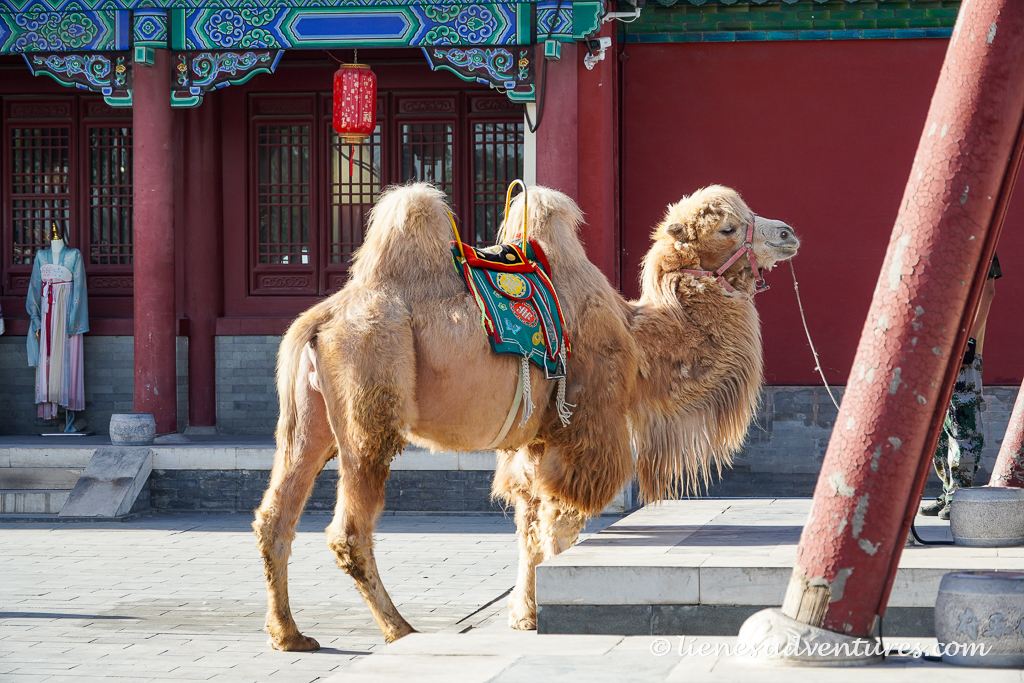
And we even stumbled upon a camel offering rides to anyone who wanted it.
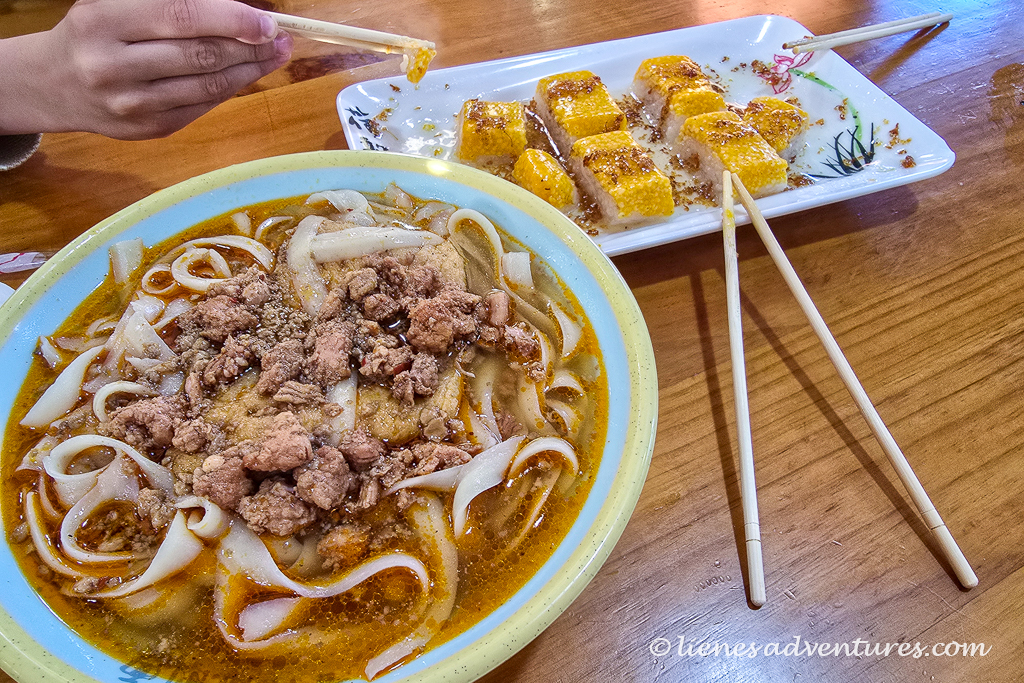
Eventually hunger took over, and we sat down for dinner. Some of Datong’s specialty dishes were hand-sliced noodles (Dao Xiao Mian) and yellow cake. We got a plate of each one to try and they were excellent! We even watched the chef hand-slicing our noodles from a big dough block straight into a boiling pot.
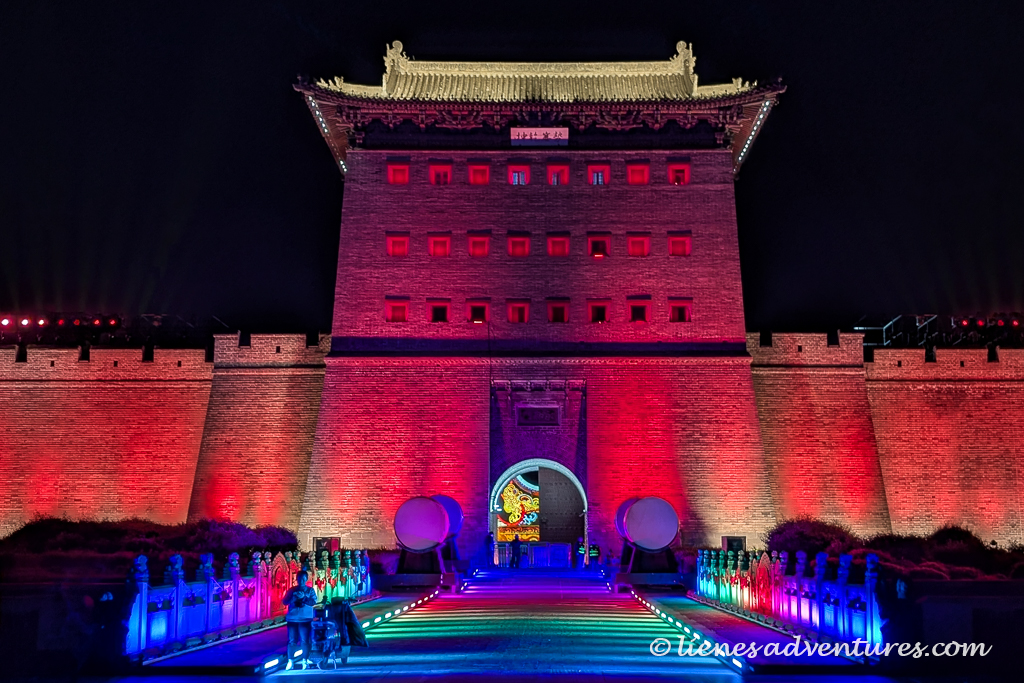
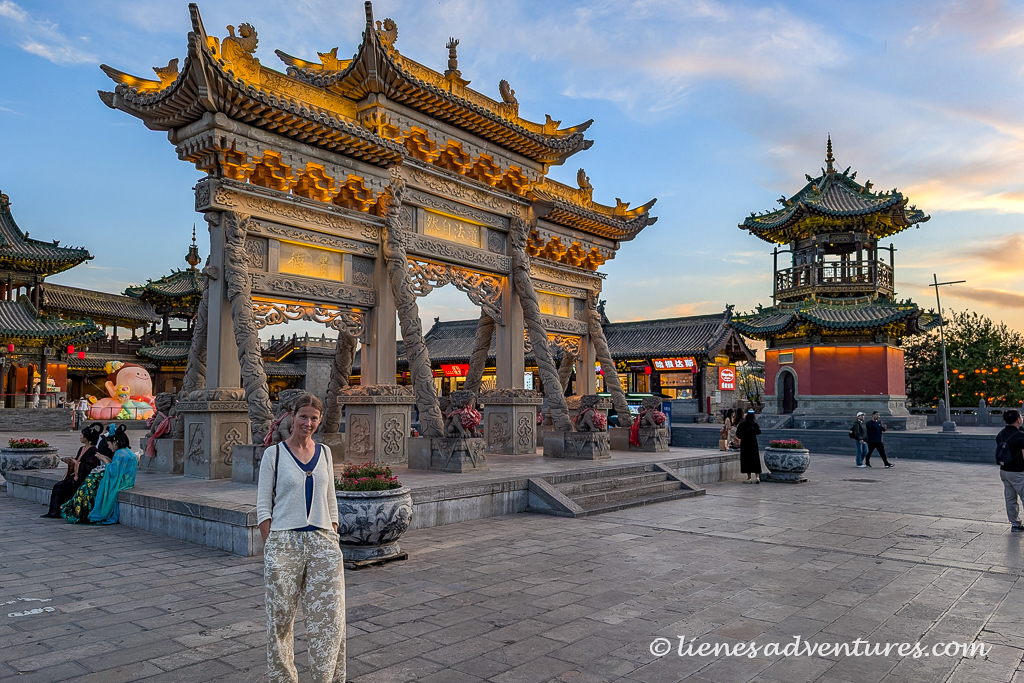
After we walked out of the restaurant, the sun was setting and the city started to light up. China did a really great job at illuminating buildings and monuments after dark, and Datong was no exception. The same places that we saw during daytime now looked completely different at night.
The last thing left to see was the City Wall. Usually, the Wall was free to visit. However, during our visit there was a Lantern Festival being held. Although we did not care to see the lanterns and just wanted to walk the Wall, there was no other option than paying the 50rmb festival entrance fee.
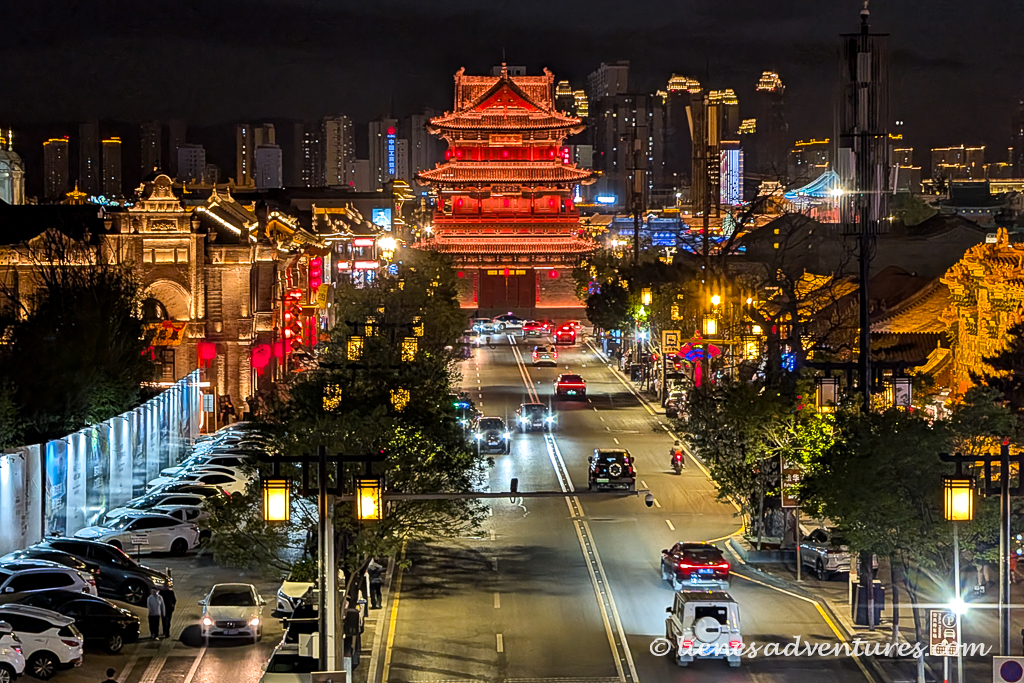
With that in mind, we decided that we might as well go for a longer walk and take in both - the night views of the city as well as check out the various festival lanterns. And these weren't the small handheld Chinese lanterns one would think of. These were huge, elaborate, lit-up art pieces lined up all along the top of the Wall for visitors to enjoy and take photos with.
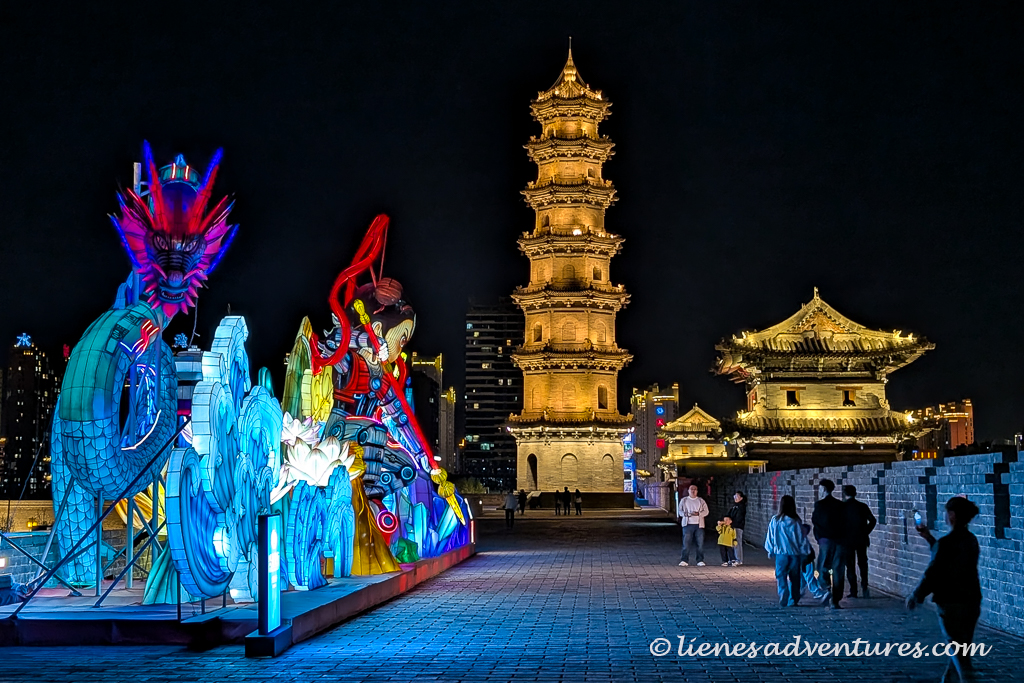
By the time we were done with our walk, it was already 10PM. Everyone was tired, and after reaching the hotel, we headed straight to sleep.
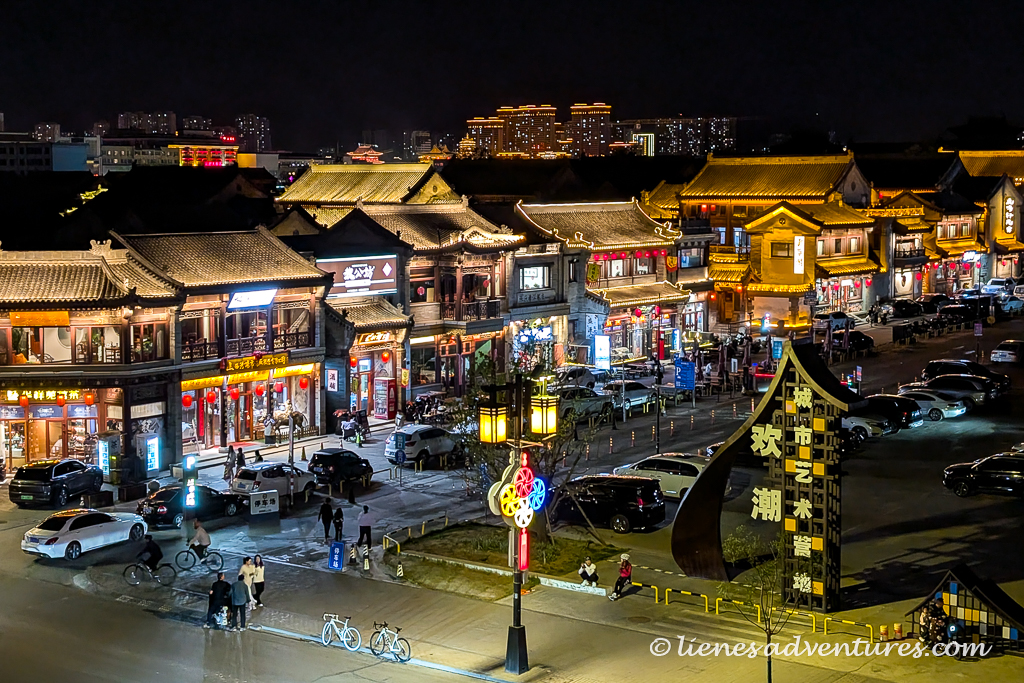
As far as our impressions about Datong Ancient City, both my husband and I agreed that it was nowhere near as impressive as Pingyao Ancient City. While it was interesting to visit, it was not a match to Pingyao. If our time in China was limited and we had to choose only one between them, we would definitely prefer Pingyao.
HANGING TEMPLE (XUANKONG TEMPLE)
Our next morning started with the best breakfast buffet we had had in China so far. Unlike in Chengde a few weeks ago, this time we made sure the alarms were set and we did not miss the breakfast. Our kids were happy to finally see some Western options like bacon, eggs and cheese toasts. Those were rare finds nowadays.
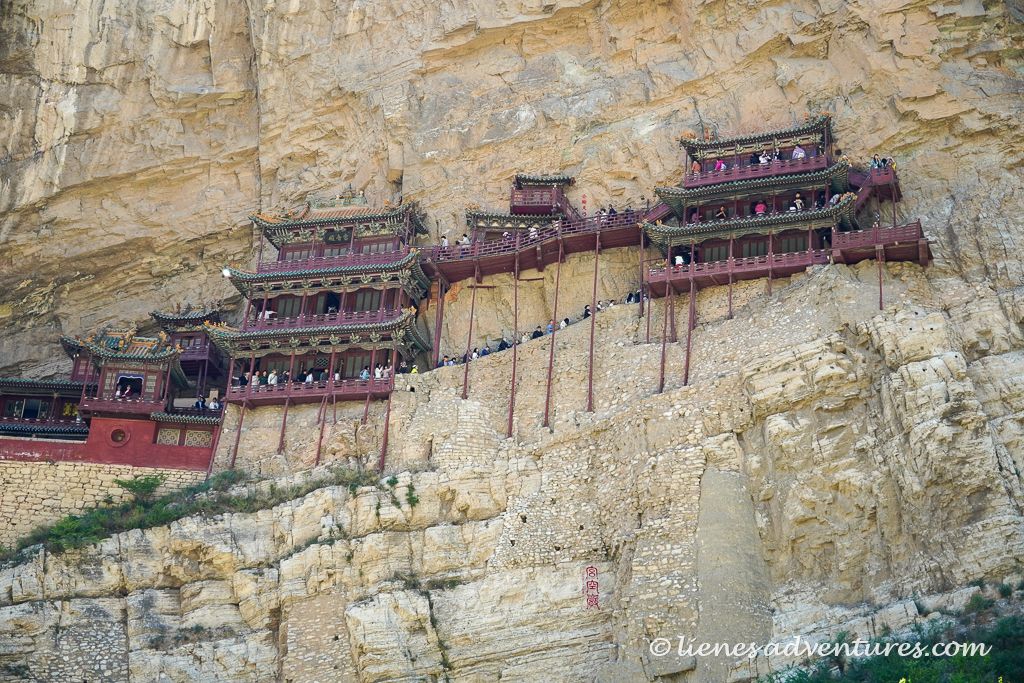
After breakfast, we packed up our bags and hit the road towards another unique historic site. About an hour’s drive south from Datong was the Hanging Temple. It was constructed in the late Northern Wei Dynasty (A.D. 491) and had a long history of over 1,500 years. Its most prominent feature was that the whole temple was extended outwards from the cliff, 50 meters (165ft) above the ground.
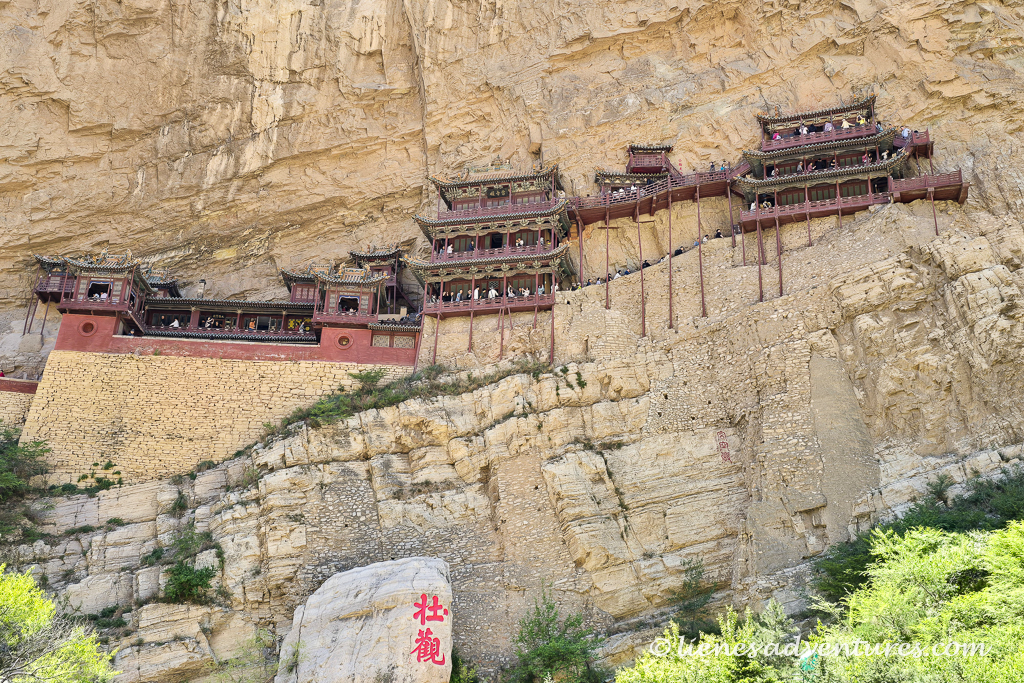
There were 2 types of tickets available for the temple – a park entrance ticket that allowed visitors to look at the temple from the ground. And an additional “temple boarding” ticket that allowed visitors to actually climb up to the temple and walk it. The climbing tickets were limited and very hard to get. Timed entry slots opened for reservation 7 days in advance (and sold out within hours). I made sure to secure us these tickets because it would be a shame to travel this far out but not get to enter the temple. My kids were very excited about the upcoming experience, while I was a little more reserved… Climbing a 1,500-year-old wooden structure hanging off a side of a cliff came with its perils, after all.
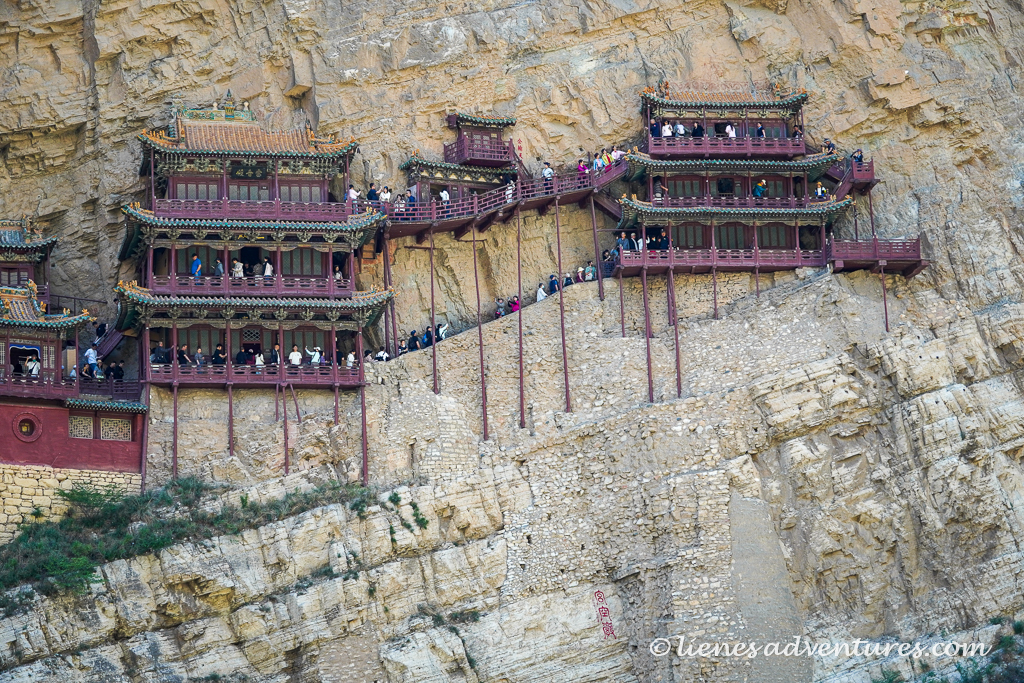
Once we reached the visitor center, we grabbed a shuttle bus to the park area where the temple was. As we got closer to it, it looked very surreal! Built on the cliffs of Mt. Hengshan (one of the five most scared mountains in China) this very unique temple was the combination of three religions of Confucianism, Taoism and Buddhism. About 1/3 of structure’s body was hanging off the cliff, with its halls connected by winding corridors and bridges. Although it was said that climbing the temple was not suggested to people with fear of heights (me!), I was not going to let this opportunity pass by.
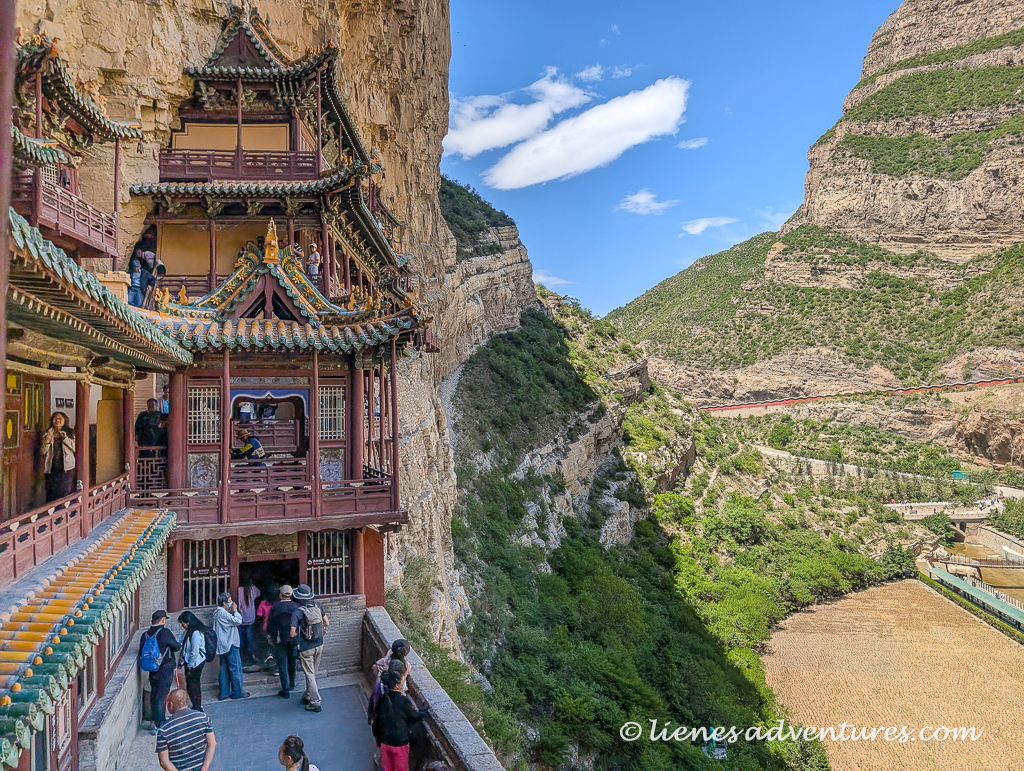
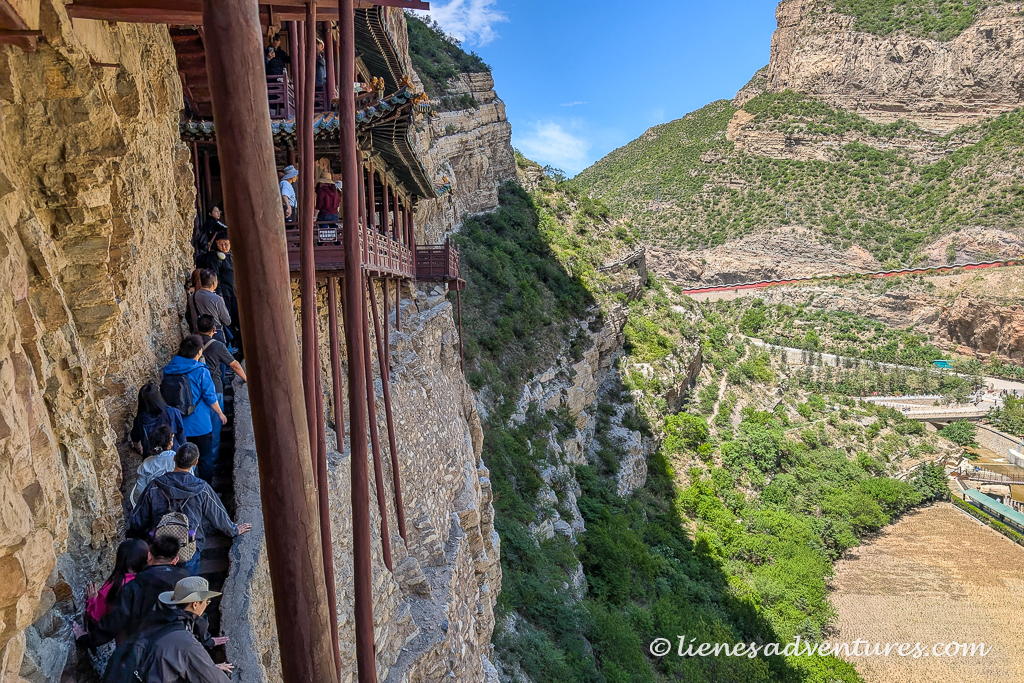
Tickets were sold in limited numbers to prevent crowding, however, going was still very slow. Some of the narrower sections of the temple’s walkways caused bottlenecks due to people being either scared to move forward or stopping for pictures. I would be lying if I said I didn’t feel slightly uncomfortable. The barely knee-heigh railings in spots and steep drops below gave me a little vertigo. On top of that, I had to worry for my 2 little boys who seemed to have zero self-preservation instincts. While I was glued to the temple's inner wall, the boys constantly wanted to peek over the outer edges... However, I tried to enjoy the experience as much as possible. While slightly scary, in the end it was not quite as bad as I had anticipated.
A fun fact: Times magazine selected the Hanging Temple as one of the 'World’s Top 10 Unique and Precipitous Architectures' in 2010.
But what was the secret of this wooden structure? What allowed it to last for over 1,500 years with minimal damage? The clever design and smart site selection of Hanging Temple was an important reason for its preservation. Located at the inward concave of the cliff with the protruding part acting like an umbrella, it made the temple protected from the impact of rain and falling rocks. The high position of the temple also avoided the risk of being flooded which was a frequent occurrence in the valley below.
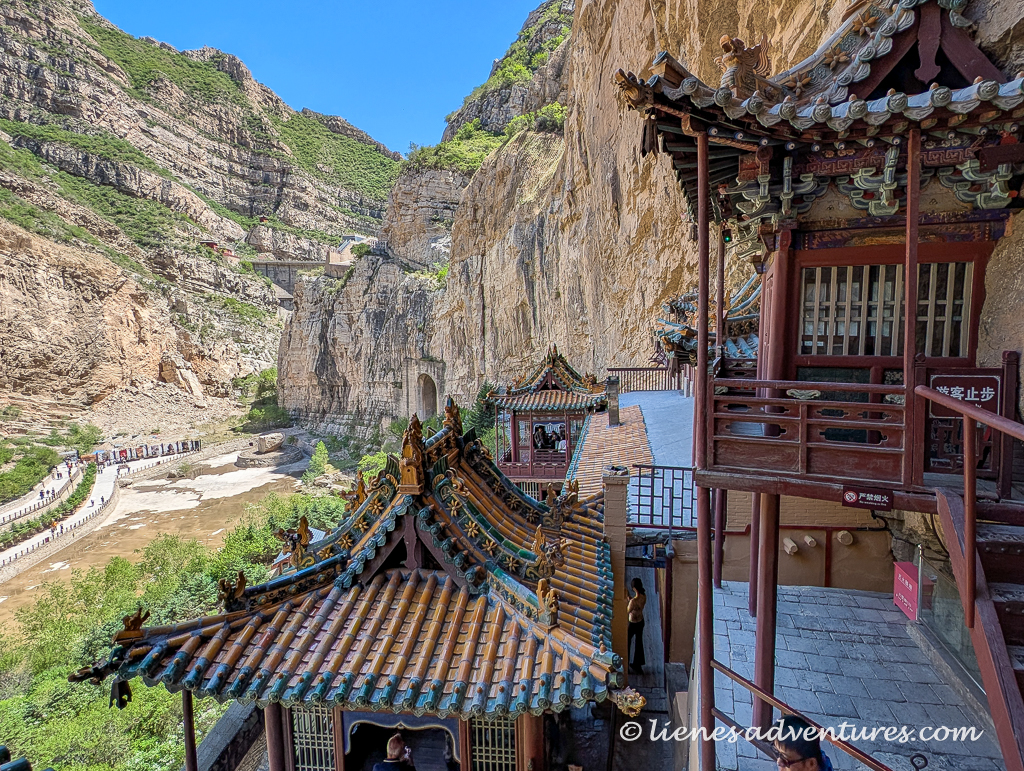
Due to the wisdom of the monks centuries ago, the structure had survived for us to admire and enjoy today.
The Temple visit concluded our weekend’s adventures in Datong. We were truly impressed by the temple and the Grottoes we saw the day before. China had some amazing history worth exploring, and it was all only a few hours’ drive away from Beijing. Datong got a big, fat approval stamp in our books.
To read more about our travels around China, click here:
HIKING ALL 4 PEAKS OF MOUNT HUASHAN WITH KIDS AND A SPONTANEOUS VISIT TO TERRACOTTA WARRIORS
CHENGDE - IMPERIAL GARDENS AND TIBETAN TEMPLES. A WEEKEND TRIP FROM BEIJING
DAY TRIP TO TIANJIN CITY FROM BEIJING, CHINA
CHINESE NEW YEAR AT PINGYAO ANCIENT CITY (AND A VISIT TO WANG FAMILY COMPOUND)
3 DAYS AT HARBIN INTERNATIONAL ICE AND SNOW SCULPTURE WINTER FESTIVAL IN CHINA